

P0513 on 2022 Jeep Grand Wagoneer: Causes and Fixes for Invalid Key
On a 2022 Jeep Grand Wagoneer, P0513 means the anti-theft system doesn't recognize the key, causing a no-start condition. This is most often due to a programming error after the vehicle's computer (PCM) was replaced or updated, as noted in manufacturer bulletins. The fix requires a dealer to perform a 'PCM Replaced' routine and 'Proxy Configuration Alignment' to re-synchronize the vehicle's security modules.
- P0513 on a 2022 Grand Wagoneer means your vehicle will not start due to an anti-theft system error.
- The most probable cause, especially after recent service, is a programming error between the key and the vehicle's main computer (PCM), which requires a dealer to fix.
- Before calling a tow truck, try your spare key and consider replacing the key fob battery, as these are simple potential fixes.
- Do not replace parts like the starter; the problem is electronic and related to security verification, not a mechanical failure to start.
- This issue is considered critical as it will leave you stranded. Professional service is almost always required to resolve the root cause.
What's Unique About the 2022-2022 Jeep GRAND WAGONEER
For the 2022 Grand Wagoneer (WS platform), this code is strongly linked to service procedures. Manufacturer Technical Service Bulletins (TSBs) S2225000003 and S2208000073 specifically call out that P0513 occurs after replacing or reprogramming ('flashing') the PCM. The core issue is that the PCM's security code defaults during the update, causing a mismatch with the RF Hub and BCM. This isn't just a bad part; it's a failed software process that requires a specific dealer-level 'PCM Replaced' procedure and 'Proxy Configuration Alignment' to fix.
Diagnostic Flowchart
Tap your situation to follow the diagnostic path that matches what you're seeing on this vehicle.
Symptoms You May Notice
- Engine will not start; it may crank but not fire up.
- Engine starts and then immediately stalls (within 2-3 seconds).
- A red security indicator light is illuminated or flashing on the dashboard.
- Check Engine Light is on.
- Key fob functions (lock/unlock) may not work.
- Replacing the starter motor. The engine cranks but won't start due to the immobilizer disabling fuel and ignition, not because the starter is bad.
- Replacing the battery without addressing potential programming needs. While a weak battery can be a cause, if the code appeared after a jump-start or battery replacement, a module reset or proxy alignment may still be necessary.
Most Likely Causes
- Incorrect PCM Programming After Service 🔴 High Probability This is explicitly documented in Jeep TSBs S2225000003 and S2208000073. When the PCM is replaced or its software is updated ('flashed'), it can lose the security key information. The TSB explains this is because the PCM defaults and no longer has the proper security code, so the 'handshake' with the RF Hub and BCM always fails.
How to confirm: Confirm if the PCM was recently replaced or flashed, or if the vehicle battery was disconnected or went dead. If so, this is the most likely cause. The vehicle must return to a shop with OEM-level tools like wiTECH.
Typical fix: Perform the 'PCM Replaced' routine via the BCM's miscellaneous functions menu, followed by a 'Proxy Configuration Alignment' using a dealer scan tool to re-synchronize the PCM, Body Control Module (BCM), and Radio Frequency Hub (RFH).
Est. part cost: $0 - Weak or Dead Key Fob Battery 🟡 Medium Probability
How to confirm: Try using the spare key fob. If the vehicle starts, the issue is with the primary key. Replace the battery in the non-working fob (CR2450). You can also try holding the nose of the 'dead' fob directly against the start button while pressing it; this uses a low-frequency signal that can work even with a very weak battery.
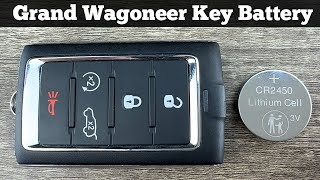
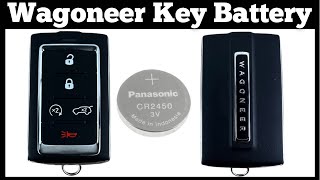
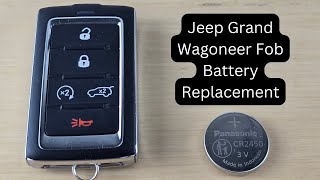
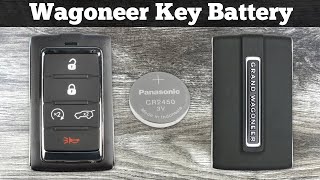
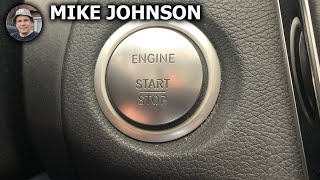
Typical fix: Replace the battery inside the key fob. The correct size for the 2022 Grand Wagoneer is a CR2450. 🎬 See this walkthrough on how to replace your key fob battery.
Est. part cost: $5-$15 - Faulty Key Fob ⚪ Low Probability
How to confirm: If replacing the battery doesn't work and the spare key starts the vehicle, the internal transponder chip in the first key has likely failed.
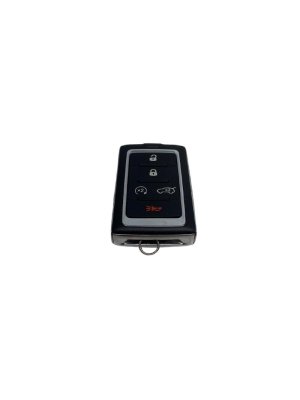
Typical fix: Replace and program a new key fob. This must be done by a dealership or a qualified automotive locksmith. The OEM part number can vary, but examples include 68469565AA and 685169738AA.
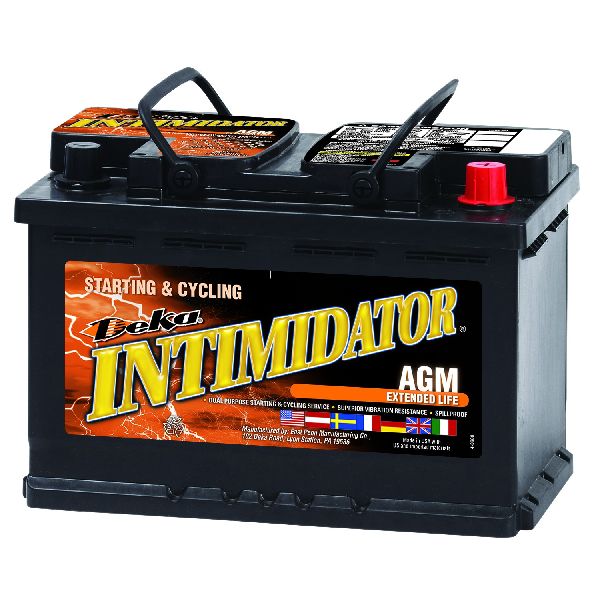
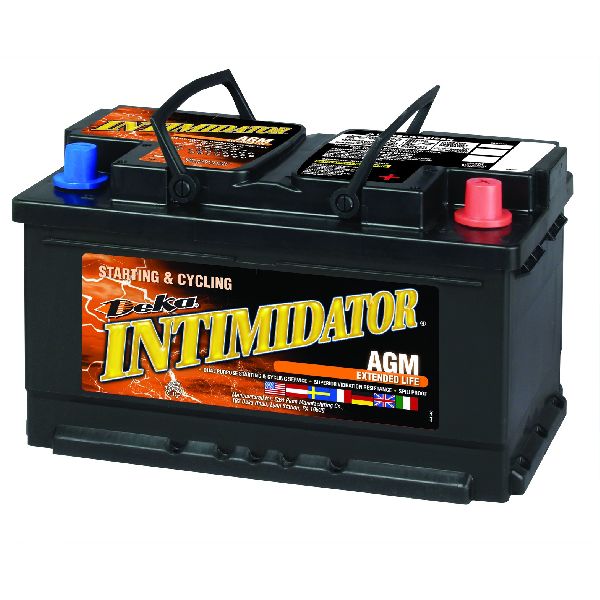
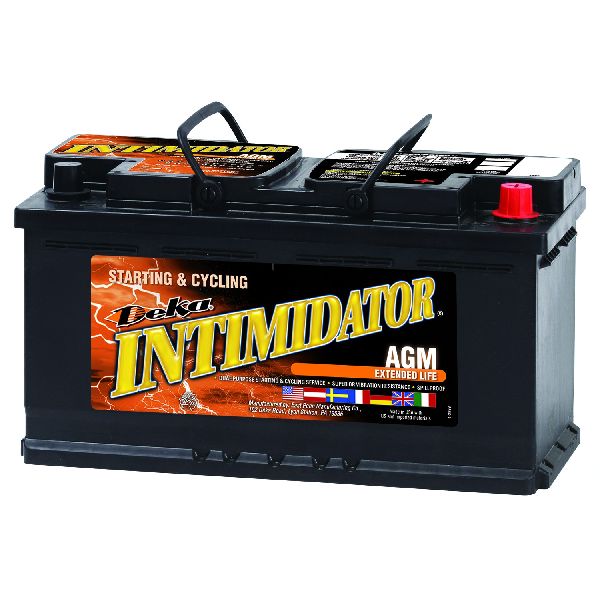
Est. part cost: $200-$400 - Weak Main Vehicle Battery ⚪ Low Probability Modern vehicles with multiple electronic modules are sensitive to low voltage. A weak or recently replaced battery can cause a voltage drop that leads to communication errors between the security modules during startup, triggering a false P0513 code and requiring a module reset.
How to confirm: Test the vehicle's main 12V battery with a multimeter or battery tester. Voltage should be above 12.4V when the vehicle is off. If the code appeared after a jump-start or battery replacement, module desynchronization is likely.
Typical fix: Recharge or replace the vehicle's main battery. A 'Proxy Configuration Alignment' may be required afterward to clear communication faults.
Est. part cost: $200-$400
Rare But Worth Checking
- Faulty Radio Frequency Hub (RFH) or Powertrain Control Module (PCM): While the TSBs point to a programming issue, it's possible the hardware itself has failed. On platform-mate Ram 1500s, the RFH is known to be susceptible to water damage from leaking rear windows, a potential long-term concern. If reprogramming procedures fail repeatedly, a technician will diagnose the RFH and PCM. This is an expensive, last-resort diagnosis.
- Aftermarket Remote Starter or Alarm: Improperly installed aftermarket electronics can interfere with the factory immobilizer system's communication, causing this code to appear intermittently.
- Radio Frequency Interference (RFI): Strong radio signals or other RFID-emitting devices (like building access cards) on the keychain can sometimes interfere with the key-to-vehicle communication, setting a P0513 code. This is rare but can be tested by removing all other items from the keychain. 🎬 Watch: A helpful overview of P0513 causes, symptoms, and fixes.
Diagnosis Steps
- Attempt to start the vehicle with a known-good spare key. If it starts, the problem is with the first key fob.
- If the spare key also fails, replace the battery (CR2450) in one of the key fobs as a low-cost first step.
- For push-button start, hold the nose of the key fob directly against the engine start button and press the button. This can overcome a weak fob battery.
- Check the vehicle's main battery for proper voltage (above 12.4V). A weak battery can cause communication errors.
- If the code appeared immediately after a PCM replacement, software update, or battery change, the vehicle must go to a dealer or qualified shop. Inform them TSB S2208000073 describes the exact issue.
- A professional scan tool is required to run the 'PCM Replaced' routine and/or a 'Proxy Configuration Alignment' to re-sync the modules.
- If reprogramming fails, a technician must diagnose the RF Hub, PCM, and related wiring for faults.
Parts You'll Likely Need
- Key Fob Battery
(OEM #CR2450)— This is the simplest and most common cause if the issue is not related to a recent PCM service.
Trusted brands: Energizer, Duracell, Panasonic
OEM price range: $5-$15
Aftermarket price range: $2-$10 - Key Fob
(OEM #68469565AA / 685169738AA / M3NWXF0B1 (FCC ID))— If the key fob's internal transponder has failed, the entire fob must be replaced and programmed by a dealer or locksmith.
Trusted brands: Mopar
OEM price range: $200-$400
Aftermarket price range: $70-$150 - Powertrain Control Module (PCM) — In rare cases, the PCM itself is faulty. The P0513 code is often a symptom of its replacement, but the module can also be the root cause.
Trusted brands: Mopar
OEM price range: $600-$900
Aftermarket price range: $400-$700
Related Codes That Often Appear With This One
- U-series codes (e.g., U0426) — Communication codes often appear with P0513, indicating a network problem between the PCM, BCM, or RF Hub, which is the root cause of the security handshake failure.
- B-series codes (e.g., B22A9, B389A) — Body Control Module (BCM) codes related to the PCM or key may be present, such as 'VIN Mismatch' or other environment ID codes, pointing towards the desynchronization issue.
Technical Service Bulletins (TSBs) & Recalls
- S2225000003: P0513-Invalid Skim Key setting in the PCM after programming a replacement ?generic? PCM
- S2208000073: No Start, After Flash And Or PCM Replace, DTC P0513 Invalid Skim Key Setting
Platform-Specific Known Issues
- TSB S2225000003: Notes that code P0513 can be set after programming a replacement 'generic' PCM, indicating an 'Invalid Skim Key' setting.
- TSB S2208000073: This is the key document. It addresses a no-start condition with P0513 after a PCM flash or replacement. It details that the PCM's security code defaults, and the 'PCM Replaced' procedure must be run to re-establish the security handshake between the PCM, BCM, and RF Hub, followed by a Proxy Alignment.
Mechanic-Grade Diagnostic Values
- Battery Voltage During Flash/Programming — expected: Maintain between 13.2V and 13.5V. Failure: Dropping below 13.2V or exceeding 13.5V can interrupt the process and corrupt module software.
Hidden / Shadow Codes Worth Checking
- U1517-87 - Body Controller Secret Code-Missing Message: This is a CAN bus communication code logged by the Radio Frequency Hub Module (RFHM) when it does not receive the expected security handshake message from the BCM. It often accompanies P0513 and points directly to the module synchronization issue. (see via A professional scan tool like wiTECH is required to read codes from the RFHM.)
Scan Tool Commands That Help
- wiTECH 2.0: Proxy Configuration Alignment — This is the primary fix. It's used after replacing a module (PCM, BCM, RFH) or after a software flash to force all modules on the network to re-learn the vehicle's configuration from the BCM. The function is found under the 'Vehicle Preparations' tab.
- wiTECH 2.0: PCM Replaced — This routine, found under the BCM's miscellaneous functions, must be run when a new or reflashed PCM is installed. It initiates the process for the BCM and RF Hub to learn the new PCM's security ID. This is a critical step outlined in TSB S2208000073.
- wiTECH 2.0: Restore Vehicle Configuration — In some cases, before a Proxy Alignment, a technician may need to run this routine to restore the BCM's factory configuration data, which can become corrupted. This is found under the 'Guided Diagnostics' tab.
- Autel IM508/IM608, AlfaOBD: Read/Write VIN, Read PIN — Advanced aftermarket tools can be used to read the immobilizer PIN code (also called Global Security Component or GSC PIN) and write the correct VIN to a replacement module. This is necessary if a used PCM is installed, as dealer tools cannot reprogram a used module.
Wiring & Ground Locations
- Body Control Module (BCM) — Located in the driver's side footwell, high up in the dash near the A-pillar. This location makes it vulnerable to water intrusion from a leaking windshield or sunroof drain.. The BCM is a central node in the immobilizer security chain. A communication failure or fault within the BCM itself will prevent the security handshake and trigger P0513.
- Radio Frequency Hub (RFH) Module — On similar Stellantis platforms like the Ram DT, the RF Hub is located behind the rear seats, under the back window. This location is also noted for being susceptible to water damage from leaking third brake lights or rear windows.. The RFH reads the key fob's transponder chip and communicates its validity to the BCM and PCM. A faulty RFH, its wiring, or its antennas will directly cause a P0513 code.
- Main Fuse Boxes — The 2022 Wagoneer has three main fuse box locations: 1) Under the hood, on the right side next to the battery. 2) Inside the cabin, under the dashboard to the right of the steering column. 3) In the rear cargo area, behind a panel on the left side.. A blown fuse for the BCM, PCM, or RF Hub (Keyless Entry module) will cause a no-start and can set a P0513. Checking relevant fuses is a basic but critical diagnostic step.
- Main Engine/Body Ground Straps — Key grounds are located from the battery negative terminal to the inner fender (G101), from the firewall to the engine block, and from the body to the frame.. A corroded or loose ground strap can cause intermittent and difficult-to-diagnose electrical issues, including module communication errors that can lead to a false P0513 code.
Real Owner Repair Stories
- RamForum.com user (2007 Ram 3500 5.9L) — Intermittent no-start with P0513. Key fob would stop working (no lock/unlock), and the engine would shut off after a few seconds. The issue would sometimes resolve temporarily.
❌ Tried (didn't work) Replacing key fob battery., Having a locksmith reprogram both keys., Disconnecting the vehicle battery for a few hours.
✅ What actually fixed it The owner found a corroded battery cable connection at the main fuse panel. Cleaning this connection resolved the issue for several days, indicating the root cause was a poor power supply or ground connection to the security modules, causing intermittent communication failure.
OEM Part Supersession History
Unknown→68245485AE, 68213680AH (example RF Hubs for similar Ram platforms)— Part revisions to address hardware or software issues.
Heads up: Crucially, a used RF Hub module cannot be reprogrammed to a new vehicle, even with dealer tools. A new, unprogrammed ('virgin') module must be purchased for the vehicle to accept the VIN and key programming.
Model Year Variations Within This Range
- 2022-2024: While mechanically similar, the BCM part numbers differ between the Grand Wagoneer (WS) and its platform-mate, the Grand Cherokee (WL). Ensure the correct module is ordered for the specific vehicle model.
Helpful Videos


Used OEM Parts in Stock


New Aftermarket Parts Available


The information in this article is provided for general reference and educational purposes only. Vehicle specifications, procedures, and part compatibility can vary by production date, trim level, and region. Always consult your vehicle's factory service manual and verify part numbers before purchasing or performing repairs. Safety-critical components such as airbags, seat belts, and braking systems should be installed by a qualified professional.
- Jeep GRAND WAGONEER:
- 🎬 Helpful Videos
- 🛍️ Shop This Part
- What's Unique About the 2022-2022 Jeep GRAND WAGONEER
- Diagnostic Flowchart
- Symptoms You May Notice
- Most Likely Causes
- Rare But Worth Checking
- Diagnosis Steps
- Parts You'll Likely Need
- Related Codes That Often Appear With This One
- Technical Service Bulletins (TSBs) & Recalls
- Platform-Specific Known Issues
- Mechanic-Grade Diagnostic Values
- Hidden / Shadow Codes Worth Checking
- Scan Tool Commands That Help
- Wiring & Ground Locations
- Real Owner Repair Stories
- OEM Part Supersession History
- Model Year Variations Within This Range
- 🎟️ Get 5% Off