

P0513 on 2012-2022 Hyundai Veloster: Incorrect Immobilizer Key Causes and Fixes
On a 2012-2022 Hyundai Veloster, P0513 means the car's anti-theft system doesn't recognize the key, causing a no-start condition. The most likely fix is a dead battery in the key fob (a CR2032 coin battery). If that doesn't work, the key fob itself or the immobilizer antenna coil may be faulty.
- P0513 on a Veloster means the car's anti-theft system has been activated and will not allow the engine to run.
- Always start by trying your spare key and then replacing the battery in the malfunctioning key fob (CR2032).
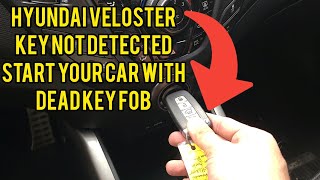
- For push-button start models, you can often start the car with a dead key fob by pressing the start button with the fob itself.
- If simple key
What's Unique About the 2012-2022 Hyundai Veloster
For the Hyundai Veloster, particularly the first generation (2012-2017), immobilizer issues are a relatively common point of discussion among owners. While the causes are typical for most modern cars (key fob battery, antenna), the push-button start system has a specific backup method: pressing the start button directly with the key fob to overcome a dead fob battery. 🎬 Watch: How to start your Veloster with a dead key fob This uses a passive, close-range signal that doesn't require fob battery power. This is a crucial first troubleshooting step before assuming a more significant component has failed. On Hyundai vehicles of this era, failure of the immobilizer antenna coil itself is also a more frequent culprit compared to some other brands.
Generation note: This guide covers the first generation (2012-2017) and the second generation (2019-2022) of the Hyundai Veloster. The immobilizer system functions similarly in both generations, and the common causes and diagnostic steps are largely the same. First-gen models may use a traditional key-in-ignition cylinder, where the antenna is a ring around the cylinder, while later models use a push-button start with a corresponding antenna.
Symptoms You May Notice
- Engine cranks but will not start
- Engine starts and immediately stalls
- Flashing immobilizer/security light on the dashboard (often looks like a car with a key inside it)
- "Key Not Detected" message on the instrument cluster
- Key fob fails to lock or unlock the doors remotely (often indicates a dead fob battery)
- Intermittent starting issues, where the car starts fine on some days but not others
- Replacing the starter motor when the engine cranks but won't start.
- Replacing the main vehicle battery without first checking the key fob battery.
- Assuming the entire BCM or PCM has failed when the issue is a less expensive component like the antenna coil or key fob.
Most Likely Causes
- Dead or Weak Key Fob Battery 🔴 High Probability Key fob batteries have a finite lifespan, typically 2-4 years. This is a common maintenance item and the most frequent cause of P0513.
How to confirm: Try your spare key fob. If it works, the battery in the primary fob is the issue. You can also try starting the car by pressing the start button with the key fob itself; this uses a passive RFID signal that doesn't require battery power. A Reddit user with a 2015 Veloster experienced a no-start with an immobilizer light, and the first suggestion was to try a fresh battery from a different store, as they can sit on shelves for years.
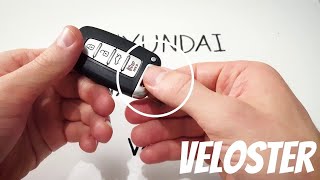
Typical fix: Replace the CR2032 coin battery inside the key fob. 🎬 See this quick key fob battery replacement walkthrough
Est. part cost: $1-$5 - Faulty Key Fob 🟡 Medium Probability Key fobs can be damaged by being dropped, getting wet, or internal electronic failure of the transponder chip over time.
How to confirm: If a new battery doesn't fix the issue and the spare key works perfectly, the original key fob's transponder chip or circuit board is likely damaged. The remote lock/unlock functions may still work even if the transponder chip for starting the car has failed.
Typical fix: The key fob must be replaced and programmed to the vehicle by a dealership or a qualified automotive locksmith with OEM-level tools like an Autel IM608 or similar.
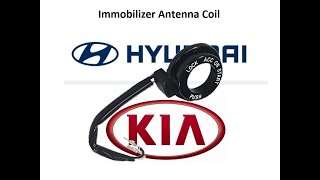
Est. part cost: $150-$400 - Faulty Immobilizer Antenna Coil ⚪ Low Probability The antenna coil, located around the ignition switch or start button, reads the transponder chip in the key. It can fail electronically over time, and this is a known issue on Hyundai/Kia vehicles of this era.
How to confirm: This requires professional diagnosis. A mechanic will use a scan tool to check for communication between the key, antenna, and immobilizer module. If neither key works and the batteries are good, the antenna is a prime suspect.
Typical fix: Replace the immobilizer antenna coil. This part is relatively inexpensive and accessible. 🎬 Watch: How to replace the immobilizer antenna coil
Est. part cost: $50-$100
Rare But Worth Checking
- Faulty Immobilizer Control Module (SMARTRA unit): For the 2012-2015 Veloster, the immobilizer control unit (part number 95420-2V000) can fail. This is less common than key or antenna issues but is a known failure point. Replacement is not plug-and-play and requires programming by a dealer or locksmith with access to security PIN codes.
- Wiring or Connector Issues: A loose or corroded connector between the immobilizer antenna and the Body Control Module (BCM) can interrupt the signal and cause a P0513 code.
- BCM or PCM Programming Error: Rarely, a software glitch or data corruption within the Body Control Module or Powertrain Control Module can cause the vehicle to lose its key programming, especially after a dead battery, jump-start, or PCM reflash. A Stellantis TSB for P0513 confirms that a PCM replacement can default the security code, requiring a 'PCM replacement routine' to re-establish the handshake with the security module.
- Radio Frequency Interference: Other electronic devices or even other keys on the same keychain can interfere with the signal between the key fob and the immobilizer antenna. The owner's manual suggests that if the key isn't recognized, to ensure no other transponder keys or metal objects are near the key when trying to start the car.
Diagnosis Steps
- Try your spare key. If the car starts, the problem is with your primary key fob.
- Replace the battery (CR2032) in the non-working key fob. Ensure it's installed correctly. Try a battery from a different store to rule out a dead-on-shelf battery.
- If the battery is new, try starting the vehicle by pushing the start/stop button with the key fob itself. This can bypass a weak battery signal.
- Check for a flashing security light on the dash. A steady light that goes off after a few seconds is normal, but a flashing light indicates a fault.
- Remove other keys and electronic devices from the keychain to eliminate potential radio frequency interference.
- If neither key works, inspect the vehicle's main battery terminals for corrosion and ensure they are tight. Low system voltage can cause electronic issues.
- After a battery disconnect, a simple reset may be needed. Lock and unlock the doors with the key fob, then try to start the car. Another method is to turn the key to the 'ON' position for 10-15 minutes to allow the system to re-learn the key.
- If the problem persists, use an OBD-II scanner capable of reading security system codes to confirm P0513 and check for related codes like P1690 or P1693.
- At this point, diagnosis of the immobilizer antenna or control module requires specialized tools and should be performed by a professional.
Parts You'll Likely Need
- Key Fob Battery
(OEM #CR2032)— This is the most frequent cause of P0513 and is a simple maintenance item.
Trusted brands: Energizer, Duracell, Panasonic
OEM price range: $5-$10
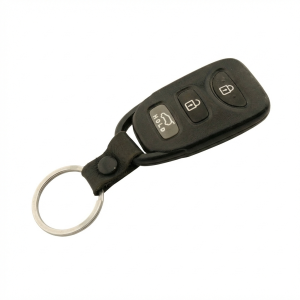
Aftermarket price range: $1-$5 - Key Fob / Smart Key — If the internal transponder chip fails, the entire key fob must be replaced and programmed.
Trusted brands: Hyundai OE
OEM price range: $200-$400
Aftermarket price range: $75-$150 - Immobilizer Control Unit
(OEM #95420-2V000)— This module can fail, preventing the car from reading any programmed keys. This part number is cited for the 2012-2015 Veloster.
Trusted brands: Hyundai OE
OEM price range: $70-$120
Aftermarket price range: $30-$75
Related Codes That Often Appear With This One
- P1690 — This Hyundai-specific code for 'Immobilizer-SMARTRA No Response' often appears with P0513, indicating a communication failure with the immobilizer module, strongly pointing towards the antenna, wiring, or the module itself.
- P1693 — This code for 'Immobilizer Transponder Error' points to a problem reading the key's transponder chip, which is the direct cause of the P0513 code. This could be a bad key, dead fob battery, or RF interference.
Mechanic-Grade Diagnostic Values
- Immobilizer Antenna Coil Resistance — expected: Approximately 8.5 Ω. Failure: An open circuit (infinite resistance) or a significant deviation from the specified value indicates a faulty antenna coil.
- SMARTRA Harness Ground to Chassis Ground — expected: 1 Ω or less. Failure: Higher resistance indicates a poor ground connection, which can cause communication errors.
Scan Tool Commands That Help
- Hyundai GDS (Global Diagnostic System): Key Teaching / Registering Transponder Key — This function is required after replacing a key fob, the SMARTRA immobilizer module, or the ECM. It programs the unique transponder ID of the key(s) to the vehicle's memory. A vehicle-specific 6-digit PIN code is required to access this function.
- Hyundai GDS (Global Diagnostic System): Neutralize SMARTRA / PCM — This function is used to 'virginize' or reset a used ECM or SMARTRA module so it can be programmed to a different vehicle. This is a dealer/specialist-level function and is necessary when installing a non-new module.
- Hyundai GDS (Global Diagnostic System): Vehicle S/W Management — This menu contains special functions, including resetting adaptive values and writing the VIN to a new module, which may be necessary after replacing a control unit related to the immobilizer system.
Wiring & Ground Locations
- GM02 — Top left side of the dash.. This is a primary grounding point for various dash components. A poor connection here could potentially affect the immobilizer module or related circuits.
- GGGT07 — Left side of the engine compartment.. This is a major engine compartment ground. While less direct, poor grounding here can introduce electrical noise and voltage issues that affect sensitive modules like the ECM, which communicates with the immobilizer.
- SMARTRA Module Connector — Typically located around the ignition lock cylinder for keyed models or near the push-start button.. This is the direct connection to the immobilizer antenna and the communication line to the ECM. Checking for power, ground, and signal integrity at this connector is a key diagnostic step. A diagnostic document specifies measuring the antenna coil resistance between the antenna coil (+) and (-) terminals of the SMARTRA harness connector.
Real Owner Repair Stories
- Carly Forum User (2012 Hyundai Veloster, 103,270 km) — Cranks briefly or starts for a split second, then dies. Flashing/erratic security light on the dashboard.
❌ Tried (didn't work) Initial diagnosis was uncertain.
✅ What actually fixed it The key's programming had become corrupted. A workshop reprogrammed the key to the vehicle, which resolved the starting issue for a cost of 45€. - Carly Forum User (Hyundai Veloster (year not specified)) — Cranks but won't start, security light acting weird.
❌ Tried (didn't work) Unspecified initial troubleshooting.
✅ What actually fixed it Disconnecting the main vehicle battery for 30 minutes and reconnecting it. This appeared to reset the immobilizer system and allowed the car to start normally.
OEM Part Supersession History
95420-2V000→N/A— This is the specified Immobilizer Control Unit for the 2012-2015 Hyundai Veloster. No supersession information was found, but it's crucial to note this part is for standard key ignition models, not push-button start.
Heads up: This module must be programmed to the vehicle's keys using a dealer-level scan tool and a security PIN code. It is not a plug-and-play part.
Model Year Variations Within This Range
- 2012-2017 (First Generation): Primarily used the SMARTRA 3 immobilizer system. Models could have either a traditional blade key with the antenna coil around the ignition cylinder or a push-button start with a smart key. The immobilizer control unit (95420-2V000) is specifically listed for 2012-2015 models with a standard key.
- 2019-2022 (Second Generation): Utilizes a more integrated Smart Key system. While the principle is the same (key authentication), the control modules and software are more advanced. DIY programming is generally not possible for these model years; professional programming is required for any key or module replacement.
Diagnostic Flowchart
Other Known Issues on This Vehicle
Issues unrelated to this code that are worth knowing about as an owner of this generation:
- Engine Connecting Rod Bearing Failure (1.6L GDI) 🔴 High — Common in 2012-2016 models, often occurring between 30,000 and 80,000 miles. Preceded by knocking or pinging noises. (Ref: Hyundai Recall 198 (NHTSA Campaign 20V746000) was issued for premature connecting rod bearing wear in 2015-2016 Velosters.)
- Dual-Clutch Transmission (DCT) Problems 🟠 Medium — Affects both 6-speed (Gen 1) and 7-speed (Gen 2 Turbo) models. Symptoms include hesitation from a stop, jerky shifting, shuddering, and overheating warnings. (Ref: Multiple lawsuits and TSBs (e.g., 16-01-035 for related models) have been issued regarding DCT performance.)
- Piston Oil Ring Defects (2.0L Nu MPI) 🔴 High — Affects 2019-2021 models with the 2.0L Nu MPI engine, leading to excessive oil consumption, engine damage, stalling, and risk of fire. (Ref: Hyundai Recall 209 (NHTSA Campaign 21V301000) addresses improperly heat-treated piston oil rings.)
- Peeling Exterior Paint (Especially White) 🟡 Low — Widespread reports of paint, particularly white and pearl white finishes, peeling and flaking off in large sheets across multiple model years. (Ref: Hyundai extended the paint warranty to 10 years/unlimited miles for this issue on many models, though Veloster was not explicitly listed in all announcements, owners have reported the issue.)
- Malfunctioning Speakers 🟡 Low — A common complaint on 2012-2016 models where the audio system speakers stop working intermittently or completely.
Used vs. New Parts: Buying Guide for This Vehicle
When a used part is the smart pick: A used Immobilizer Antenna Coil is a good candidate for a used part. It is a simple electronic component that either works or doesn't, and it does not require programming. It can be sourced from a junkyard vehicle of the same model and generation.
Donor-vehicle mileage cap: roughly under 150000 miles for the part to have meaningful remaining life.
What to inspect on the donor part:
- Ensure the connector pins on the antenna coil are clean, straight, and free of corrosion.
- Check for any cracks or physical damage to the plastic housing.
- Verify the part number matches your original part if possible.
OEM-only on this vehicle (don't cheap out):
- Key Fob / Smart Key
- Immobilizer Control Module (SMARTRA unit)
Brands owners have reported issues with on this vehicle:
- Unbranded Key Fobs from online marketplaces: While cheaper, these often have transponder chips that cannot be programmed correctly to Hyundai vehicles, leading to wasted money and time.
Real Owner Stories
Aggregated from forums and TSBs cited above. Mileages and costs reflect what owners reported in those sources.
2015 Hyundai Veloster
Symptoms: The car had a no-start condition with the immobilizer light on. The owner discovered a temporary workaround involving the gear shifter while troubleshooting the security system.
What fixed it: The community suggested replacing the key fob battery with a fresh one from a different store to rule out a dead-on-shelf battery.
Source hint: r/veloster on Reddit: 'Immobilizer issue?'
Related OBD-II Codes
Frequently Asked Questions
My 2015 Veloster won't start and the immobilizer light is flashing; could it just be the key fob battery?
Is there a way to start my Veloster if the key fob battery is dead and I'm stranded?
I have a 2019 Veloster with the 2.0L engine; is this immobilizer issue related to the piston ring recall?
Can I use a used immobilizer antenna coil from a junkyard Elantra to fix my Veloster?
Does the 2015-2016 Veloster have any recalls that might cause engine issues similar to a no-start?
My Veloster's security light stays on for a few seconds and then goes off. Is this P0513?
Helpful Videos


We Have This Part in Stock

The information in this article is provided for general reference and educational purposes only. Vehicle specifications, procedures, and part compatibility can vary by production date, trim level, and region. Always consult your vehicle's factory service manual and verify part numbers before purchasing or performing repairs. Safety-critical components such as airbags, seat belts, and braking systems should be installed by a qualified professional.
- Hyundai Veloster:
- 🎬 Helpful Videos
- 🛍️ Shop This Part
- What's Unique About the 2012-2022 Hyundai Veloster
- Symptoms You May Notice
- Most Likely Causes
- Rare But Worth Checking
- Diagnosis Steps
- Parts You'll Likely Need
- Related Codes That Often Appear With This One
- Mechanic-Grade Diagnostic Values
- Scan Tool Commands That Help
- Wiring & Ground Locations
- Real Owner Repair Stories
- OEM Part Supersession History
- Model Year Variations Within This Range
- Diagnostic Flowchart
- Other Known Issues on This Vehicle
- Used vs. New Parts: Buying Guide for This Vehicle
- Real Owner Stories
- 2015 Hyundai Veloster
- Related OBD-II Codes
- Frequently Asked Questions
- 🎟️ Get 5% Off