

P0513 on 2015-2018 GMC Yukon: Incorrect Immobilizer Key Causes and Fixes
On a 2015-2018 GMC Yukon, code P0513 is most often caused by specific electrical faults, not a bad key. The most likely culprits are a poor Body Control Module (BCM) ground at location G218 under the dash or corroded wiring in the driver's sill plate. These are well-documented issues covered by GM Technical Service Bulletins and confirmed by widespread owner experiences.
- For a 2015-2018 GMC Yukon, P0513 is most likely an electrical problem, not a key problem.
- Before attempting any expensive repairs, inspect the BCM ground (G218) under the driver's dash for an trapped insulation mat.
- The second most likely cause is corroded wiring under the driver's side door sill plate.
- Do not replace the BCM if the code appeared after a jump start or battery change; a dealer software procedure may be all that is needed.
- Trying a spare key and replacing the key fob battery are easy first steps but are less likely to be the final solution on this specific vehicle.
What's Unique About the 2015-2018 Gmc YUKON
For the 2015-2018 GMC Yukon and its K2XX platform siblings (Tahoe, Suburban, Silverado, Sierra, Escalade), P0513 is frequently a symptom of underlying electrical problems rather than a simple key failure. General Motors has issued multiple Technical Service Bulletins (TSBs) that point to two main weak points: a poor BCM ground (G218) under the driver's side dash where an insulation mat can get trapped, and corroded wiring in the driver's side sill plate area. TSB PIT5391D specifically notes that corroded wires in the sill plate, particularly circuit 5199, can cause a loss of Ignition 1 voltage, leading to P0513 and a no-start condition. These issues disrupt communication between modules, triggering the immobilizer code even with a perfectly good key.
Diagnostic Flowchart
Tap your situation to follow the diagnostic path that matches what you're seeing on this vehicle.
Symptoms You May Notice
- Engine cranks but will not start
- Engine starts and immediately stalls
- Intermittent no-start condition
- Flashing security light on the instrument panel.
- Check Engine Light (Service Engine Soon lamp) is on
- Service Engine Soon lamp may NOT be on when the ignition is in the run position (as noted in TSB PIT5391D).
- Multiple other warning lights, such as "Service Stabilitrak" or "Service 4WD".
- Instrument panel, radio, or HVAC display going blank or resetting (symptom of G218 ground issue).
- Audible clicking from relays in the fuse block.
- Replacing the key fob without checking the battery first.
- Replacing the Body Control Module (BCM) before thoroughly inspecting the G218 ground and driver's sill plate wiring.
- Replacing the ignition switch or immobilizer antenna ring, which are less common failure points than the documented wiring/ground issues.
- Paying for expensive key reprogramming when the root cause is a simple wiring or ground fault.
Most Likely Causes
- Poor Body Control Module (BCM) Ground at G218 🔴 High Probability A factory TSB (PIT5405C, later superseded by 18-NA-161) identifies that the dash insulator mat is often trapped between the ground eyelet and the body, causing a high-resistance connection that creates widespread electrical issues. This is a well-documented factory assembly issue.
How to confirm: Visually inspect the G218 ground stud, located under the driver's side dash near the A-pillar, often behind the kick panel. Check if the black dash insulation foam is caught under the ground's ring terminal. Confirm the 10mm nut is clean and tight. A large number of accompanying 'U' communication codes strongly points to this ground issue.
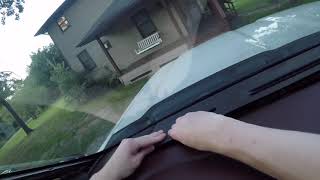
Typical fix: Remove the 10mm nut, pull the insulation mat away from the stud (trimming it if necessary), clean the contact surfaces of the ring terminal and body with a wire brush, and securely retighten the ground nut. 🎬 Watch: How to fix the G218 ground issue on your truck.
Est. part cost: $0-$5 - Damaged or Corroded Wiring in Driver's Sill Plate 🔴 High Probability TSB PIT5391D points to this specific location where moisture can accumulate from wet shoes or leaking door seals, causing corrosion and breaks in the wiring harness that runs along the floor. Circuit 5199 (Ignition 1 voltage) is frequently cited as the specific wire that fails.
How to confirm: Remove the driver's side door sill plate and peel back the carpet to inspect the wiring harness for any signs of green corrosion, chafing, or broken wires. Pay close attention to the bundle of wires and any factory splices.
Typical fix: Repair the damaged section of wire(s) using solder and heat-shrink tubing or appropriate weatherproof butt connectors. Clean any corrosion and ensure the harness is protected from future moisture intrusion.
Est. part cost: $5-$25 - BCM Software Glitch After Low Voltage Event 🟡 Medium Probability TSB 21-NA-277 notes that jump-starting, replacing the battery, or a low voltage event can cause the BCM to lose its key programming, setting a P0513. The bulletin explicitly warns against replacing the BCM for this condition before performing a special recovery procedure.
How to confirm: This is diagnosed if the P0513 code appeared immediately after a battery-related event. A GM dealer tool (GDS2) is needed to confirm the state of the BCM and check for related codes like B3924, B3925, B3926, and B3927.
Typical fix: A special BCM recovery procedure ('Special Data Reset A') must be performed by a dealer or a shop with advanced tools like GM's SPS2 software. This is a software fix and does not involve replacing parts.
Est. part cost: $0 - Weak or Dead Key Fob Battery ⚪ Low Probability
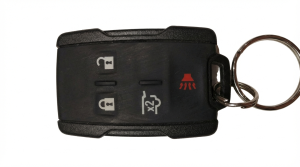
How to confirm: Try starting the vehicle with a spare key. If the spare key works, the issue is with the primary key. Replace the CR2032 battery in the non-working key fob. A 'Key Not Detected' message on the DIC is also a strong clue.
Typical fix: Replace the key fob battery. If the battery is dead, you may still be able to start the vehicle by placing the fob in the designated backup slot in the center console.
Est. part cost: $2-$10
Rare But Worth Checking
- Faulty Key Fob Transponder: While possible, this is less common on this platform than the wiring and ground issues. If a new battery and a relearn procedure don't fix the key, its internal chip may have failed.
- Faulty Body Control Module (BCM): The BCM itself can fail, but this should be considered a last resort after all TSB-related wiring, grounding, and software issues have been ruled out. TSB 21-NA-277 specifically warns against replacing the BCM for a P0513 caused by low voltage.
- Faulty Underhood Fuse Box: In some cases on related GM platforms, internal corrosion or a faulty relay within the underhood fuse block can cause an intermittent no-crank with a P0513, even when the theft-deterrent system itself is functional.
Diagnosis Steps
- Scan for all DTCs in all modules. Pay close attention to any accompanying 'U', 'C', or 'B' codes, or code P262B.
- If possible, try starting the vehicle with a spare key to rule out a single faulty key.
- Replace the battery (CR2032) in the key fob(s) as a simple, low-cost first step.
- Inspect the Body Control Module (BCM) ground at location G218. This is the highest probability fix. Remove the driver's side lower dash trim to access the ground near the A-pillar. Using a 10mm socket, remove the nut and inspect for a trapped insulation mat. Clean all contact surfaces and retighten.
- Remove the driver's side door sill trim and peel back the carpet to inspect the wiring harness running along the floor. Look for any signs of water intrusion, corrosion (green crust), or physical damage to the wires, paying special attention to factory splices.
- If the issue started after a battery replacement or jump start, consult a dealer about performing the BCM recovery procedure outlined in TSB 21-NA-277 before replacing any parts.
- If all wiring and grounds are confirmed good, further diagnosis of the immobilizer antenna, key programming, and BCM itself with a professional scan tool is required.
Parts You'll Likely Need
- Wiring Repair Supplies — To fix corroded or broken wires found in the driver's sill plate harness, which is a common cause identified in TSBs.
Trusted brands: 3M
OEM price range: $5-$25
Aftermarket price range: $5-$25 - Key Fob Battery
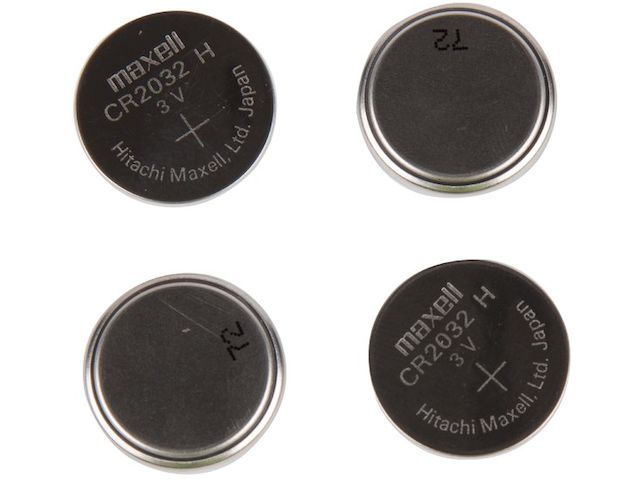
(OEM #CR2032)— A weak battery can cause an intermittent signal, triggering the code. It is the easiest and cheapest potential fix.
Trusted brands: Energizer, Duracell, Panasonic
OEM price range: $5-$15
Aftermarket price range: $2-$10
Related Codes That Often Appear With This One
- P262B — This code is often set with P0513 when the cause is damaged wiring in the driver's sill plate, as noted in TSB PIT5391D.
- U0073, U0100, U0140, etc. — A large number of network communication codes (U-codes) appearing with P0513 is a strong indicator of a systemic electrical problem, most likely the poor G218 ground mentioned in TSB PIT5405C.
- C0364, C0544, C0800 — Various chassis codes (C-codes) related to 4WD, steering, and stability control can also be triggered by the G218 ground fault, appearing alongside P0513.
- B3924, B3925, B3926, B3927 — These BCM codes for 'Environment ID' are explicitly linked with P0513 in TSB 21-NA-277, indicating the BCM software corruption issue after a low voltage event.
Technical Service Bulletins (TSBs) & Recalls
- PIT5405C / 18-NA-161: Cites a poor BCM ground at G218 or a shorted B+ cable as a cause for P0513 and numerous other electrical DTCs and symptoms like blank instrument clusters and service stabilitrak messages.
- PIT5391D: Points to damaged or corroded wiring in the driver's sill plate (specifically circuit 5199) as a cause for a no-crank or start/stall condition with P0513 and/or P262B set.
- 21-NA-277: Details a BCM software corruption issue after a low-voltage event that causes P0513. Warns against replacing the BCM and outlines a special software recovery procedure.
Platform-Specific Known Issues
- This platform is highly susceptible to a poor BCM ground (G218) and sill plate wiring corrosion, which are the primary causes of P0513, rather than actual key failures.
Mechanic-Grade Diagnostic Values
- System Voltage (Key On, Engine Off) — expected: ~12.6 Volts. Failure: Below 12.4V indicates a discharged battery which can cause module communication errors and trigger P0513.
- GDS2 Live Data: Immobilizer Key Status — expected: 'Valid' or 'OK'. Failure: A status of 'Fail' or 'Incorrect' points directly to a key recognition problem.
- GDS2 Live Data: Transponder Challenge Status — expected: 'Pass'. Failure: A 'Fail' status indicates the cryptographic handshake between the key and BCM has failed.
- Voltage at Circuit 5199 (BCM Connector X5, Pin 1, Pink Wire) — expected: Battery Voltage (~12V+) with key in 'RUN' or 'CRANK' position. Failure: 0V or significantly low voltage indicates an open or high resistance in the circuit, likely in the driver's sill plate harness.
Scan Tool Commands That Help
- GDS2: BCM Special Functions > Special Data Reset A — Use this function when P0513 and associated BCM codes (B3924, B3925, etc.) appear after a low voltage event, battery replacement, or jump start. TSB 21-NA-277 advises this software recovery procedure INSTEAD of replacing the BCM.
- GDS2 with SPS2: BCM Programming and Setup — This is required any time the BCM is replaced. The new module must be programmed with the vehicle's VIN and specific configuration using the Service Programming System (SPS2) before it will function correctly.
Wiring & Ground Locations
- G218 — Under the driver's side dashboard, to the left of the steering column, behind the kick panel near the A-pillar. It is a stud with a 10mm nut.. This is the primary ground for the Body Control Module (BCM). A poor connection here, often due to a trapped dash insulator mat, is the most common cause of P0513 and a host of other communication codes on this platform.
- Driver's Sill Plate Harness — Runs in the channel along the floor, underneath the plastic driver's door sill trim plate.. This harness is highly susceptible to moisture and corrosion. Circuit 5199 (typically a pink wire), which provides critical Ignition 1 voltage to the BCM, runs through this harness and is a known failure point documented in TSB PIT5391D.
- X50A — The Underhood Fuse Block, located in the engine compartment on the driver's side.. This is the main power distribution center. Internal corrosion or poor terminal fit on the large connectors underneath the block can cause intermittent power loss to the BCM and other modules, triggering P0513 as an edge-case failure.
Real Owner Repair Stories
- tahoeyukonforum.com user report (2016 GMC Yukon) — Intermittent no-start, P0513 code, along with multiple other communication codes. Sometimes would start, other times would just crank.
❌ Tried (didn't work) Replacing the vehicle battery, Checking the G218 ground (it was clean), Replacing key fob batteries
✅ What actually fixed it The owner pulled up the driver's side sill plate and found multiple corroded wires in the harness. Specifically, a pink wire and an orange wire had green corrosion and were broken. Repairing these two wires with butt connectors and heat shrink solved the no-start condition and all codes disappeared.
OEM Part Supersession History
13580690→13594692 (among others like 13595998, 13509921)— Part revision and consolidation by GM.
Heads up: BCMs for this platform are not plug-and-play. A new or used BCM must be programmed with the vehicle's specific VIN and RPO codes using GM's SPS2 software. Failure to program will result in a no-start and multiple error codes.
Helpful Videos
Used OEM Parts in Stock


New Aftermarket Parts Available


The information in this article is provided for general reference and educational purposes only. Vehicle specifications, procedures, and part compatibility can vary by production date, trim level, and region. Always consult your vehicle's factory service manual and verify part numbers before purchasing or performing repairs. Safety-critical components such as airbags, seat belts, and braking systems should be installed by a qualified professional.
- Gmc YUKON:
- 🎬 Helpful Videos
- 🛍️ Shop This Part
- What's Unique About the 2015-2018 Gmc YUKON
- Diagnostic Flowchart
- Symptoms You May Notice
- Most Likely Causes
- Rare But Worth Checking
- Diagnosis Steps
- Parts You'll Likely Need
- Related Codes That Often Appear With This One
- Technical Service Bulletins (TSBs) & Recalls
- Platform-Specific Known Issues
- Mechanic-Grade Diagnostic Values
- Scan Tool Commands That Help
- Wiring & Ground Locations
- Real Owner Repair Stories
- OEM Part Supersession History
- 🎟️ Get 5% Off