

P0513 on 2022 GMC Terrain: Causes and Fixes for 'Incorrect Immobilizer Key'
On a 2022 GMC Terrain, P0513 almost always indicates a software problem with the Body Control Module (BCM), often triggered by a battery change or jump-start. The fix is typically a software update or reset performed by a dealer, not a parts replacement. Expect to pay for 1-2 hours of shop labor.
- P0513 on a 2022 GMC Terrain is a critical code that will prevent the vehicle from starting.
- The most likely cause is a known software glitch in the Body Control Module (BCM), not a failed part, typically occurring after a battery change or jump-start.
- Before going to a shop, try your spare key and try placing the key in the backup slot in the front cupholder to rule out a simple key fob battery issue.
- Do not let a repair shop replace the BCM without first attempting the specific software recovery procedure detailed in GM TSBs #23-NA-165 and #21-NA-277.
What's Unique About the 2022-2022 Gmc TERRAIN NA
For the 2022 GMC Terrain and its platform mates like the Chevy Equinox, this code is frequently not due to a bad key or a failed part. GM has issued Technical Service Bulletins (TSBs) #23-NA-165 and #21-NA-277 acknowledging that a low-voltage event, such as a battery replacement or jump-start, can cause a "memory corruption event" in the BCM. This software glitch triggers P0513 and a no-start condition. The only fix is a specific reprogramming procedure (like a "Special Data Reset A") performed by a dealer with GM-specific software, which warns against module replacement until the procedure is attempted.
Diagnostic Flowchart
Tap your situation to follow the diagnostic path that matches what you're seeing on this vehicle.
Symptoms You May Notice
- Engine will not crank or start.
- Engine starts and immediately stalls.
- Key fob does not work for locking or unlocking doors (loss of active functions).
- Passive entry and push-to-start functions are inoperative (loss of passive functions).
- Security light may be flashing on the instrument panel.
- Multiple warning messages may appear on the driver information center.
- Replacing the starter motor when the 'no crank' is due to security authorization, not a starter failure.
- Replacing the vehicle's main 12V battery without addressing the underlying BCM software corruption, which can re-trigger the code.
- Replacing the Body Control Module (BCM) before attempting the software recovery procedure outlined in TSBs #23-NA-165 and #21-NA-277.
Most Likely Causes
- Body Control Module (BCM) Software Corruption 🔴 High Probability As documented in GM TSBs #23-NA-165 and #21-NA-277, a low-voltage event (like a battery change or jump-start) can corrupt the memory of the specific GEN3R BCM used in this vehicle, triggering this code without an actual hardware failure.
How to confirm: A GM dealer or a shop with a GDS2 scan tool must check for P0513 along with a specific combination of B-codes (B389A, B3924, B3925, B3926, B3927) as detailed in the TSBs. The problem will persist even with a known-good key and is the confirmed cause if these specific codes are present after a voltage event.
Typical fix: Reprogramming the BCM using a dealer-level procedure called "Special Data Reset A" or "Programming A" via the GM Service Programming System (SPS), followed by an immobilizer relearn. The TSBs explicitly warn against replacing the BCM before this software fix is attempted.
Est. part cost: $0 - Weak or Dead Key Fob Battery 🟡 Medium Probability While less likely to cause P0513 than a software glitch on this specific vehicle, a very weak battery can cause communication issues. It's a simple and cheap first step.
How to confirm: Try the spare key fob. If the spare key works, the issue is with the primary key. You can also try placing the non-working key in the designated backup slot (the pocket in the front cupholder for 2018+ models) which allows the car to start with a dead fob battery.
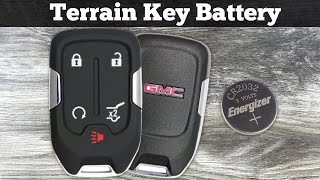
Typical fix: Replace the CR2032 battery inside the key fob. 🎬 Watch: How to replace your GMC Terrain key fob battery.
Est. part cost: $3-$10 - Faulty Key Fob ⚪ Low Probability
How to confirm: If the spare key works and replacing the battery in the primary key does not solve the issue, the transponder chip inside the key fob may have failed or been damaged.
Typical fix: Replace the key fob and have it professionally programmed to the vehicle by a dealer or automotive locksmith.
Est. part cost: $150-$350
Rare But Worth Checking
- Faulty Immobilizer Antenna: The antenna ring that reads the key's signal can fail, but this is much less common than the BCM software issue on this model year. A technician can test the antenna's resistance to rule it out.
- Wiring Harness Issue: A poor connection, damaged wire, or bad ground in the BCM or immobilizer circuits can cause this code, but it's less probable than the known TSB-related issues.
Diagnosis Steps
- Attempt to start the vehicle with the second/spare key fob. If it starts, the problem is isolated to the primary key.
- If the spare key also fails, try placing the key in the vehicle's key fob backup slot (located in the front cupholder pocket on 2018+ models) and attempt to start. This can work even with a weak fob battery.
- As a low-cost measure, replace the CR2032 battery in the key fob.
- If the vehicle still won't start, do not replace any parts. The vehicle must be towed to a GM dealer or a qualified independent shop with GM diagnostic tools (GDS2).
- Provide the service technician with TSB numbers 23-NA-165 and 21-NA-277. This directs them to the known software issue and specific recovery procedure, saving diagnostic time.
- The technician must verify the vehicle has a GEN3R BCM and then follow the GM-specified "Special Data Reset A" or "Programming A" and immobilizer relearn procedure.
- Only if the BCM reprogramming fails should diagnosis of the BCM hardware, immobilizer antenna, and related wiring begin.
Parts You'll Likely Need
- No parts needed - Software Update — The most common fix is a BCM software reflash or recovery procedure performed at the dealership, as specified in GM service bulletins #23-NA-165 and #21-NA-277.
OEM price range: $0
Aftermarket price range: $0 - Key Fob
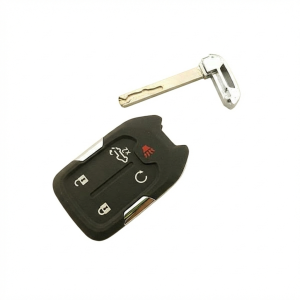
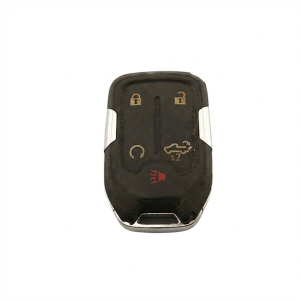
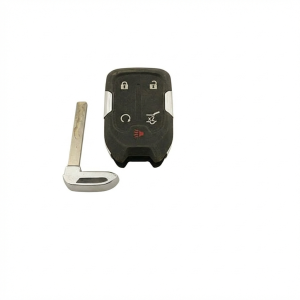
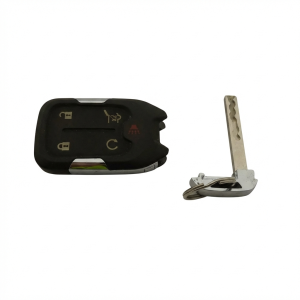
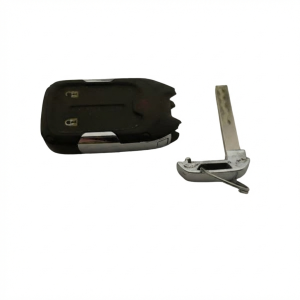
(OEM #13522895)— If one key fails but the spare works, and a battery change doesn't help, the key fob's internal transponder has likely failed. The part number is for a 5-button smart key (FCC ID: HYQ1ES) but should be verified with the vehicle's VIN.
Trusted brands: ACDelco, GMC
OEM price range: $150-$350
Aftermarket price range: $70-$150
Related Codes That Often Appear With This One
- B2924 00 — This code, along with B3925, B3926, and B3927, relates to the keyless entry and start system and is specifically mentioned in TSB #21-NA-277 as appearing alongside P0513 during a BCM memory corruption event.
- B3925 00 — Related to keyless entry antenna circuits and often set in conjunction with P0513 due to the BCM software issue described in TSB #21-NA-277.
- B3926 00 — Another keyless entry system code that points to the same root cause (BCM software) when seen with P0513, per TSB #21-NA-277.
- B3927 00 — Also mentioned in TSB #21-NA-277, this code is part of the suite of errors that can accompany P0513 during the BCM memory corruption event.
- B389A 00 — This DTC is a key indicator of the memory corruption issue described in TSB #21-NA-277 and TSB #23-NA-163. The bulletin notes that if this code is not present, disconnecting the battery for 30 seconds and rechecking may cause it to appear, confirming the condition.
Technical Service Bulletins (TSBs) & Recalls
- 23-NA-165: Addresses loss of active and passive key functions and a no-start condition with P0513.
- 21-NA-277: Addresses no-crank/no-start or start/stall with P0513 and other B-codes set, pointing to a BCM issue.
Platform-Specific Known Issues
- Bulletin #23-NA-165: GM issued this TSB to address a no-crank/no-start condition with P0513 set, caused by BCM memory corruption after a voltage fluctuation. The fix is a specific BCM programming routine called "Special Data Reset A" for GEN3R BCMs.
- Bulletin #21-NA-277: This bulletin addresses a similar no-crank or start/stall condition where P0513 is set along with other B-codes (B3924, B3925, etc.). It warns against replacing modules before following a specific diagnostic and recovery procedure for Gen III BCMs.
Hidden / Shadow Codes Worth Checking
- B3924 00, B3925 00, B3926 00, B3927 00: These are 'Environment ID' DTCs for the keyless entry antennas. TSB #21-NA-277 states that if three or more of these are present and current, it strongly indicates the BCM memory corruption issue. The '00' symptom byte signifies a 'General Electrical Failure'. (see via GM GDS2 or an equivalent professional scan tool capable of reading BCM codes.)
- B389A 00: A key indicator of the BCM memory corruption. TSB #21-NA-277 advises that if this code is not initially present after a no-start event, a technician should disconnect the battery for 30 seconds and recheck. If the code then appears, it confirms the condition described in the bulletin. (see via GM GDS2 or an equivalent professional scan tool.)
Scan Tool Commands That Help
- GM SPS (Service Programming System): K9 Body Control Module > Special Data Reset A — This is the primary, first-step software fix for the BCM memory corruption that causes P0513 after a low-voltage event. It is performed before any key relearn procedure, as specified in TSB #23-NA-165.
- GM SPS (Service Programming System): Immobilizer > Body Control Module IMMO Learn with Existing Transponder or Remote Key — This function must be performed immediately after the 'Special Data Reset A' to re-synchronize the vehicle's original keys with the reset BCM.
- GM GDS2: Module Diagnostics > [K9] Body Control Module > Identification Information — To view the BCM's Base Model Part Number (BMPN) to confirm it is a 'GEN3R' type and is eligible for the TSB repair procedure.
- GM SPS (Service Programming System): K9 Body Control Module > Programming B Per Bulletin 23-NA-163 Only — This is a secondary recovery step used only if an immobilizer learn was previously attempted and failed, but the vehicle now starts with the fob in the backup pocket. This procedure may require new key fobs.
Wiring & Ground Locations
- Body Control Module (BCM) — Inside the passenger cabin, located under the driver's side of the dashboard, often near the steering column and integrated with the interior fuse panel.. The BCM is the module that suffers from memory corruption, stores the related fault codes, and requires reprogramming. Access is needed to verify its part number and connections if software fixes fail.
- Instrument Panel Fuse Block — Under the dashboard on the driver's side, below the steering wheel, behind a removable cover.. Contains fuses that power the Body Control Module. While a blown fuse is not the common cause for this specific software-related issue, checking power to the BCM is a fundamental diagnostic step if the module is unresponsive.
- Engine Compartment Fuse Block — Under the hood, in front of the battery, under a cover with three retaining tabs.. Contains main fuses and relays for the vehicle's electrical systems. A problem here could potentially cause the low-voltage event that triggers the BCM corruption.
- Rear Compartment Fuse Block — In the luggage area, on the left (driver's) side, behind a removable trim panel.. Contains fuses for various body and accessory systems. Less likely to be directly related to P0513 but part of the overall electrical system.
"I Checked Everything" — The Actual Cause
- The most common 'everything checks out but it won't start' scenario for 2018-2022 models is the BCM software corruption detailed in TSBs #21-NA-277 and #23-NA-165. A technician can verify the key fob signal is good, the immobilizer antenna has correct resistance, and all wiring is intact, yet the vehicle will not start due to this internal BCM memory glitch. The cause is not a failed part, but a software state triggered by a past low-voltage event (like a battery change or jump-start), and the only fix is the specific dealer-level software reset procedure.
Model Year Variations Within This Range
- 2022: The issue described in TSBs #21-NA-277 and #23-NA-165 specifically applies to vehicles equipped with a 'GEN3R' Body Control Module. A technician can verify this by checking the label on the module itself or by looking up the Base Model Part Number (BMPN) in the GDS2 scan tool. A list of eligible BMPNs includes 13518569, 13519619, 13527252, 13529492, 13533809, and others. If the BCM is not a GEN3R type, the TSBs do not apply.
Helpful Videos
We Have This Part in Stock

The information in this article is provided for general reference and educational purposes only. Vehicle specifications, procedures, and part compatibility can vary by production date, trim level, and region. Always consult your vehicle's factory service manual and verify part numbers before purchasing or performing repairs. Safety-critical components such as airbags, seat belts, and braking systems should be installed by a qualified professional.
- Gmc TERRAIN NA:
- 🎬 Helpful Videos
- 🛍️ Shop This Part
- What's Unique About the 2022-2022 Gmc TERRAIN NA
- Diagnostic Flowchart
- Symptoms You May Notice
- Most Likely Causes
- Rare But Worth Checking
- Diagnosis Steps
- Parts You'll Likely Need
- Related Codes That Often Appear With This One
- Technical Service Bulletins (TSBs) & Recalls
- Platform-Specific Known Issues
- Hidden / Shadow Codes Worth Checking
- Scan Tool Commands That Help
- Wiring & Ground Locations
- "I Checked Everything" — The Actual Cause
- Model Year Variations Within This Range
- 🎟️ Get 5% Off