

P0513 on 2022 Dodge Durango: Causes and Fixes for Invalid Key & No-Start
P0513 on a 2022 Dodge Durango means the anti-theft system doesn't recognize your key, causing a no-start or start-and-stall condition. This often happens after a software update or PCM replacement and requires a key reprogramming procedure at a dealership or by a qualified locksmith. Before towing, always try a spare key and consider replacing the key fob's CR2032 battery.
- P0513 means your Durango's anti-theft system has locked the engine because it doesn't recognize the key.
- The vehicle will not run, so this is a critical, non-drivable condition.
- Before calling for a tow, try your spare key. If it works, your primary key is the problem. The next step is to replace the CR2032 battery in the non-working key fob.
- If you recently had the engine computer (PCM) serviced or replaced, the fix is likely a simple reprogramming procedure that the shop needs to perform, as outlined in TSB S2208000073.
- Due to the need for specialized security programming, this is not a DIY-friendly repair beyond trying a spare key or replacing the key fob battery.
What's Unique About the 2022-2022 Dodge DURANGO
For the 2022 Dodge Durango and its platform mates like the Jeep Grand Cherokee, this code is specifically called out in a Technical Service Bulletin (TSB) related to software updates and module replacements. The TSB #S2208000073 highlights that P0513 can be set after flashing or replacing the PCM if the security information is not properly synchronized. This is because the process defaults the PCM's security data, and a specific "PCM Replaced" routine must be run with a dealer tool like wiTECH to restore the security code and re-establish the handshake between the PCM, Body Control Module (BCM), and the Radio Frequency Hub (RF Hub). This points to a procedural sensitivity in the modern Durango's complex, multi-module electronic security system.
Diagnostic Flowchart
Tap your situation to follow the diagnostic path that matches what you're seeing on this vehicle.
Symptoms You May Notice
- Engine cranks but will not start
- Engine starts and immediately stalls (usually within 2 seconds)
- Security indicator light on the dashboard is illuminated or flashing
- No-crank, no-start condition in some cases
- Key fob remote functions (lock/unlock) may not work
- Replacing the starter motor or main battery without checking for security codes first. The symptoms (crank-no-start) can be similar, but the presence of P0513 points specifically to the anti-theft system.
- Assuming the key fob is bad when the real issue is a failed 'PCM Replaced' procedure after a recent software update.
Most Likely Causes
- Improper Procedure After PCM Flash or Replacement 🔴 High Probability As documented in TSB S2208000073, if the 'PCM Replaced' routine isn't performed after a software update or PCM swap, the security handshake between modules fails, triggering P0513. The PCM's security data is not automatically transferred and must be manually synchronized.
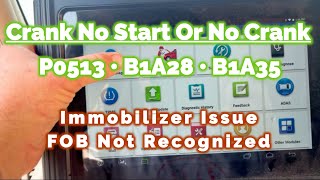
How to confirm: Review the vehicle's recent service history. If the PCM was recently worked on (software update or physical replacement), this is the most likely cause. A dealer-level scan tool will show a mismatch between the PCM, BCM, and RF-Hub, likely accompanied by code B1A28 in the RF-Hub. 🎬 Watch: Diagnosing a no-start with P0513 and B1A28 codes.
Typical fix: Perform the 'PCM Replaced' routine using a dealership-level scan tool (wiTECH) to synchronize the security code between the PCM, BCM, and RF Hub. This is followed by a 'Proxy Configuration Alignment'.
Est. part cost: $0 - Faulty or Weak Key Fob 🟡 Medium Probability Key fobs contain a battery and a delicate transponder chip. The battery can die, or the chip can be damaged from being dropped or from age.
How to confirm: The easiest way to check is to try starting the vehicle with a spare key. If the spare key works, the problem is with the original key. You can also try replacing the key fob battery (CR2032) as a first step. 🎬 See this quick walkthrough for replacing your key fob battery.
Typical fix: Replace the key fob battery (CR2032). If that fails, the entire key fob needs to be replaced and programmed to the vehicle by a dealer or locksmith.
Est. part cost: $5-$450 - Faulty Wireless Control Module (WCM) / Radio Frequency Hub (RFH) ⚪ Low Probability The RF Hub is the receiver that reads the key's signal. These modules can fail electronically, preventing them from communicating with the key or the PCM. This is a known issue on related Stellantis platforms.
How to confirm: This requires a professional scan tool to check for communication with the RF Hub and to see if it is receiving the key's signal. A lack of communication or specific RFH-related trouble codes points to a faulty module or wiring.
Typical fix: Replace the Radio Frequency Hub (RFH) and program it to the vehicle, along with all existing keys. This procedure requires dealer-level tools.
Est. part cost: $200-$500
Rare But Worth Checking
- Low Vehicle Battery Voltage: A weak main vehicle battery can cause various communication errors between modules during startup, including the security handshake that prevents P0513. One owner on a Reddit forum reported that a P0513 on a similar Jeep platform was ultimately caused by a dead vehicle battery, despite the symptoms pointing to a complex security issue.
- Radio Frequency Interference (RFI): Strong radio signals from other devices on a keychain (like office access cards) or aftermarket electronics can sometimes interfere with the key fob's signal, causing a temporary P0513. Try starting the vehicle with only the key fob present.
- Aftermarket Remote Starter Issues: Improperly installed aftermarket remote start systems that bypass the factory immobilizer can fail and cause a P0513 code. A user on Reddit with a Jeep experienced this exact issue.
Diagnosis Steps
- Verify the P0513 code is present using an OBD-II scanner. Note if it is active or stored.
- Check the instrument cluster for a flashing or solid security light (often a red dot).
- Try starting the vehicle with a known-good spare key. If it starts, the issue is with the primary key.
- If the spare key doesn't work, replace the battery in the original key fob (confirmed to be a CR2032) and try again.
- Isolate the key fob from any other fobs, access cards, or electronics on the keychain to rule out Radio Frequency Interference (RFI) and try again.
- Review the vehicle's service history. If the PCM was recently flashed or replaced, the vehicle must be taken to a dealer to have the proper 🎬 Watch: Why PCM replacement and programming can sometimes fail. 'PCM Replaced' procedure performed per TSB S2208000073.
- If there is no recent service, have a professional use an advanced scan tool (like AlfaOBD or wiTECH) to check for communication between the key, the Radio Frequency Hub (RFH), and the PCM. Check for related codes like B1A28-00 in the RFH module.
- If the RFH is not communicating, inspect its wiring and connectors for damage or corrosion. If wiring is good, the RFH module itself is likely faulty.
- If all modules are communicating, the final step is to attempt to reprogram the keys. If they fail to program, a faulty key or RFH is confirmed.
Parts You'll Likely Need
- Key Fob Battery
(OEM #CR2032)— This is the simplest and most common failure point for a key fob that is otherwise functional. A weak battery can fail to transmit the correct security code.
Trusted brands: Energizer, Duracell, Rome Tech
OEM price range: $5-$10
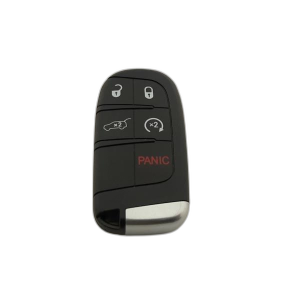
Aftermarket price range: $2-$8 - Key Fob with Integrated Key
(OEM #68477911AC (replaces 68477911AA))— If the internal transponder chip is damaged, the entire key fob must be replaced and programmed.
Trusted brands: Mopar
OEM price range: $150-$250
Aftermarket price range: $100-$250 - Radio Frequency Hub (RFH)
(OEM #68572594AA)— This module is the receiver for the key's signal. It's a known failure point that can cause P0513. Replacement requires professional programming.
Trusted brands: Mopar
OEM price range: $200-$500
Aftermarket price range: $150-$350
Related Codes That Often Appear With This One
- B1A28-00: ECM MISMATCH WITH SKIM (stored in RF Hub)
- U0426-62: MiniKrypt Error Signal Compare Error
Technical Service Bulletins (TSBs) & Recalls
- S2208000073: No Start, After Flash And Or PCM Replace, DTC P0513 Invalid Skim Key Setting.
Platform-Specific Known Issues
- TSB S2208000073 explicitly states that a P0513 code and a no-start condition can occur after flashing software to the PCM or replacing the PCM if the correct key/security relearn procedure is not followed.
- A thread on RamForum.com for a platform-mate vehicle details a frustrating, intermittent P0513 issue that was temporarily resolved by cleaning a corroded battery cable to the fuse panel, highlighting the system's sensitivity to voltage and clean connections.
Hidden / Shadow Codes Worth Checking
- B1A28-00: ECM Mismatch With SKIM. This code is set in the Radio Frequency Hub (RFH) or equivalent security module when it receives a mismatching security code from the PCM during the startup handshake. It directly indicates the reason P0513 is being set in the PCM. (see via A professional-level scan tool like wiTECH or AlfaOBD that can read codes from all vehicle modules, not just the PCM.)
Scan Tool Commands That Help
- wiTECH 2.0: PCM Replaced — This function is mandatory after replacing or reflashing the PCM. It is located under the BCM or WCM 'Miscellaneous Functions' and is used to transfer the vehicle's secret security key from the immobilizer module to the PCM, allowing them to synchronize. The TSB for P0513 on this vehicle directly calls for this procedure.
- wiTECH 2.0: Proxy Configuration Alignment — This routine should be performed after a 'PCM Replaced' procedure. It updates the vehicle's configuration data (VIN, sales codes, etc.) across all modules on the CAN bus network, ensuring they all recognize the new or updated PCM correctly.
- wiTECH 2.0 / Advanced Scanners: Network Test (Bus Diagnostics) — For intermittent P0513 issues, this function checks the communication status of all modules on the network. It can help identify if the RF Hub, BCM, or another module is intermittently dropping off the network, pointing towards a wiring or module health issue rather than just a key problem.
Wiring & Ground Locations
- Radio Frequency Hub (RFH) — Located behind the left rear cargo quarter trim panel in the 2022 Durango.. This is the module that receives the signal from the key fob. Physical access is required to inspect its connectors for corrosion or damage, or to replace the module itself, which is a potential cause of P0513.
- Body Control Module (BCM) — Located high in the driver's side dashboard, above the pedals and under the steering column area. It is held in by four 10mm nuts and has multiple large connectors.. The BCM is a central node in the security handshake. While less likely to fail than the RFH, its wiring and connectors can be a source of communication issues. The 'PCM Replaced' routine is often initiated from the BCM menu in the scan tool.
- Alternator / Engine Block Ground Straps — On similar 3.6L and 5.7L engines, ground straps are located on the passenger side near the alternator and motor mount, with one specific thin strap sometimes attaching directly to a post on the back of the alternator.. Poor grounding can cause unstable voltage and communication errors between modules. An intermittent P0513 without a clear cause can sometimes be traced back to a loose or corroded ground strap affecting the PCM, BCM, or RFH.
Real Owner Repair Stories
- YouTube channel 'Global Commerce CA' (Dodge Caliber (related platform with similar SKIM system)) — No-crank, no-start with a flashing security light and active P0513 code.
❌ Tried (didn't work) Attempting to re-program the original key failed. The scan tool showed 'learning status of current key: no', indicating the vehicle was rejecting it.
✅ What actually fixed it A new key was cut and successfully programmed to the vehicle using an Autel IM608. The car started immediately, proving the original key's transponder chip was internally defective, even though a handheld tool could still read its ID. - Reddit user in r/Wrangler (2013 Jeep Wrangler JK (related platform)) — Check engine light with code B1A28 'ECM mismatch with SKIM' and a flashing red security light.
❌ Tried (didn't work) Considering replacing the keyless RFID module (WIN/RFH) and having it programmed by the dealer., Changing batteries in both key fobs did not resolve the issue.
✅ What actually fixed it The problem was resolved by replacing the ignition switch itself (Dorman 924-727). This was a ~$25 part and did not require any reprogramming of modules.
When the Usual Fixes Don't Work
- While Pass 2 correctly identifies a 'Faulty Key Fob' as a common cause, a deeper look reveals a significant nuance: a key can be faulty even if a handheld transponder tool reads its chip ID successfully. The failure can be in the key's ability to complete the secure cryptographic handshake, not just its ability to broadcast an ID, as shown in a real-world repair where only a new, reprogrammed key fixed the issue.
- Pass 2 points to complex module failures (RFH, PCM) as a primary cause after ruling out the key. However, an edge case on a related platform shows that a simple, inexpensive ignition switch can fail and produce the exact same 'ECM Mismatch' codes (like B1A28), mimicking a much more complex and expensive module or programming failure.
OEM Part Supersession History
Unknown→68572594AA— This is the current Mopar part number for the Radio Frequency Hub (Receiver) listed for a 2022 Dodge Durango.
Heads up: Part number must be matched exactly when replacing security modules like the RF Hub. Using a part from a different model year or with different options (e.g., with/without remote start) can cause programming to fail.
Helpful Videos
Used OEM Parts in Stock



New Aftermarket Parts Available



The information in this article is provided for general reference and educational purposes only. Vehicle specifications, procedures, and part compatibility can vary by production date, trim level, and region. Always consult your vehicle's factory service manual and verify part numbers before purchasing or performing repairs. Safety-critical components such as airbags, seat belts, and braking systems should be installed by a qualified professional.
- Dodge DURANGO:
- 🎬 Helpful Videos
- 🛍️ Shop This Part
- What's Unique About the 2022-2022 Dodge DURANGO
- Diagnostic Flowchart
- Symptoms You May Notice
- Most Likely Causes
- Rare But Worth Checking
- Diagnosis Steps
- Parts You'll Likely Need
- Related Codes That Often Appear With This One
- Technical Service Bulletins (TSBs) & Recalls
- Platform-Specific Known Issues
- Hidden / Shadow Codes Worth Checking
- Scan Tool Commands That Help
- Wiring & Ground Locations
- Real Owner Repair Stories
- When the Usual Fixes Don't Work
- OEM Part Supersession History
- 🎟️ Get 5% Off