

P0507 on 2010-2017 Volvo XC60: High Idle Causes and Fixes
On a 2010-2017 Volvo XC60, code P0507 is almost always caused by a failed PCV oil trap diaphragm, creating a vacuum leak. This is often accompanied by a loud squealing noise from the engine. Replacing the PCV assembly is the typical fix, costing between $100-$250 for the part.
- The most probable cause of a P0507 code on a 2010-2017 Volvo XC60 is a failed PCV oil trap, identifiable by a loud squealing noise from the engine.
- The issue is common across all engine variants of this generation (3.2L, T6, and 2.0L Drive-E) and also affects other Volvo models using these engines.
- Diagnosis is straightforward: listen for the squeal and check for strong vacuum at the oil filler cap. If present, the PCV assembly needs replacement.
- The repair is DIY-friendly for many home mechanics and the part is widely available.
- The code is often accompanied by P0171 (System Too Lean) due to the unmetered air entering the engine from the PCV leak.
What's Unique About the 2010-2017 Volvo XC60

For this generation of Volvo XC60, across all its engine options (3.2L I6, 3.0L T6, and 2.0L Drive-E), the P0507 code is overwhelmingly linked to the failure of the PCV system, also known as the oil trap. A diaphragm inside this assembly tears, creating a significant vacuum leak that the system cannot compensate for. This failure is so common that a distinct high-pitched squeal from the engine bay is a well-documented symptom that points directly to this root cause.
Generation note: The 2010-2017 model years cover the entire first generation of the Volvo XC60. However, this period includes different engine families: the 6-cylinder SI6 engines (3.2L and 3.0L T6) used until 2016, and the 4-cylinder Drive-E engines introduced around 2014. While the root cause is often the PCV system for all engines, the specific parts and part numbers differ.
Symptoms You May Notice
- Check Engine Light is on
- Engine idle speed is higher than normal, or fluctuates
- A loud, high-pitched squealing or whistling noise from the engine, especially at idle
- Car may feel like it's pulling forward at a stop
- Rough or unstable idle
- Sluggish acceleration followed by a lurch of power
- Replacing the Mass Airflow (MAF) sensor. A faulty MAF sensor is unlikely to cause a high idle with a loud squeal; these symptoms point more directly to a large vacuum leak.
Most Likely Causes

- Failed PCV Oil Trap Assembly (Torn Diaphragm) 🔴 High Probability The rubber diaphragm inside the PCV assembly becomes brittle with age and heat cycles, eventually tearing. This creates a large, unmetered vacuum leak directly into the intake manifold.
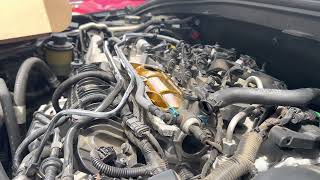
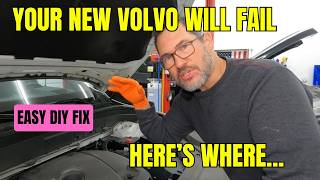
How to confirm: Listen for a loud squeal from the top of the engine. With the engine running, try to remove the oil filler cap. If it is held on by strong vacuum or the squealing noise stops when the cap is removed, the PCV diaphragm is torn. 🎬 Watch: Easy DIY steps to diagnose and repair the PCV trap. A smoke test will also show smoke billowing from the PCV assembly.
Typical fix: Replace the entire PCV oil trap assembly. While some have replaced just the diaphragm cap with aftermarket parts, the complete assembly is the official and most reliable repair. Real-World Repair Story: A 2018 Volvo V90 T6 owner with an identical engine design experienced a squeal, creeping idle, and codes P0507 and P0171. They confirmed that replacing the PCV oil trap kit from a parts supplier like FCP Euro completely resolved the issue.
Est. part cost: $100 - $250 - Leaking EVAP Purge Valve ⚪ Low Probability
How to confirm: A smoke test is the most effective method. With the smoke machine connected to the EVAP system or intake, check for smoke leaking from the purge valve when it is commanded closed. A diagnostic video for a newer Volvo showed this exact issue causing a P0507.
Typical fix: Replace the faulty EVAP purge valve.
Est. part cost: $40 - $100 - Dirty Electronic Throttle Body ⚪ Low Probability Carbon can build up over many miles (typically over 100k) and prevent the throttle plate from closing completely at idle.
How to confirm: Remove the air intake hose connected to the throttle body and visually inspect the throttle plate and bore for significant carbon buildup that could prevent the plate from closing completely.
Typical fix: Clean the throttle body bore and plate with a dedicated throttle body cleaner and a soft cloth 🎬 Watch: How to clean the throttle body to fix idle issues. or brush. A throttle relearn procedure may be required after cleaning.
Est. part cost: $10 - $20 (for cleaner)
Rare But Worth Checking
- Cracked or Disconnected Vacuum Hose: While the PCV system is the most common leak source, any other vacuum hose connected to the intake manifold could crack or become disconnected, causing the same symptoms. A thorough visual inspection and smoke test are key.
- Torn Check Valve in Intake Resonator (2.0L Drive-E): On some 2.0L Drive-E engines, a small check valve/screen where the PCV hose connects to the intake air resonator can tear, causing a vacuum leak. This was documented on a 2015 XC60 and a newer XC90.
- Intermittent Sensor or Electrical Issue: In rare cases, the P0507 code may not be caused by a vacuum leak. One owner of a 2017 S60 T5 reported an intermittent high idle that occurred only in cold weather and was not resolved by replacing the PCV box or the EVAP purge valve, suggesting a more complex sensor or software-related issue.
Diagnosis Steps

- Scan the vehicle for any other stored trouble codes. Note if codes like P0171 are present.
- Start the engine and listen for a loud, high-pitched squeal coming from the top of the engine near the oil filter housing.
- If the squeal is present, carefully attempt to loosen the oil filler cap. If there is strong suction or the noise changes/stops, the PCV oil trap diaphragm has failed. Proceed to replace the assembly.
- If no noise is present, the next step is to perform a smoke test. Introduce smoke into the intake system and look for leaks from any vacuum hoses, the intake manifold gaskets, the EVAP purge valve, and the PCV assembly itself.
- If no vacuum leaks are found, inspect the electronic throttle body for carbon buildup that may be holding the throttle plate open.
- Inspect the air intake tract, especially on 2.0L models, for any torn boots or failed check valves, paying close attention to the port where the PCV hose connects to the air inlet resonator.
Parts You'll Likely Need

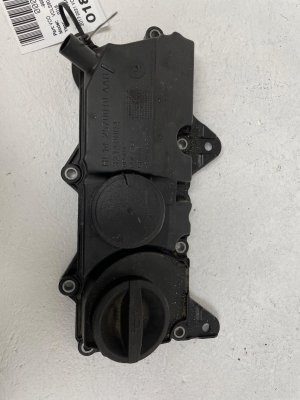
- PCV Oil Trap / Valve Cover (for 3.2L & 3.0L T6)
(OEM #31319642)— This is the most common failure point for P0507 on the 6-cylinder engines. The integrated diaphragm tears, causing a massive vacuum leak.
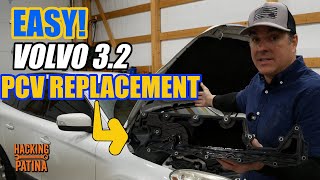
Trusted brands: Genuine Volvo, Febi, Professional Parts Sweden 🎬 See this simple walkthrough for replacing the 3.2L oil trap.
OEM price range: $180-$250
Aftermarket price range: $100-$150 - PCV Oil Trap / Oil Separator (for 2.0L Drive-E)
(OEM #32140004)— This is the equivalent part for the 4-cylinder Drive-E engines. The diaphragm can fail in a similar manner to the 6-cylinder version.
Trusted brands: Genuine Volvo
OEM price range: $150-$200
Aftermarket price range: $75-$120 - Supercharger Intake Pipe (for 2.0L Drive-E)
(OEM #31338660)— A check valve diaphragm within this pipe can tear, causing P0507 on the 2.0L engines. The entire pipe assembly must be replaced.
Trusted brands: Genuine Volvo
OEM price range: $100-$150
Aftermarket price range: N/A
Related Codes That Often Appear With This One
- P0171 — System Too Lean (Bank 1). The unmetered air from the vacuum leak creates a lean air/fuel mixture, which the oxygen sensors detect, often triggering P0171 alongside P0507.
Technical Service Bulletins (TSBs) & Recalls
- Volvo FSB 284-064, FSB 284-065, FSB 284-066: These bulletins reference a fix for P0507 on 2015-2017 models via an ECM/ACM software reprogram. However, these appear to apply to Volvo heavy-duty truck chassis, not the XC60 passenger vehicle, so their relevance is questionable but worth noting for dealer-level diagnostics.
- TSB Bulletin #KC-187: This manufacturer bulletin notes that DTC P0507 can light the Malfunction Indicator Lamp (MIL) on certain Volvo chassis with non-common rail fuel systems, specifically referencing emissions standards for model years starting in 2015.
Mechanic-Grade Diagnostic Values
- Electronic Throttle Body Motor Resistance — expected: 2 to 15 Ohms. Failure: An open circuit (infinite resistance) or a short circuit (less than 1 Ohm) indicates a failed motor.
- Short-Term Fuel Trim (STFT) / Long-Term Fuel Trim (LTFT) — expected: Close to 0% at idle on a healthy engine.. Failure: Consistently high positive fuel trims (e.g., > +10%) indicate the ECM is adding fuel to compensate for unmetered air (a vacuum leak), which is the root cause of P0507.
Scan Tool Commands That Help
- Volvo VIDA/DICE: Adaptation of the throttle unit — This function must be run after cleaning or replacing the electronic throttle body. It allows the ECM to relearn the throttle plate's closed and open positions. Failure to perform this adaptation can result in erratic idle, poor performance, and persistent codes even with a new part.
Wiring & Ground Locations
- Main Engine Ground Strap — Typically runs from the engine block to the chassis/body, often near the passenger side strut tower or firewall.. A corroded or loose main engine ground can cause erratic behavior from all engine sensors, including the crank sensor and throttle body, potentially leading to incorrect idle speed calculations and codes like P0507.
- Strut Tower Grounds — Multiple M6 ground posts are located on both the driver and passenger side strut towers in the engine bay.. These are central grounding points for various components and harnesses. Ensuring they are clean and tight is a critical first step in diagnosing any electronic issue, as a bad ground here can cause unpredictable problems.
Real Owner Repair Stories
- Reddit user on r/VolvoXC90 (2020 Volvo XC90 T6 (Drive-E Engine)) — P0507 code (high idle) that kept returning.
❌ Tried (didn't work) Replacing the PCV oil trap assembly., Performing a smoke test, which found a small EVAP pipe leak that was repaired but did not fix the P0507.
✅ What actually fixed it The oil separation screen/check valve located inside the engine air inlet resonator, where the breather hose attaches, was torn. The owner purchased a new resonator assembly (approx. $110-$160) just to harvest the small internal valve and install it into the original resonator, which resolved the code. - Reddit user on r/Volvo (2018 XC60 T5) — Intermittent P0507 code, high idle that comes and goes, only occurs during cold months.
❌ Tried (didn't work) Smoke test (no leaks found)., Replacing the PCV box., Replacing the EVAP purge valve.
✅ What actually fixed it The issue was never resolved. The owner noted the high idle stops if the 'auto hold' feature is engaged. This story serves as a valuable counter-example where the most common fixes do not work, pointing to a more complex intermittent sensor, wiring, or software issue. - Reddit user on r/Volvo (2018 Volvo V90 T6 (identical engine design)) — Loud squealing noise, creeping idle at stops, codes P0507 and P0171.
✅ What actually fixed it Replacing the PCV oil trap kit (including hoses) completely fixed all symptoms and codes. This confirms the classic failure pattern.
"I Checked Everything" — The Actual Cause
- A 2020 XC90 T6 owner had a P0507 that persisted after replacing the PCV assembly. A smoke test did find and lead to the repair of a leaky EVAP hose, but this did not fix the P0507 code. The actual cause was a torn check valve inside the air inlet resonator, a location a smoke test may not easily identify as the leak is internal to the intake tract.
- An owner of a 2018 XC60 T5 had their mechanic perform a smoke test which came back clean, finding no vacuum leaks. Despite this, the car continued to set an intermittent P0507 code in cold weather, even after replacing the PCV and purge valve, indicating the cause was not a standard vacuum leak.
When the Usual Fixes Don't Work
- While the vast majority of P0507 codes on this platform are caused by the PCV system, there are documented cases where this is not the root cause. One owner of a 2018 XC60 T5 diligently replaced the PCV box and the EVAP purge valve, and had a smoke test performed which found no leaks, yet the intermittent high idle in cold weather persisted. This suggests that in rare instances, the cause could be a faulty sensor providing incorrect temperature or pressure data, or a software anomaly within the ECM that only manifests under specific environmental conditions.
OEM Part Supersession History
30731234, 30757662, 30788481→31319642— Part revision/update for the PCV Oil Trap / Valve Cover for 3.2L & 3.0L T6 engines.31316184, 31430236, 31430923, 31670210, 32242753→32140004— Part revision/update for the PCV Oil Trap / Oil Separator for 2.0L Drive-E engines.
Model Year Variations Within This Range
- 2010-2016 (approx.): Models with the 3.2L I6 and 3.0L T6 engines use the PCV assembly integrated into the valve cover, part number 31319642.
- 2014-2017 (approx.): Models with the 2.0L Drive-E four-cylinder engines use a separate PCV oil separator, part number 32140004. These engines are also susceptible to a torn check valve inside the air inlet resonator, which can cause P0507.
Diagnostic Flowchart

Other Known Issues on This Vehicle
Issues unrelated to this code that are worth knowing about as an owner of this generation:
- Excessive Oil Consumption (2.0L Drive-E Engines) 🔴 High — A widespread and well-documented problem primarily affecting 2015-2016 model year 4-cylinder Drive-E (VEA) engines. Caused by carbon clogging low-tension piston rings, leading to oil burning. Consumption can start around 70,000-80,000 miles. (Ref: Volvo TSB TJ 31233; Extended Warranty Program P10207 (8 years/100,000 miles) for piston/ring replacement.)
- Automatic Transmission Shifting Problems 🟠 Medium — Owners report issues across multiple model years, including erratic or delayed shifting, hesitation, and occasional slipping or grinding noises. Often first noticed as rough or jerky shifts.
- Oil Consumption (3.2L SI6 Engines) 🟠 Medium — Some owners of the 3.2L naturally aspirated engine, particularly 2010-2012 models, report oil consumption issues, though it is considered much less common than the Drive-E problem. It is often attributed to piston rings and may be mitigated by shorter oil change intervals (5,000-7,500 miles).
- Failing Tailgate Lift Motors 🟡 Low — A common annoyance where the power tailgate may become stiff, fail to open/close, or the lifting arms break. A recall was issued for some 2017-2019 models due to the tailgate lifting arm potentially separating from the vehicle. (Ref: Recall issued for some model years for tailgate lifting arm separation.)
Used vs. New Parts: Buying Guide for This Vehicle
When a used part is the smart pick: For this specific P0507 repair, buying used parts is generally not recommended for the primary failure items. However, for secondary diagnostic steps, a used throttle body or sensor from a reputable recycler with a warranty could be a cost-effective option if you suspect those parts are faulty.
Donor-vehicle mileage cap: roughly under 60000 miles for the part to have meaningful remaining life.
What to inspect on the donor part:
- For a throttle body, ensure the seller guarantees it is functional and not electronically 'locked' to the donor vehicle.
- Verify the donor vehicle's mileage; lower is always better for electronic components.
- Ask for clear photos to check for physical damage or corrosion on connectors.
OEM-only on this vehicle (don't cheap out):
- PCV Oil Trap / Oil Separator: The failure mode is a torn rubber diaphragm due to age and heat cycles. A used part has unknown remaining life and is a very poor value, as it is likely to fail soon after installation. Always buy this part new.
Aftermarket brands forum-validated for this vehicle:
- Febi
- Professional Parts Sweden (Proparts)
Brands owners have reported issues with on this vehicle:
- Unnamed, no-brand diaphragm-only repair kits from online marketplaces are a gamble; the rubber quality may be poor, leading to premature failure. The complete assembly is the more reliable repair.
Real Owner Stories
Aggregated from forums and TSBs cited above. Mileages and costs reflect what owners reported in those sources.
2018 Volvo V90 T6 (Shared Engine Design)
Symptoms: Squeal, creeping idle, and codes P0507 and P0171.
What fixed it: Replacing the PCV oil trap kit from a parts supplier like FCP Euro.
Source hint: Reddit r/Volvo thread titled 'Squealing, Creeping Idle, and P0507 P0171 on 2018 V90 T6'
2018 Volvo XC60 T5 Inscription
Symptoms: Accelerator would start sluggish then lurch with power; Check engine light came on.
What fixed it: PCV assembly replacement (confirmed by community as the most likely culprit for these symptoms).
Source hint: Reddit r/Volvo thread titled 'PCV replacement on 2018 XC60 T5 Inscription'
2017 Volvo S60 T5 Inscription
Symptoms: Increased/higher idle and P0507 code that persisted even after replacing the PCV and purge valve.
What fixed it: The source indicates this was a rarer, intermittent issue possibly related to sensors or cold weather, as standard fixes failed.
Source hint: Reddit r/Volvo thread titled 'P0507 on 2017 S60 T5 - Not the PCV or Purge Valve'
Related OBD-II Codes
Frequently Asked Questions
Why is my XC60 making a loud whistling noise along with the P0507 code?
Do Volvo TSBs 284-064, 284-065, or 284-066 apply to my XC60's high idle issue?
How can I tell if the PCV diaphragm is the cause of my high idle without tools?
Could a dirty throttle body be causing the P0507 code on my high-mileage Volvo?
Is there an extended warranty for issues related to the 2.0L Drive-E engine in my XC60?
Can I just replace the PCV cap instead of the whole assembly?
Helpful Videos


We Have This Part in Stock



The information in this article is provided for general reference and educational purposes only. Vehicle specifications, procedures, and part compatibility can vary by production date, trim level, and region. Always consult your vehicle's factory service manual and verify part numbers before purchasing or performing repairs. Safety-critical components such as airbags, seat belts, and braking systems should be installed by a qualified professional.
- Volvo XC60:
- 🎬 Helpful Videos
- 🛍️ Shop This Part
- What's Unique About the 2010-2017 Volvo XC60
- Symptoms You May Notice
- Most Likely Causes
- Rare But Worth Checking
- Diagnosis Steps
- Parts You'll Likely Need
- Related Codes That Often Appear With This One
- Technical Service Bulletins (TSBs) & Recalls
- Mechanic-Grade Diagnostic Values
- Scan Tool Commands That Help
- Wiring & Ground Locations
- Real Owner Repair Stories
- "I Checked Everything" — The Actual Cause
- When the Usual Fixes Don't Work
- OEM Part Supersession History
- Model Year Variations Within This Range
- Diagnostic Flowchart
- Other Known Issues on This Vehicle
- Used vs. New Parts: Buying Guide for This Vehicle
- Real Owner Stories
- 2018 Volvo V90 T6 (Shared Engine Design)
- 2018 Volvo XC60 T5 Inscription
- 2017 Volvo S60 T5 Inscription
- Related OBD-II Codes
- Frequently Asked Questions
- 🎟️ Get 5% Off