

P0507 on 2019-2021 Ram 1500: Causes and Fixes for High Idle Speed
On a 2019-2021 Ram 1500, code P0507 indicates the engine is idling higher than the computer expects. The most common causes are vacuum leaks from cracked hoses (especially PCV lines) or a dirty electronic throttle body. Cleaning the throttle body, performing a throttle relearn procedure, or finding and fixing a vacuum leak often resolves the issue.
- P0507 means your Ram's engine is idling too fast.
- The most likely cause is unmetered air entering the engine, either from a vacuum leak or a dirty throttle body that can't close properly.
- Start your diagnosis by inspecting for obvious cracked vacuum hoses and cleaning the electronic throttle body.
- A smoke test is the most reliable way to find a hidden vacuum leak.
- Replacing a bad PCV valve is an inexpensive and easy potential fix.
What's Unique About the 2019-2021 Ram 1500

The 5th Generation Ram 1500 (DT) uses a sophisticated electronic throttle body to manage idle speed. Unlike older trucks with a separate Idle Air Control (IAC) valve, idle control is integrated into the main throttle body assembly. This design means that carbon buildup on the throttle plate or issues with the throttle motor itself are common culprits for P0507. Additionally, vacuum leaks, a frequent cause of high idle on any vehicle, can be tricky to find among the numerous hoses on the 5.7L Hemi or 3.6L Pentastar engines. A key step after cleaning the throttle body or disconnecting the battery is performing a throttle relearn procedure to reset the learned idle values in the PCM.
Diagnostic Flowchart
Tap your situation to follow the diagnostic path that matches what you're seeing on this vehicle.
Symptoms You May Notice
- Check Engine Light is on.
- Engine idling higher than normal (e.g., above 800 RPM in Drive, sometimes spiking to 1500+ RPM).
- Rough or fluctuating idle.
- Harsh engagement when shifting from Park into Drive or Reverse.
- Increased fuel consumption.
- Vehicle may feel like it's 'pushing' against the brakes when stopped.
- Replacing the throttle body when it only needed to be cleaned and have a relearn procedure performed.
- Replacing sensors like the MAP or O2 sensors without first checking for vacuum leaks.
- Assuming an aftermarket throttle body is plug-and-play without confirming if it requires special tuning, as some owners have found it can cause this code.
Most Likely Causes


- Vacuum Leak 🔴 High Probability Engines have numerous vacuum hoses for systems like the PCV (Positive Crankcase Ventilation) and brake booster. Over time, these rubber and plastic hoses can crack, become disconnected, or get damaged during other maintenance. The PCV hose and intake manifold gaskets are frequent sources of leaks.
How to confirm: Visually inspect all vacuum lines connected to the intake manifold for cracks or loose fittings. Listen for a hissing sound with the engine running. A smoke test, where smoke is fed into the intake system, is the most effective way to pinpoint a leak. 🎬 See how to find hidden vacuum leaks using a smoke test. Another method is to carefully spray carburetor cleaner near suspected leak points; a change in idle RPM indicates a leak.
Typical fix: Replace the cracked or leaking hose. A common culprit is the crankcase breather hose or the short hose connected to the PCV valve.
Est. part cost: $15-$75 - Dirty or Faulty Electronic Throttle Body 🔴 High Probability Carbon and oil vapor from the PCV system can build up around the throttle plate, preventing it from closing completely. This allows excess unmetered air to enter the engine, raising the idle speed.
How to confirm: Remove the air intake tube from the throttle body and inspect the throttle plate and bore for black carbon buildup. 🎬 Watch: How to clean your Hemi throttle body and reset it.
Typical fix: Clean the throttle body bore and plate with a dedicated throttle body cleaner and a soft cloth. After cleaning, a throttle relearn procedure is often necessary. In some cases, the entire electronic throttle body assembly may need to be replaced if the internal motor or sensors have failed.
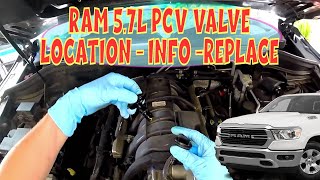
Est. part cost: $10 (cleaner) - $450 (replacement part) - Faulty PCV Valve 🟡 Medium Probability The PCV valve can get stuck open, creating a constant vacuum leak that pulls unmetered air into the intake manifold. This is a common and inexpensive part to fail.
How to confirm: Remove the PCV valve and shake it; if it doesn't rattle, it's likely stuck. You can also check for strong, continuous suction at the valve with the engine idling.
Typical fix: Replace the PCV valve. This is a low-cost and simple repair. 🎬 Watch this easy tutorial on replacing your Hemi PCV valve.
Est. part cost: $25-$65 - Needs Idle Relearn Procedure 🟡 Medium Probability After disconnecting the battery, cleaning the throttle body, or replacing related components, the PCM's learned idle position can be lost. Without performing a relearn, the PCM may not be able to control the idle speed correctly, causing it to be too high.
How to confirm: This is typically suspected if the P0507 code appeared immediately after a battery replacement or throttle body service.
Typical fix: Perform a manual throttle relearn procedure. This usually involves a sequence of turning the ignition on (without starting), waiting for about 10 seconds, and then idling the engine. A scan tool can also force a relearn.
Est. part cost: $0
Rare But Worth Checking
- Failing Alternator: A failing alternator can cause erratic voltage, which may confuse the PCM and lead to incorrect idle commands. This is less common but has been noted as a possible cause.
- PCM Software Issue: As noted in TSB #08-037-21, software updates can sometimes resolve idle speed inconsistencies, particularly on 2021 models with the 3.6L eTorque engine. This would require a visit to a dealer or a qualified shop with the ability to flash the PCM.
- Leaking Intake Manifold Gaskets: While less common than hose leaks, the intake manifold gaskets can fail and create a significant vacuum leak, leading to a P0507 code. This is often confirmed with a smoke test.
Diagnosis Steps
- Check for any other stored trouble codes that could point to a related issue. A sensor-specific code could be the root cause.
- With a scan tool, observe the live data for target idle RPM vs. actual idle RPM. A significant and consistent difference confirms the high idle condition.
- Visually inspect the entire air intake system from the air filter to the throttle body for loose connections or cracks.
- Carefully inspect all vacuum hoses connected to the intake manifold, including the PCV hose, brake booster line, and any lines for the EVAP system.
- If no visible leaks are found, perform a smoke test to identify hard-to-see vacuum leaks, paying close attention to the intake manifold gaskets and PCV system.
- Remove the air intake duct and inspect the electronic throttle body for carbon buildup. Clean it thoroughly with appropriate cleaner if it's dirty.
- After cleaning the throttle body or if the battery was recently disconnected, perform the throttle relearn procedure.
- Inspect and test the PCV valve to ensure it is not stuck open. It should rattle when shaken.
- If all else fails, check for available PCM software updates from the manufacturer, as mentioned in TSBs.
Parts You'll Likely Need

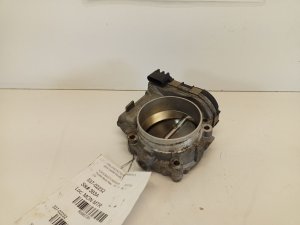
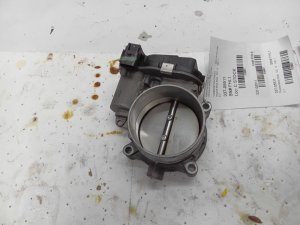
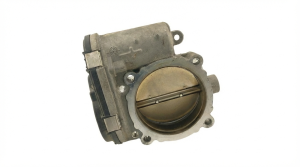
- Electronic Throttle Body
(OEM #68425322AB (5.7L Hemi, example))— If cleaning doesn't resolve the high idle, the internal electronics or motor may have failed, requiring a full replacement.
Trusted brands: Mopar, Standard Motor Products, Hitachi
OEM price range: $250-$450
Aftermarket price range: $150-$250 - PCV Valve
(OEM #53032940AB (5.7L Hemi) / 68083202AC (3.6L V6))— A common failure point that can get stuck open, creating a vacuum leak that causes a high idle. It is an inexpensive and easy part to replace as a first step.
Trusted brands: Mopar, Standard Motor Products
OEM price range: $25-$65
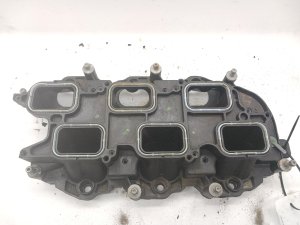
Aftermarket price range: $15-$30 - Intake Manifold Gaskets — If a vacuum leak is traced to the intake manifold itself, the gaskets will need to be replaced. This is more labor-intensive.
Trusted brands: Mopar, Fel-Pro, Mahle
OEM price range: $40-$80
Aftermarket price range: $20-$50
Related Codes That Often Appear With This One
- P0506 — This code for 'Idle Speed Performance Lower Than Expected' can appear with P0507 if the idle control system is behaving erratically, as mentioned in TSB #08-037-21 for certain 2021 models.
- P2172 — This code for 'High Airflow/Vacuum Leak Detected' often accompanies P0507 because a vacuum leak is a primary cause for both codes, as seen in TSB #S2105000002.
- P04FC — This code relates to the cold start idle air control system and can be triggered alongside P0507, indicating a broader issue with unmetered air entering the engine, as noted in TSB #S2105000002.
Technical Service Bulletins (TSBs) & Recalls

- 08-037-21: Mentions P0507 - Idle Speed Performance Higher Than Expected as part of a group of codes that may be resolved with a PCM software update on 2021 3.6L eTorque models.
- S2105000002: Groups P0507 with P04FC and P2172, indicating a likely unmetered air or vacuum leak issue.
Platform-Specific Known Issues
- TSB #08-037-21 notes that on 2021 Ram 1500s with the 3.6L eTorque engine, P0507 can be set along with several other codes and may be addressed by a PCM software update.
- TSB #S2105000002 links P0507 with codes P04FC and P2172, suggesting a common root cause related to unmetered air entering the engine, possibly due to a vacuum leak.
- Owners on forums frequently report that a simple throttle body cleaning followed by a manual relearn procedure resolves the code without needing to replace parts.
Mechanic-Grade Diagnostic Values
- Normal Engine Idle Speed — expected: 600-800 RPM once warm. Failure: Consistently 100-200 RPM or more above the target idle speed set by the PCM.
- Throttle Body Connector Voltage Supply — expected: 5.0 Volts. Failure: Significantly lower or no voltage on the supply pin indicates a wiring or PCM issue.
- Throttle Body Connector Pinout (6-Pin Connector, example from 4.7L) — expected: Pin 1: TP Sensor Signal, Pin 2: 5V Supply, Pin 3: ETC Motor (+), Pin 4: TP Sensor 2 Signal, Pin 5: Sensor Return/Ground, Pin 6: ETC Motor (-).. Failure: Incorrect voltage readings, open, or shorted circuits on any of these pins when testing.
Scan Tool Commands That Help
- OEM Scan Tool (wiTECH, DRB IIIt): ETC Learn (Electronic Throttle Control Learn) — This function should be used after cleaning or replacing the throttle body, or after disconnecting the battery, to force the PCM to relearn the throttle's home and range-of-motion electrical parameters.
- Professional Aftermarket Scan Tool: Idle Relearn / Throttle Actuator Control (TAC) Relearn / Idle Air Volume Learn — Used to reset and recalibrate the idle speed after repairs. The name varies by tool manufacturer but performs the same essential function as the OEM command.
Wiring & Ground Locations
- Electronic Throttle Body Connector — Directly on the electronic throttle body, where the engine air intake tube connects.. This 6-pin connector provides all power and signal communication to the throttle body. A poor connection, corrosion, or damaged wire here can directly cause P0507. Checking for the 5V reference voltage at this connector is a key diagnostic step.
Real Owner Repair Stories
- Comment on YouTube video by '8020 Automotive' (Not specified, but applicable to many vehicles with cable-actuated cruise control.) — High idle at 1500 RPM, P0507 code.
❌ Tried (didn't work) Replaced throttle position sensor, Replaced idle air valve, Replaced crank/cam shaft sensors, Cleaned throttle body, Performed smoke test for vacuum leaks (none found)
✅ What actually fixed it The cruise control cable next to the throttle cable was adjusted too tightly, physically preventing the throttle from closing completely. Loosening the cable resolved the high idle.
"I Checked Everything" — The Actual Cause
- A mechanical issue was preventing the throttle plate from fully closing. In one documented case, a cruise control cable was adjusted too tightly, physically holding the throttle slightly open and causing a high idle, even though the system had no vacuum leaks.
Model Year Variations Within This Range
- 2019: As the first model year of the 5th generation, owner forums report that 2019 models are more prone to general issues and 'kinks' compared to the 2021 models, which had two years of production refinements.
- 2021: TSB #08-037-21 specifically addresses P0507 on the 2021 Ram 1500 with the 3.6L eTorque engine, indicating that a PCM software update may be the required fix, which is not noted for other years or engines.
Helpful Videos

Used OEM Parts in Stock


New Aftermarket Parts Available


The information in this article is provided for general reference and educational purposes only. Vehicle specifications, procedures, and part compatibility can vary by production date, trim level, and region. Always consult your vehicle's factory service manual and verify part numbers before purchasing or performing repairs. Safety-critical components such as airbags, seat belts, and braking systems should be installed by a qualified professional.
- Ram 1500:
- 🎬 Helpful Videos
- 🛍️ Shop This Part
- What's Unique About the 2019-2021 Ram 1500
- Diagnostic Flowchart
- Symptoms You May Notice
- Most Likely Causes
- Rare But Worth Checking
- Diagnosis Steps
- Parts You'll Likely Need
- Related Codes That Often Appear With This One
- Technical Service Bulletins (TSBs) & Recalls
- Platform-Specific Known Issues
- Mechanic-Grade Diagnostic Values
- Scan Tool Commands That Help
- Wiring & Ground Locations
- Real Owner Repair Stories
- "I Checked Everything" — The Actual Cause
- Model Year Variations Within This Range
- 🎟️ Get 5% Off