

P0507 on 2003-2007 Nissan Murano: High Idle Causes and Fixes
On a 2003-2007 Nissan Murano, P0507 almost always means the engine is idling too high because the throttle body was recently cleaned or replaced. The fix is typically not a new part, but performing an 'Idle Air Volume Learning' procedure, which is free to do manually but can be tricky and may require multiple attempts.
- If you have a P0507 code after cleaning the throttle body or performing related maintenance, do not buy any parts yet.
- The first and most important step is to perform the 'Idle Air Volume Learning' (IAVL) procedure.
- The manual IAVL procedure is free but requires precise timing. Watch a video guide carefully before attempting it.
- If the relearn doesn't work, then investigate for vacuum leaks, particularly from the PCV valve and intake hoses, before condemning the expensive throttle body.
What's Unique About the 2003-2007 Nissan Murano

The VQ35DE engine in the first-generation Murano is very sensitive to changes in airflow at the throttle body. Over time, carbon builds up, and the ECM adapts by opening the throttle slightly more to maintain the correct idle. When the throttle body is cleaned or replaced, the sudden increase in airflow overwhelms the ECM's learned adjustments, causing a persistent high idle (often 900-1200 RPM) and triggering the P0507 code. This makes the 'Idle Air Volume Learning' (IAVL) procedure a uniquely common and critical fix for this specific vehicle and its platform mates.
Symptoms You May Notice
- Check Engine Light is on
- Engine idle speed is noticeably high (e.g., 800-1200 RPM when it should be ~650 RPM).
- Rough or surging idle.
- Increased fuel consumption.
- Vehicle may feel like it's pushing forward slightly when stopped
- Engine may idle around 900-1000 RPM in Park/Neutral and drop to 750 RPM in Drive.
- In some cases, the vehicle may stall in slow traffic or lose power during acceleration, as noted in NHTSA ODI #11725159.
- Replacing the electronic throttle body when it only needs cleaning and an idle relearn.
- Replacing the Mass Airflow (MAF) sensor, assuming it's misreading airflow.
- Searching for a vacuum leak when the root cause is the ECM needing to relearn the idle parameters after a cleaning.
Most Likely Causes

- Needs Idle Air Volume Learning (IAVL) Procedure 🔴 High Probability This is the most common cause, especially after the throttle body has been cleaned, disconnected, or replaced. The ECM's learned memory for the old, dirty throttle body doesn't match the new, higher airflow, requiring a reset.
How to confirm: This issue will almost always appear immediately after service was performed on the throttle body, intake system, or even after a battery disconnect.
Typical fix: Perform the three-step relearn process: Accelerator Pedal Released Position Learn, Throttle Valve Closed Position Learn, and Idle Air Volume Learning (IAVL). This can be done with a professional scan tool or via a specific manual sequence of key turns and pedal presses.
Est. part cost: $0 - Dirty Electronic Throttle Body 🟡 Medium Probability Carbon and gunk can build up on the throttle plate and bore, preventing the plate from closing completely. This allows excess air to enter the engine, raising the idle speed.
How to confirm: Visually inspect the inside of the throttle body by removing the air intake tube. Look for a black ring of carbon where the throttle plate seats.
Typical fix: Clean the throttle body bore and plate with a dedicated throttle body cleaner and a soft cloth. Do not spray cleaner directly into the unit, as it can damage electronics. After cleaning, an Idle Air Volume Learning procedure is almost always required.
Est. part cost: $5-$15 - Vacuum Leak ⚪ Low Probability Aging rubber hoses and plastic intake components can crack, allowing unmetered air to enter the engine after the mass airflow sensor. This extra air leans out the mixture and raises the idle. Common leak points include the PCV hose, brake booster line, and intake manifold gaskets.
How to confirm: Listen for hissing sounds around the engine bay at idle. You can also carefully spray short bursts of brake cleaner or use a smoke machine around vacuum lines and gaskets; a change in idle RPM or visible smoke indicates you've found the leak.
Typical fix: Identify and replace the cracked vacuum hose, faulty PCV valve, or leaking gasket (e.g., intake manifold gasket).
Est. part cost: $10-$150
Rare But Worth Checking
- Faulty Electronic Throttle Body: While cleaning is the usual fix, the electronic motor or position sensor within the throttle body can fail, requiring complete replacement. NHTSA ODI #11727964, though involving a different model, highlights that P0507 can be directly linked to a fractured internal gear in the Electric Throttle Control Actuator. Manually forcing the throttle plate open during cleaning can sometimes damage the internal gears.
- Faulty PCV Valve: A PCV (Positive Crankcase Ventilation) valve that is stuck open will create a significant vacuum leak, leading to a high idle. It's an inexpensive part to check and replace.
- Low Battery Voltage: Nissan TSBs and service procedures note that low battery voltage can cause the P0507 code or prevent the IAVL from completing successfully. Before performing the IAVL, ensure the battery is fully charged (above 12.9 volts at idle) and in good health.
Diagnosis Steps

- Scan for codes. Confirm P0507 is present and note any other codes, like P0101. A report in NHTSA ODI #11558644 mentions P0507 appearing alongside P061B (Torque Management) and P0101 (Mass Air Flow).
- Ask about recent service history. Has the throttle body been cleaned, battery replaced, or have spark plugs been changed recently? If yes, the Idle Air Volume Learning procedure is the most likely fix.
- Check Battery Voltage. Ensure battery voltage is above 12.9V at idle before proceeding, as low voltage can prevent the relearn from working.
- Inspect the throttle body. Remove the intake boot and check for carbon buildup. If it's dirty, clean it thoroughly with throttle body cleaner on a rag. Be aware that this will likely make the high idle worse until the relearn is performed.
- Perform the Full Relearn Procedure. This is the most critical step. It consists of three parts: Accelerator Pedal Released Position Learn, Throttle Valve Closed Position Learn, and finally the Idle Air Volume Learning (IAVL). 🎬 See how to fix high idle surges with this relearn It can be attempted manually (often requires precise timing and multiple tries) or performed instantly with a capable scan tool.
- Check for vacuum leaks. If the IAVL procedure does not resolve the issue, perform a smoke test or carefully use brake cleaner to check for leaks from hoses (PCV, brake booster), the intake manifold gaskets, and the air intake tube itself.
- Inspect the PCV valve. Remove the valve (often located on the passenger side valve cover) and shake it. If it doesn't rattle, it's likely stuck and should be replaced.
- Test the electronic throttle body. If all else fails, the throttle body itself may have an internal fault (motor or sensor) and require replacement.
Parts You'll Likely Need
- Idle Air Volume Learning Procedure — This is not a physical part, but a software recalibration that is the most common solution. It resets the ECM's learned values for the throttle position after cleaning or replacement.
OEM price range: $0 (manual) - $150 (dealer)
Aftermarket price range: $0 - Electronic Throttle Body
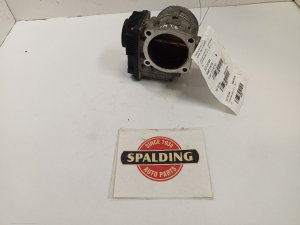
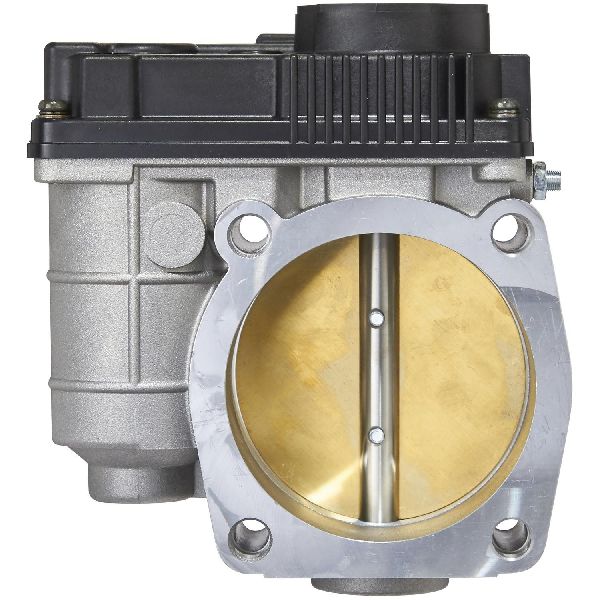
(OEM #16119-AE013)— If cleaning and relearning fail, the throttle body assembly itself may be faulty. It is often replaced after being misdiagnosed as faulty when it only needed a relearn. The Hitachi ETB0004 is a common aftermarket replacement.
Trusted brands: Hitachi, Bosch, Cardone
OEM price range: $400-$600
Aftermarket price range: $150-$250 - PCV Valve
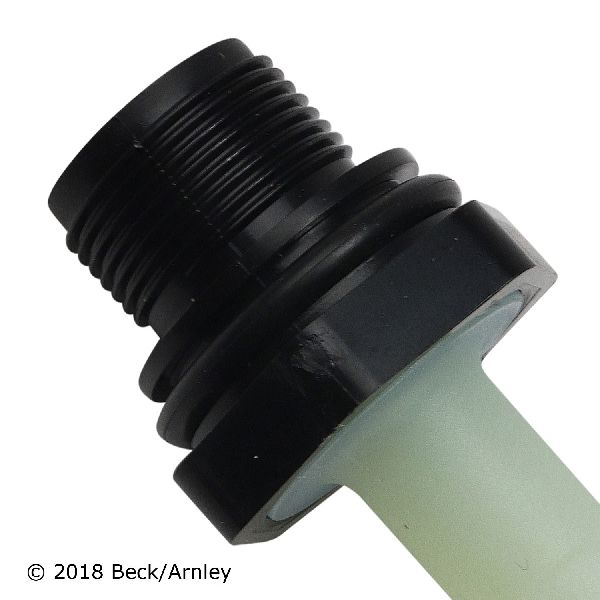
(OEM #11810-EA200 (or 11810-8J102))— A stuck PCV valve can cause a vacuum leak, leading to a high idle. It is an inexpensive and easy part to replace during diagnosis.
Trusted brands: Standard Motor Products, WVE, Beck/Arnley
OEM price range: $15-$30
Aftermarket price range: $5-$15
Related Codes That Often Appear With This One
- P0101 — A Nissan TSB links P0507 with P0101 (Mass Air Flow 'A' Circuit Range/Performance). The bulletin states that a weak battery or the need for an Idle Air Volume Learn procedure can trigger one or both codes, and the prescribed fix is to test the battery, erase codes, and perform the IAVL.
- P1800 — On some models, a P1800 for the variable intake air system can appear alongside P0507. A faulty solenoid valve for the intake manifold runner control can contribute to idle issues.
- P0223 and P2135 — Manufacturer Bulletin #NTB21-080 notes that P0507 may be stored in the ECM alongside P0223 (Throttle Position Sensor 1) or P2135 (Throttle Position Sensor Correlation).
Technical Service Bulletins (TSBs) & Recalls
- NTB21-049: Addresses MIL ON with DTC P0101 and/or P0507. The prescribed fix is to first test the 12-volt battery, recharge or replace if necessary, erase codes, and then perform an Idle Air Volume
- Bulletin #NTB21-080: This manufacturer bulletin addresses cases where the MIL is on and P0507 is stored in the ECM, potentially in conjunction with P0223 or P2135.
Platform-Specific Known Issues
- The manual Idle Air Volume Learning procedure for this vehicle is notoriously difficult to perform correctly, often requiring multiple attempts. The timing of the pedal presses is critical and all preconditions (engine temp, electrical loads off, wheels straight) must be met.
- Some owners have reported success in resetting the ECM and forcing an idle relearn by disconnecting the negative battery terminal for an extended period (e.g., overnight or 24 hours), though this is not the official procedure and success varies.
- A user on Matt's Bucket blog detailed a frustrating experience where multiple manual relearn attempts failed. The final fix that worked was disconnecting the battery for 24 hours to fully erase the ECM's memory, which then allowed it to relearn the idle automatically.
Mechanic-Grade Diagnostic Values
- Battery Voltage (at idle) — expected: More than 12.9V. Failure: Less than 12.9V can prevent the IAVL procedure from starting or completing.
- Engine Coolant Temperature — expected: 70 - 100°C (158 - 212°F). Failure: The engine being too cold or too hot will cancel the IAVL procedure.
- Transmission Fluid Temperature Sensor (CVT Models) — expected: Less than 0.9V. Failure: A reading of 0.9V or higher indicates the transmission is not at the correct operating temperature for the IAVL procedure.
- Electrical Load — expected: All accessories OFF (A/C, radio, lights, defogger). Failure: Any electrical load can interfere with the ECM's ability to learn the base idle.
Scan Tool Commands That Help

- Nissan CONSULT-II/III or capable aftermarket scanner: Idle Air Vol Learn — This command is found under 'Work Support' or 'Special Functions' within the 'Engine' control unit menu. It is used to force the ECM to perform the Idle Air Volume Learning procedure instantly, bypassing the tricky manual pedal-dance method. This is the preferred professional method after cleaning or replacing the throttle body.
Wiring & Ground Locations
- Engine Control Module (ECM) — Behind the glove box assembly in the passenger side dashboard.. This is the computer that stores the P0507 code and controls the entire idle learning process. All sensor inputs and throttle actuator outputs route to this module.
- Throttle Control Motor Relay — Located within the IPDM E/R (Intelligent Power Distribution Module Engine Room), which is in the right front of the engine compartment, behind the headlight.. A failure of this relay can cut power to the electronic throttle control actuator, leading to various throttle-related codes, including potential idle control faults.
- Main Engine Harness Ground — A key ground wire for the VQ35DE engine harness runs from the timing chain cover to a point on the chassis frame, often located under or behind the power steering fluid reservoir.. Corrosion or a loose connection at this primary ground point can cause erratic behavior in engine sensors, including the throttle position sensor, potentially contributing to incorrect idle calculations and preventing the relearn procedure from working correctly.
- Electronic Throttle Body Connector — A 6-pin connector directly on the electronic throttle body housing.. This is the connection point for the throttle motor and the dual throttle position sensors. Checking for power, ground, and signal voltage at these pins is a key diagnostic step if the throttle body is suspected to be faulty.
Real Owner Repair Stories
- YouTube comment on 'Nissan P0507 Idle Control System - Idle Relearn Procedure' video by Falcon's Garage (Nissan (model not specified, but procedure applies to Murano)) — High idle after repairs, P0507 code present.
❌ Tried (didn't work) Performing the manual idle relearn procedure approximately 20 times with the engine and transmission fully warmed up, per the official instructions.
✅ What actually fixed it The owner tried the procedure one more time the next day with the engine fully cold. This attempt worked, and the idle returned to a normal 625 RPM after the engine warmed up. This suggests that for some vehicles, a cold start can be a variable that allows a 'stuck' relearn process to complete successfully.
OEM Part Supersession History
16119-AE013→16119-AE01A— Part revision and discontinuation. The original -AE013 part is no longer available directly from Nissan.
Heads up: While -AE01A is the official supersession, aftermarket suppliers also list 16119-AE013B and 16119-AE01C as interchangeable service parts. However, care should be taken as minor electronic differences can exist between revisions, even if they physically fit.
Model Year Variations Within This Range
- 2003: A Nissan service document notes that for 2002-2003 models, if the Idle Air Volume Learning (IAVL) procedure fails to correct the high idle, the next step is to check for and apply any available ECM software updates. This step is not listed for 2004 and later models, suggesting earlier ECM logic was more prone to 'losing' its idle calibration.
Diagnostic Flowchart
Real Owner Stories
Aggregated from forums and TSBs cited above. Mileages and costs reflect what owners reported in those sources.
Nissan Murano
Symptoms: Failed to perform the manual Idle Air Volume Learning procedure after multiple frustrating attempts. Also tried unofficial methods like unplugging the MAF sensor and throttle body without success.
What fixed it: Disconnecting the negative battery terminal for 24 hours to fully erase the ECM's memory, which allowed the vehicle to relearn the idle automatically.
Source hint: NissanMurano.org and Matt's Bucket blog
2005 Infiniti FX35
Symptoms: Received the P0507 code and unnecessarily replaced multiple expensive parts trying to fix the high idle.
What fixed it: Replaced the MAF, throttle body, and intake hose without success. The actual fix was simply performing the Idle Air Volume Learning (IAVL) procedure correctly.
Source hint: InfinitiScene.com
Infiniti G35
Symptoms: Replaced the throttle body to fix an idle issue, but the P0507 code immediately returned.
What fixed it: The community advised that the new part wasn't the issue; the fix required addressing a persistent vacuum leak and correcting imprecise relearn timing.
Source hint: G35Driver.com
Nissan/Infiniti VQ35DE
Symptoms: Manually pushed the throttle plate open during cleaning, which resulted in a P0507 code. The owner was worried they had permanently damaged the electronic throttle body.
What fixed it: Checking for intake leaks and correctly performing the relearn procedure, rather than replacing the throttle body.
Source hint: NICOclub.com
Documented NHTSA Reports
- An owner reported in NHTSA ODI #11725159 that their vehicle stalled in slow traffic and later stopped in the middle lane while accelerating on the highway, with P0507 being the identified engine code.
- NHTSA ODI #11558644 describes a scenario where P0507 appeared alongside multiple other codes, including P061B and P0101, following a driving impact.
Related OBD-II Codes
Frequently Asked Questions
Does TSB NTB21-049 apply to my 2003-2007 Nissan Murano for code P0507?
Why is the manual Idle Air Volume Learning (IAVL) procedure so difficult to do on my Murano?
I just cleaned the throttle body on my Murano and now it idles at 1000 RPM and threw a P0507. Did I break the throttle body?
I can't get the manual relearn to work. Is there another way to reset the ECM on my Murano?
Can a weak battery cause the P0507 relearn to fail?
Are other Nissan or Infiniti vehicles prone to this exact P0507 issue?
Helpful Videos
Used OEM Parts in Stock

New Aftermarket Parts Available


The information in this article is provided for general reference and educational purposes only. Vehicle specifications, procedures, and part compatibility can vary by production date, trim level, and region. Always consult your vehicle's factory service manual and verify part numbers before purchasing or performing repairs. Safety-critical components such as airbags, seat belts, and braking systems should be installed by a qualified professional.
- Nissan Murano:
- 🎬 Helpful Videos
- 🛍️ Shop This Part
- What's Unique About the 2003-2007 Nissan Murano
- Symptoms You May Notice
- Most Likely Causes
- Rare But Worth Checking
- Diagnosis Steps
- Parts You'll Likely Need
- Related Codes That Often Appear With This One
- Technical Service Bulletins (TSBs) & Recalls
- Platform-Specific Known Issues
- Mechanic-Grade Diagnostic Values
- Scan Tool Commands That Help
- Wiring & Ground Locations
- Real Owner Repair Stories
- OEM Part Supersession History
- Model Year Variations Within This Range
- Diagnostic Flowchart
- Real Owner Stories
- Nissan Murano
- 2005 Infiniti FX35
- Infiniti G35
- Nissan/Infiniti VQ35DE
- Documented NHTSA Reports
- Related OBD-II Codes
- Frequently Asked Questions
- 🎟️ Get 5% Off