

P0507 on 2006-2013 Land Rover Range Rover: High Idle Causes & Fixes
On a 2006-2013 Range Rover, code P0507 is most often caused by a vacuum leak or a dirty electronic throttle body. For 2010-2013 models with the 5.0L V8, a torn PCV valve diaphragm is the number one suspect. Cleaning the throttle body and inspecting or replacing the PCV valve are the most common fixes.
- P0507 means the engine is idling faster than the computer expects, most often due to a vacuum leak.
- For 2010-2013 models with the 5.0L V8, the primary suspect is a torn PCV valve diaphragm, often identifiable by a loud whistling noise.
- A simple and often effective first step for any model year is to clean the electronic throttle body.
- This code is often paired with lean codes (P2187, P2189), which strongly points towards unmetered air entering the engine.
- A smoke test is the most reliable way to find a hidden vacuum leak if the PCV valve and throttle body are not the culprits.
What's Unique About the 2006-2013 Land Rover RANGE ROVER
This era of Range Rover spans two generations (L322 and L405) and multiple Jaguar-derived V8 engines. While all are susceptible to vacuum leaks, the 2010-2013 models with the 5.0L V8 (Jaguar AJ133 engine) are particularly known for PCV valve diaphragm failures. These diaphragms are integrated into the valve covers and are notorious for tearing, causing a significant vacuum leak that directly leads to a P0507 code, often accompanied by a distinct whistling sound. Land Rover has since released a service kit to replace just the diaphragm, whereas previously the entire valve cover had to be replaced.
Diagnostic Flowchart
Tap your situation to follow the diagnostic path that matches what you're seeing on this vehicle.
Generation note: The 2006-2013 range covers the end of the L322 generation (2006-2012) and the first year of the L405 generation (2013). Engine options changed significantly in 2010, moving from the 4.4L and 4.2L Supercharged AJ-V8s to the newer 5.0L naturally aspirated and supercharged V8s. The PCV system design on the 5.0L engines is a common source of this code.
Symptoms You May Notice
- Check Engine Light is on
- Engine idle speed is higher than normal (e.g., 1100-1500 RPM in Park).
- Rough or fluctuating idle, sometimes surging on startup.
- A distinct whistling, 'tea kettle', or 'kazoo' sound from the engine bay, especially at idle. This is a classic sign of a torn PCV diaphragm on the 5.0L V8.
- Difficulty starting the engine or stalling at stops.
- Harsh engagement when shifting into Drive or Reverse.
- Strong suction when trying to remove the oil filler cap while the engine is running.
- Replacing the entire throttle body when only a cleaning is needed.
- Replacing the Idle Air Control (IAC) valve. These modern Range Rovers use an electronic throttle body and do not have a separate IAC valve.
Most Likely Causes
- Faulty PCV Valve Diaphragm (Especially on 5.0L V8) 🔴 High Probability The rubber PCV valve diaphragms on the 5.0L V8 (2010-2013) are integrated into the valve covers and are notorious for tearing with age and heat cycles. This is a well-documented failure point, often occurring between 60,000 and 100,000 miles.
How to confirm: Listen for a loud whistling or sucking noise from the top of the engine (specifically the passenger side valve cover) at idle. The sound may stop if you remove the oil filler cap or dipstick. You can also try removing the oil filler cap with the engine running; if a strong vacuum makes it difficult to remove, the PCV diaphragm has likely failed. A smoke test will definitively show smoke escaping from the round PCV cap.
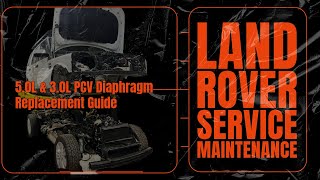
Typical fix: Replace the PCV valve diaphragm. Aftermarket kits are available that allow you to replace just the diaphragm without replacing the entire valve cover. The 5.0L V8 has two diaphragms, and it is recommended to replace both at the same time. 🎬 Watch this detailed DIY guide for replacing the PCV diaphragm. On supercharged models, this can be done without removing the supercharger.
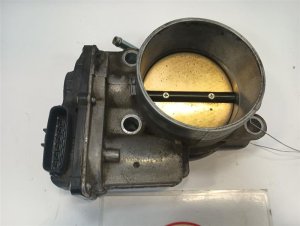
Est. part cost: $20-$80 for a diaphragm kit, $250-$400 for a complete valve cover. - Dirty Electronic Throttle Body 🔴 High Probability Carbon and oil vapor from the PCV system can build up around the throttle plate and bore over time. This buildup restricts the plate's movement, preventing it from closing fully and causing a higher-than-normal idle. Even a small amount of buildup can cause issues due to sensitive electronic controls.
How to confirm: Remove the intake air duct from the throttle body and visually inspect the throttle plate and bore for black carbon buildup, especially on the back side of the plate and the edges where it seals.
Typical fix: Clean the throttle body bore and plate with a dedicated throttle body cleaner and a soft cloth. Do not use harsh tools that could scratch the surface. After cleaning, an idle relearn procedure may be required.
Est. part cost: $5-$15 for a can of throttle body cleaner. - Vacuum Leak (Other Hoses/Gaskets) 🟡 Medium Probability With age and exposure to engine heat, plastic and rubber components like vacuum lines, intake manifold gaskets, and the air intake duct itself can become brittle and crack.
How to confirm: A smoke test is the most effective method. This involves injecting smoke into the intake system after the MAF sensor and watching for where it escapes. You may also hear a hissing sound near the leak's location or notice a fluctuating idle when spraying brake cleaner near a suspected leak point.
Typical fix: Replace the cracked hose, leaking gasket, or damaged component. Common areas include the large plastic intake tube and the brake booster vacuum hose.
Est. part cost: $20-$300 depending on the specific part that has failed.
Rare But Worth Checking
- Faulty Throttle Position Sensor (TPS): While less common, a failing TPS can send incorrect data to the ECU, causing idle control problems. This may also be accompanied by other drivability issues like hesitation.
- Faulty Mass Airflow (MAF) Sensor: A dirty or failing MAF sensor can provide inaccurate airflow readings, leading the ECU to miscalculate the required idle speed. Cleaning the MAF sensor with a dedicated cleaner is a good first step. This usually triggers other codes like P0101.
- Faulty VCT Solenoid: In one documented case on a Land Rover forum, a P0507 code with a fluctuating high idle was ultimately diagnosed by a dealer as a faulty Variable Camshaft Timing (VCT) solenoid.
Diagnosis Steps
- Scan for additional fault codes. Codes like P2187 or P2189 strongly suggest a vacuum leak.
- If a 5.0L engine is present, start the engine and listen carefully for a distinct whistling or 'tea kettle' sound from the passenger side valve cover area.
- With the engine idling, carefully try to remove the oil filler cap. Extreme vacuum resistance (cap is difficult to pull off) is a classic sign of a failed PCV diaphragm.
- If the PCV is not the obvious cause, remove the intake ducting and visually inspect the throttle body for heavy carbon buildup, especially around the edges of the throttle plate.
- If the throttle body is dirty, clean it thoroughly with appropriate cleaner and a soft rag. 🎬 See how to clean your throttle body in five minutes. Be prepared to perform an idle relearn procedure afterward.
- If the cause is still not apparent, perform a smoke test to systematically check for vacuum leaks. Inject smoke into the intake system after the MAF sensor and look for smoke escaping from hoses (especially the brake booster line), gaskets (intake manifold, throttle body), and the intake duct itself.
- After any repair, clear the codes with a scanner and perform a drive cycle, including a mix of idling and varied driving, to allow the system to adapt.
Parts You'll Likely Need
- PCV Valve Diaphragm Repair Kit (5.0L V8)
(OEM #LR133579 (supersedes LR051835, LR041443, LR010780))— This is the single most common failure point on 2010-2013 5.0L V8 engines causing a P0507 code. The kit includes the diaphragm, spring, and cap.
Trusted brands: Land Rover Genuine, RKX, URO Parts, Febi
OEM price range: $50-$80
Aftermarket price range: $20-$50 - Valve Cover (includes PCV)
(OEM #Right: LR113201 / Left: LR113202 (verify by VIN))— This is the official dealer repair if the diaphragm kit is not used or if the valve cover itself is cracked. The PCV diaphragm is integrated.
Trusted brands: Land Rover Genuine, OE Supplier
OEM price range: $250-$400
Aftermarket price range: $150-$250 - Throttle Body Gasket — Should be replaced whenever the throttle body is removed for cleaning or inspection to prevent vacuum leaks.
Trusted brands: Mahle, Victor Reinz
OEM price range: $15-$30
Aftermarket price range: $5-$15
Related Codes That Often Appear With This One
- P2187 — System Too Lean at Idle, Bank 1. This code is frequently seen with P0507 because the underlying cause, a vacuum leak, introduces extra, unmetered air into the engine, creating a lean air/fuel mixture at idle. Bank 1 is the passenger side on these V8s.
- P2189 — System Too Lean at Idle, Bank 2. Similar to P2187, this indicates a lean condition on the opposite engine bank (driver's side), reinforcing the diagnosis of a significant vacuum leak affecting the entire intake system.
Technical Service Bulletins (TSBs) & Recalls
- SSM74374: Notes that P0507, along with other codes like P2187 and P2189, can be stored in the PCM as a result of an air intake system leak. [⭐ MANUFACTURER TSB]
- SSM 75609 / 75610: A related communication advising technicians to use the lower-level PCV diaphragm repair kit (LR166809/AJ814239 for newer models) instead of replacing the entire valve cover assembly for idle instability issues.
Platform-Specific Known Issues
- A Land Rover Technical Service Bulletin (TSB #SSM74374) explicitly states that DTC P0507 could be stored due to an air intake system leak. [⭐ MANUFACTURER TSB]
- On the 5.0L V8 (2010-2013), the two PCV diaphragms are considered a common failure item by owners, with failure often occurring between 60,000 and 100,000 miles.
- Owner forums like rangerovers.net and landroverforums.com have numerous threads where owners fixed P0507, P2187, and P2189 codes on their 5.0L Range Rovers by replacing the PCV diaphragm kits (part LR133579) after hearing a distinct whistle.
Mechanic-Grade Diagnostic Values
- Short-Term (STFT) & Long-Term (LTFT) Fuel Trims at Idle — expected: Combined (STFT + LTFT) values should be within +/- 5% on a warm engine.. Failure: High positive fuel trims (e.g., > +10%) at idle that decrease as RPMs increase strongly indicate a vacuum leak.
- Mass Air Flow (MAF) Sensor Reading at Idle (5.0L V8) — expected: Approximately 5.0 g/s (grams/second). A common rule of thumb is the g/s value should roughly match engine displacement in liters.. Failure: A significantly lower reading (< 3.0 g/s) or an erratic reading that doesn't increase with RPM suggests a sensor issue.
- Throttle Position Sensor (TPS) Voltage (Key-On, Engine-Off) — expected: Less than 0.7V with the throttle fully closed.. Failure: A closed-throttle voltage higher than 0.7V can indicate carbon buildup or a faulty sensor, preventing the ECU from entering its idle control strategy correctly.
Hidden / Shadow Codes Worth Checking
- P0507-23: Idle Control System - RPM Higher Than Expected - Signal stuck low. This is a JLR-specific sub-code indicating the engine idle speed is greater than the maximum deviation allowed. (see via Jaguar Land Rover approved diagnostic equipment (SDD/Pathfinder).)
Scan Tool Commands That Help
- Land Rover SDD (Symptom Driven Diagnostics): Powertrain -> Air path set-up routine (or 'Air Path Calibration') — This is the official dealer-level procedure required after cleaning or replacing the electronic throttle body. It resets the learned positions of the throttle valve, EGR valve, and other air system components to prevent high idle after service.
- Aftermarket (iCarsoft, Launch, GAP IIDTool): ETC (Electronic Throttle Control) Reset / Throttle Adaptation Reset — A function to force the ECU to relearn the throttle's 'zero position' after it has been cleaned or replaced. This is necessary because the ECU has adapted to the old, dirty throttle body and will cause a high idle with the clean one until reset.
Real Owner Repair Stories
- YouTube user 'Missado Diagnostics' (2016 Land Rover Range Rover (Note: L405 generation, but diagnostic path for P0507/P2187/P2189 is identical to 2010-2013 models)) — Codes P0507, P2187, P2189.
❌ Tried (didn't work) A smoke test was performed and showed no leaks.
✅ What actually fixed it The PCV breather valve diaphragm was found to be torn internally upon visual inspection. Replacing the diaphragm with a rebuild kit resolved the issue, highlighting that a smoke test can sometimes be inconclusive for this specific failure. - Land Rover Forums user (Not specified, but symptoms align with 5.0L V8 issues.) — Rough idle, O2 sensor codes (implying lean condition).
❌ Tried (didn't work) Initial diagnosis was unclear.
✅ What actually fixed it The cause was found to be leaking brake vacuum lines. The leak was most noticeable when applying the brakes. Replacing the three brake vacuum lines resolved the high idle and associated codes.
"I Checked Everything" — The Actual Cause
- In a documented case, a 2016 Range Rover with P0507 and lean codes passed a smoke test, showing no leaks. However, the technician proceeded to visually inspect the PCV diaphragm and found it was torn internally. Replacing the diaphragm fixed the issue, proving that this internal tear may not always show up on a smoke test.
OEM Part Supersession History
LR010780, LR041443, LR051835→LR133579— Updated design and/or material for the PCV valve diaphragm kit for the 5.0L V8 and 3.0L V6 engines to improve durability and prevent tearing.
Model Year Variations Within This Range
- 2010-2013 (5.0L V8 Engines): These model years are uniquely prone to P0507 being caused by torn PCV valve diaphragms integrated into the valve covers. This is the primary suspect for these engines, often accompanied by a loud whistling sound.
- 2006-2009 (4.4L & 4.2L SC V8 Engines): For these earlier models, P0507 is more likely caused by general vacuum leaks (cracked hoses, intake gaskets) or a dirty electronic throttle body, as they do not share the same high-failure PCV diaphragm design as the later 5.0L engines.
Helpful Videos

We Have This Part in Stock





The information in this article is provided for general reference and educational purposes only. Vehicle specifications, procedures, and part compatibility can vary by production date, trim level, and region. Always consult your vehicle's factory service manual and verify part numbers before purchasing or performing repairs. Safety-critical components such as airbags, seat belts, and braking systems should be installed by a qualified professional.
- Land Rover RANGE ROVER:
- 🎬 Helpful Videos
- 🛍️ Shop This Part
- What's Unique About the 2006-2013 Land Rover RANGE ROVER
- Diagnostic Flowchart
- Symptoms You May Notice
- Most Likely Causes
- Rare But Worth Checking
- Diagnosis Steps
- Parts You'll Likely Need
- Related Codes That Often Appear With This One
- Technical Service Bulletins (TSBs) & Recalls
- Platform-Specific Known Issues
- Mechanic-Grade Diagnostic Values
- Hidden / Shadow Codes Worth Checking
- Scan Tool Commands That Help
- Real Owner Repair Stories
- "I Checked Everything" — The Actual Cause
- OEM Part Supersession History
- Model Year Variations Within This Range
- 🎟️ Get 5% Off