

P0507 on 2018-2019 Jeep Wrangler: High Idle Causes and Fixes
On a 2018-2019 Jeep Wrangler (JL), code P0507 often points to a required Powertrain Control Module (PCM) software update, as detailed in multiple Technical Service Bulletins. TSB #9004112 explicitly advises technicians to verify software is current before replacing any parts. If the software is up to date, the most common causes are a vacuum leak (especially from a cracked PCV hose) or a dirty electronic throttle body.
- For a 2018-2019 Jeep Wrangler (JL), P0507 is very often caused by outdated PCM software that a dealer must update.
- Always check for TSBs related to your VIN before starting any physical repairs for this code.
- If a software update is not available or doesn't fix the issue, the next most likely causes are a simple vacuum leak or a dirty throttle body.
- Symptoms can include not just a high idle, but also excessive noise from the radiator fan.
What's Unique About the 2018-2019 Jeep WRANGLER

For the 2018-2019 (JL Generation) Jeep Wrangler, the P0507 code is frequently linked to software issues within the Powertrain Control Module (PCM). Multiple Technical Service Bulletins (TSBs) have been issued by the manufacturer to address this code, often in conjunction with other DTCs and symptoms like excessive radiator fan noise. This is a departure from many other vehicles where P0507 is almost exclusively caused by a vacuum leak or a dirty throttle body. TSB #9004112 specifically instructs dealers to check the PCM software level *before* replacing any components for a P0507 concern, highlighting the prevalence of the software fix.
Diagnostic Flowchart
Tap your situation to follow the diagnostic path that matches what you're seeing on this vehicle.
Generation note: The 2018 model year was a transition period. Both the older 'JK' generation and the new 'JL' generation were sold as 2018 models. The provided TSBs specifically reference the 2018-2019 'JL' model. While P0507 can occur on a JK, the causes are more traditional (vacuum leaks, PCV valve). For the JL, a software update is a very common and officially documented first step.
Symptoms You May Notice
- Check Engine Light is on
- Engine idling higher than normal (e.g., above 1,000 RPM when warm). Some owners report idle increasing to ~1200 RPM after 10 minutes of idling.
- Engine RPMs may fluctuate or surge at idle.
- Excessive radiator fan noise, especially with the A/C on maximum. [Bulletin #1814422, #1811422, #18-018-20, #18-037-19 REV. A]
- Vehicle may feel like it's 'pushing' against the brakes when stopped
- Harsh transmission engagement when shifting into gear.
- Illumination of the 'Auto Start/Stop Unavailable' warning light on the dashboard is frequently reported by owners at the same time the high idle occurs.
- Replacing the throttle body when only a cleaning or a software update is needed.
- Replacing sensors like the MAP or O2 sensors without first checking for vacuum leaks or software updates.
- Mistaking a cracked PCV hose for a more complex intake manifold issue.
Most Likely Causes

- Powertrain Control Module (PCM) Software Update Needed 🔴 High Probability Manufacturer TSBs #1814422, #1811422, #18-018-20, and #18-037-19 REV. A all list P0507 as a code that can be resolved with a PCM software update. Critically, TSB #9004112 directs technicians to verify the software is current *before* replacing any parts, making this the primary first step.
How to confirm: A Jeep dealership or a qualified shop with access to OEM software tools (like wiTECH) can check the current software version against available updates.
Typical fix: Reprogramming the PCM with the latest software version. This is a non-mechanical repair.
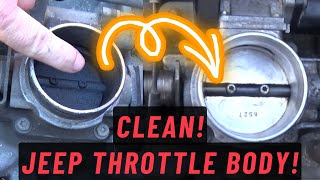
Est. part cost: $0-$200 - Dirty or Faulty Electronic Throttle Body 🟡 Medium Probability Carbon and grime can build up around the throttle plate, preventing it from closing completely. This allows excess air into the engine, raising the idle speed. This is a common issue on many electronically controlled engines.
How to confirm: Remove the air intake hose from the throttle body and visually inspect the throttle plate and bore for a ring of black carbon buildup.
Typical fix: Clean the throttle body bore and plate with a dedicated throttle body cleaner and a soft cloth. Do not force the throttle plate open manually. If cleaning doesn't work, the throttle body may need to be replaced.
Est. part cost: $150-$400 - Vacuum Leak 🟡 Medium Probability Unmetered air entering the engine after the mass airflow sensor can cause the idle to increase. Common sources include cracked hoses (PCV, brake booster) or a leaking intake manifold gasket. A cracked PCV hose is a known failure point on the 3.6L Pentastar engine.
How to confirm: Visually inspect all vacuum hoses for cracks or disconnections. A smoke test is the most effective method, where smoke is introduced into the intake system to reveal the location of any leaks. Pay close attention to the PCV hose that runs along the valve cover.
Typical fix: Replace the leaking hose or gasket.
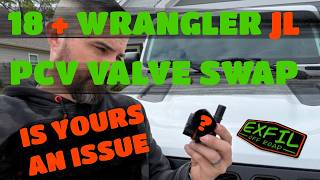
Est. part cost: $10-$150 - Faulty PCV Valve or Hose ⚪ Low Probability The Positive Crankcase Ventilation (PCV) system uses plastic hoses that can become brittle and crack over time, creating a significant vacuum leak. A stuck-open PCV valve can also cause this issue.
How to confirm: Inspect the PCV valve and its connecting hoses for cracks, brittleness, or blockage. A hissing sound may be audible near the valve or its hoses if a leak is present.
Typical fix: Replace the PCV valve and/or hose. This is often an inexpensive and straightforward repair.
Est. part cost: $20-$60
Rare But Worth Checking
- eTorque System Fault: TSB #0814523 specifically links P0507 with drive motor codes (P0C01-00, P0C05-00) and a loss of 12V charging on vehicles equipped with the 2.0L eTorque engine. This indicates a problem within the hybrid system could be the root cause, which would also illuminate the battery warning light.
Diagnosis Steps
- Check for Technical Service Bulletins (TSBs). Given the history with this vehicle, the first step is to see if an available PCM software update addresses the P0507 code. A dealer or equipped shop can verify this with the VIN.
- Scan for other fault codes. The presence of codes like P0456, P061A, or P0128 strongly points towards the software update fix. The presence of an 'Auto Start/Stop Unavailable' message is also a strong indicator.
- Inspect for vacuum leaks. Visually check all intake and vacuum hoses for obvious cracks or loose connections. Pay close attention to the PCV hose and brake booster line. A hissing noise from the engine bay at idle is a tell-tale sign.
- Perform a smoke test. If no visual leaks are found, use a smoke machine to pressurize the intake system and identify any hard-to-see leaks from gaskets or hidden hose cracks.
- Inspect and clean the throttle body. Remove the air intake tube and check the throttle plate for carbon buildup. Clean it thoroughly with throttle body cleaner and a soft rag, being careful not to damage the electronic components.
- Inspect the PCV system. Check the PCV valve for proper operation and its hoses for integrity. A cracked PCV hose is a common failure point and can cause a significant vacuum leak.
Parts You'll Likely Need

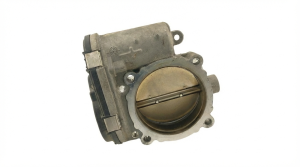
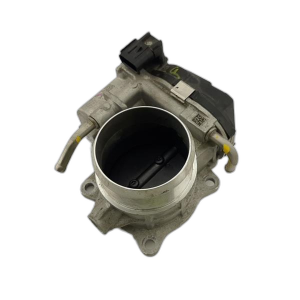
- Electronic Throttle Body
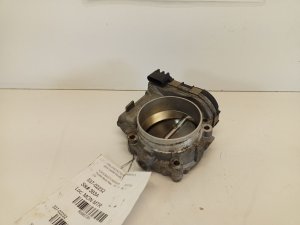
(OEM #05281804AC (for 3.6L V6, supersedes 5281804AB, 5281804AA))— If cleaning does not resolve the high idle, the electronic components of the throttle body may have failed.
Trusted brands: Mopar, Standard Motor Products, Bosch
OEM price range: $250-$400
Aftermarket price range: $150-$250 - PCV Valve
(OEM #68083202AC (for 2018 JK 3.6L))— A stuck PCV valve can act as a constant vacuum leak, causing a high idle. It is an inexpensive and common maintenance item. Note: Part number may vary for JL models.
Trusted brands: Mopar, Standard Motor Products
OEM price range: $25-$50
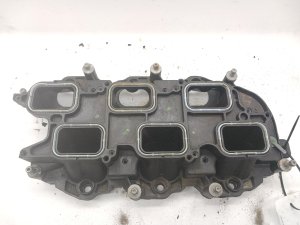
Aftermarket price range: $15-$30 - Intake Manifold Gasket — If a smoke test reveals a leak at the intake manifold, the gasket will need to be replaced to seal the vacuum leak.
Trusted brands: Mopar, Fel-Pro
OEM price range: $40-$80
Aftermarket price range: $20-$50
Related Codes That Often Appear With This One
- P0456 — EVAP System Small Leak. TSBs #1814422, #1811422, and #18-037-19 REV. A indicate that a PCM flash addresses both P0507 and P0456 simultaneously. A vacuum leak in the EVAP system can also contribute to idle issues.
- P061A — Level 2 Torque Performance. TSBs #1814422 and #18-018-20 group this code with P0507 as being resolved by a software update.
- P0128 — Thermostat Rationality. TSBs #1811422 and #18-037-19 REV. A mention this code alongside P0507, suggesting a software fix.
- P0C01-00 / P0C05-00 — Drive Motor 'A' codes. TSB #0814523 links these eTorque-specific codes with P0507, indicating a potential hybrid system issue.
Technical Service Bulletins (TSBs) & Recalls
- Bulletin #9004112: States to verify the PCM is at the latest software level prior to replacing any components for a P0507 code.
- Bulletin #0814523: Links P0507 to eTorque system faults (P0C01-00, P0C05-00) and loss of 12V charging.
- Bulletin #1814422: Cites P0507 with P061A and excessive fan noise, fixed by a software update.
Platform-Specific Known Issues
- Multiple TSBs (#0814523, #1814422, #1811422, #18-018-20, #18-037-19 REV. A) indicate that a PCM software reflash is a primary fix for P0507, often bundled with fixes for other codes and symptoms like excessive fan noise.
- TSB #9004112 explicitly directs technicians to check for software updates before replacing any hardware for a P0507 code, confirming this is the most common intended fix from the manufacturer.
- Forum discussions frequently mention the P0507 code appearing alongside an error message for the Electronic Start-Stop (ESS) system, suggesting a link in the PCM's logic.
Mechanic-Grade Diagnostic Values
- Commanded vs. Actual Engine RPM at Idle — expected: Actual RPM should be within approximately 100 RPM of the commanded RPM. Normal warm idle is ~650-800 RPM.. Failure: A user reported that when the fault occurred, the PCM commanded 1450 RPM, but the actual engine speed only reached 1150 RPM, triggering the P0507 code and a start/stop system error.
- Throttle Body Bolt Torque — expected: 80 in-lbs. Failure: Improperly torqued throttle body bolts could lead to a vacuum leak at the gasket.
Scan Tool Commands That Help
- Manual Procedure (No Scan Tool): Throttle Position Sensor Recalibration / Idle Relearn — This procedure can be attempted after disconnecting the battery, cleaning or replacing the throttle body, or if throttle response feels laggy. It helps the PCM relearn the throttle plate's closed and open positions. The procedure involves turning the ignition to 'Run' (without starting the engine), slowly depressing the gas pedal to the floor over 30 seconds, and then slowly releasing it over 30 seconds before turning the ignition off.
Wiring & Ground Locations
- G901A / G902A — In the engine bay, near the main battery, on the passenger side fender wall.. These are primary chassis and PCM ground points. A loose or corroded ground here can cause erratic sensor readings and incorrect PCM behavior, potentially leading to idle control problems.
- Throttle Body Connector — Directly on the electronic throttle body, accessible after removing the main air intake snorkel.. This 6-pin connector provides power and ground to the throttle motor and transmits throttle position data back to the PCM. Corrosion or a loose connection can directly cause incorrect throttle operation and high idle.
Real Owner Repair Stories
- jlwranglerforums.com user 'sho' (2019 Jeep Wrangler JL 2.0L Turbo) — Check Engine Light with P0507 and 'Service Start/Stop System' message. Idle would be normal (~800 RPM) then the computer would command 1450 RPM, but the engine would only go to 1150 RPM, triggering the fault.
❌ Tried (didn't work) Initial dealer diagnosis suggested vacuum leak or faulty Idle Air Control valve., Dealer replaced the mass airflow sensor and throttle body., Dealer ordered a new PCM.
✅ What actually fixed it The root cause was identified as a software issue in the PCM for the 2019 2.0L engine. An eventual software update from FCA (Jeep's parent company) resolved the problem without further parts replacement. - gladiator.jeepgladiatorforum.com user 'cmb396' (2020 Jeep Gladiator Rubicon (JT, similar platform to JL)) — After sitting for a week, got a Check Engine Light, 'Auto Start/Stop Unavailable' message, and a very high idle of 1800-2000 RPM. Codes P0507 and P1400 were present.
❌ Tried (didn't work) Initial speculation was a throttle body motor issue.
✅ What actually fixed it The user reported the final fix was replacing the auxiliary battery for the auto start/stop system. A failing auxiliary battery was causing the electrical system to command a high idle.
"I Checked Everything" — The Actual Cause
- In several owner reports, a smoke test for vacuum leaks came back negative. The ultimate cause was not a physical air leak but either a required PCM software update or a failing auxiliary battery for the auto start/stop system, which caused the PCM to command a high idle state.
Model Year Variations Within This Range
- 2018-2019: The 2.0L eTorque engine has a unique potential cause for P0507. TSB #0814523 links the code to faults in the hybrid drive motor system, which is a completely different diagnostic path from the 3.6L V6 that focuses on software, vacuum leaks, and the throttle body.
Helpful Videos
Used OEM Parts in Stock


New Aftermarket Parts Available


The information in this article is provided for general reference and educational purposes only. Vehicle specifications, procedures, and part compatibility can vary by production date, trim level, and region. Always consult your vehicle's factory service manual and verify part numbers before purchasing or performing repairs. Safety-critical components such as airbags, seat belts, and braking systems should be installed by a qualified professional.
- Jeep WRANGLER:
- 🎬 Helpful Videos
- 🛍️ Shop This Part
- What's Unique About the 2018-2019 Jeep WRANGLER
- Diagnostic Flowchart
- Symptoms You May Notice
- Most Likely Causes
- Rare But Worth Checking
- Diagnosis Steps
- Parts You'll Likely Need
- Related Codes That Often Appear With This One
- Technical Service Bulletins (TSBs) & Recalls
- Platform-Specific Known Issues
- Mechanic-Grade Diagnostic Values
- Scan Tool Commands That Help
- Wiring & Ground Locations
- Real Owner Repair Stories
- "I Checked Everything" — The Actual Cause
- Model Year Variations Within This Range
- 🎟️ Get 5% Off