

P0507 on 2014-2019 Jaguar F-TYPE: High Idle Speed Causes and Fixes
On a 2014-2019 Jaguar F-TYPE, code P0507 almost always indicates an unmetered air leak in the intake system. The most effective fix is to perform a smoke test to locate and repair the cracked hose or leaking gasket, which is often more cost-effective than replacing parts at random. Common culprits include PCV valve diaphragms and brake booster vacuum lines.
- Do not immediately assume a component is faulty; P0507 on an F-TYPE is most often a simple air leak.
- A smoke test is the most efficient and accurate diagnostic tool for this code.
- Check for accompanying lean codes (P2187, P2189), as they strongly support the diagnosis of a vacuum leak.
- Listen for a hissing sound from the valve covers; a torn PCV diaphragm is an extremely common and inexpensive fix.
- Before replacing expensive parts like the throttle body, perform the simple and cheap diagnostic steps of a visual inspection and cleaning.
What's Unique About the 2014-2019 Jaguar F-TYPE
On many vehicles, a P0507 code points to a faulty Idle Air Control (IAC) valve. However, on the Jaguar F-TYPE's modern engine architecture (AJ126 V6 and AJ133 V8), which uses an electronic throttle body, this code is overwhelmingly caused by unmetered air entering the engine after the mass airflow sensor. Jaguar's own Technical Service Bulletin (TSB) for this platform directly links P0507 to air intake system leaks, making a vacuum leak the primary suspect, not a faulty electronic component.
Diagnostic Flowchart
Tap your situation to follow the diagnostic path that matches what you're seeing on this vehicle.
Symptoms You May Notice
- Check Engine Light is on
- Engine idle speed is noticeably high (e.g., over 1000 RPM, sometimes surging to 2000 RPM on a cold start).
- Rough or fluctuating idle.
- Hissing noise from the engine bay, particularly around the PCV valves on the valve covers or near the brake booster.
- Slightly increased fuel consumption.
- Hard brake pedal or engine stumbling when brakes are applied, indicating a leak in the brake booster or its vacuum line.
- Replacing the throttle body assembly without first checking for vacuum leaks or cleaning the original part.
- Replacing O2 sensors, as they may report lean conditions (like P2187/P2189) that are actually caused by the vacuum leak, not a faulty sensor.
Most Likely Causes
- Vacuum Leak from Hoses or Gaskets 🔴 High Probability As confirmed by TSB #SSM74375, the F-TYPE's complex intake plumbing has several potential failure points. Rubber and plastic components in the engine bay are exposed to heat cycles, causing them to become brittle and crack over time. The brake booster vacuum line and PCV system hoses are frequently cited failure points.
How to confirm: The most effective method is to use a smoke machine to feed smoke into the intake system and watch for where it escapes. A visual inspection may also reveal cracked, disconnected, or brittle hoses. Spraying an unlit propane torch or a small amount of brake cleaner near suspected leak points while listening for a change in idle RPM can also pinpoint a leak.
Typical fix: Replace the specific leaking hose or gasket. Common culprits include PCV hoses, the brake booster line, and intake manifold gaskets.
Est. part cost: $20-$200 - Faulty Positive Crankcase Ventilation (PCV) Valve Diaphragm 🔴 High Probability The AJ126/AJ133 engines use round PCV valve diaphragms located on the valve covers. The rubber diaphragm can tear, creating a significant vacuum leak. This is a very common failure point across all JLR vehicles with these engines. A torn diaphragm will often create a distinct hissing or whistling sound.
How to confirm: With the engine running, listen for a hissing sound coming directly from the round PCV valve caps. A smoke test will show smoke billowing from the cap if the diaphragm is torn. You can also carefully try to place a finger over the small vent hole on the cap; a torn diaphragm will create strong suction.
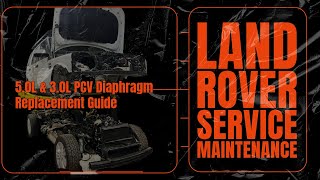
Typical fix: Replace the PCV valve diaphragm and cap. The V6 engine has two, while the V8 has four. They are often sold as a kit. The OEM part number for the diaphragm kit is often cited as C2D60163 or LR133579. 🎬 Watch: A detailed DIY guide for replacing the PCV diaphragm.
Est. part cost: $40-$100 for a set of two - Dirty or Sticking Throttle Body 🟡 Medium Probability Carbon and oil deposits from the crankcase ventilation system can build up around the throttle plate, preventing it from closing completely at idle. This allows a small amount of extra air into the engine, raising the idle speed.
How to confirm: Remove the air intake tube connected to the throttle body and visually inspect the throttle plate and bore for black carbon buildup.
Typical fix: Clean the throttle body bore and plate with a dedicated throttle body cleaner and a soft cloth. After cleaning and reconnecting the battery, an idle relearn procedure may be necessary. This can sometimes be accomplished by turning the ignition on (engine off), slowly pressing the accelerator to the floor and releasing it twice, then starting the engine and letting it idle for 5-10 minutes without touching the pedal.
Est. part cost: $10-$25 for cleaner
Rare But Worth Checking
- Leaking Brake Booster: A failure of the internal diaphragm of the brake booster itself can create a large vacuum leak. This would typically be accompanied by a stiff brake pedal and a hissing sound from the driver's footwell area when the brake pedal is pressed.
- Leaking Vacuum Pump: While more commonly associated with oil leaks on the 3.0L and 5.0L engines, a failure in the vacuum pump or its seals can sometimes create a vacuum leak that affects idle speed.
- PCM Software Issue: In some isolated cases reported on forums, owners have stated that a PCM reflash by the dealer was required to resolve persistent high idle issues after all mechanical causes were ruled out.
Diagnosis Steps
- Verify the P0507 code is present using an OBD-II scanner. Check for any other codes, particularly P2187 or P2189, which strongly suggest a vacuum leak.
- With the engine running, listen carefully for any hissing sounds around the top of the engine. Pay close attention to the round PCV valve caps on the valve covers and the vacuum line running to the brake booster.
- Perform a thorough visual inspection of all vacuum hoses, the intake air tube, and connections for any signs of cracks, brittleness, or disconnection.
- If no obvious leaks are found, perform a smoke test. Introduce smoke into the intake system via a vacuum port and watch for where it escapes. This is the most reliable way to find small leaks, especially from PCV diaphragms or intake gaskets.
- If no vacuum leaks are detected, remove the air intake ducting and inspect the throttle body for carbon buildup.
- Clean the throttle body thoroughly with an appropriate cleaner if it is dirty.
- After cleaning, perform a throttle body relearn procedure. This may involve a specific pedal sequence or simply letting the car idle for an extended period.
- Inspect the brake booster and its main vacuum hose for leaks. A hissing sound when the brake pedal is pressed is a key indicator.
Parts You'll Likely Need
- PCV Valve Diaphragm Kit
(OEM #C2D60163 / LR133579)— The rubber diaphragms in the PCV valves are a very common failure point, tearing and causing a significant vacuum leak. The V6 uses two, the V8 uses four.
Trusted brands: Jaguar OE, URO Parts, EuroAMP
OEM price range: $70-$150 (for a pair)
Aftermarket price range: $30-$80 (for a pair) - Vacuum Hose — A cracked or disconnected vacuum hose, especially for the brake booster or other PCV lines, can let unmetered air into the engine.
Trusted brands: Jaguar OE, URO Parts
OEM price range: $30-$150
Aftermarket price range: $15-$75 - Intake Manifold Gasket
(OEM #C2Z17248 (V6) / AJ811948 (V8))— If a vacuum leak is present at the base of the intake manifold or supercharger, the gasket will need to be replaced.
Trusted brands: Jaguar OE, Mahle, Elring
OEM price range: $50-$120
Aftermarket price range: $30-$80
Related Codes That Often Appear With This One
- P2187 — System Too Lean at Idle, Bank 1. This code is frequently seen with P0507 because the unmetered air from a vacuum leak creates a lean air/fuel mixture.
- P2189 — System Too Lean at Idle, Bank 2. Similar to P2187, this indicates a lean condition on the opposite engine bank, reinforcing the likelihood of a significant vacuum leak.
Technical Service Bulletins (TSBs) & Recalls
- SSM74375: Confirms that P0507 can be an indicator of an air intake system leak on 2014 model year engines.
Platform-Specific Known Issues
- Jaguar issued Technical Service Bulletin #SSM74375 which explicitly states that P0507, along with other codes like P2187 and P2189, can be stored in the PCM as a result of an air intake system leak.
- PCV Diaphragm Failure: The most common real-world failure causing P0507 on the AJ126/AJ133 engine family is a torn PCV diaphragm. Owners on forums frequently report a hissing noise from the valve covers followed by the P0507 code, which is resolved by replacing the inexpensive diaphragm kits.
- Disconnected Vacuum Line: In a thread on JaguarForums.com, an owner with a 2019 F-Type P300 (2.0t engine) experienced a P0507 code due to a vacuum line that had become disconnected near the back of the engine. This highlights the importance of a thorough visual inspection.
Mechanic-Grade Diagnostic Values
- Long Term Fuel Trim (LTFT) at Idle — expected: Between -10% and +10%. Ideally close to 0%.. Failure: A sustained positive value greater than +10% on one or both banks strongly indicates a vacuum leak, as the PCM is adding fuel to compensate for unmetered air.
- Engine Ground Point Voltage Drop — expected: Well under 0.5V (500mV).. Failure: A reading higher than 0.5V while cranking the engine indicates high resistance in the ground circuit, which can cause erratic sensor behavior. The test is performed by connecting a multimeter between the battery negative terminal and a specific ground point on the engine block or chassis.
Scan Tool Commands That Help
- Manual Procedure (No Tool): Throttle Body Adaptation / Relearn — After cleaning or replacing the throttle body, or after disconnecting the battery, to reset the learned idle and closed-throttle positions. A common procedure is: Turn ignition on (engine off), slowly press the accelerator pedal to the floor and release it twice, then start the engine and let it idle.
Wiring & Ground Locations
- ECM (Engine Control Module) — Located in the left rear of the engine compartment.. The ECM is the computer that receives all sensor inputs and determines that the idle is too high, setting the P0507 code. Checking its connectors for corrosion or damage is a last-resort diagnostic step.
- G1D132D — A ground stud located on the right side of the rear of the engine compartment (for 2014 3.0L models).. This is a critical engine ground point. A poor connection here can cause incorrect readings from sensors involved in idle control, potentially leading to a P0507 code. A voltage drop test should be performed if electrical issues are suspected.
Real Owner Repair Stories
- JaguarForums.com user post (2019 Jaguar F-Type P300 (2.0t)) — Check Engine Light on, P0507 code, rough and fluctuating idle, high idle in Park.
❌ Tried (didn't work) The check engine light returned after the initial fix.
✅ What actually fixed it A mechanic found a vacuum line that was not connected. Reconnecting the hose was the initial fix, highlighting the importance of a thorough visual inspection for disconnected components.
OEM Part Supersession History
C2D60163→102123488— Part revision by the manufacturer. The new part number is listed as 'Unavailable' on some official Jaguar parts sites as of early 2024, indicating potential supply issues.
Heads up: The Land Rover equivalent part number, LR133579, is widely cited as being identical and is often used as a direct replacement when C2D60163 is unavailable.
Model Year Variations Within This Range
- 2018-2019: F-TYPE models with the 'P300' designation use a 2.0L 4-cylinder Ingenium engine, not the V6 or V8. However, they are still susceptible to code P0507 caused by vacuum leaks, as confirmed by owner reports of disconnected vacuum lines triggering the code.
Helpful Videos
Used OEM Parts in Stock


New Aftermarket Parts Available





The information in this article is provided for general reference and educational purposes only. Vehicle specifications, procedures, and part compatibility can vary by production date, trim level, and region. Always consult your vehicle's factory service manual and verify part numbers before purchasing or performing repairs. Safety-critical components such as airbags, seat belts, and braking systems should be installed by a qualified professional.
- Jaguar F-TYPE:
- 🎬 Helpful Videos
- 🛍️ Shop This Part
- What's Unique About the 2014-2019 Jaguar F-TYPE
- Diagnostic Flowchart
- Symptoms You May Notice
- Most Likely Causes
- Rare But Worth Checking
- Diagnosis Steps
- Parts You'll Likely Need
- Related Codes That Often Appear With This One
- Technical Service Bulletins (TSBs) & Recalls
- Platform-Specific Known Issues
- Mechanic-Grade Diagnostic Values
- Scan Tool Commands That Help
- Wiring & Ground Locations
- Real Owner Repair Stories
- OEM Part Supersession History
- Model Year Variations Within This Range
- 🎟️ Get 5% Off