

P0507 on 1990-2010 Honda Vehicles: High Idle Causes and Fixes for Civic, Accord, CR-V & More
On most 1990-2010 Hondas, P0507 is caused by a dirty throttle body or Idle Air Control Valve (IACV) that needs cleaning. After cleaning, an 'idle relearn procedure' is almost always required to fix the high idle. For drive-by-wire models, this may require a specific scan tool to reset the throttle position memory before the relearn. This is a very common, low-cost DIY repair.
- Start by cleaning the throttle body; this is the most likely fix and is very inexpensive.
- You MUST perform an idle relearn procedure after cleaning the throttle or disconnecting the battery, or the high idle will likely continue.
- If cleaning and relearning doesn't work, your next step is to check for vacuum leaks from old, cracked hoses.
- On older Hondas (pre-2006), pay special attention to the separate Idle Air Control Valve (IACV) as it can be removed and cleaned.
- This code is highly DIY-friendly and rarely indicates a serious mechanical problem.
What's Unique About the 1990-2010 Honda General

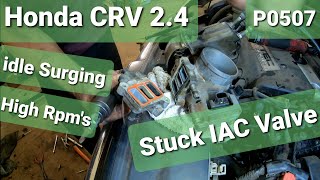
For this era of Hondas, the cause of P0507 depends on the vehicle's age. Earlier models (1990s-early 2000s) use a separate Idle Air Control Valve (IACV) 🎬 Watch: How to fix surging idle and clean the IACV that gets clogged with carbon. Later models (mid-2000s-2010) use an Electronic Throttle Body (ETB) where the main throttle plate controls idle. On both systems, carbon buildup is the primary culprit. However, the key to fixing it on a Honda, especially later models, is performing a specific reset and relearn procedure. The PCM adapts to carbon buildup over time; simply cleaning the throttle body creates a large air gap that the PCM isn't prepared for, causing a high idle. For many electronic throttle models, a simple battery disconnect is not enough; a scan tool must be used to clear the learned throttle position values *before* performing the idle relearn procedure. Skipping this two-step process is the most common reason the code returns.
Generation note: The 1990-2010 range covers multiple generations of models like the Civic, Accord, and CR-V. The key difference is the idle control method: - Cable-Throttle Models (approx. 1990-2005): These use a mechanical throttle cable and a separate Idle Air Control Valve (IACV) mounted to the throttle body or intake manifold. The IACV is the most common part to fail or clog. Cleaning the IACV often requires draining a small amount of coolant as coolant lines run through it. - Drive-by-Wire Models (approx. 2006-2010): These have an Electronic Throttle Body (ETB) with no separate IACV. Idle is controlled by the main throttle plate. A dirty throttle body is the most common cause here. A proper fix requires cleaning the throttle body, then using a scan tool to reset the learned throttle position, and finally performing the idle relearn procedure.
Symptoms You May Notice
- Check Engine Light is on
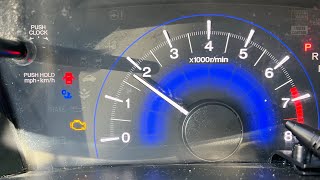
- Engine idling noticeably higher than normal (e.g., 1000-1500 RPM instead of ~750 RPM).
- Rough or fluctuating idle, sometimes surging when electrical loads (like A/C or power windows) are activated.
- Harsh engagement or a 'clunk' when shifting an automatic transmission from Park to Drive or Reverse.
- Vehicle feels like it's 'pulling' or hard to stop at low speeds.
- In some cases, the engine may be hard to start or stall.
- Replacing the throttle body when it only needed to be cleaned and have the relearn procedure performed correctly.
- Replacing the IACV when the issue was a vacuum leak or the need for an idle relearn.
- Replacing the Throttle Position Sensor (TPS), which rarely causes a high idle on its own.
- Continuously attempting the manual idle relearn without first clearing the learned throttle values with a scan tool on drive-by-wire models.
Most Likely Causes

- Dirty Throttle Body and/or Idle Air Control Valve (IACV) 🔴 High Probability Honda's PGM-FI system is sensitive to carbon buildup around the throttle plate and within the IACV passages. This buildup restricts airflow at small openings, but can also prevent the throttle plate or IACV from closing fully, causing a high idle.
How to confirm: Visually inspect the throttle body bore and plate for a layer of black carbon. If the vehicle has an IACV, it is likely clogged if the throttle body is dirty. The IACV can be removed for cleaning, which often involves its two coolant ports getting clogged.
Typical fix: Remove the air intake tube, thoroughly clean the throttle body and plate with throttle body cleaner and a soft brush or cloth. 🎬 See this walkthrough for cleaning the throttle body and relearning If applicable, remove and clean the IACV and its passages. A new throttle body gasket is recommended.
Est. part cost: $5-$20 for cleaner and a gasket. - Idle Relearn Procedure Not Performed (or Done Incorrectly) 🔴 High Probability After cleaning the throttle/IACV or disconnecting the battery, the PCM's memory of the idle position is erased or no longer correct for the clean throttle body. It must relearn the new, clean position. On drive-by-wire models, the PCM has adapted to the dirty throttle plate position over time. Cleaning it introduces a large amount of air the PCM doesn't expect. A simple idle relearn is often not enough; the learned throttle position value must be cleared first with a capable scan tool. 🎬 Watch: Why you need a scan tool to reset learned values
How to confirm: This is the likely cause if the P0507 code appeared immediately after cleaning the throttle body, replacing the battery, or clearing PCM codes. The idle will be very high (1500-2000 RPM) right after startup.
Typical fix: For all models, perform the idle relearn procedure. For Drive-by-Wire models, the proper sequence is: 1. Use a Honda-capable scan tool (like HDS or some advanced aftermarket scanners) to find the 'TP POSITION CHECK' or similar function and 'clear the throttle position learned value'. 2. Then, perform the manual idle relearn: Start the engine and hold the RPM at 3,000 (in Park/Neutral) until the engine is at full operating temperature (radiator fan cycles on at least once). 3. Let the engine idle with no accessories on (no AC, lights, radio) for at least 5-10 minutes. The idle should gradually drop to the correct RPM.
Est. part cost: $0 if you have the scanner, otherwise it may require a shop visit. - Vacuum Leak 🟡 Medium Probability Over time, rubber vacuum hoses can crack and plastic intake components can develop leaks, allowing unmetered air into the engine, which the PCM cannot control, leading to a high idle. The PCV valve hose is a common culprit.
How to confirm: Listen for a hissing sound at idle. Visually inspect all vacuum hoses connected to the intake manifold, especially the PCV valve hose and brake booster hose. A common DIY method is to carefully spray brake cleaner or starter fluid around suspected leak points; a change in idle RPM indicates a leak. For hard-to-find leaks, a mechanic will use a smoke machine to inject smoke into the intake and see where it escapes.
Typical fix: Replace the cracked hose or faulty gasket that is causing the leak. The PCV valve hose is a frequent failure point and should be inspected closely.
Est. part cost: $10-$50 for a hose. - Faulty PCV Valve ⚪ Low Probability The Positive Crankcase Ventilation (PCV) valve can get stuck open, creating a constant vacuum leak. This is a simple and inexpensive maintenance item that is often overlooked.
How to confirm: Remove the PCV valve and shake it. If it does not rattle, it is stuck and needs to be replaced. You can also check for strong, constant suction at the valve at idle. With the engine idling, pinching the hose to the PCV valve should cause a noticeable drop in RPM; if it doesn't, the valve may be stuck open.
Typical fix: Replace the PCV valve and its grommet. This is an inexpensive and simple repair.
Est. part cost: $10-$40
Rare But Worth Checking
- Faulty Engine Coolant Temperature (ECT) Sensor: An incorrect reading from the ECT sensor can make the PCM think the engine is cold, causing it to command a high idle even when the engine is warm.
- Failing Alternator: A failing alternator can cause voltage issues and erratic behavior from the PCM and electronic throttle body, sometimes resulting in a high idle.
- Sticking/Incorrectly Adjusted Idle Screw (Cable-Throttle Models): On older models with a separate IACV, there is often a physical idle stop screw on the throttle body. If this has been tampered with or is sticking, it can hold the throttle plate open and cause a high idle. One owner on a forum found this was the ultimate culprit after trying many other fixes.
- Faulty Power Steering Pressure Switch: The power steering pressure switch signals the PCM to slightly increase idle when the steering wheel is turned. If this switch fails and sends a constant signal, it can cause a persistent high idle.
Diagnosis Steps
- Read the code with an OBD-II scanner. Note if the code appeared immediately after a battery disconnect or throttle body cleaning.
- Visually inspect the engine bay for obvious vacuum leaks, such as disconnected or cracked hoses around the intake manifold. Pay close attention to the PCV hose.
- Remove the air intake duct and inspect the throttle body. If significant carbon is present, clean it thoroughly with appropriate cleaner and a soft cloth. Do not spray cleaner directly on electronic throttle bodies; spray it on the cloth.
- If your vehicle has a separate IACV, remove and clean it. Be prepared to drain a small amount of coolant on some models.
- For Drive-by-Wire models (approx. 2006+): Use a capable scan tool to clear the learned throttle position values. This step is critical and often missed.
- Reassemble everything, clear the trouble codes with the scanner, and perform the idle relearn procedure.
- Drive the vehicle to see if the code returns. If it does, the next step is to perform a smoke test to find a more subtle vacuum leak.
- If no vacuum leaks are found, investigate less common causes like the PCV system, ECT sensor data, or alternator output.
Parts You'll Likely Need
- Idle Air Control Valve (IACV)
(OEM #16022-PNA-J51 (Example for 2002-2006 CR-V, Civic Si))— For older, cable-throttle models, this valve gets clogged with carbon and sticks, failing to regulate idle. Cleaning often works, but replacement is the definitive fix for a failed valve.
Trusted brands: Denso, Hitachi, Standard Motor Products
OEM price range: $150-$400
Aftermarket price range: $40-$120 - Throttle Body Gasket — This should be replaced whenever the throttle body is removed for a thorough cleaning to prevent vacuum leaks.
Trusted brands: Fel-Pro, Mahle, Honda OE
OEM price range: $10-$20
Aftermarket price range: $5-$10 - PCV Valve
(OEM #17130-RBB-A01 (Example for many 2.0L/2.4L engines like 2006-2015 Civic, Accord, CR-V))— A cheap and easy-to-replace part that can get stuck open and act as a vacuum leak.
Trusted brands: Honda OE, Standard Motor Products
OEM price range: $25-$50
Aftermarket price range: $5-$15
Related Codes That Often Appear With This One
- P0171 — System Too Lean (Bank 1). A vacuum leak is a common cause for both P0507 and P0171, as the unmetered air creates a lean condition and a high idle.
- P2279 — Intake Air System Leak. This code is often triggered alongside P0507, especially after cleaning a throttle body on a drive-by-wire system, because the PCM interprets the extra air past the clean throttle plate as a massive vacuum leak.
Technical Service Bulletins (TSBs) & Recalls
- Acura Service News (June 2013): Specifically addresses P0507 and P2279 appearing after throttle body service. It confirms that the PCM's learned throttle position values must be cleared with an HDS diagnostic tool before performing the idle relearn procedure.
- Honda TSB 01-026: A general bulletin about updating control modules. It outlines the procedure for using the Honda Diagnostic System (HDS) to reprogram or reset modules, which is the tool required to properly clear learned throttle values that cause P0507.
Platform-Specific Known Issues
- 2006-2010 Honda Civic (Drive-by-Wire): Owners frequently report getting P0507 immediately after cleaning the throttle body. Many forum posts, like one on 8thcivic.com, detail the frustration of the standard idle relearn not working. The solution consistently involves using a scan tool to reset the throttle's learned values before performing the relearn.
- 2003-2007 Honda Accord (Drive-by-Wire): Similar to the Civic, these Accords require the scan tool reset. A thread on DriveAccord.net details a user's experience where even after cleaning the throttle body and performing the relearn multiple times, the idle remained high until a shop with a proper Honda HDS scanner cleared the learned values.
- Acura TL/MDX (J-Series V6): Acura models with the J-series V6 engine are also highly susceptible. An AcuraZine forum thread explains in detail that the ECU adapts the throttle plate's resting position to compensate for carbon buildup. Cleaning the throttle body without resetting this learned 'TPS Position' via a scanner will cause P0507 and can also trigger an SH-AWD warning light.
Mechanic-Grade Diagnostic Values
- Idle Air Control Valve (IACV) Coil Resistance (2-wire rotary type) — expected: 8-12 Ohms between the two terminals.. Failure: A reading of infinite ohms (open circuit) or zero ohms (short circuit) indicates a faulty valve.
- Idle Air Control Valve (IACV) Coil Resistance (3-wire type) — expected: 16-28 Ohms between the center pin and each outer pin.. Failure: A reading outside this range indicates a faulty coil winding.
- IACV Power Supply Voltage (Key On, Engine Off) — expected: Battery voltage (~12V) should be present at the power supply wire of the IACV connector.. Failure: No voltage suggests a problem with the PGM-FI main relay or the wiring from it.
- Target vs. Actual Idle RPM (Live Scan Data) — expected: Actual RPM should be within ~50 RPM of Target RPM once the engine is warm and stable.. Failure: A consistent deviation where Actual RPM is 100-200+ RPM higher than Target RPM confirms the condition for P0507.
Scan Tool Commands That Help

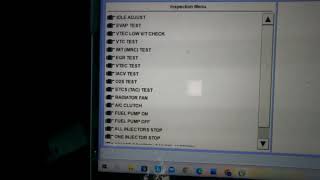
- Honda Diagnostic System (HDS) or compatible aftermarket scanner (e.g., Foxwell NT510): ETCS TEST -> TP POSITION CHECK -> Clear — This function is critical for Drive-by-Wire models after cleaning the throttle body. It erases the PCM's learned values for the old, dirty throttle position, which is required before the idle relearn procedure can succeed.
- Honda Diagnostic System (HDS): PCM Reset — This function performs a soft reset of the Powertrain Control Module, clearing adaptive memory. It is often performed as part of the complete throttle relearn sequence after clearing the TP learned value.
- Bi-directional Scan Tool: IAC Duty Cycle Actuation / IAC Step Command — For cable-throttle models, this command allows a technician to manually command the IAC valve to open and close. If the RPM does not change when commanded, it confirms the IAC valve is stuck, clogged, or has failed electrically.
Wiring & Ground Locations
- G101 — A critical ground point typically bolted to the thermostat housing or the intake manifold plenum, often near the thermostat.. G101 is the main ground termination point for the PCM and multiple critical sensors, including those that provide data for idle control. A loose, corroded, or broken G101 connection can cause erratic sensor readings, leading to incorrect idle calculations and triggering a P0507. It is a very common failure point that mimics other issues.
Real Owner Repair Stories
- YouTube user comment on 'The Offroading Mechanic' video (2007 Honda CR-V) — High idle and P0507 code immediately after cleaning the throttle body.
❌ Tried (didn't work) Initial throttle body cleaning
✅ What actually fixed it The problem was not the throttle body itself, but a faulty intake air bypass thermal valve. Replacing this separate valve resolved the high idle issue. - FixItPhillip YouTube video (2004 Honda CR-V 2.4L VTEC) — P0507 code with idle surging up and down on its own in Park or Neutral.
❌ Tried (didn't work) Checking for vacuum leaks (none were found).
✅ What actually fixed it The Idle Air Control (IAC) valve was removed from the bottom of the throttle body. It was heavily corroded and stuck. The technician disassembled and thoroughly cleaned the valve, freeing its internal mechanism. After reinstallation (with a small amount of silicone on the old gasket), the idle surge was fixed. - Honda-Tech forum user (2000 Honda Civic Si) — No Check Engine Light, no spark, no fuel pump prime, OBD scanner cannot connect to ECU.
❌ Tried (didn't work) Replacing main relay, Checking all fuses
✅ What actually fixed it The issue was a failed wire in the harness leading from the G101 ground on the thermostat housing. Although the ground bolt itself was clean and tight, the wire had frayed or broken inside the loom. Testing continuity from the main relay plug to the G101 bolt confirmed the open circuit.
"I Checked Everything" — The Actual Cause
- In many cases for P0507 on these Hondas, a smoke test will come back clean because the issue is not a traditional vacuum leak. The root cause is often the PCM's inability to adapt to a change, such as a newly cleaned throttle body, or a component that is failing internally without creating an external leak, like a stuck-open PCV valve or a malfunctioning IAC valve.
When the Usual Fixes Don't Work
- While the most common fix is cleaning the throttle/IACV and performing a relearn, a significant number of owners report that this does not solve the problem. In these cases, the issue often traces back to less obvious sources. One owner on a forum for 2007 CR-Vs found the ultimate cause to be a faulty intake air bypass thermal valve, a mechanical part that was creating a vacuum leak after the engine warmed up. Another common story involves a faulty PCV valve that is stuck open, creating a vacuum leak that a smoke test might not immediately reveal. Finally, issues with the main ECU ground (G101) on the thermostat housing are a notorious source of strange idle problems that can mimic a bad IACV or vacuum leak.
Model Year Variations Within This Range
- approx. 1990-2000: Many early models used a 2-wire rotary solenoid IACV. These are tested by checking for resistance between the two pins, which should be around 8-12 ohms.
- approx. 2001-2005: Many later cable-throttle models switched to a 3-wire IACV. These are tested by measuring resistance from the center pin to each of the outer pins, with a typical spec of 16-28 ohms for each side.
- approx. 2006-2010: These models use Drive-by-Wire (DBW) electronic throttle bodies, eliminating a separate IACV. The fix almost always involves cleaning the throttle body and performing a specific two-part reset procedure: clearing the learned throttle values with a scan tool, followed by a manual idle relearn.
Diagnostic Flowchart
Other Known Issues on This Vehicle
Issues unrelated to this code that are worth knowing about as an owner of this generation:
- Automatic Transmission Failure (early 2000s) 🔴 High — Very common on 1998-2004 Accords (especially V6) and Odysseys, often failing before 100,000 miles. Symptoms include harsh shifting, slipping, and failure to engage gears. (Ref: Multiple recalls and warranty extensions were issued, but most have expired.)
- Cracked Engine Block (R18 Engine) 🔴 High — Affects 2006-2008 and some 2009 Civics. A casting defect can cause a coolant leak from a crack in the engine block, leading to overheating and engine failure. (Ref: Honda issued a 10-year, unlimited mileage warranty extension (now expired for most vehicles) to cover this repair.)
- Premature Rear Brake Wear (2008+ Accord) 🟠 Medium — Common on 2008-2012 Accords. The rear brake pads wear out much faster than the front pads, often needing replacement as early as 20,000-30,000 miles due to brake system proportioning.
- Failing Clear Coat / Peeling Paint 🟡 Low — Widespread across many Honda models from the late 1990s through the late 2000s, particularly in dark colors. The clear coat fails, leading to a chalky, peeling appearance. (Ref: Honda faced class-action lawsuits and extended paint warranties for some models/years, but these have largely expired.)
- Faulty Ignition Switch 🔴 High — Common on 1998-2002 Accords. The switch can wear out and cause the engine to stall while driving. (Ref: A recall was issued for this problem.)
- Clogged EGR Ports (V6 Models) 🟠 Medium — Common on J-series V6 engines from the late 90s and early 2000s. The EGR passages in the intake manifold clog with carbon, causing poor performance and codes like P0401. (Ref: Honda issued TSB 05-026 extending the warranty for this issue on some Odyssey and Pilot models.)
Used vs. New Parts: Buying Guide for This Vehicle
When a used part is the smart pick: A used OEM throttle body (either cable or electronic) from a reputable salvage yard is often a smart choice. These parts rarely fail mechanically and usually just need a thorough cleaning. A used IACV can also be a good option, provided it is a genuine OEM part (Denso, Keihin) and not a cheap aftermarket replacement.
Donor-vehicle mileage cap: roughly under 150000 miles for the part to have meaningful remaining life.
What to inspect on the donor part:
- For throttle bodies, check for a smooth, non-binding throttle plate movement and ensure the connectors are not damaged.
- For IACVs, inspect the ports for excessive corrosion or damage. If possible, test the resistance to ensure it's within spec before purchasing.
- Look for parts from vehicles that were clearly in a rear-end collision, suggesting the engine was running fine before the accident.
OEM-only on this vehicle (don't cheap out):
- Idle Air Control Valve (IACV)
- PCV Valve
Aftermarket brands forum-validated for this vehicle:
- Denso (often the original OEM supplier for Honda)
- Standard Motor Products (SMP) - often considered a reliable Tier 1 aftermarket option
Brands owners have reported issues with on this vehicle:
- Unnamed, no-brand 'white box' parts from online marketplaces. These frequently have incorrect coil resistances or use inferior materials, leading to failure within a short period.
Real Owner Stories
Aggregated from forums and TSBs cited above. Mileages and costs reflect what owners reported in those sources.
2006 Honda Civic
Symptoms: The owner experienced a 4-month battle with a high idle after a mechanic replaced the throttle body without a relearn. Symptoms included RPM jumps with electrical load and the car pulling hard at stops.
What fixed it: Using a scan tool to reset the throttle's learned values before performing the relearn procedure.
Source hint: Honda Civic Forum - 'High idle P0507'
2003-2007 Honda Accord Drive-by-Wire
Symptoms: The idle remained high even after cleaning the throttle body and attempting the manual relearn multiple times.
What fixed it: A shop used a proper Honda HDS scanner to clear the learned values.
Source hint: DriveAccord.net thread
Acura MDX (J-Series V6)
Symptoms: After cleaning the throttle body, the vehicle developed a P0507 code and an SH-AWD warning light (77).
What fixed it: Resetting the learned 'TPS Position' via a scan tool.
Source hint: AcuraZine - 'P0507 and SH-AWD:77 after Cleaning Throttle Body'
Related OBD-II Codes
Frequently Asked Questions
I cleaned the throttle body on my 2007 Honda Accord and now the idle is even higher. Did I break something?
Does Acura have a specific bulletin regarding P0507 after a throttle body service?
Why is my Acura MDX showing an SH-AWD light along with the P0507 code?
Can a simple PCV valve cause a P0507 high idle on a Honda?
Is there a general Honda TSB for using the diagnostic system to reset these modules?
My 2006 Civic idle jumps when I use the power windows. Is this related to P0507?
Helpful Videos
We Have This Part in Stock





The information in this article is provided for general reference and educational purposes only. Vehicle specifications, procedures, and part compatibility can vary by production date, trim level, and region. Always consult your vehicle's factory service manual and verify part numbers before purchasing or performing repairs. Safety-critical components such as airbags, seat belts, and braking systems should be installed by a qualified professional.
- Honda General:
- 🎬 Helpful Videos
- 🛍️ Shop This Part
- What's Unique About the 1990-2010 Honda General
- Symptoms You May Notice
- Most Likely Causes
- Rare But Worth Checking
- Diagnosis Steps
- Parts You'll Likely Need
- Related Codes That Often Appear With This One
- Technical Service Bulletins (TSBs) & Recalls
- Platform-Specific Known Issues
- Mechanic-Grade Diagnostic Values
- Scan Tool Commands That Help
- Wiring & Ground Locations
- Real Owner Repair Stories
- "I Checked Everything" — The Actual Cause
- When the Usual Fixes Don't Work
- Model Year Variations Within This Range
- Diagnostic Flowchart
- Other Known Issues on This Vehicle
- Used vs. New Parts: Buying Guide for This Vehicle
- Real Owner Stories
- 2006 Honda Civic
- 2003-2007 Honda Accord Drive-by-Wire
- Acura MDX (J-Series V6)
- Related OBD-II Codes
- Frequently Asked Questions
- 🎟️ Get 5% Off