

P0507 on 2007-2011 Honda CR-V: High Idle Causes and Fixes
On a 2007-2011 Honda CR-V, P0507 is almost always caused by a dirty electronic throttle body or a vacuum leak from a bad PCV valve. The most common fix is to clean the throttle body and perform an idle relearn procedure, which is a low-cost DIY job.
- P0507 on this CR-V is most often a maintenance issue, not a broken part.
- ALWAYS perform the idle relearn procedure after cleaning the throttle body or disconnecting the battery.
What's Unique About the 2007-2011 Honda CR-V
The key detail for the 2007-2011 CR-V is its use of a drive-by-wire throttle system, which integrates idle control into the main throttle body. Unlike older Hondas, there is no separate Idle Air Control (IAC) valve to clean or replace. A very common scenario for this code is an owner cleaning the throttle body or disconnecting the battery and then failing to perform the mandatory 'idle relearn procedure', causing the computer to use incorrect baseline settings and setting the P0507 code.
Symptoms You May Notice
- Check Engine Light is on
- Engine idles higher than normal (e.g., 900-1500 RPM)
- Rough or surging idle
- Vehicle may feel like it's lunging or hard to stop
- Increased fuel consumption.
- Car may shake slightly at idle.
- Replacing the entire throttle body assembly before attempting to clean it and perform an idle relearn.
- Searching for or attempting to replace a non-existent Idle Air Control (IAC) valve.
- Replacing O2 sensors or other components before checking for simple vacuum leaks.
Most Likely Causes
- Dirty Throttle Body 🔴 High Probability Carbon and oil vapor from the PCV system can build up around the throttle plate, preventing it from closing completely at idle. This lets in extra air, causing the high idle. This is the most frequent cause of P0507 on this vehicle.
How to confirm: Visually inspect the throttle bore and plate for a ring of black carbon buildup. The plate should be shiny and the bore clean. A user on Honda-Tech described getting the P0507 code immediately after cleaning the throttle body, highlighting the sensitivity of the system.
Typical fix: Carefully clean the throttle body bore and plate with a dedicated throttle body cleaner and a soft cloth. An idle relearn procedure is mandatory after cleaning.
Est. part cost: $5-$15 - Idle Relearn Procedure Not Performed 🔴 High Probability The PCM needs to learn the new 'closed' position of the throttle plate after it has been cleaned or after the battery has been disconnected. Without this procedure, its stored values are incorrect, leading to a high idle. 🎬 Watch: Troubleshooting a P0507 code and idle issues.
How to confirm: This is the likely cause if the P0507 code appeared immediately after cleaning the throttle body, replacing the battery, or if the battery died.
Typical fix: Perform the idle relearn procedure. The official Honda procedure requires warming the engine to operating temperature (radiator fan cycles on), then letting it idle for 5 minutes with no accessories on. A scan tool (HDS) can confirm the learn status. Some owners have success simply by disconnecting the battery for 10+ minutes to force a reset, then performing the manual relearn.
Est. part cost: $0 - Vacuum Leak (especially PCV Valve) 🟡 Medium Probability The PCV (Positive Crankcase Ventilation) valve can get stuck open, creating a constant vacuum leak. Hoses can also become brittle and crack over time, letting unmetered air into the intake manifold.
How to confirm: Listen for a hissing sound near the engine. A professional can perform a smoke test to pinpoint the exact location of the leak. Common leak points include the PCV valve and hose, intake manifold gasket, and brake booster hose.
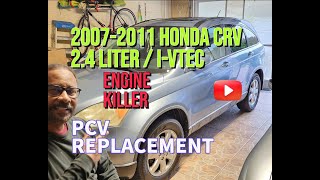
Typical fix: Replace the faulty PCV valve or cracked vacuum hose. The PCV valve is an inexpensive and common maintenance item. 🎬 See this walkthrough for replacing the PCV valve.
Est. part cost: $20-$60
Rare But Worth Checking
- Faulty Electronic Throttle Body: While cleaning usually solves the issue, the internal motor or position sensors can fail, requiring a full replacement. This should only be considered after all other causes are ruled out. A user on Reddit reported that replacing a dirty intake manifold and resetting the throttle position sensor finally solved their persistent P0507 issue.
- PCM Software Issue: In very rare cases, the Powertrain Control Module (PCM) may have outdated software. A dealer or specialized shop can check for and apply updates using a Honda Diagnostic System (HDS).
Diagnosis Steps
- Scan for other DTCs. Address any other codes first.
- Inspect for obvious vacuum leaks. Listen for hissing sounds around the intake manifold, PCV valve, and brake booster hose. Check the integrity of all vacuum lines connected to the intake.
- Remove the air intake hose and visually inspect the throttle body for carbon buildup.
- If dirty, clean the throttle body thoroughly using appropriate cleaner and a rag. Do NOT spray directly into the electronics. It is best to remove the throttle body for a complete cleaning. 🎬 Watch: How to remove and clean the throttle body.
- Reassemble and immediately perform the Idle Relearn Procedure. The official Honda procedure is: Start the engine and hold the RPM at 3,000 (in Park/Neutral) until the radiator fan comes on or coolant temp reaches 194°F (90°C). Then, let it idle for at least 5 minutes with no loads (A/C, radio, lights off). The time the fan is running does not count towards the 5 minutes.
- If the idle is still high, perform a smoke test to find any hard-to-see vacuum leaks.
- Check the PCV valve. It is located on the valve cover, typically threaded into the intake manifold or connected via a hose. It should rattle when shaken; if it doesn't, or if it's oily, replace it.
- If all else fails, the issue may be with the throttle body's internal electronics or a PCM software issue, requiring professional diagnosis with a Honda Diagnostic System (HDS) scan tool.
Parts You'll Likely Need
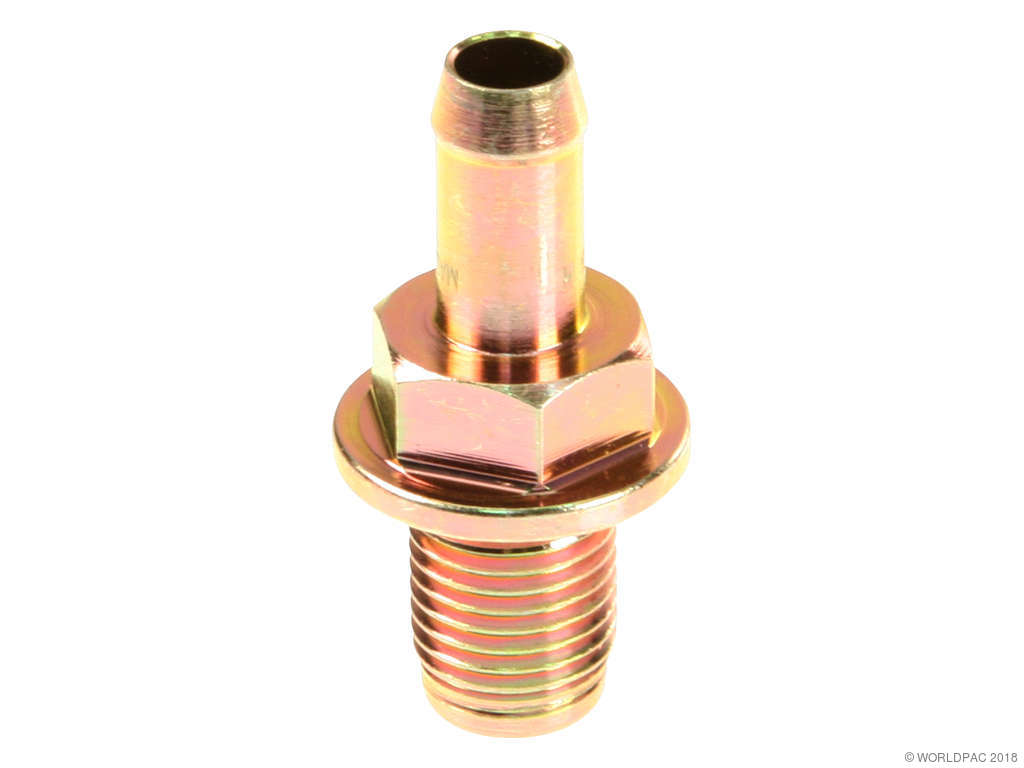
- PCV Valve
(OEM #17130-RZA-A01)— This valve can get stuck open, causing a vacuum leak. It's an inexpensive part and a common cause of high idle issues. The part number 17130-PND-A01 is for the older generation CR-V and is incorrect for this vehicle.
Trusted brands: Honda (Genuine), Standard Motor Products (V453), Carquest (PCA1024)
OEM price range: $30-$45
Aftermarket price range: $15-$25 - Throttle Body Gasket
(OEM #16176-RTA-004)— This should be replaced whenever the throttle body is removed for a thorough cleaning to prevent a new vacuum leak.
Trusted brands: Honda (Genuine), Fel-Pro, Mahle
OEM price range: $10-$20
Aftermarket price range: $5-$10
Technical Service Bulletins (TSBs) & Recalls
- Honda TSB 09-010: Addresses a loud rattling noise from the engine at cold start-up, caused by a defective VTC actuator. While not directly related to P0507, it's a very common engine issue for this platform.
Scan Tool Commands That Help
- Honda Diagnostic System (HDS): ETCS (TAC) Test — This function in the HDS allows a technician to test the electronic throttle control system's functionality, including the throttle plate motor and sensors, to verify if the throttle body is responding correctly to PCM commands.
- Honda Diagnostic System (HDS): Reset PCM — This command forces a hard reset of the Powertrain Control Module. It should be performed before the idle learn procedure to clear any learned bad values that could be causing the high idle.
- Honda Diagnostic System (HDS): Monitor OBD STATUS for DTC P0507 — After performing a fix, a technician uses this to monitor the system in real-time to see if the test 'PASSED', 'FAILED', or is still 'EXECUTING'. This confirms if the repair was successful without waiting for the check engine light to return.
Wiring & Ground Locations
- G101 — Located on the left side of the engine, often on or near the thermostat housing.. This is a primary ground termination point for the PCM and multiple critical engine management sensors and relays, including the main relay and power steering pressure switch. A poor connection at G101 can cause erratic PCM behavior and incorrect sensor readings, potentially leading to high idle conditions.
- G102 — Located at the front of the engine.. Provides another essential engine ground path. Verifying this ground is clean and tight is part of a thorough electrical diagnosis for persistent electronic throttle control issues.
- ETCS Control Relay — Located in the under-dash fuse/relay box.. This relay powers the electronic throttle control system. A malfunction can trigger DTC P1659 (ETCS Control Relay Off Malfunction) and may indirectly contribute to idle control problems. Diagnosis involves checking for battery voltage at specific pins in the relay socket.
Real Owner Repair Stories
- YouTube channel 'Piston Break' (Honda CR-V with K24 engine, year not specified but within the generation.) — Persistent P0507 code and a lean code (P0171).
❌ Tried (didn't work) Found and fixed a rotted PCV hose., Cleaned the throttle body., Performed idle relearn procedure by disconnecting the battery.
✅ What actually fixed it The P0507 code remained after fixing the vacuum leak. The final fix required replacing the entire electronic throttle body. The mechanic suspected that either cleaning it caused a failure or it was already worn out. A tiny amount of gasket maker was also used on the new gasket to seal any surface imperfections on the intake manifold.
"I Checked Everything" — The Actual Cause
- In one documented case on a 2012 CR-V (next generation, but same principle), a smoke test revealed no vacuum leaks. The root cause was found to be heavy carbon deposits inside the throttle body, which restricted proper plate movement and confused the ECM. A thorough cleaning and idle relearn resolved the P0507 code.
OEM Part Supersession History
16400-RZA-A01→N/A— This is the primary part number for the electronic throttle body for this vehicle range.
Heads up: This part is specified for US and Mexico-built CR-Vs. Japanese-built models may use a different part number. Verify with VIN before ordering.
Model Year Variations Within This Range
- 2010-2011: The 2010-2011 models received a facelift which included minor engine updates for slightly more horsepower and fuel efficiency. While the fundamental K24Z engine architecture and electronic throttle control system remained the same, there could be subtle differences in PCM software versions. However, the primary causes and fixes for P0507 remain consistent across the 2007-2011 range.
Diagnostic Flowchart
Other Known Issues on This Vehicle
Issues unrelated to this code that are worth knowing about as an owner of this generation:
- VTC Actuator Rattle on Cold Start 🟠 Medium — Very common, especially in colder climates. The noise is a brief, loud rattle for 1-2 seconds immediately after a cold start. (Ref: TSB 09-010, TSB 16-012.)
- A/C Compressor Failure ('Black Death') 🔴 High — Common issue where the compressor fails internally, sending metal debris throughout the entire A/C system, requiring a costly replacement of all major components. (Ref: Warranty Extension TSB #SB-12-072 was issued but has since expired.)
- Faulty Door Lock Actuators 🟡 Low — Extremely common for one or more door lock actuators to fail, causing doors to not lock or unlock with the remote or switch. (Ref: TSB 14-083 and 14-084; a class-action lawsuit led to a warranty extension which has now expired.)
- Rear Differential Noise on Turns 🟡 Low — A groaning or growling noise from the rear when making slow turns, typically caused by worn-out differential fluid. (Ref: Honda TSB recommends replacing the fluid with genuine Dual Pump System Fluid (DPSF) and burnishing the clutches.)
- Excessive Oil Consumption 🟠 Medium — More prevalent in the 2010-2011 models, some engines may consume oil, requiring frequent top-offs between changes.
Used vs. New Parts: Buying Guide for This Vehicle
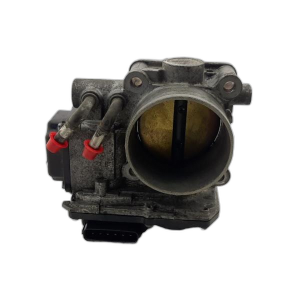
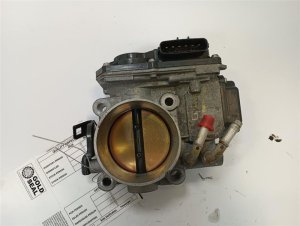
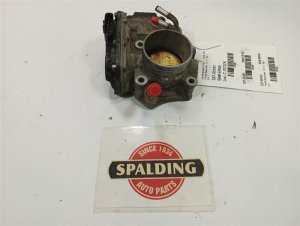
When a used part is the smart pick: A used OEM electronic throttle body from a reputable salvage yard can be a cost-effective alternative to a new unit, which is very expensive. Since failure often results from wear or damage during cleaning, a used part can be a viable fix.
Donor-vehicle mileage cap: roughly under 120000 miles for the part to have meaningful remaining life.
What to inspect on the donor part:
- Inspect the throttle plate for deep scoring or damage.
- Check the electrical connector for corrosion or bent pins.
- Ensure the throttle plate moves smoothly by hand (with the unit unpowered).
- If possible, get a part from a vehicle with known lower mileage and no front-end collision damage.
OEM-only on this vehicle (don't cheap out):
- PCV Valve: Aftermarket PCV valves can have incorrect flow rates, leading to persistent issues. Given the low cost of the genuine Honda part, it is strongly recommended to use OEM.
- Throttle Body Gasket: While aftermarket gaskets from brands like Fel-Pro are generally acceptable, an OEM gasket is guaranteed to fit perfectly and prevent vacuum leaks, which is critical for this repair.
Aftermarket brands forum-validated for this vehicle:
- Standard Motor Products (for PCV valve, if OEM is unavailable)
Brands owners have reported issues with on this vehicle:
- Unbranded, 'white-box' PCV valves and electronic sensors from online marketplaces have a high failure rate and are best avoided.
Real Owner Stories
Aggregated from forums and TSBs cited above. Mileages and costs reflect what owners reported in those sources.
2010 Honda CR-V — 106000 miles
Symptoms: car shakes a little at idle and has check engine on
What fixed it: Cleaning the throttle body and checking the Idle Air Control (IAC) valve components.
Source hint: reddit r/MechanicAdvice
2007 Honda CR-V
Symptoms: 950-1000 RPM idle immediately after cleaning the throttle body by spraying cleaner directly into it
What fixed it: Performing the idle relearn procedure to reset the drive-by-wire throttle sensitivity.
Source hint: honda-tech.com: '2007 CRV Hi Idle' (Jul 6, 2020)
2007 Honda CR-V LX
Symptoms: P0507 code on a model with no IAC valve; high idle persisted after standard fixes.
What fixed it: Replacing a dirty intake manifold.
Source hint: reddit.com/r/Honda: 'P0507 Code on 2007 Honda CR-V LX but this model has no IAC'
Related OBD-II Codes
Frequently Asked Questions
Does the 2007 Honda CR-V LX have an Idle Air Control (IAC) valve to replace for code P0507?
Why did my 2007-2011 CR-V start idling high immediately after I cleaned the throttle body?
Is there a TSB for the rattling noise I hear on cold starts alongside my idle issues?
Can a dead battery cause the P0507 code on my 2008-2012 Accord or CR-V?
What is the official Honda idle relearn procedure for the 2007-2011 CR-V?
Could a hissing sound from the engine bay be related to P0507?
Helpful Videos
Used OEM Parts in Stock
New Aftermarket Parts Available


The information in this article is provided for general reference and educational purposes only. Vehicle specifications, procedures, and part compatibility can vary by production date, trim level, and region. Always consult your vehicle's factory service manual and verify part numbers before purchasing or performing repairs. Safety-critical components such as airbags, seat belts, and braking systems should be installed by a qualified professional.
- Honda CR-V:
- 🎬 Helpful Videos
- 🛍️ Shop This Part
- What's Unique About the 2007-2011 Honda CR-V
- Symptoms You May Notice
- Most Likely Causes
- Rare But Worth Checking
- Diagnosis Steps
- Parts You'll Likely Need
- Technical Service Bulletins (TSBs) & Recalls
- Scan Tool Commands That Help
- Wiring & Ground Locations
- Real Owner Repair Stories
- "I Checked Everything" — The Actual Cause
- OEM Part Supersession History
- Model Year Variations Within This Range
- Diagnostic Flowchart
- Other Known Issues on This Vehicle
- Used vs. New Parts: Buying Guide for This Vehicle
- Real Owner Stories
- 2010 Honda CR-V — 106000 miles
- 2007 Honda CR-V
- 2007 Honda CR-V LX
- Related OBD-II Codes
- Frequently Asked Questions
- 🎟️ Get 5% Off