

P0507 on 2009-2020 Dodge Journey 3.6L: Causes for High Idle and How to Fix It
For a Dodge Journey with a 3.6L Pentastar V6, code P0507 means the engine is idling higher than it should. The most common causes are a vacuum leak from a bad PCV valve or intake gasket, or a dirty electronic throttle body. Cleaning the throttle body is a good first step and costs under $20. An idle relearn procedure is often required after any repair.
- P0507 on your Dodge Journey 3.6L means the engine is idling too fast.
- Start by inspecting for vacuum leaks and cleaning the electronic throttle body, as these are the most likely and cheapest fixes.
- The PCV valve is a known weak point on this engine; if it's original, consider replacing it as it can cause a vacuum leak when it fails.
- This engine does not have a separate Idle Air Control (IAC) valve.
- After cleaning or replacing the throttle body, a relearn procedure may be required to restore normal idle.
What's Unique About the 2009-2020 Dodge Journey

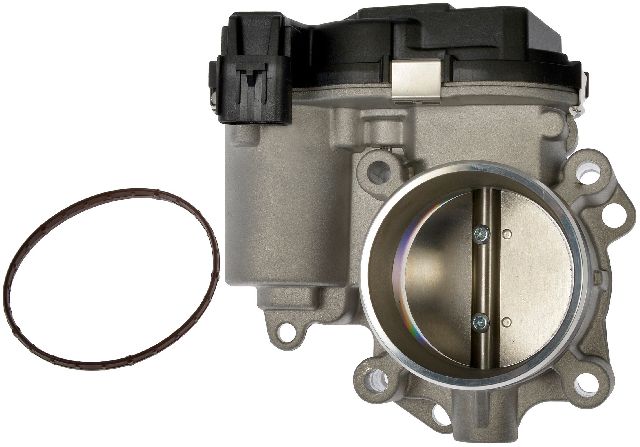
The Dodge Journey with the 3.6L Pentastar V6 integrates idle control directly into the electronic throttle body, so there is no separate Idle Air Control (IAC) valve to fail. Problems with high idle are therefore almost always linked to unmetered air entering the engine. This can come from a dirty throttle body plate that can't close properly, a failed PCV valve (a known issue on this engine), or cracked intake manifold gaskets. Because this engine is used in millions of Chrysler, Dodge, and Jeep vehicles, these issues are well-documented across many models.
Generation note: The Dodge Journey was produced in a single generation from 2009-2020, but the 3.6L Pentastar V6 engine was introduced with the 2011 model year facelift. This guide is specific to the 2011-2020 models equipped with the 3.6L V6. The Pentastar engine itself was significantly updated for the 2016 model year, but the primary causes for P0507 remain consistent.
Symptoms You May Notice
- Check Engine Light is on
- Engine idle speed is noticeably high (e.g., 900-1200 RPM at a stop)
- Rough or surging idle
- Harsh or 'clunky' engagement when shifting from Park to Drive or Reverse
- Increased fuel consumption
- In some cases, the engine may be difficult to start or may stall.
- Replacing the accelerator pedal, as it is part of the electronic throttle control system but rarely the cause for a high idle code.
- Looking for a separate Idle Air Control (IAC) valve, which this engine does not have.
Most Likely Causes

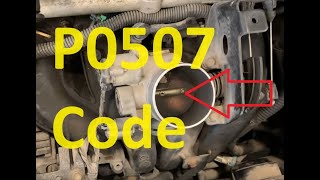
- Dirty or Sticking Electronic Throttle Body 🔴 High Probability Carbon and oil vapor from the PCV system can build up around the throttle plate, preventing it from closing completely at idle. This small opening allows extra air in, raising the idle speed. This is one of the most common causes for P0507 on this engine.
How to confirm: Remove the air intake tube connected to the throttle body and visually inspect the throttle plate and bore for black carbon buildup. The buildup is often most significant on the back side of the plate.
Typical fix: Clean the throttle body bore and plate with a dedicated throttle body cleaner and a soft cloth or brush. Do not force the plate open manually. After cleaning, a throttle relearn procedure is highly recommended.
Est. part cost: $10 - $20 for cleaner - Vacuum Leak 🔴 High Probability Vacuum leaks are a very common cause of high idle on the Pentastar engine. Unmetered air enters the engine, the O2 sensors detect a lean condition, and the PCM may add more fuel, which can contribute to a higher, unstable idle.
How to confirm: Listen for a hissing sound around the engine bay at idle. A more definitive method is to use a smoke machine to feed smoke into the intake system and watch for where it escapes, paying close attention to the intake manifold gaskets and PCV hoses. You can also carefully spray brake cleaner or a propane torch (unlit) around gasket areas and vacuum hoses; a change in engine RPM indicates you've found the leak.
Typical fix: Replace the cracked hose or faulty gasket. The intake manifold gaskets are a frequent culprit.
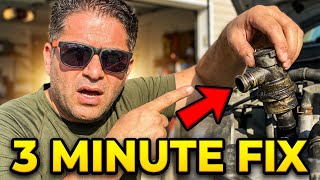
Est. part cost: $10 - $90 - Faulty PCV Valve 🟡 Medium Probability The Positive Crankcase Ventilation (PCV) valve can get stuck open, creating a significant internal vacuum leak. This is a common wear item on many engines, including the Pentastar, and is an inexpensive first step in diagnosis.
How to confirm: Locate the PCV valve on the rear of the passenger-side cylinder head (Bank 1). A stuck-open valve may cause a loud sucking or hissing noise. One owner reported breaking the brittle PCV hose during another repair, which immediately caused a P0507 code and an idle of 1600+ RPM. After removal, if the valve does not rattle when shaken, it is stuck and needs replacement.
Typical fix: Replace the PCV valve. It is an inexpensive and relatively simple replacement.
Est. part cost: $15 - $50
Rare But Worth Checking
- Failing Electronic Throttle Body: If cleaning the throttle body and performing a relearn doesn't resolve the issue and there are no vacuum leaks, the internal motor or position sensor of the throttle body itself may be failing. Checking for a stable 5V reference at the throttle body's electrical connector can help diagnose this.
- Powertrain Control Module (PCM) Fault: In very rare cases, the PCM itself can be the source of the problem, incorrectly commanding the idle speed or requiring a software update. This should only be considered after all other possibilities have been exhausted. Some TSBs for other issues involve flashing the PCM.
Diagnosis Steps

- Check for any other stored trouble codes with an OBD-II scanner. Codes like P0171, P0174, or P2173 strongly suggest a vacuum leak.
- Perform a thorough visual inspection of all vacuum hoses connected to the intake manifold, brake booster, and PCV system for cracks or disconnections. The PCV hose is particularly prone to becoming brittle.
- With the engine running, listen for audible hissing noises that would indicate a vacuum leak.
- Remove the air intake duct and inspect the electronic throttle body for carbon buildup. If dirty, clean it thoroughly with throttle body cleaner and a soft cloth.
- Inspect and test the PCV valve. Remove it and shake it; if it doesn't rattle, it's likely stuck and needs replacement. Given its low cost, some owners replace it proactively.
- If no obvious leaks are found, perform a smoke test to pinpoint the source of the unmetered air. Pay close attention to the upper and lower intake manifold gaskets.
- After any cleaning or replacement of the throttle body, or even after disconnecting the battery, perform an idle relearn procedure. This can sometimes be done without a scan tool by disconnecting the battery for 30 seconds, reconnecting, and letting the vehicle idle. A more reliable method uses a bidirectional scan tool to run the 'ETC Learn' function.
- If the issue persists, check the electrical connector at the throttle body for damage, corrosion, and proper voltage.
Parts You'll Likely Need

- PCV Valve
(OEM #05184354AE)— A common failure point that gets stuck open, causing a vacuum leak and high idle. It's an inexpensive and easy part to replace as a first step.
Trusted brands: Mopar, Standard Motor Products, Dorman
OEM price range: $25-$50
Aftermarket price range: $15-$30 - Intake Manifold Gasket Set (Upper & Lower)
(OEM #05184331AC)— The gaskets can become brittle and crack over time, creating a vacuum leak that is a very common cause for high idle and lean codes. A smoke test is the best way to confirm a leak here.
Trusted brands: Mopar, Fel-Pro, Mahle
OEM price range: $50-$90
Aftermarket price range: $30-$60 - Electronic Throttle Body
(OEM #05184349AF)— Replaced if cleaning does not fix a sticking throttle plate or if the internal electronics fail. A relearn procedure is mandatory after replacement.
Trusted brands: Mopar, Bosch, Standard Motor Products
OEM price range: $200-$300
Aftermarket price range: $120-$200
Related Codes That Often Appear With This One
- P0171 — System Too Lean (Bank 1) - A vacuum leak that causes P0507 also allows unmetered air into the engine, creating a lean condition.
- P0174 — System Too Lean (Bank 2) - Similar to P0171, this indicates a lean condition on the second bank of the V6 engine, often pointing to a large vacuum leak affecting both banks, such as the intake manifold gasket.
- P2173 — High Airflow/Vacuum Leak Detected (Slow Accumulation) - This code is often seen with P0507 and points directly to a vacuum leak or throttle body issue.
Platform-Specific Known Issues
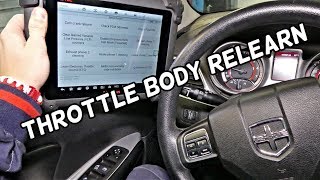
- Throttle Relearn Procedure: After cleaning/replacing the throttle body or disconnecting the battery, a relearn is often necessary. A common DIY method is to disconnect the battery for several minutes, reconnect, turn the ignition to 'ON' (without starting) for 10 seconds, then turn it off for 10 seconds, and finally start the engine and let it idle to relearn. For a guaranteed result, a bidirectional scan tool can perform the 'ETC Learn' or 'Throttle Body Relearn' function.
Mechanic-Grade Diagnostic Values
- 5-Volt Reference at Throttle Body Connector — expected: 4.5V to 5.2V with Key On, Engine Off (KOEO) at Pin 1.. Failure: Voltage significantly below 4.5V suggests a short in the reference circuit or a PCM issue.
- Throttle Position Sensor (TPS) Signal Voltage — expected: On a scan tool, voltage should sweep smoothly from ~0.5V (closed throttle) to ~4.5V (wide-open throttle).. Failure: Voltage is stuck, jumps erratically, or has dead spots as the throttle plate is moved.
- Throttle Body Motor Resistance — expected: Between 2.5 and 25.0 ohms when measured between the two motor pins (Pins 5 & 6) on the throttle body itself.. Failure: An open circuit (infinite resistance) indicates a failed internal motor.
- Long-Term and Short-Term Fuel Trims (LTFT/STFT) at warm idle — expected: Ideally between -5% and +5%. Values up to +/-10% can be acceptable.. Failure: Consistently high positive trims (e.g., > +10%) strongly suggest a vacuum leak, as the PCM is adding fuel to compensate for unmetered air.
- Target vs. Actual Idle RPM — expected: Normal warm idle is approximately 650-750 RPM. The 'Actual RPM' PID should match the 'Target Idle' PID on a scan tool.. Failure: P0507 sets when Actual RPM is 100-200 RPM above Target RPM for a sustained period.
Scan Tool Commands That Help
- wiTECH or other professional bidirectional scanner: ETC Learn / Throttle Body Relearn — This function is mandatory after replacing the electronic throttle body and highly recommended after cleaning it or disconnecting the battery. It resets the learned minimum throttle position values in the PCM, allowing for correct idle speed control.
Wiring & Ground Locations
- Electronic Throttle Body Connector (6-Pin) — On the throttle body, located at the top front of the engine where the air intake duct connects.. This is the central connection point for all throttle control signals. Pin damage, corrosion, or a loose connection here will directly cause throttle-related codes, including P0507. The pinout is: Pin 1: 5V Supply (F855 Circuit), Pin 2: TPS 2 Signal (K122 Circuit), Pin 3: Sensor Ground (K922 Circuit), Pin 4: TPS 1 Signal (K22 Circuit), Pin 5: ETC Motor (+), Pin 6: ETC Motor (-).
- Main Engine Ground Stud — On the driver's side strut tower in the engine compartment. The main negative battery cable connects here, and another cable runs from this stud to the engine block.. A weak or corroded main ground can cause a host of unpredictable electrical issues, including erratic sensor readings and incorrect operation of the electronic throttle body, potentially leading to high idle.
- Passenger Side Ground Points — There are ground studs on the passenger side strut tower. One forum user also identified a key ground point on the body just in front of the ABS module connector and behind the coolant reservoir.. Multiple systems ground in this area. Ensuring these connections are clean and tight is crucial for stable voltage supply to all engine management components.
- PCM Connector C2 — The Powertrain Control Module (PCM) is located on the driver's side of the engine compartment. C2 is one of the large multi-pin connectors, often black with an orange insert.. The throttle body circuits terminate at this connector. In rare cases of persistent issues where the throttle and wiring test good, checking for continuity and pin integrity at the PCM itself is the final step.
Real Owner Repair Stories
- Reddit user, r/AskAMechanic (Chrysler with 3.6L Pentastar Engine) — P0562 (System Voltage Low), high idle, and electronic throttle control warning light (red lightning bolt).
❌ Tried (didn't work) Throttle relearn procedure, Replacing the electronic throttle body
✅ What actually fixed it A combination of two issues were found. First, a vacuum leak in the PCV hose was repaired, which made the idle smoother. The final fix was replacing a weak battery. The old battery could start the car but dropped to 10.4 volts during cranking, causing system voltage to be too low for the sensitive electronics to operate correctly, leading to the throttle errors and high idle. - Dodge Owner Report (NHTSA ODI #11208215) — An owner of a related Dodge model reported that on acceleration, the vehicle would occasionally feel like it lost speed or stalled. The check engine light triggered code P0507, which the owner noted could be related to fuel pressure issues or electrical health, leading them to replace the battery.
"I Checked Everything" — The Actual Cause
- In one documented case on a 3.6L Pentastar, a persistent high idle with codes P0562 and throttle warnings was not caused by a vacuum leak. After replacing the throttle body with no success, the root cause was found to be a weak battery. The low system voltage during operation caused erratic behavior in the electronic throttle control system, which the PCM interpreted as an idle control fault. Replacing the battery resolved the issue.
OEM Part Supersession History
05184349AB, 05184349AC, 05184349AD→05184349AF— Part has been revised and updated by the manufacturer over the years to improve reliability.
Heads up: All listed part numbers are generally interchangeable for the 2011-2020 3.6L Journey, but it is always best to use the latest revision (AF).
Model Year Variations Within This Range
- 2016-2020: For the 2016 model year, the 3.6L Pentastar engine was significantly upgraded (PUG). Changes included a two-stage variable valve lift (VVL) system, a higher compression ratio (11.3:1 vs 10.2:1), cooled EGR, and a new intake manifold. While the root causes of P0507 are the same, be aware that parts like the intake manifold and its gaskets may differ from the earlier 2011-2015 engines.
Diagnostic Flowchart
Other Known Issues on This Vehicle
Issues unrelated to this code that are worth knowing about as an owner of this generation:
- Rocker Arm / Lifter Failure ('Pentastar Tick') 🔴 High — Common across all years, especially pre-2016 models. Often presents as a distinct ticking noise from the top of the engine that can lead to misfires and camshaft damage if ignored. (Ref: A class-action lawsuit was filed regarding this issue, but no official recall was issued.)
- Cracked Oil Filter Housing / Cooler Assembly 🔴 High — Extremely common. The factory plastic housing becomes brittle from heat cycles and cracks, causing significant oil and/or coolant leaks into the engine valley, often mistaken for a rear main seal leak.
- Left Cylinder Head Defect (Early Models) 🔴 High — Primarily affected 2011-2013 models, causing misfires on the left bank (cylinders 2, 4, 6) due to overheating valve seats. (Ref: Chrysler issued an extended warranty (X56) for 10 years/150,000 miles and TSB 09-002-14 REV. B to address this.)
- Premature Brake Wear and Warped Rotors 🟠 Medium — Common complaint due to the vehicle's weight. Owners report vibrations when braking, often requiring premature replacement of front brake rotors.
- Water Leaks into Cabin 🟠 Medium — Reported on 2009-2018 models, water can leak through the roof or other exterior seals, soaking carpets and potentially causing electrical issues.
Used vs. New Parts: Buying Guide for This Vehicle
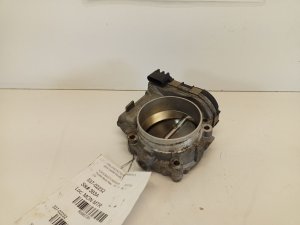
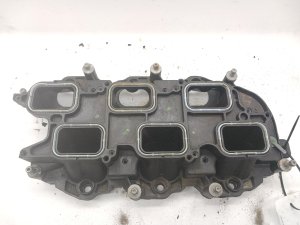
When a used part is the smart pick: A used OEM electronic throttle body from a low-mileage donor vehicle can be a cost-effective option, as they are often replaced due to misdiagnosis. A complete used intake manifold assembly can also be a good value if you suspect a crack, as it includes hoses and sensors.
Donor-vehicle mileage cap: roughly under 75000 miles for the part to have meaningful remaining life.
What to inspect on the donor part:
- For a throttle body, check for a clean throttle plate and bore with no deep scoring.
- Ensure the electrical connector pins are straight and free of corrosion.
- Ask for the donor vehicle's VIN to verify mileage and confirm it did not have extensive front-end damage.
- For an intake manifold, inspect thoroughly for any hairline cracks, especially around bolt holes and seams.
OEM-only on this vehicle (don't cheap out):
- While not strictly 'OEM-only', sensors like the throttle body are critical. Using a used OEM part is often more reliable than a new, unproven, no-name aftermarket part.
Aftermarket brands forum-validated for this vehicle:
- Intake Gaskets: Fel-Pro is a widely used and generally trusted aftermarket brand for intake manifold gaskets.
- Throttle Body: Bosch is an OEM supplier and a reliable choice. Standard Motor Products (SMP) is also a reputable aftermarket brand. For performance, BBK and MMX offer larger-bore throttle bodies.
Brands owners have reported issues with on this vehicle:
- Avoid unbranded, 'white-box' electronic throttle bodies from online marketplaces. These often have high failure rates due to poor quality internal electronics and can cause more diagnostic headaches than they solve.
Real Owner Stories
Aggregated from forums and TSBs cited above. Mileages and costs reflect what owners reported in those sources.
Chrysler vehicle (Pentastar 3.6L V6 family)
Symptoms: P0507 code present; owner was advised it was 'definitely not what I wanna see.'
What fixed it: Cleaned the throttle body and performed an idle relearn using a simple battery-disconnect procedure.
Source hint: Reddit r/MechanicAdvice - P0507. Definitely not what I wanna see.
2009-2020 Dodge Journey 3.6L Pentastar V6
Symptoms: Immediate P0507 code and an idle of 1600+ RPM.
What fixed it: Replaced a brittle PCV hose that had broken during another repair.
Source hint: Article Context - Common Causes (Faulty PCV Valve)
Dodge Nitro (Related Platform)
Symptoms: The vehicle drove normally most of the time, but occasionally felt like it lost speed or stalled during acceleration. The check engine light appeared with code P0507.
What fixed it: The owner, suspecting fuel pressure or electrical issues, replaced the battery (NHTSA ODI #11208215).
Related OBD-II Codes
Frequently Asked Questions
Why does my Dodge Journey 3.6L shift so harshly into Drive when the idle is high?
Can I clean the throttle body on my Pentastar V6 myself to fix P0507?
Is there a specific TSB for the ticking noise I hear along with my high idle issues?
Where is the PCV valve located on the Dodge Journey 3.6L?
How do I perform a throttle relearn on my Journey without a professional scan tool?
Could a cracked oil filter housing cause my P0507 code?
Helpful Videos

Used OEM Parts in Stock


New Aftermarket Parts Available




The information in this article is provided for general reference and educational purposes only. Vehicle specifications, procedures, and part compatibility can vary by production date, trim level, and region. Always consult your vehicle's factory service manual and verify part numbers before purchasing or performing repairs. Safety-critical components such as airbags, seat belts, and braking systems should be installed by a qualified professional.
- Dodge Journey:
- 🎬 Helpful Videos
- 🛍️ Shop This Part
- What's Unique About the 2009-2020 Dodge Journey
- Symptoms You May Notice
- Most Likely Causes
- Rare But Worth Checking
- Diagnosis Steps
- Parts You'll Likely Need
- Related Codes That Often Appear With This One
- Platform-Specific Known Issues
- Mechanic-Grade Diagnostic Values
- Scan Tool Commands That Help
- Wiring & Ground Locations
- Real Owner Repair Stories
- "I Checked Everything" — The Actual Cause
- OEM Part Supersession History
- Model Year Variations Within This Range
- Diagnostic Flowchart
- Other Known Issues on This Vehicle
- Used vs. New Parts: Buying Guide for This Vehicle
- Real Owner Stories
- Chrysler vehicle (Pentastar 3.6L V6 family)
- 2009-2020 Dodge Journey 3.6L Pentastar V6
- Dodge Nitro (Related Platform)
- Related OBD-II Codes
- Frequently Asked Questions
- 🎟️ Get 5% Off