

P0506 on 2018-2022 GMC Terrain: Idle Speed Low Causes and Fixes
On a 2018-2022 GMC Terrain, code P0506 is almost always caused by the charge air cooler tube disconnecting from the throttle body. This is a well-known issue addressed by multiple GM service bulletins. The fix is to re-attach the tube and install an updated retainer clip, which is a low-cost part and an easy DIY job.
- P0506 on a 2018-2022 GMC Terrain is most likely not a complex engine problem, but a simple disconnected tube.
- Before buying any parts, visually inspect the large air tube connected to the throttle body. The fix may be as simple as reconnecting it.
- For a permanent fix, install the updated retainer clip (GM Part No. 13434668) to prevent the tube from blowing off again.
- This issue will almost always be accompanied by other codes like P0299 (Underboost) and P0101 (MAF Performance), which confirm a massive air leak.
- If the tube is secure, the next most likely cause is a dirty throttle body that needs cleaning.
What's Unique About the 2018-2022 Gmc TERRAIN
The 2018-2022 GMC Terrain, particularly with the 1.5L turbo engine (RPO code LYX), has a well-documented, widespread issue with the charge air cooler (CAC) outlet tube. The factory retainer clip that secures this tube to the throttle body is a known weak point. The tube can blow off under normal turbo boost pressure, creating a massive air leak after the mass airflow sensor. This unmetered air leak is the primary reason this code appears so frequently on this specific platform, often accompanied by other codes related to underboost and air/fuel mixture. The issue is so prevalent that GM issued several service bulletins and a voluntary emissions recall to address it.
Diagnostic Flowchart
Tap your situation to follow the diagnostic path that matches what you're seeing on this vehicle.
Symptoms You May Notice
- Check Engine Light (Malfunction Indicator Lamp) is on
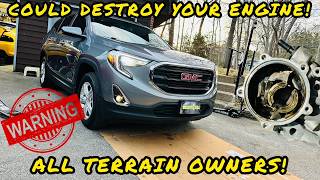
- "Reduced Engine Power" me 🎬 Watch: A mechanic explains this common Terrain failure and repair.ssage on the instrument panel
- Engine stalls or nearly stalls at idle or when coming to a stop
- Rough, unstable, or low idle
- Hesitation or stumbling on acceleration
- A loud "whoosh" or "pop" sound from the engine bay when the tube disconnects, followed by a constant hissing sound of leaking air.
- Replacing the throttle body when it only needs cleaning or when the actual fault is the disconnected CAC tube.
- Replacing the Mass Airflow (MAF) sensor due to accompanying codes like P0101, when the actual issue is the large air leak downstream from the sensor.
Most Likely Causes
- Charge Air Cooler (CAC) Outlet Tube Disconnected from Throttle Body 🔴 High Probability As documented in multiple GM Technical Service Bulletins (TSBs) and a voluntary emissions recall (N192271200), the original retainer clip design is insufficient, leading to the tube blowing off under normal turbo pressure.
How to confirm: Visually inspect the large black plastic tube that connects to the engine's throttle body, located on the driver's side of the engine. It will likely be completely disconnected or loose enough to be pulled off by hand. You will hear a significant air leak with the engine running.
Typical fix: Reconnect the tube to the throttle body. It is highly recommended to replace the original retainer clip with the updated part (GM Part No. 13434668, superseded by 84828210). Ensure the O-ring seal inside the tube is present and properly seated before reconnecting. The new clip should provide an audible 'click' when seated.
Est. part cost: $10-$25 - Dirty or Carbon-Fouled Throttle Body 🟡 Medium Probability Direct-injected engines like the 1.5L LYX can be prone to carbon buildup on intake components, including the throttle plate. This buildup can restrict the small amount of air needed to maintain a proper idle, especially if the primary CAC tube issue is not present.
How to confirm: After confirming the CAC tube is secure, remove the air intake tube from the throttle body and inspect the throttle plate and bore for black, sticky carbon deposits.
Typical fix: Clean the throttle body bore and plate with a dedicated throttle body cleaner and a soft brush or microfiber rag. An idle relearn procedure may be required after cleaning, which can be initiated with a dealer-level scan tool or sometimes by letting the vehicle idle for several minutes after reconnecting the battery.
Est. part cost: $5-$15 for cleaner - Vacuum Leak (Other than CAC Tube) ⚪ Low Probability
How to confirm: With the engine running, listen for hissing sounds from areas other than the main CAC tube. A more definitive method is to introduce smoke into the intake system with a smoke machine and watch for leaks from hoses (like PCV or EVAP lines), gaskets, or the intake manifold.
Typical fix: Replace the cracked or disconnected vacuum hose or leaking gasket.
Est. part cost: $5-$50
Diagnosis Steps
- Scan for all DTCs. Note any other codes present, as they provide critical context (e.g., P0299, P0101, P1101 are strong indicators of the main issue).
- Open the hood and perform a visual inspection. The top priority is to check the connection of the large charge air cooler tube to the throttle body on the driver's side of the engine. This is the most common failure point and is often completely disconnected.
- If the tube is disconnected, inspect the tube end and the throttle body inlet for damage. Also, ensure the O-ring seal is still inside the tube's connector. If the seal is missing or damaged, it must be replaced.
- If the tube is secure, inspect for other vacuum leaks from smaller hoses connected to the intake manifold, such as PCV or EVAP purge lines.
- If no leaks are found, remove the intake ducting from the throttle body and inspect the throttle plate for heavy carbon buildup.
- Clean the throttle body if it is dirty, using appropriate cleaner and a soft cloth.
- After any repair, clear the DTCs and perform a test drive. An audible 'click' should be heard when reconnecting the CAC tube with the new clip.
- If the problem persists after addressing leaks and cleaning the throttle body, further diagnosis of the electronic throttle control system or other engine mechanical issues may be needed.
Parts You'll Likely Need
- Charge Air Cooler Retainer Clip
(OEM #84828210)— This is the updated part specified by GM to prevent the charge air cooler tube from disconnecting. It supersedes the original, weaker clip (PN 13434668) and is essential for a durable repair.
Trusted brands: ACDelco, GM Genuine
OEM price range: $10-$20
Aftermarket price range: $5-$15 - Charge Air Cooler Tube O-Ring Seal
(OEM #84027044)— This seal can be lost or damaged when the tube blows off the throttle body. It is essential for a proper seal upon reconnection. TSB PIP5710A specifically calls out checking for this seal.
Trusted brands: ACDelco, GM Genuine
OEM price range: $5-$15
Aftermarket price range: $5-$10 - Throttle Body Cleaner — Needed if the secondary cause is a carbon-fouled throttle body, which can restrict airflow at idle.
Trusted brands: CRC, Berryman
Aftermarket price range: $5-$15
Related Codes That Often Appear With This One
- P0299 — Engine Underboost: The disconnected charge air cooler tube is a massive boost leak, preventing the turbo from building target pressure.
- P0101 — Mass Air Flow (MAF) Sensor Performance: The amount of air measured by the MAF sensor doesn't match what the engine expects because a large volume of it is escaping from the disconnected tube before reaching the cylinders.
- P1101 — Intake Air Flow System Performance: Similar to P0101, this GM-specific code indicates a discrepancy between the predicted and actual airflow based on MAF and throttle position sensors, directly caused by the CAC tube leak.
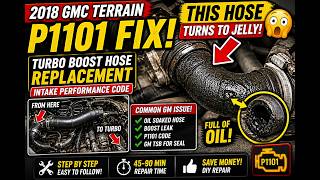
- P0172 — System Too Rich: This can occur because the ECM detects a large volume of air at the MAF and commands a corresponding amount of fuel, but the air never makes it to the engine. The oxygen sensors detect an overly rich mixture relative to the actual (low) 🎬 Watch: Visual guide to troubleshooting these related turbo boost codes. amount of air in the cylinders, triggering the code.
Technical Service Bulletins (TSBs) & Recalls
- N192271200: Emission Recall for 2019 models. Instructs dealers to install an improved charge air cooler retainer to prevent the duct from disconnecting and causing codes like P0506.
- 22-NA-224: Supersedes PIP5651G. Provides a repair procedure for a group of codes including P0506, caused by the CAC outlet tube separating from the throttle body.
- PIP5710A: Cites the possibility of the charge air cooler tube becoming disconnected from the throttle body, causing reduced power and DTC P0506. Stresses checking for the O-ring seal.
- PIP5651G: Also points to the charge air cooler tube connection becoming disconnected, causing reduced power and code P0506. This TSB is now superseded by 22-NA-224.
- PIE0569B: Mentions a checklist for loss of power and DTC P0506.
- N192266090: A service update for dealers to install a retainer kit (Part No. 13434668) on 2019 models in their inventory to prevent the issue from occurring.
Platform-Specific Known Issues
- Multiple Technical Service Bulletins (TSBs) have been issued by General Motors regarding the charge air cooler outlet tube disconnecting from the throttle body. This is a known design weakness for this platform.
- Service Update N192266090 was released for certain 2019 models to proactively install an improved charge air cooler retainer kit on vehicles in dealer inventory.
- Emission Recall N192271200 was issued for certain 2019 models to address this exact issue, instructing dealers to install the improved retainer.
Mechanic-Grade Diagnostic Values
- Mass Air Flow (MAF) Sensor Reading at Idle — expected: Approximately 2-7 g/s on a fully warm engine.. Failure: A reading of 0 g/s indicates a failed sensor or wiring issue. A reading significantly outside the expected range with the CAC tube confirmed secure could indicate a faulty sensor.
- Upstream O2 Sensor (Bank 1, Sensor 1) Voltage — expected: Continuously fluctuating between approximately 0.1V (lean) and 0.9V (rich) on a warm, closed-loop engine.. Failure: A sensor that is stuck high (e.g., >0.8V) or low (e.g., <0.2V) or responds very slowly may be faulty.
Scan Tool Commands That Help
- GDS2 (GM Global Diagnostic System 2): Idle Learn Reset / Throttle Learn Reset — This function should be used after cleaning or replacing the throttle body. It resets the learned idle and throttle position values in the ECM, preventing an erratic or incorrect idle after the repair.
- GDS2 (GM Global Diagnostic System 2): Clear DTCs — Required after performing the CAC tube repair to extinguish the MIL and exit Reduced Engine Power mode, as specified in GM service bulletins.
Wiring & Ground Locations
- G112 — On some GM models, located on the lower left front of the engine block.. This is a primary ground point for the Engine Control Module (ECM). A poor connection here can cause a wide range of erratic engine performance issues, including incorrect sensor readings and improper throttle control, although it is a much rarer cause for P0506 than the CAC tube leak.
- Throttle Body Connector (M75) — The 6-pin electrical connector on the electronic throttle body.. This connector powers the throttle motor and relays throttle position back to the ECM. Key pins include Throttle Position Sensor 1 Signal (Pin 33, DK GRN wire), Throttle Position Sensor 2 Signal (Pin 35, PPL wire), TAC Motor Control-1 (Pin 32, YEL wire), and TAC Motor Control-2 (Pin 16, BRN wire). Damage to this connector or wiring can directly cause idle control faults.
Real Owner Repair Stories
- GM Emission Recall N192271200 and TSB 22-NA-224 (2019 GMC Terrain w/ 1.5L LYX Turbo) — Owner experienced a sudden 'Reduced Engine Power' message, a check engine light, and the engine began to run rough and stalled when coming to a stop. A scan revealed codes P0506, P0299, P0101, and P1101.
❌ Tried (didn't work) Initially suspected a bad sensor due to the number of codes.
✅ What actually fixed it A visual inspection under the hood immediately revealed the large black charge air cooler tube had completely blown off the throttle body inlet. The fix was to reconnect the tube and replace the original, flimsy wire clip with the updated, more robust retainer clip (PN 13434668, now superseded by 84828210). After installing the new clip and clearing the codes, all symptoms were resolved.
OEM Part Supersession History
13434668→84828210— The original clip was the subject of multiple service bulletins and a recall for being too weak to properly retain the charge air cooler duct under boost. The superseding part is a more robust design.
Model Year Variations Within This Range
- 2019: The 2019 model year was the specific target of Emission Recall N192271200 and Service Update N192266090 to address the CAC tube retainer. This suggests the problem was most prevalent or first officially addressed in this model year.
- 2018: A TSB related to charge air cooler icing (18-NA-069) notes that a redesigned CAC part is only required if the vehicle's build date is before March 1, 2018, indicating a running production change.
Helpful Videos

Used OEM Parts in Stock

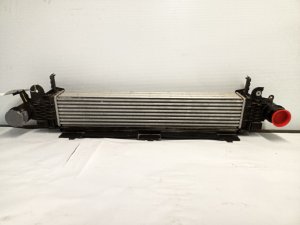
New Aftermarket Parts Available

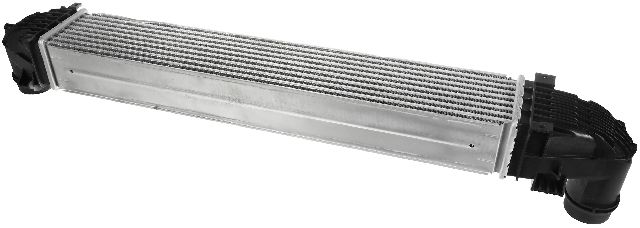



The information in this article is provided for general reference and educational purposes only. Vehicle specifications, procedures, and part compatibility can vary by production date, trim level, and region. Always consult your vehicle's factory service manual and verify part numbers before purchasing or performing repairs. Safety-critical components such as airbags, seat belts, and braking systems should be installed by a qualified professional.
- Gmc TERRAIN:
- 🎬 Helpful Videos
- 🛍️ Shop This Part
- What's Unique About the 2018-2022 Gmc TERRAIN
- Diagnostic Flowchart
- Symptoms You May Notice
- Most Likely Causes
- Diagnosis Steps
- Parts You'll Likely Need
- Related Codes That Often Appear With This One
- Technical Service Bulletins (TSBs) & Recalls
- Platform-Specific Known Issues
- Mechanic-Grade Diagnostic Values
- Scan Tool Commands That Help
- Wiring & Ground Locations
- Real Owner Repair Stories
- OEM Part Supersession History
- Model Year Variations Within This Range
- 🎟️ Get 5% Off