

P0506 on 2013-2020 Chevrolet Malibu: Low Idle Causes and Fixes
P0506 on a 2013-2020 Chevy Malibu means the engine's idle speed is lower than expected. The most common causes are a disconnected charge air cooler (CAC) tube on turbo models or a dirty electronic throttle body. Cleaning the throttle body or re-securing the air tube with an updated retainer clip often resolves the issue.
- P0506 means the engine idle is too low.
- On turbocharged Malibus, the first thing to check is the large air tube connected to the throttle body; it frequently pops off.
- The second most likely cause is a dirty throttle body that needs cleaning.
- This code is often accompanied by others like P1101, P0101, and P0299, which reinforce the diagnosis of a major air leak or throttle issue.
- After cleaning the throttle body or fixing a leak, an idle relearn procedure is necessary to restore normal operation.
What's Unique About the 2013-2020 Chevrolet MALIBU

For the 8th and 9th generation Malibu, especially those with turbocharged engines (1.5L and 2.0L), P0506 is frequently linked to issues in the air intake tract between the turbo and the throttle body. Multiple GM Technical Service Bulletins (TSBs) point specifically to the charge air cooler (CAC) tube becoming disconnected from the throttle body, causing a massive air leak that the system cannot compensate for, leading to a low, rough idle and reduced engine power. TSB N192271200 even specifies an 'improved charge air cooler retainer' to fix this design flaw.
Diagnostic Flowchart

Tap your situation to follow the diagnostic path that matches what you're seeing on this vehicle.
Generation note: This guide covers the end of the 8th generation (2013-2016 Limited) and the 9th generation (2016-2020) Malibu. The most cited issue, a disconnected charge air cooler tube, is specific to the turbocharged engines common in these generations (1.5L LFV and 2.0L LTG). Carbon buildup on the throttle body is a common issue for all direct-injection engines in both generations.
Symptoms You May Notice

- Check Engine Light is on
- Engine idle speed is lower than normal (e.g., below 600 RPM)
- Rough or unstable idle
- Engine stalling, especially when coming to a stop or when accessories like the A/C are turned on.
- Reduced Engine Power message on the driver information center.
- Hesitation or stumbling on acceleration
- Audible hissing or whooshing sound from the engine bay, especially under boost
- Vehicle may be stuck in a low gear or refuse to shift properly ('limp mode').
- Replacing the Mass Airflow (MAF) sensor. While related to air metering, a dirty MAF sensor more commonly causes other codes like P0101 and may not be the root cause for an isolated P0506. TSBs confirm P0101 is usually set *with* P0506 due to the large CAC tube leak.
- Replacing spark plugs or ignition coils. While these can cause a rough idle, they typically trigger misfire codes (P0300-P0308) rather than an idle speed control code.
Most Likely Causes

- Disconnected Charge Air Cooler (CAC) Tube 🔴 High Probability Multiple manufacturer TSBs (including N192271200 and 22-NA-224) confirm that the charge air cooler outlet tube can blow off the throttle body, creating a significant unmetered air leak. This is a known weak point, especially on the 1.5L turbo engine, prompting GM to issue an improved retainer clip.
How to confirm: Visually inspect the large diameter air duct connecting to the throttle body. Check if the clamp is loose or if the tube has popped off entirely. The connection is often at the back of the engine bay. TSB PIP5710A advises checking that the internal seal is still present and correctly positioned before reattaching.
Typical fix: Re-seat the charge air cooler tube onto the throttle body and securely fasten it. For a permanent fix, especially on 2019 models, install the improved 'Charge Air Cooler Retainer Kit', GM Part No. 13434668, as specified in TSB N192266090. Ensure both surfaces are clean and free of oil before re-clamping.
Est. part cost: $0-$25 (if a new clamp or the retainer kit is needed) - Dirty or Carbon-Fouled Throttle Body 🔴 High Probability Direct injection engines, like those in the Malibu, use a PCV (Positive Crankcase Ventilation) system that can allow oil vapor into the intake. This vapor bakes onto the back of the throttle plate and bore, restricting the small amount of air needed for idle and causing the plate to stick.
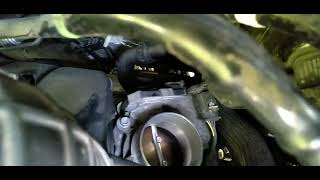
How to confirm: Remove the air intake duct from the throttle body. Visually inspect the throttle plate and the inside of the throttle body bore for a thick, black layer of carbon buildup. A YouTube video by 'Dullah Goso hard' titled 'Cleaning Malibu throttle body fix poor idle and stalling' provides a clear visual guide.
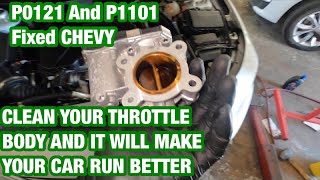
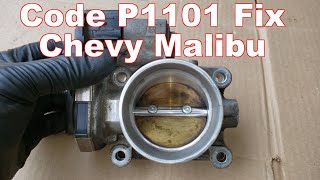
Typical fix: Clean the throttle body thoroughly using a dedicated throttle body cleaner and a soft brush or microfiber towel. For a complete cleaning, the throttle body should be removed (four 10mm bolts). After cleaning, an idle relearn procedure is required. A user on malibuforums.com fixed the related P1101 code with this exact procedure.
Est. part cost: $5-$15 (for a can of throttle body cleaner) - Vacuum Leak (Other than CAC tube) 🟡 Medium Probability Beyond the main CAC tube, other vacuum lines, gaskets (like the intake manifold gasket), or the PCV system itself can crack or fail, allowing unmetered air to enter the engine and disrupt the idle. TSB 22-NA-067 notes that in extreme cold, the PCV system can freeze, causing pressure issues and oil leaks which can also lead to idle problems.
How to confirm: With the engine running, listen for hissing sounds. A smoke machine test is the most effective way to find the source of a vacuum leak by feeding smoke into the intake and watching where it escapes.
Typical fix: Replace the cracked hose, faulty gasket, or failed PCV valve. In one owner's experience shared in a YouTube comment, cleaning the throttle body resolved P0506 after a dealership had already replaced multiple solenoids and a valve cover due to a suspected vacuum leak.
Est. part cost: $10-$150 (depending on the failed component)
Rare But Worth Checking
- Faulty Electronic Throttle Body: While cleaning often resolves the issue, the electronic motor or position sensor within the throttle body can fail. TSB 22-NA-224 warns that if the CAC tube blows off, it can sometimes damage the throttle body housing, requiring replacement. This should be a last resort after confirming the unit is clean and there are no air leaks.
- Powertrain Control Module (PCM) Issue: In very rare cases, the PCM may have a software glitch or internal failure. This should only be considered after all other mechanical and electrical possibilities have been exhausted and relevant TSBs for software updates have been checked.
Diagnosis Steps
- Scan for any other trouble codes. Codes like P1101, P0101, P0299, or P0172 strongly point towards an intake air leak from the charge air system.
- Visually inspect the entire air intake system, paying close attention to the charge air cooler tube connection at the throttle body. Check for looseness or complete separation.
- If the tube is disconnected, inspect the tube end for a missing O-ring seal and inspect the throttle body inlet for cracks or damage before reconnecting, as per TSB 22-NA-224.
- If no obvious leaks are found, remove the intake duct from the throttle body and inspect for heavy carbon buildup.
- If the throttle body is dirty, remove and clean it thoroughly with appropriate cleaner. Be careful not to manually force the throttle plate on electronic units.
- If the code persists after cleaning, perform a vacuum leak test using a smoke machine to check for less obvious leaks from hoses, gaskets, or the PCV system.
- After any repairs, clear the codes and perform a throttle idle relearn procedure. This typically involves letting the engine idle in park for 3 minutes, turning it off for 1 minute, and then idling again for 3 minutes.
- If the problem remains, consider installing the updated Charge Air Cooler Retainer Kit (Part No. 13434668) if not already equipped.
Parts You'll Likely Need
- Throttle Body Cleaner
(OEM #ACDelco 19375579 (X66-A))— This is the most common fix. Carbon buildup restricts airflow at idle, and a simple cleaning restores proper function.
Trusted brands: CRC, ACDelco, Berryman
OEM price range: $10-$20
Aftermarket price range: $5-$15 - Charge Air Cooler Retainer Kit
(OEM #13434668)— This is an improved part from GM specifically to address the CAC tube blowing off the throttle body. TSB N192266090 and N192271200 call for this part to be installed.
Trusted brands: ACDelco (Genuine GM)
OEM price range: $15-$25
Aftermarket price range: N/A - Electronic Throttle Body Assembly
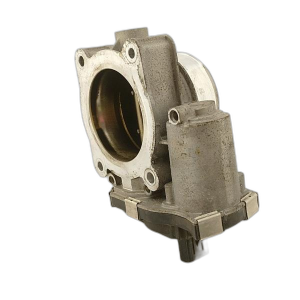
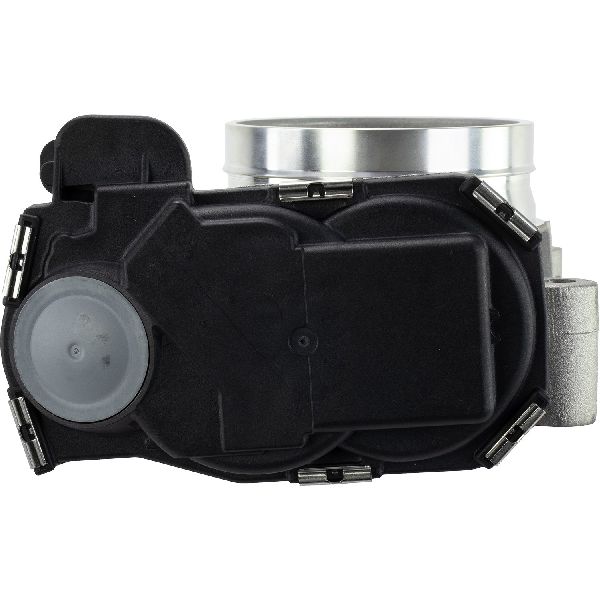
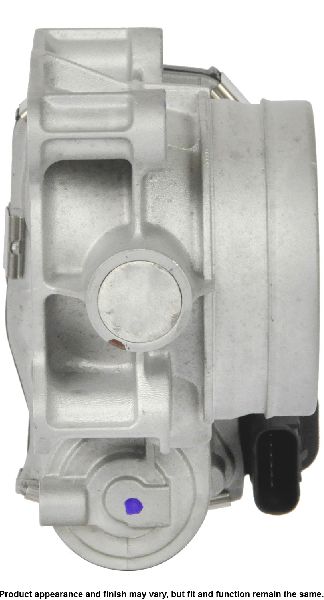
(OEM #12670839 (Varies by engine/year))— If cleaning does not solve the problem, or if the housing is damaged from the CAC tube blowing off, the entire assembly must be replaced.
Related Codes That Often Appear With This One
- P1101 — Intake Air Flow System Performance. This code is very common with P0506 on Malibus and often points directly to a dirty throttle body or a disconnected charge air cooler tube. They are frequently listed together in the same TSBs.
- P0101 — Mass Air Flow (MAF) Circuit Range/Performance. A large vacuum leak (like the CAC tube) causes a major disagreement between the MAF sensor's reading and what the engine expects, triggering this code alongside P0506.
- P0299 — Turbo/Supercharger Underboost. This code is a strong indicator that the charge air cooler tube has disconnected, as the turbo is unable to build boost pressure with such a large leak.
- P0172 — System Too Rich. The PCM sees less air from the MAF than is actually entering the engine (due to the leak occurring after the MAF sensor) and injects the normal amount of fuel, creating a rich condition.
Technical Service Bulletins (TSBs) & Recalls
- PIP5651G / 22-NA-224: Confirms CAC tube disconnection causes P0506, P0101, P0299, P1101. TSB 22-NA-224 supersedes PIP5651G and adds visuals for inspecting throttle body damage.
- N192271200 / N192266090: A voluntary emission recall and service update for 2019 models to install an 'improved charge air cooler retainer' (Part #13434668) to prevent the CAC tube from disconnecting.
- PIP5710A: Details the procedure to reattach the CAC tube, emphasizing the need to check for the presence and position of the internal seal before reconnecting.
- PIP5529A / PIP5529B: Lists P0506 among a wide array of codes that can be set due to various electrical or system performance issues, though less specific than the CAC tube TSBs.
Platform-Specific Known Issues
- A disconnected charge air cooler tube from the throttle body is a well-documented issue on turbocharged Malibus, as cited in multiple TSBs like 22-NA-224 and N192271200. This is the first thing to check.
- A Reddit thread for a 2019 Equinox with the same 1.5L engine family confirms a user fixed the 'Reduced Engine Power' message and associated codes (including P0506) by simply snapping the charge air tube back into place.
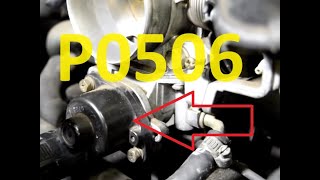
- A YouTube video by 'JAIRON EL MECÁNICO chapin' shows how heavy carbon buildup on the throttle body of a similar GM vehicle causes the idle to drop, especially when the A/C is turned on, directly leading to code P0506.
Mechanic-Grade Diagnostic Values
- Mass Air Flow (MAF) Sensor at warm idle — expected: Should roughly equal engine displacement in liters (e.g., ~1.5 g/s for 1.5L engine). A general range is 2-7 g/s.. Failure: A reading significantly lower than expected can indicate a vacuum leak downstream of the sensor (like a disconnected CAC tube). A reading of 0 or an unusually high number at idle can indicate a faulty sensor or wiring.
- Throttle Position Sensor (TPS) Voltage, Key-On Engine-Off — expected: 0.36V - 0.96V at closed throttle (idle position). Greater than 4.0V at Wide-Open Throttle (WOT).. Failure: Voltage outside the expected range at idle, or voltage that does not increase smoothly as the throttle is opened, can indicate a faulty sensor or a poor adjustment.
- Desired vs. Actual Idle Speed — expected: Actual idle speed should be within a narrow band of the desired idle speed shown on a scan tool, typically between 750-1000 RPM when warm.. Failure: The P0506 code is set when the actual RPM is consistently below the desired (commanded) RPM by a specific threshold (e.g., 100-150 RPM).
Scan Tool Commands That Help
- GDS2 / Professional Scan Tool (Autel, XTool, etc.): Idle Learn Reset / Throttle Relearn — This function is required after cleaning or replacing the electronic throttle body. It resets the stored idle and off-idle airflow values in the ECM, allowing it to learn the new baseline position of the clean throttle plate. Failure to perform this can result in a continued or new idle-related trouble code.
- Manual Procedure (No Scan Tool): Manual Idle Relearn Procedure — If a capable scan tool is not available, a manual relearn can be attempted. The general process is: 1) Idle in Park for 3 minutes. 2) Turn engine off for 60 seconds. 3) Start and idle in Park for another 3 minutes. This forces the ECM to adjust idle trims. It is considered less reliable than a scan tool reset.
Wiring & Ground Locations
- ECM/ECU Main Ground — On the back of the cylinder head, secured by a 10mm bolt.. A poor ground connection for the Engine Control Module can cause erratic sensor readings and incorrect actuator commands. While not a common cause for P0506, a faulty ground can mimic many other electronic failures and should be checked if other diagnostics are inconclusive.
- ECM/PCM Fuses — Located in both the under-hood fuse block and the interior fuse panel.. A blown fuse will cut power to the ECM, causing a no-start or stalling condition that could potentially be misdiagnosed. This is a preliminary check for any electronic fault.
Real Owner Repair Stories
- YouTube Commenter (2017 Chevrolet Malibu LT) — Check Engine Light with code P1101 (often seen with P0506).
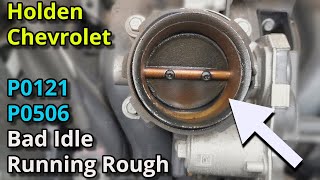
✅ What actually fixed it The owner followed one video to clean the throttle body and another video to clean the Mass Airflow (MAF) sensor. After clearing the codes, the check engine light did not return. - YouTube channel 'Gerard Burke' (Holden Malibu 2.4L (Chevrolet Malibu equivalent)) — Rough idle, poor performance, and fault codes P0121 (Throttle Position Sensor Performance) and P0506.
✅ What actually fixed it The mechanic found the throttle body was extremely dirty with carbon and oil buildup. He removed the throttle body from the vehicle for a thorough cleaning, which resolved the idle and performance issues.
Model Year Variations Within This Range
- 2013-2016: The 2016 model year included both the new 9th generation body style and the older 8th generation, sold as the 'Malibu Limited'. The Malibu Limited (and 2013-2015 models) primarily used a 2.5L non-turbo engine (LKW). For these models, P0506 is not caused by a charge air cooler tube but is most likely due to a dirty throttle body or a standard vacuum leak.
- 2016-2020: The 9th generation 'new' Malibu introduced the 1.5L (LFV) and 2.0L (LTG) turbocharged engines. On these models, the primary and most documented cause of P0506 is the charge air cooler (CAC) tube blowing off the throttle body, a problem specific to the forced induction setup.
Helpful Videos
Used OEM Parts in Stock


New Aftermarket Parts Available


The information in this article is provided for general reference and educational purposes only. Vehicle specifications, procedures, and part compatibility can vary by production date, trim level, and region. Always consult your vehicle's factory service manual and verify part numbers before purchasing or performing repairs. Safety-critical components such as airbags, seat belts, and braking systems should be installed by a qualified professional.
- Chevrolet MALIBU:
- 🎬 Helpful Videos
- 🛍️ Shop This Part
- What's Unique About the 2013-2020 Chevrolet MALIBU
- Diagnostic Flowchart
- Symptoms You May Notice
- Most Likely Causes
- Rare But Worth Checking
- Diagnosis Steps
- Parts You'll Likely Need
- Related Codes That Often Appear With This One
- Technical Service Bulletins (TSBs) & Recalls
- Platform-Specific Known Issues
- Mechanic-Grade Diagnostic Values
- Scan Tool Commands That Help
- Wiring & Ground Locations
- Real Owner Repair Stories
- Model Year Variations Within This Range
- 🎟️ Get 5% Off