

P0506 on 2013-2017 Cadillac ATS: Causes and Fixes for Low Idle Speed
Code P0506 on a 2013-2017 Cadillac ATS means the engine's idle speed is lower than the computer expects. The most common causes are a dirty throttle body, vacuum leaks from loose intake manifold bolts or cracked PCV hoses. Cleaning the throttle body and inspecting for these leaks is the first step.
- P0506 means the idle is too low, often causing a rough idle or stalling.
- Before buying parts, check for loose intake manifold bolts, a known issue covered by a TSB.
- The second most likely cause is a dirty throttle body, which can be fixed with a simple cleaning.
- Inspect all PCV hoses for cracks, as they are a common source of vacuum leaks on these engines.
- After cleaning or replacing the throttle body, a 'relearn' procedure is often necessary to restore a smooth idle.
What's Unique About the 2013-2017 Cadillac ATS

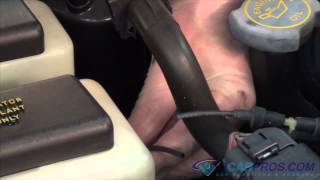
For the 2013-2017 Cadillac ATS, particularly those with the 2.0T LTG and 2.5L LCV engines, code P0506 is specifically mentioned in GM Technical Service Bulletin PIP5529B. 🎬 Watch: A quick explanation of the P0506 code on Cadillacs. A key issue identified is loose intake manifold bolts, which can create a vacuum leak significant enough to cause a low, unstable idle and trigger this code along with others. Another common failure point is brittle plastic PCV hoses that crack and create unmetered air leaks, a frequent problem on the 2.0T engine that often leads to a P0171 (System Too Lean) code first, but can contribute to P0506.
Diagnostic Flowchart
Tap your situation to follow the diagnostic path that matches what you're seeing on this vehicle.
Symptoms You May Notice
- Check Engine Light is on
- Engine idles at a lower RPM than normal
- Rough or vibrating idle
- Engine may stall when coming to a stop
- Hesitation or stumbling during acceleration from a stop
- Difficulty starting the engine.
- Replacing the throttle body when it only needs cleaning. Always clean the throttle body thoroughly before considering replacement.
- Replacing the intake manifold gasket when only the bolts needed to be re-torqued with threadlocker, as specified in TSB PIP5529B.
Most Likely Causes


- Loose Intake Manifold Bolts 🔴 High Probability This is a documented issue in GM Technical Service Bulletin #PIP5529B for the 2013-2017 ATS with LTG and LCV engines. The bolts can back out over time, causing a significant vacuum leak.
How to confirm: Physically check the intake manifold bolts for tightness. A smoke test of the intake system will definitively show a leak around the manifold gasket if the bolts are loose.
Typical fix: Remove one bolt at a time, apply medium-strength threadlocker, and torque all bolts to the manufacturer's specification in the correct sequence. The final torque spec is typically 10 N.m (89 lb in). The TSB notes that replacing the gasket is usually not necessary unless it's damaged.
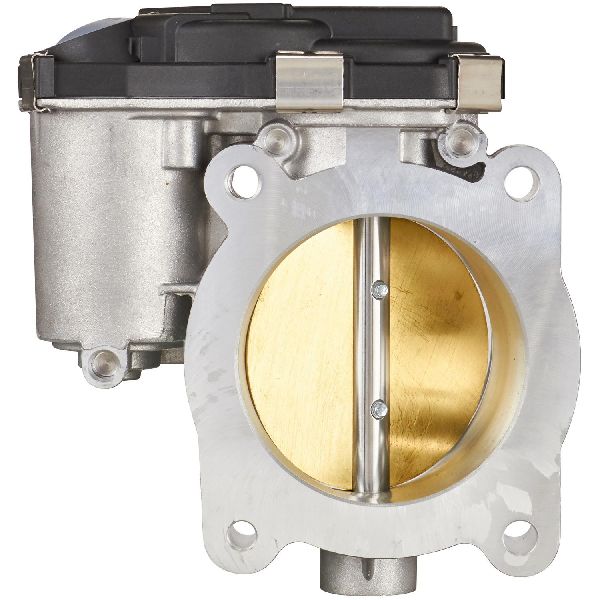
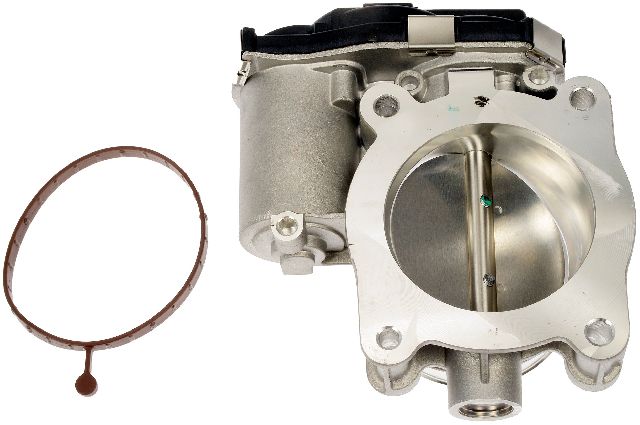
Est. part cost: $5-$15 for threadlocker - Dirty Throttle Body 🔴 High Probability Carbon and oil vapor from the PCV system can build up around the throttle plate, restricting the small amount of air needed for idle. This is a very common cause for low idle issues.
How to confirm: Remove the intake air duct and visually inspect the throttle plate and bore for black carbon buildup.
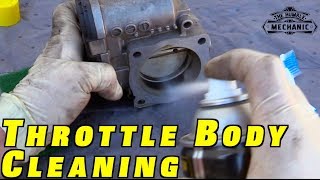
Typical fix: Clean the throttle body bore and plate with a dedicated throttle body cleaner and a soft cloth or brush. A throttle relearn procedure is required afterward. This can sometimes be done without a scan tool by following a specific sequence of key-on/key-off cycles and idling periods.
Est. part cost: $10-$20 for cleaner - Cracked or Leaking PCV Hoses 🟡 Medium Probability The plastic PCV hoses, especially on the 2.0T LTG engine, become brittle with age and heat cycles, leading to cracks and vacuum leaks. These leaks are a very common source of P0171 (lean) codes that can accompany a P0506.
How to confirm: Visually inspect all PCV system hoses for cracks, especially at the connection points and bends. Listen for a hissing sound near the valve cover at idle. A smoke test is the most reliable method.
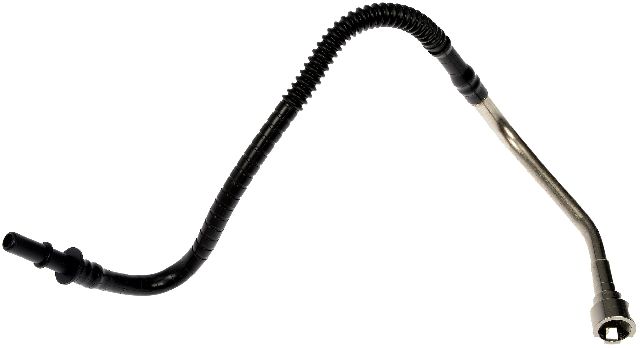
Typical fix: Replace the cracked PCV hose assembly. The main hose assembly for the 2.0T engine is often replaced with an aftermarket part that has improved connectors.
Est. part cost: $50-$120 - Faulty PCV Valve ⚪ Low Probability The PCV valve itself can get stuck or break, particularly the plastic housing where hoses connect. This is less common than the hoses cracking but can still cause pressure and vacuum issues. A stuck-open valve can cause a rough idle and stalling.
How to confirm: Check for physical damage to the valve or its connections. A malfunctioning valve can cause pressure issues in the crankcase.
Typical fix: Replace the PCV valve.
Est. part cost: $40-$80
Rare But Worth Checking
- Broken Valve Spring: While less common, GM has a TSB (PIP5423B) that links P0506 with P0106, which can be caused by a broken valve spring on some GM engines. This is a more serious mechanical issue.
- Sheared Camshaft Sprocket Locator Pin: A very rare but severe internal engine issue mentioned in GM bulletins can cause a variety of codes and a crank-no-start or stalling condition. This would require significant engine repair.
Diagnosis Steps
- Scan for all DTCs. Note if P0506 appears with other codes like P0171, P0106, or P0068, as this strongly points towards a vacuum leak.
- Visually inspect the engine bay for any obvious disconnected or cracked vacuum hoses, paying close attention to the PCV system tubing on the 2.0T engine.
- With the engine running, listen for hissing sounds around the intake manifold, which would indicate a vacuum leak.
- Check the tightness of the intake manifold bolts. As per TSB PIP5529B, this is a known issue. If loose, they must be re-torqued with threadlocker.
- If no obvious leaks are found, perform a smoke test to definitively identify any hard-to-see cracks in gaskets or hoses. This is the most effective way to find vacuum leaks.
- Remove the air intake tube from the throttle body and inspect the throttle plate and bore for carbon buildup.
- If dirty, clean the throttle body thoroughly using appropriate cleaner and a soft brush. Do not push the throttle plate open manually; have a helper turn the ignition to 'ON' (engine off) and press the gas pedal.
- After cleaning or replacing parts, perform a throttle relearn procedure. A common manual method is: Start and idle the engine for 3 minutes, turn the ignition off for 60 seconds, repeat this cycle, then drive the vehicle. A scan tool can also perform this function.
Parts You'll Likely Need

- Throttle Body Cleaner — This is the first and most common fix. Carbon buildup restricts airflow at idle, and a simple cleaning often resolves the code.
Trusted brands: CRC, ACDelco
OEM price range: $15-$25
Aftermarket price range: $10-$20 - PCV Hose/Tube (2.0T)
(OEM #ACDelco 25193343)— The plastic hoses on the 2.0T engine are known to become brittle and crack, causing vacuum leaks that trigger P0506 and P0171.
Trusted brands: ACDelco, Dorman
OEM price range: $70-$120
Aftermarket price range: $40-$80 - Intake Manifold Gasket — Only needed if the gasket is found to be leaking even after torquing the manifold bolts correctly. TSB PIP5529B states this is not usually required.
Trusted brands: ACDelco, Fel-Pro
OEM price range: $30-$50
Aftermarket price range: $15-$30
Related Codes That Often Appear With This One
- P0171 — System Too Lean. This code often appears with P0506 because the root cause is frequently a vacuum leak (from loose intake bolts or cracked hoses), which introduces unmetered air and creates a lean air/fuel mixture.
- P0106 — Manifold Absolute Pressure (MAP) Sensor Performance. A vacuum leak or erratic airflow from a dirty throttle body can cause the MAP sensor readings to be out of range, triggering this code alongside P0506. TSB PIP5529B specifically lists this as a related code.
- P0068 — MAP/MAF - Throttle Position Correlation. This indicates a mismatch between the airflow measured by the sensors and the throttle position, often caused by a vacuum leak or throttle body issue. This is also listed in TSB PIP5529B.
Technical Service Bulletins (TSBs) & Recalls
- PIP5529B: Addresses a stall, hesitation, or MIL with a combination of codes including P0506, caused by loose intake manifold bolts. Specifies using threadlocker and provides a unique labor operation code for the repair.
- PIP5529A: An earlier version of the same bulletin, also identifying loose intake manifold bolts as the cause.
Platform-Specific Known Issues
- Technical Service Bulletin PIP5529B points directly to loose intake manifold bolts as a cause for P0506, often accompanied by other codes like P0171 and P0106. The fix is to re-torque the bolts to 10 N.m (89 lb in) with medium-strength threadlocker.
- Owners on cadillacforums.com frequently report that a thorough throttle body cleaning followed by a relearn procedure resolves the P0506 code, especially when it appears by itself.
- The brittle PCV hose assembly on the 2.0T LTG engine is a well-documented failure point that causes vacuum leaks, often triggering a P0171 code but can also contribute to the P0506 low idle condition.
Mechanic-Grade Diagnostic Values
- Manifold Absolute Pressure (MAP) Sensor Signal Voltage (Key On, Engine Off) — expected: ~4.5 V. Failure: Significantly lower voltage could indicate a sensor or wiring issue.
- Manifold Absolute Pressure (MAP) Sensor Signal Voltage (Engine Idling) — expected: 1.0 V - 2.0 V. Failure: Higher voltage (e.g., >2.0V) at idle suggests low engine vacuum, which could be caused by a vacuum leak—a primary cause of P0506.
- 5-Volt Reference Voltage at Sensor Connectors (e.g., MAP, Throttle Body) — expected: 5.0 V. Failure: No voltage or significantly low voltage indicates a wiring problem or an issue with the ECM. This can trigger various codes, including P0651.
Scan Tool Commands That Help
- GDS2 (GM Global Diagnostic System 2): Idle Learn Reset — This function must be used after cleaning or replacing the throttle body. It resets the learned idle airflow values in the ECM. Failure to perform this reset can cause the P0506 code to persist even after the physical repair is complete.
- GDS2 (GM Global Diagnostic System 2): Engine Control Module (ECM) Reset — After certain repairs, such as replacing the ECM or throttle body, a full reset of learned values may be required. This forces the ECM to relearn all parameters, including idle.
Wiring & Ground Locations
- G101 — Located at the left front of the engine, on the lower block.. This is a primary ground for the Engine Control Module (ECM). A corroded or loose connection here can cause a wide range of erratic engine management issues, including incorrect idle control commands that could lead to P0506.
- G104 (2013 MY) — For 2013 4-cylinder models, the engine ground was at the front of the engine until mid-December 2012, after which it was moved to the rear of the engine.. A poor engine ground connection can cause intermittent electrical issues. TSB PI1097A notes that this ground should be inspected for being clean and secure to resolve certain electrical faults.
- G105 / G106 — Located near the left hood hinge area and on the front center frame cross rail.. These are major chassis and engine compartment ground points. While not directly tied to the throttle body in all diagrams, poor grounding in this area can create electrical noise and voltage drops affecting various systems controlled by the BCM and ECM.
- X81 (Throttle Body Connector) — The 6-pin electrical connector on the electronic throttle body assembly.. Corrosion, spread terminals, or damaged wires at this specific connector can directly interrupt the ECM's ability to control or sense the throttle plate's position, causing idle control faults like P0506.
Real Owner Repair Stories
- YouTube Channel 'The Enthusiast Mechanic' (General GM engine with integrated PCV valve in valve cover (applies to ATS 2.5L LCV and others)) — P0171 (System Too Lean), rough idle, hissing/slurping sound from the valve cover.
❌ Tried (didn't work) Not specified, but the issue is often misdiagnosed as other vacuum leaks.
✅ What actually fixed it The internal diaphragm of the PCV valve, which is integrated into the valve cover, had torn. This created a significant unmetered air leak. The fix required replacing the entire valve cover assembly. The failure is confirmed by spraying brake cleaner near the PCV port on the cover and observing a change in engine idle.
Model Year Variations Within This Range
- 2013: The location of engine ground G104 on 4-cylinder (LCV, LTG) automatic transmission models changed mid-year. Vehicles produced before mid-December 2012 have the ground at the front of the engine, while later models have it at the rear. This is relevant when troubleshooting electrical issues per TSB PI1097A.
Helpful Videos


Used OEM Parts in Stock



New Aftermarket Parts Available


The information in this article is provided for general reference and educational purposes only. Vehicle specifications, procedures, and part compatibility can vary by production date, trim level, and region. Always consult your vehicle's factory service manual and verify part numbers before purchasing or performing repairs. Safety-critical components such as airbags, seat belts, and braking systems should be installed by a qualified professional.
- Cadillac ATS:
- 🎬 Helpful Videos
- 🛍️ Shop This Part
- What's Unique About the 2013-2017 Cadillac ATS
- Diagnostic Flowchart
- Symptoms You May Notice
- Most Likely Causes
- Rare But Worth Checking
- Diagnosis Steps
- Parts You'll Likely Need
- Related Codes That Often Appear With This One
- Technical Service Bulletins (TSBs) & Recalls
- Platform-Specific Known Issues
- Mechanic-Grade Diagnostic Values
- Scan Tool Commands That Help
- Wiring & Ground Locations
- Real Owner Repair Stories
- Model Year Variations Within This Range
- 🎟️ Get 5% Off