

P0505 on 2003-2009 Toyota 4Runner 4.7L V8: Idle Control System Fault Causes and Fixes
Code P0505 on a 4.7L V8 4Runner indicates an idle control system malfunction. For 2003-2004 models with a mechanical throttle, this usually points to a dirty or faulty Idle Air Control (IAC) valve. For 2005-2009 models with an electronic throttle body, the issue is typically a dirty or failing throttle body assembly itself, as the idle control is integrated. Cleaning the relevant component often resolves the issue, but replacement may be necessary.
- P0505 on the 4.7L V8 almost always relates to the Idle Air Control (IAC) system.
- The most likely fix is cleaning the carbon buildup from the throttle body and the IAC valve passages. This is a low-cost, high-success-rate first step.
- If cleaning doesn't work, the IAC valve itself has likely failed and needs to be replaced. Always use a new gasket.
- Check for vacuum leaks, especially if you also have lean codes (P0171, P0174), as this is another very common cause.
- After the repair, reset the ECU by disconnecting the battery so it can relearn the proper idle strategy.
What's Unique About the 2003-2009 Toyota 4Runner
The 4th generation 4Runner with the 2UZ-FE engine had a significant change mid-cycle. 2003-2004 models use a mechanical throttle body with a separate, replaceable Idle Air Control (IAC) valve. This design is highly prone to carbon buildup in the IAC valve's rotary mechanism and its air passages, causing it to stick and trigger a P0505 code. 2005-2009 models were updated with the VVTi engine, which included an Electronic Throttle Control System (ETCS-i). On these later models, there is no separate IAC valve; idle speed is managed by the main throttle plate within the electronic throttle body. For these vehicles, a P0505 code points to a dirty throttle bore and plate or a malfunction of the entire electronic throttle body assembly. This distinction is critical for correct diagnosis and repair.
Symptoms You May Notice
- Erratic idle speed (fluctuating up and down).
- Idle speed is too high or too low.
- Engine stalling when coming to a stop or when the gas pedal is released.
- Engine stalling when shifting from Park to Drive.
- Difficulty starting the engine.
- Hesitation when accelerating from a stop.
- Check Engine Light is on.
- Replacing the Throttle Position Sensor (TPS) when the issue is the IAC valve (on 2003-2004 models).
- Replacing the fuel pump when the issue is a simple vacuum leak or dirty throttle body.
- Not performing the idle relearn procedure after a repair, leading to the belief that the repair failed.
Most Likely Causes
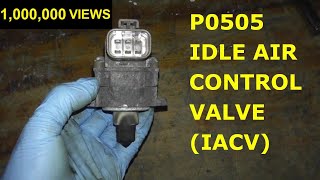
- Dirty or Sticking Idle Air Control (IAC) Valve (2003-2004 models) 🔴 High Probability The 2UZ-FE engine's rotary solenoid IAC valve is highly susceptible to carbon and gunk buildup over many miles, causing it to stick open or closed. This is the most common cause for this code on early 4th gen V8s.
How to confirm: Remove the IAC valve from the throttle body and inspect it and its air passages for heavy carbon deposits. You can also test the valve's motor for proper resistance with a multimeter. Between the center terminal (+B) and the outer terminals (RSC, RSO), resistance should be 17.0–24.5 Ω when cold and 21.5–28.5 Ω when hot.
Typical fix: Thoroughly clean the IAC valve and the throttle body passages with throttle body cleaner and a soft brush. If cleaning does not resolve the issue, the IAC valve must be replaced.
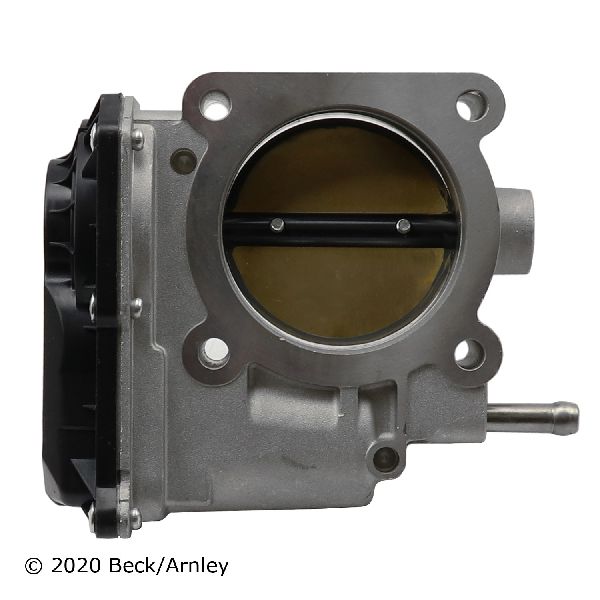
Est. part cost: $5-$15 for cleaner and gaskets, $100-$250 for a new valve. - Dirty or Faulty Electronic Throttle Body (2005-2009 models) 🔴 High Probability On the later VVTi engines, the electronic throttle body is responsible for idle control. Carbon buildup around the throttle plate and bore can restrict movement and prevent the ECM from maintaining the target idle speed. The internal motor or position sensor can also fail.
How to confirm: Visually inspect the throttle plate and bore for significant carbon buildup that could restrict airflow or prevent the plate from closing properly. A diagnostic scan tool can be used to monitor the commanded vs. actual throttle position at idle.
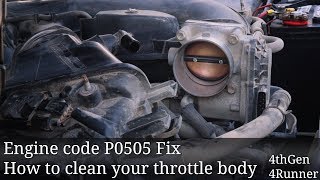
Typical fix: Clean the throttle body bore and plate with a dedicated electronic throttle body cleaner and a lint-free rag. Do not push the plate open manually. If cleaning doesn't help, the entire throttle body assembly must be replaced as the components are not serviced separately.
Est. part cost: $10 for cleaner, $450-$650 for a new OEM throttle body assembly. - Vacuum Leak 🟡 Medium Probability With age, rubber vacuum hoses, particularly the PCV hose and its grommet, can become brittle and crack. Intake manifold gaskets can also fail, allowing unmetered air to enter the engine, which disrupts the idle.
How to confirm: Perform a smoke test to find the source of the leak. Alternatively, you can carefully spray short bursts of brake cleaner or starter fluid around vacuum lines and intake gaskets with the engine running; a change in idle RPM indicates a leak.
Typical fix: Replace the cracked hose or faulty gasket.
Est. part cost: $10-$100
Rare But Worth Checking
- Faulty Engine Coolant Temperature (ECT) Sensor: The ECM uses the ECT sensor reading to determine the correct cold-start and warm idle speed. An incorrect reading can cause the ECM to command the wrong idle RPM, triggering a P0505.
- Wiring Issue to IAC Valve or Throttle Body: A damaged wire or corroded connector can prevent the ECM from controlling the IAC valve (2003-04) or electronic throttle body (2005-09), leading to a P0505 code. This can be diagnosed by checking for proper voltage and continuity at the respective connector.
- Needs Idle Relearn Procedure: After disconnecting the battery, cleaning the throttle body, or replacing components, the ECM's learned idle values are lost. The vehicle may idle erratically until an idle relearn procedure is performed.
- Faulty Powertrain Control Module (PCM/ECM): In very rare cases, the driver circuit within the engine computer that controls the idle system can fail. This should only be considered after all other possibilities have been exhausted.
Diagnosis Steps
- Scan for any other accompanying trouble codes. Codes like P0171/P0174 strongly suggest a vacuum leak.
- Visually inspect all vacuum hoses connected to the intake manifold for cracks, disconnection, or brittleness.
- Perform a smoke test to definitively identify any vacuum leaks in the intake system.
- For 2003-2004 Models: Remove the throttle body to access the Idle Air Control (IAC) valve. Inspect the valve and its air passages for carbon buildup. Test the IAC valve's electrical resistance: between the center pin (+B) and the outer pins (RSC, RSO), it should be 17.0–24.5 Ω cold or 21.5–28.5 Ω hot. If out of spec or stuck, replace it.
- For 2005-2009 Models: Remove the air intake hose from the throttle body. Inspect the throttle plate and bore for heavy carbon buildup. Clean thoroughly with electronic-safe throttle body cleaner without moving the plate by hand.
- If the problem persists after cleaning, test the wiring to the IAC valve or electronic throttle body for proper voltage and ground.
- If the component is clean and the circuit is good, the component itself (IAC valve or entire throttle body assembly) is likely faulty and should be replaced.
- Perform Idle Relearn Procedure: After any repair, an idle relearn is crucial. Warm the engine to operating temperature. Turn the engine off. Turn the ignition ON then OFF twice, then start the engine. With the parking brake engaged, shift to Drive and let the vehicle idle for 5-10 minutes without touching the throttle or accessories. This allows the ECM to relearn the idle parameters.
Parts You'll Likely Need
- Idle Air Control Valve (2003-2004)
(OEM #22270-50050)— This valve is the most common failure point for P0505 on early models. It gets stuck due to carbon buildup, and cleaning is not always sufficient to restore function.
Trusted brands: Toyota OE, Aisin, Denso
OEM price range: $180-$250
Aftermarket price range: $70-$150 - Electronic Throttle Body Assembly (2005-2009)
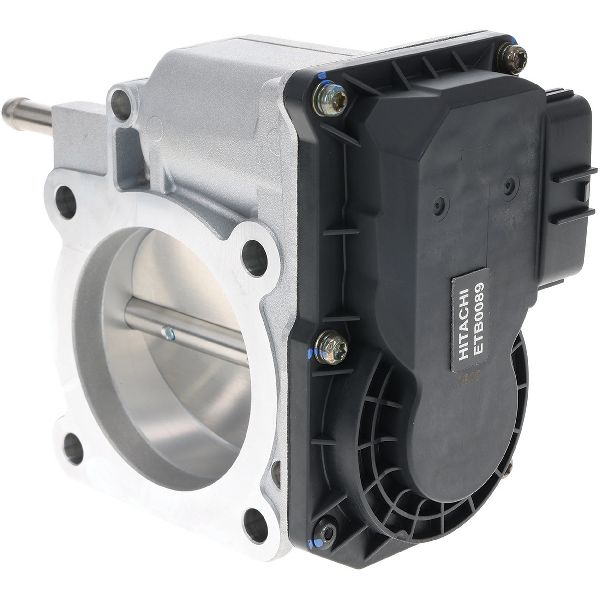
(OEM #22030-50200)— For later models with ETCS-i, the entire assembly is replaced if cleaning doesn't solve the idle issue, as the motor and sensors are integrated.
Trusted brands: Toyota OE, Aisin
OEM price range: $450-$650
Aftermarket price range: $200-$350 - Idle Air Control Valve Gasket (2003-2004)
(OEM #22278-50020)— This gasket should always be replaced when the IAC valve is removed for cleaning or replacement to prevent vacuum leaks.
Trusted brands: Toyota OE, Fel-Pro
OEM price range: $5-$10
Aftermarket price range: $2-$5 - Throttle Body Gasket
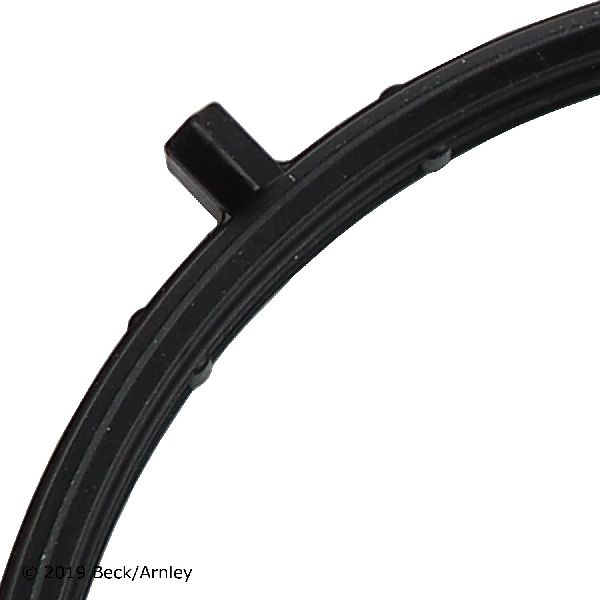
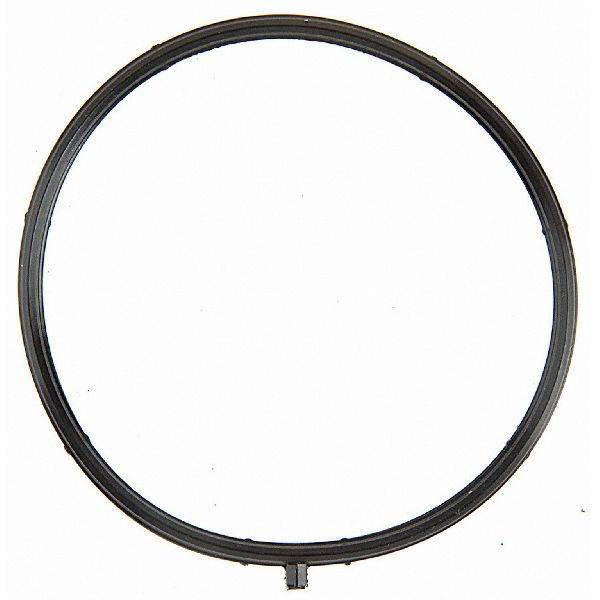
(OEM #22271-50030)— This gasket should be replaced whenever the throttle body is removed for cleaning or component replacement to ensure a proper seal.
Trusted brands: Toyota OE, Fel-Pro
OEM price range: $8-$15
Aftermarket price range: $3-$7
Related Codes That Often Appear With This One
- P0171 — System Too Lean (Bank 1). A vacuum leak is a common cause for both P0505 and P0171, as the unmetered air affects both idle control and the air-fuel mixture.
- P0174 — System Too Lean (Bank 2). Similar to P0171, this code often appears with P0505 on V8 engines when a vacuum leak is present.
- P0441 — Evaporative Emission System Incorrect Purge Flow. This can sometimes be triggered alongside P0505, potentially indicating a vacuum line issue shared between the systems.
- P0455 — Evaporative Emission System Leak Detected (large leak). Like P0441, this points towards a potential vacuum or EVAP system integrity issue that can occur concurrently with idle problems.
Platform-Specific Known Issues
- On T4R.org, a user with a 2003 V8 experienced a high idle of 1500 RPM and a P0505 code. The solution was to replace the IAC valve (part 22270-50050) and the corresponding gasket, which completely resolved the issue. This highlights the common failure of the IAC on early models.
- A thread on Toyota-4Runner.org for a 2005 V8 with P0505 confirms the difference in later models. The owner cleaned the electronic throttle body, which temporarily fixed the surging idle. This points to the electronic throttle body being the culprit on 2005+ models, as there is no separate IAC valve.
Mechanic-Grade Diagnostic Values
- IAC Valve Power Supply Voltage (2003-2004) — expected: Approximately 12V (Battery Voltage). Failure: Significantly lower or no voltage indicates a wiring or power supply issue.
Scan Tool Commands That Help
- Toyota Techstream: Active Test for Idle Speed Control — After cleaning the throttle body or IAC valve, this command can be used to manually increase or decrease idle RPM to verify that the ECM can control the system. It helps differentiate between a component failure and a control system/wiring issue.
- Toyota Techstream: Read Freeze Frame Data — When P0505 is triggered, freeze frame data captures engine conditions at that moment. This data is crucial for determining if the fault occurred when the engine was cold or warm, under load, and the state of other sensors, which can help pinpoint the root cause.
Wiring & Ground Locations
- Ec / Ed — Ground points located on the right and left cylinder heads, respectively.. The ECM and its related sensors rely on solid ground connections. A corroded or loose ground on a cylinder head can introduce electrical noise or resistance, potentially affecting the idle control system's operation and triggering a P0505.
- Ee / Ef — Ground points located on the rear of the right and left cylinder heads, respectively.. These are major engine ground points. Poor connections here can cause a variety of engine management issues, including erratic idle control, as they are critical for the ECM and ignition system's ground path.
- Eb — Ground point on the left front inner fender.. This is a primary chassis ground point. Issues here can affect the entire engine harness that grounds to the chassis, potentially impacting the idle control circuit.
Real Owner Repair Stories
- YotaTech Forums user 'jacked_72' (1997 Toyota 4Runner (V6, but same P0505 diagnostic logic for IAC-based systems)) — Low idle at 500 RPM, frequent stalling when cold, and an immediate P0505 code after clearing.
❌ Tried (didn't work) Replaced the IAC valve, Checked all vacuum hoses, Replaced the TPS, Cleaned the MAF sensor, Swapped in a used, cleaned throttle body
✅ What actually fixed it The Engine Control Unit (ECU) was faulty and had to be replaced. The immediate return of the code after clearing, despite all components and wiring testing good, pointed to an internal ECU failure. - Toyota 4Runner Forum user 'negusm' (4th Gen Toyota 4Runner (year not specified, pre-2005 implied by IAC)) — High idle (1100-2000 RPM) and persistent P0505 code.
❌ Tried (didn't work) Replacing the IAC valve with an aftermarket unit (caused high idle), Mechanic tried two different new IAC units with no success
✅ What actually fixed it The user was still diagnosing, but the discussion pointed towards checking all vacuum hoses for age-related hardening and testing wiring continuity to the ECU before condemning the ECU itself. This highlights the common issue of aftermarket IAC valves not performing correctly and the importance of ruling out all other factors.
OEM Part Supersession History
22030-0F010→22030-50200— Standard part revision and consolidation by Toyota for the electronic throttle body assembly.
Heads up: Part number 22030-50200 is the correct replacement for 2005-2009 4Runner V8 models. While other numbers like 22030-0S010 exist for other 2UZ-FE applications, using the VIN is critical to ensure the correct throttle body is ordered.
Model Year Variations Within This Range
- 2003-2004: Uses a mechanical throttle body with a separate, replaceable Idle Air Control (IAC) valve (PN 22270-50050). Diagnosis focuses on this valve and its passages.
- 2005-2009: Uses an Electronic Throttle Control System (ETCS-i) where the idle is controlled by the main throttle plate. There is no separate IAC valve. Diagnosis focuses on the entire throttle body assembly (PN 22030-50200).
Diagnostic Flowchart
Other Known Issues on This Vehicle
Issues unrelated to this code that are worth knowing about as an owner of this generation:
- Cracked Exhaust Manifolds 🔴 High — Extremely common, often referred to as 'when, not if.' Typically presents as a ticking sound from the engine bay, especially when cold, that may disappear as the engine warms up.
- Secondary Air Injection System (SAIS) Failure 🔴 High — Common on 2005+ models equipped with this emissions system. The air pump or switching valves fail, triggering codes like P2440, P2442, or P2445 and often forcing the vehicle into 'limp mode.' Repair is very expensive, leading many to use bypass kits. (Ref: A limited service campaign may have been issued, but it has likely expired.)
- Frame Rust 🔴 High — A notorious issue, especially for vehicles in the 'Rust Belt.' The frame can rust from the inside out, compromising structural integrity. Subject to class-action lawsuits and a limited service campaign by Toyota, which has likely expired. (Ref: Limited Service Campaign (LSC) for frame inspection and replacement/treatment, now expired.)
- Seized Front Brake Calipers 🟠 Medium — The pistons in the front brake calipers are known to seize, causing uneven pad wear, pulling during braking, and excessive heat.
- Cracked Dashboard 🟡 Low — Very common in vehicles exposed to sun and heat. The dashboard material becomes brittle and develops large cracks. A warranty enhancement program existed but has since expired. (Ref: Toyota Warranty Enhancement Program ZGG (Expired))
Used vs. New Parts: Buying Guide for This Vehicle
When a used part is the smart pick: For the 2005-2009 models, a used OEM electronic throttle body from a reputable salvage yard can be a cost-effective alternative to a new unit, which is very expensive. For the 2003-2004 models, the IAC valve is less expensive new, so buying used is less common unless it comes with a complete throttle body assembly.
Donor-vehicle mileage cap: roughly under 150000 miles for the part to have meaningful remaining life.
What to inspect on the donor part:
- Verify the donor vehicle's mileage; lower is always better.
- Inspect the throttle bore for excessive carbon buildup or scoring.
- Check the electrical connector for any signs of corrosion, bent pins, or damage.
- Ensure the throttle plate moves smoothly (if applicable to test) and is not physically damaged.
- Buy from a seller that offers a warranty, even if it's only 30-90 days.
OEM-only on this vehicle (don't cheap out):
- Idle Air Control (IAC) Valve (2003-2004)
- Electronic Throttle Body (2005-2009)
Aftermarket brands forum-validated for this vehicle:
- Aisin (Often the original OE manufacturer for Toyota).
- Denso (The other major OE manufacturer for Toyota electronics and engine components).
Brands owners have reported issues with on this vehicle:
- Unbranded, low-cost parts from online marketplaces. Forum users frequently report issues with non-OEM IAC valves and throttle bodies causing persistent high or erratic idle issues, leading to wasted time and money.
Real Owner Stories
Aggregated from forums and TSBs cited above. Mileages and costs reflect what owners reported in those sources.
2003 Toyota 4Runner 4.7L V8
Symptoms: High idle of 1500 RPM and a P0505 code.
What fixed it: Replaced the IAC valve (part 22270-50050) and the corresponding gasket.
Source hint: T4R.org - 'P0505 Idle Air Control System Malfunction'
2005 Toyota 4Runner 4.7L V8
Symptoms: Surging idle; owner initially looked for a separate IAC valve but found the vehicle used an electronic throttle body.
What fixed it: Cleaned the electronic throttle body, which provided a temporary fix for the surging.
Source hint: Toyota-4Runner.org - '05 4runner V8 P0505 Code'
2000-2004 Toyota Tundra 4.7L V8
Symptoms: Classic symptoms of the engine stalling at stops.
What fixed it: The IAC valve was identified as the primary suspect for replacement or cleaning.
Source hint: YotaTech - 'P0505 Idle Control System Malfunction'
Related OBD-II Codes
Frequently Asked Questions
I have a 2003 4Runner V8 with a high idle of 1500 RPM; what is the most likely fix?
Where is the IAC valve located on my 2005 4Runner 4.7L V8?
Can I manually move the throttle plate when cleaning my 2006 4Runner's throttle body?
What are the specific resistance specs for testing the IAC valve on an early 4th Gen V8?
How do I perform the idle relearn procedure on my 2UZ-FE after cleaning the throttle body?
Is the P0505 code common on other Lexus or Toyota vehicles with the 4.7L V8?
Helpful Videos


Used OEM Parts in Stock


New Aftermarket Parts Available



The information in this article is provided for general reference and educational purposes only. Vehicle specifications, procedures, and part compatibility can vary by production date, trim level, and region. Always consult your vehicle's factory service manual and verify part numbers before purchasing or performing repairs. Safety-critical components such as airbags, seat belts, and braking systems should be installed by a qualified professional.
- Toyota 4Runner:
- 🎬 Helpful Videos
- 🛍️ Shop This Part
- What's Unique About the 2003-2009 Toyota 4Runner
- Symptoms You May Notice
- Most Likely Causes
- Rare But Worth Checking
- Diagnosis Steps
- Parts You'll Likely Need
- Related Codes That Often Appear With This One
- Platform-Specific Known Issues
- Mechanic-Grade Diagnostic Values
- Scan Tool Commands That Help
- Wiring & Ground Locations
- Real Owner Repair Stories
- OEM Part Supersession History
- Model Year Variations Within This Range
- Diagnostic Flowchart
- Other Known Issues on This Vehicle
- Used vs. New Parts: Buying Guide for This Vehicle
- Real Owner Stories
- 2003 Toyota 4Runner 4.7L V8
- 2005 Toyota 4Runner 4.7L V8
- 2000-2004 Toyota Tundra 4.7L V8
- Related OBD-II Codes
- Frequently Asked Questions
- 🎟️ Get 5% Off