

P0505 on 2000-2007 Ford Taurus: Idle Control System Malfunction Causes and Fixes
On a 2000-2007 Taurus, code P0505 is almost always caused by a failing Idle Air Control (IAC) valve. It's a simple 15-minute DIY fix with an 8mm socket. Expect to pay $30-$60 for a quality aftermarket part or $70-$100 for an OEM Motorcraft valve. Cleaning the old valve is usually a temporary fix at best.
- P0505 on your Taurus almost always means you need a new Idle Air Control (IAC) valve.
- This is a very DIY-friendly repair that you can do in under 30 minutes with a single 8mm wrench or socket.
- Always replace the small gasket with the IAC valve to avoid creating a new vacuum leak.
- Before replacing the IAC, take a moment to check for any obviously cracked or disconnected vacuum hoses, as this is the next most likely cause.
- Both the 3.0L Vulcan and 3.0L Duratec engines use the same IAC valve for this generation, making it easy to find the right part.
What's Unique About the 2000-2007 Ford Taurus
The 2000-2007 Ford Taurus uses a traditional mechanical throttle cable with a separate Idle Air Control (IAC) valve for both the workhorse 3.0L Vulcan and the higher-revving 3.0L Duratec engines. Unlike newer cars with electronic throttles, the P0505 code on this platform almost exclusively points to a problem with this specific, easily-replaced valve or a vacuum leak. Conveniently, both the Vulcan and Duratec engines in this year range use the same IAC valve, simplifying the part buying process.
Symptoms You May Notice
- Engine stalling when you come to a stop or take your foot off the gas pedal.
- Rough, unstable, or surging idle (RPMs fluctuate up and down).
- Idle speed is consistently too high or too low.
- Check Engine Light is illuminated.
- Difficulty starting the engine, especially when cold.
- Shaking or vibration while parked or in gear at a stop.
- Replacing the Throttle Position Sensor (TPS). While located on the throttle body, the TPS reports throttle angle, and a failure typically causes acceleration issues, not just idle problems.
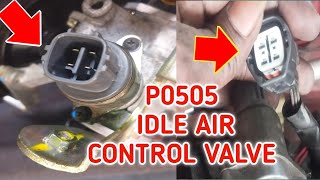
- Following TSBs for newer Fords. TSBs 12-7-4 and 12-8-1 address P0505 but apply to vehicles with Electronic Throttle Control (ETC), which this Taurus does not have. The fix described in those bulletins (reprogramming PCM, replacing throttle body) is incorrect for this vehicle. 🎬 See this overview of P0505 causes and common fixes.
Most Likely Causes
- Faulty Idle Air Control (IAC) Valve 🔴 High Probability The IAC valve is a small electric motor that constantly adjusts. Over time, it can fail electronically or get clogged with carbon buildup, causing it to stick. This is the most common failure point for idle issues on this platform. The internal motor can short out or the plunger mechanism can wear down.
How to confirm: With the engine idling rough, unplug the IAC electrical connector. If the idle speed changes drastically or the engine stalls, the valve was likely working. If the idle does not change at all, the valve is likely stuck or has failed. You can also test the valve's internal resistance with a multimeter; it should be between 6 and 10 ohms. 🎬 Watch: How to test and replace your IAC valve.
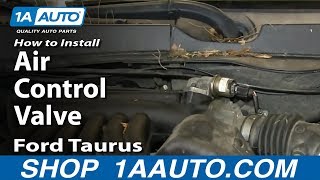
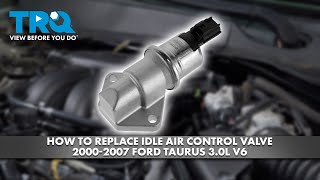
Typical fix: Replace the Idle Air Control (IAC) valve and its gasket. 🎬 Watch: Step-by-step IAC valve replacement for the 3.0L V6. Cleaning is often only a temporary solution and not recommended as a long-term fix.
Est. part cost: $30 - $100 - Vacuum Leak 🟡 Medium Probability Rubber vacuum hoses and intake gaskets become brittle with age and heat, leading to cracks that allow unmetered air to enter the engine, disrupting the air-fuel mixture and causing the PCM to lose idle control. Common leak points include the PCV valve hoses, intake manifold gaskets, and the brake booster line.
How to confirm: Visually inspect all vacuum lines, especially the PCV valve hoses and the intake air snorkel, for cracks or disconnections. Listen for a hissing sound at idle. A smoke test is the most effective way to find hard-to-see leaks from intake manifold gaskets. Spraying carburetor cleaner around suspected areas and listening for a change in engine RPM can also pinpoint a leak.
Typical fix: Replace the cracked vacuum hose or leaking gasket.
Est. part cost: $10 - $75 - Dirty Throttle Body ⚪ Low Probability Carbon can build up in the throttle body bore and on the throttle plate, restricting airflow and interfering with the small amount of air the IAC valve is designed to let by. This can prevent the throttle plate from closing completely, confusing the idle control system.
How to confirm: Remove the air intake hose from the throttle body and visually inspect for a thick, black layer of carbon buildup around the throttle plate and inside the bore. Check if the throttle plate moves freely without sticking.
Typical fix: Clean the throttle body bore and plate with a dedicated throttle body cleaner and a soft cloth or brush. Do not spray cleaner directly into the pivot shaft area.
Est. part cost: $5 - $15
Rare But Worth Checking
- Damaged IAC Connector or Wiring: The wiring harness leading to the IAC can become brittle, corroded, or wires can break internally, causing an intermittent connection. Wiggle the connector with the engine running to see if the idle changes, indicating a bad connection. A visual inspection for melted insulation or broken wires is recommended.
- Faulty Powertrain Control Module (PCM): This is extremely rare. Before condemning the PCM, all other possibilities, including the IAC valve, vacuum leaks, and wiring, must be definitively ruled out. A failed internal circuit in the PCM can cause a P0505 code, but this should be the last item to check.
Diagnosis Steps
- Scan for Codes: Confirm P0505 is the primary code. Address any other codes first, especially those related to MAF, TPS, or fuel trim.
- Inspect for Vacuum Leaks: Visually check all vacuum hoses connected to the intake manifold for cracks, especially the PCV and brake booster lines. Listen for a hissing sound at idle. A smoke test is the most reliable method.
- Test the IAC Valve: With the engine idling, disconnect the electrical connector from the IAC valve. A significant change in idle (or stalling) suggests the valve was functioning. No change in idle points to a failed or stuck valve.
- Inspect the IAC Connector: Check the wiring and connector for corrosion, damage, or loose pins. Wiggle the harness while the engine is running to check for intermittent shorts.
- Clean the Throttle Body: If not done recently, remove the intake duct and clean the throttle plate and bore with throttle body cleaner.
- Replace the IAC Valve: If the valve is suspected to be faulty, replace it. This is the most probable fix. Always install a new gasket to prevent leaks. The torque for the 8mm bolts is 89 in-lbs.
- Perform Idle Relearn: After the repair, disconnect the negative battery terminal for at least 15-30 minutes to clear the PCM's Keep Alive Memory (KAM). Reconnect it, start the engine, and let it idle for at least one minute. Then, turn the A/C on and let it idle for another minute. Finally, with the A/C on, place the car in Drive (with your foot on the brake) and let it idle for one more minute before driving to complete the process.
Parts You'll Likely Need
- Idle Air Control (IAC) Valve
(OEM #4F1Z-9F715-AA)— This is the most common failure part for code P0505 on this vehicle. It controls the engine's idle speed and fails from electronic issues or carbon buildup. This part number supersedes the older 1F1Z-9F715-AA. The Motorcraft service part number is CX1946.
Trusted brands: Motorcraft, Standard Motor Products, Hitachi, Delphi, TRQ
OEM price range: $70-$100
Aftermarket price range: $30-$60 - Idle Air Control Valve Gasket
(OEM #F6ZZ-9F670-BA)— The old gasket can be brittle or compressed and will cause a vacuum leak if reused. A new gasket is essential for a proper seal and is often included with a new IAC valve, but not always. It's critical to ensure a new one is used.
Trusted brands: Motorcraft, Fel-Pro
OEM price range: $5-$10
Aftermarket price range: $2-$5
Platform-Specific Known Issues
- A Reddit user with a 2004 Taurus experienced a choppy idle on cold starts that eventually led to stalling after driving for 40+ miles. After cleaning the MAF, PCV, and EGR and replacing plugs with no success, the community pointed towards a likely IAC or vacuum leak issue.
- On the closely related Ford Ranger with the same 3.0L Vulcan engine, owners on forums frequently discuss the P0505 code and attribute it almost universally to a bad IAC valve, confirming the high failure rate of this part across platforms.
- NHTSA ODI Investigation #PE11018 notes that for similar Ford platforms, idle instability and DTC P0505 can be attributed to a surge condition resulting from the progressive buildup of deposits in the throttle body.
Mechanic-Grade Diagnostic Values
- IAC Valve Internal Resistance — expected: 6.0 - 10.0 ohms. Failure: A reading outside this range, or an open circuit (infinite resistance), indicates a failed internal solenoid winding. Note that this test is polarity sensitive due to an internal diode.
- IAC Connector Voltage (KOEO) — expected: 10.5V or higher (Battery Voltage) on the VPWR (power) pin.. Failure: Low or no voltage indicates a wiring issue, a blown fuse, or a problem with the PCM power relay.
- IAC Duty Cycle PID (Scan Tool) — expected: 30% - 40% at a normal, warm idle with no accessories on.. Failure: A very low value (~20%) with a high idle suggests the PCM is commanding the valve closed, pointing to a vacuum leak. A very high value indicates the PCM is trying to open the valve to prevent a stall.
- Resistance from IAC valve pin to case — expected: Greater than 10,000 ohms.. Failure: A lower resistance value indicates a short to ground within the IAC valve itself.
Scan Tool Commands That Help
- Ford IDS / DRB / High-End Scan Tool: IAC Wiggle Test / Actuate IAC Motor — This bidirectional command allows the technician to manually command the IAC valve to open or close, or to cycle it through its range. If the engine RPM responds accordingly, it confirms the PCM driver, wiring, and IAC motor are all functional, pointing the diagnosis towards a vacuum leak or other issue. If the RPM does not change, it pinpoints a failure in the IAC circuit.
Wiring & Ground Locations
- G101 — Left side of the engine, above the starter motor.. This is a primary engine ground. A corroded or loose connection here can cause erratic behavior from multiple sensors and actuators controlled by the PCM, including the IAC valve.
- G100 — Left side of the engine compartment, on the fender or frame rail.. This is a key ground point for the engine harness and PCM. A poor connection at G100 can lead to incorrect voltage readings and improper operation of the idle control system.
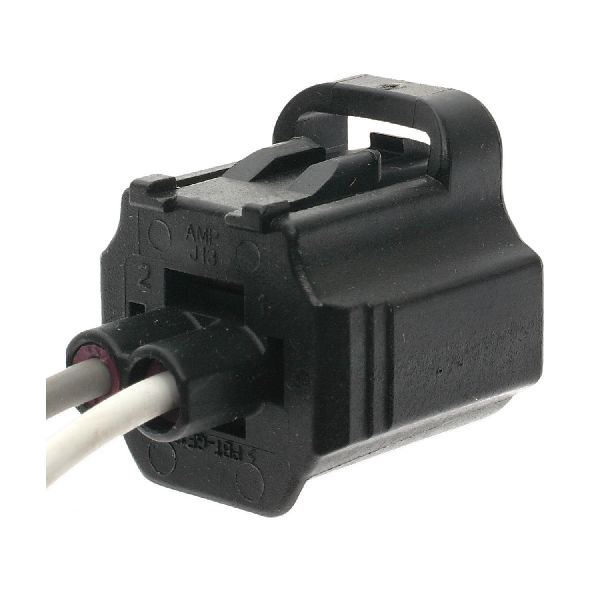
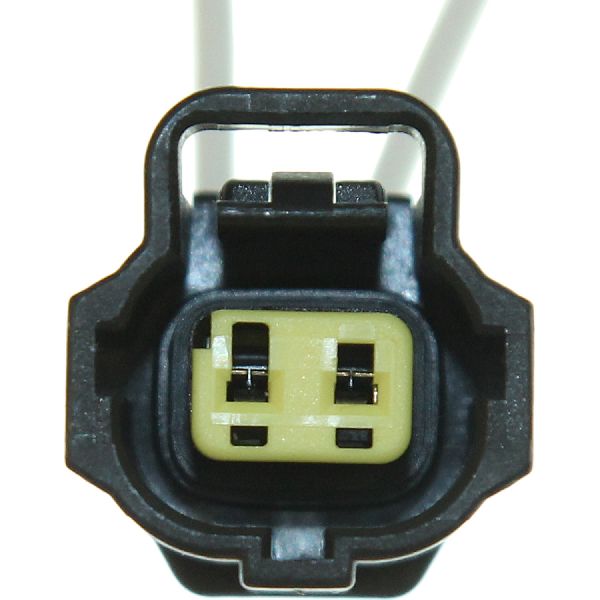
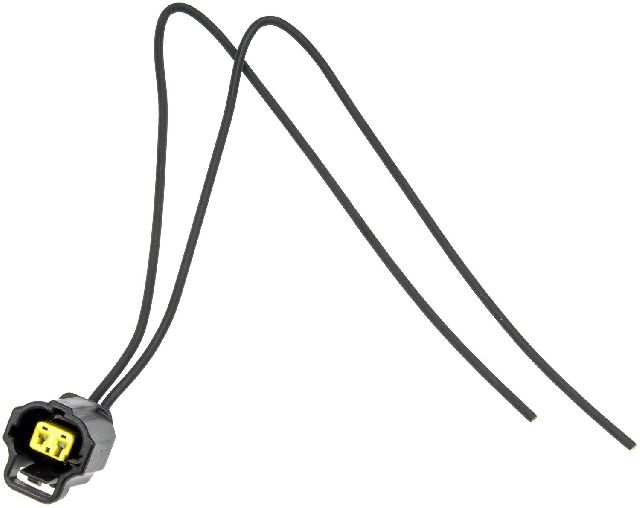
- IAC Connector Pins — The two-pin connector at the Idle Air Control valve.. One pin is the power supply (VPWR) from the PCM relay, and the other is the duty cycle control ground signal from the PCM. Testing for voltage and signal at these specific pins is critical for diagnosing a wiring or PCM driver fault.
Real Owner Repair Stories
- Ford Truck Enthusiasts Forums (1998 Ford Ranger with 3.0L V6 (mechanically similar to Taurus Vulcan)) — High idle, and when coming to a stop or cruising through a parking lot, the engine RPM would not settle down.
❌ Tried (didn't work) Replacing the Idle Air Control (IAC) valve., Disconnecting the battery for 24 hours to reset the PCM.
✅ What actually fixed it The user was advised to test the new IAC valve's resistance (spec 6-10 ohms) and check for proper voltage at the connector (10.5V+). The final fix was not explicitly posted in the thread, but the diagnostic path strongly pointed towards either a bad-out-of-the-box part or a wiring/voltage supply issue, as simply driving with the IAC unplugged made the truck run 'great'. - NHTSA ODI #10383032 — An owner of a Ford vehicle reported that after experiencing code P0505, the throttle body was replaced. However, the vehicle stalled again shortly after, and a pinpoint leak was eventually found in the resonator hose.
- NHTSA ODI #11052150 — A report involving idle air flow issues and P0505 notes that Ford issued Bulletin TSB 11-10-21, which included an updated powertrain control calibration to address the condition.
"I Checked Everything" — The Actual Cause
- A leaking brake booster diaphragm can cause a significant vacuum leak that sets a P0505. This type of leak will not be found with a smoke test of the intake manifold and hoses. The symptom is often a high, hard brake pedal and a hissing sound when the brake is applied. A quick test is to clamp off the vacuum line to the booster; if the idle returns to normal, the booster is the source of the leak.
OEM Part Supersession History
1F1Z-9F715-AA→4F1Z-9F715-AA— Standard part revision and improvement over time.4F1Z-9F715-AA→Motorcraft CX1946— This is the official Motorcraft service part number for 4F1Z-9F715-AA.
Helpful Videos

We Have This Part in Stock


The information in this article is provided for general reference and educational purposes only. Vehicle specifications, procedures, and part compatibility can vary by production date, trim level, and region. Always consult your vehicle's factory service manual and verify part numbers before purchasing or performing repairs. Safety-critical components such as airbags, seat belts, and braking systems should be installed by a qualified professional.
- Ford Taurus:
- 🎬 Helpful Videos
- 🛍️ Shop This Part
- What's Unique About the 2000-2007 Ford Taurus
- Symptoms You May Notice
- Most Likely Causes
- Rare But Worth Checking
- Diagnosis Steps
- Parts You'll Likely Need
- Platform-Specific Known Issues
- Mechanic-Grade Diagnostic Values
- Scan Tool Commands That Help
- Wiring & Ground Locations
- Real Owner Repair Stories
- "I Checked Everything" — The Actual Cause
- OEM Part Supersession History
- 🎟️ Get 5% Off