

P0502 on 2004-2011 GMC Canyon: Speed Sensor Low Input Causes and Fixes
On a 2004-2011 GMC Canyon, P0502 usually means a failed vehicle speed sensor (VSS) on the transmission or a wiring issue. A critical TSB also points to wires breaking inside the insulation near the MAP sensor, which can trigger this code. Expect to pay $20-$60 for a new VSS, a common and easy DIY fix.
- P0502 on a GMC Canyon indicates a low input from the Vehicle Speed Sensor.
- Before replacing any parts, check for other trouble codes. If codes like P0106, P0107, or P0300 are present, inspect the wiring harness near the MAP sensor for internal breaks as per TSB #PIP4409F.
- If P0502 is the only code, the most likely cause is a failed Vehicle Speed Sensor on the transmission tail shaft.
- The VSS is different from the ABS wheel speed sensors; ensure you are diagnosing and replacing the correct part for a speedometer or shifting issue.
- Replacing the VSS is a simple, low-cost DIY job for most owners.
What's Unique About the 2004-2011 Gmc CANYON
For the first-generation GMC Canyon and its Chevy Colorado twin, the P0502 code has a significant and non-obvious potential cause. A GM Technical Service Bulletin (TSB #PIP4409F) documents an issue where multiple, seemingly unrelated codes, including P0502, can be triggered by wires breaking inside their insulation near the Manifold Absolute Pressure (MAP) sensor. This means that while a faulty Vehicle Speed Sensor is a common cause, a wiring harness problem in a completely different part of the engine bay is a documented and vehicle-specific issue that must be considered during diagnosis.
Diagnostic Flowchart
Tap your situation to follow the diagnostic path that matches what you're seeing on this vehicle.
Symptoms You May Notice
- Check Engine Light is on
- Inaccurate or non-functional speedometer (may be stuck at 0 mph or fluctuate wildly)
- Harsh, erratic, or delayed automatic transmission shifting
- Transmission may feel stuck in one gear (limp mode)
- Cruise control will not engage
- ABS or Traction Control light may illuminate
- Replacing the VSS without checking for the TSB-related wiring issue near the MAP sensor, especially when other engine codes are present.
- Confusing the transmission-mounted Vehicle Speed Sensor (VSS) with the ABS Wheel Speed Sensors located at each wheel hub. The VSS fixes speedometer/shifting issues, while ABS sensors fix ABS/traction control light issues. 🎬 Watch: How to replace the ABS wheel speed sensor and hub.
- Replacing the VSS when the actual problem is a corroded or damaged pigtail connector at the sensor.
Most Likely Causes
- Wiring Broken Internally Near MAP Sensor 🔴 High Probability As documented in TSB #PIP4409F, the wiring harness in this area is susceptible to internal breaks, causing a variety of electrical faults. The constant vibration and heat cycles in the engine bay can cause the copper wire to fracture while the outer insulation remains intact.
How to confirm: Check for other codes listed in the TSB (P0106, P0107, P0171, P0300, P1107, P2431). Carefully inspect the wiring harness near the MAP sensor. Gently pull on individual wires; a wire that stretches or feels mushy is likely broken inside the insulation. Forum users often report this break occurs within a few inches of the MAP sensor connector.
Typical fix: Isolate the broken wire(s), cut out the damaged section, and splice in a new piece of wire using solder and heat shrink tubing for a durable repair. Butt connectors can also be used.
Est. part cost: $5-$15 - Failed Vehicle Speed Sensor (VSS) 🔴 High Probability The VSS is an electronic sensor exposed to harsh conditions under the vehicle, leading to eventual failure from heat, vibration, and moisture. Metal debris from normal transmission wear can also accumulate on the magnetic tip and disrupt the signal.
How to confirm: The VSS is located on the driver's side of the transmission tail shaft housing on both 2WD and 4WD models. Use a scan tool to monitor VSS output while driving. If the speed reads zero or is erratic while the vehicle is moving, and wiring is confirmed to be good, the sensor is likely faulty. You can also test the sensor's AC voltage output with a multimeter while spinning the wheels; one owner on the ScannerDanner forum noted their faulty OEM sensor only produced 2.8-3.4v AC, while the new aftermarket sensor produced over 6v AC under the same conditions, fixing the code.
Typical fix: Replace the Vehicle Speed Sensor. It is held in by a single bolt, making for a quick replacement. 🎬 See this walkthrough on how to replace the speed sensor.
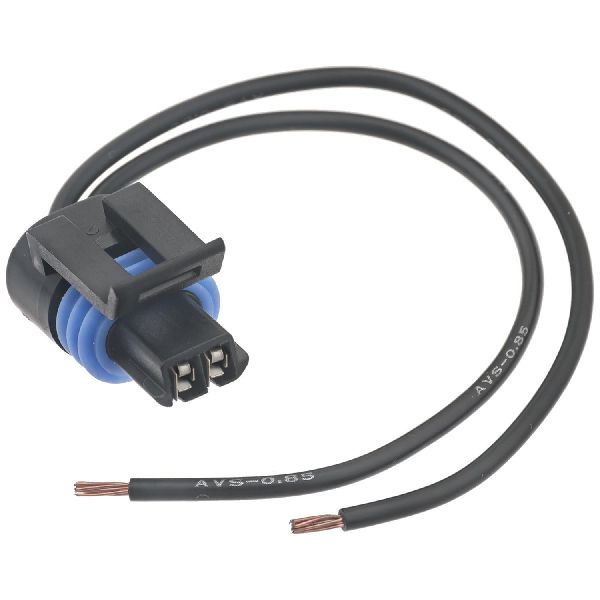
Est. part cost: $20-$60 - Damaged Wiring or Connector at VSS 🟡 Medium Probability The VSS connector and its wiring are located under the truck and are exposed to road debris, moisture, and corrosion, which can damage the connection. The plastic connector can become brittle and the locking tab can break.
How to confirm: Visually inspect the VSS connector for corrosion, bent pins, or broken wires. Check for a secure connection. The two primary wires are typically purple and green. Check for power, ground, and signal at the connector with a multimeter.
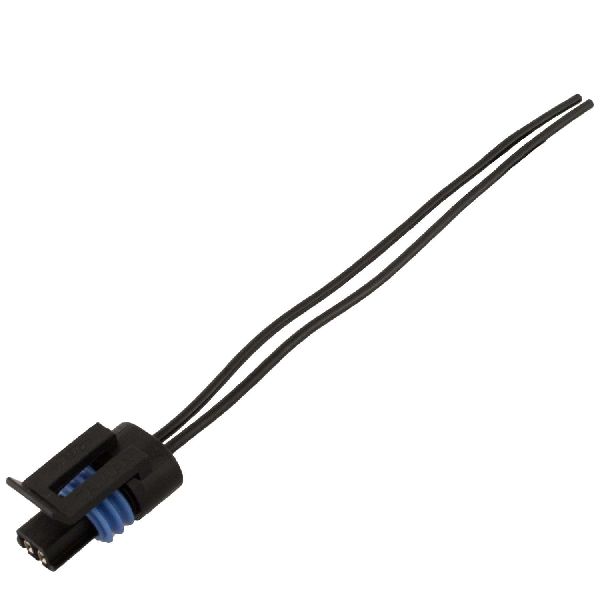
Typical fix: Clean the connector with electrical contact cleaner. If the connector or wiring pigtail is damaged, it will need to be repaired or replaced. Solder and heat shrink are recommended for a lasting repair.
Est. part cost: $10-$30
Rare But Worth Checking
- Faulty Powertrain Control Module (PCM): This is rare and should only be considered after all other possibilities (sensor, wiring, connectors) have been thoroughly ruled out. The PCM's internal circuit for the VSS can fail.
- Damaged Reluctor Ring: The VSS reads a toothed reluctor ring inside the transmission. If this ring is damaged, missing teeth, or has come loose, it can cause an erratic or missing signal. This is uncommon and typically requires transmission service to inspect and repair.
Diagnosis Steps
- Scan the ECM for all stored trouble codes. If codes like P0106, P0107, or P0300 are present alongside P0502, immediately suspect the wiring issue from TSB #PIP4409F.
- If multiple TSB-related codes are present, inspect the wiring harness near the Manifold Absolute Pressure (MAP) sensor. Gently tug on each wire to check for internal breaks as described in the TSB.
- If P0502 is the only code, locate the Vehicle Speed Sensor on the driver's side, rear of the transmission. Visually inspect the sensor and its electrical connector for any signs of damage, corrosion, or loose connections.
- Use a scan tool with live data capability to monitor the vehicle speed reading. If the reading is 0 mph or erratic while driving, the issue is with the sensor or its circuit.
- If a scan tool is not available, you can test the sensor's output. It is a variable reluctance (VR) sensor that generates an AC voltage. Safely raise the drive wheels, connect a multimeter set to AC volts to the sensor's two pins, and spin the wheels. The voltage should increase with speed. A very low or non-existent voltage indicates a bad sensor.
- If the sensor produces no signal, remove it and inspect the tip for metal debris. Also, inspect the connector pigtail for corrosion or damage.
- If the wiring and connector are good, and the sensor produces no signal (or a very low one), replace the Vehicle Speed Sensor.
- If the sensor and wiring all test good, the final and least likely possibility is a fault within the Powertrain Control Module (PCM).
Parts You'll Likely Need
- Vehicle Speed Sensor (VSS)
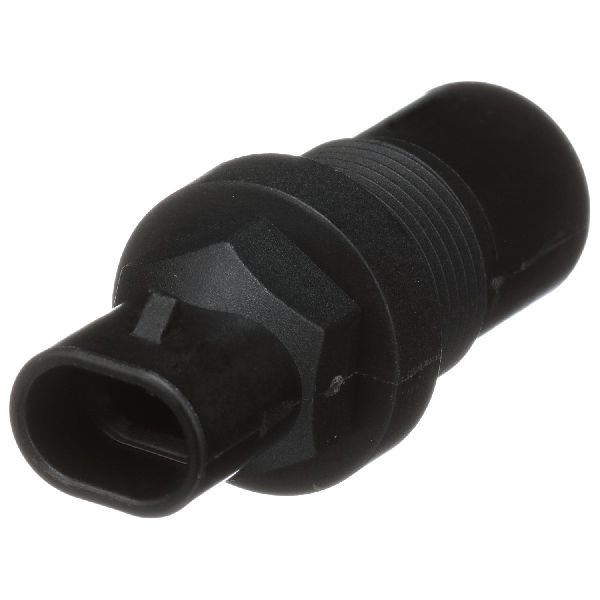
(OEM #19302667)— This sensor is the most common part to fail, directly causing the P0502 code when no wiring issues are found.
Trusted brands: ACDelco (GM Genuine), Delphi, Standard Motor Products (SMP), Dorman
OEM price range: $40-$70
Aftermarket price range: $20-$50
Related Codes That Often Appear With This One
- P0106 — Commonly appears with P0502 due to the specific wiring harness issue described in TSB #PIP4409F.
- P0107 — Commonly appears with P0502 due to the specific wiring harness issue described in TSB #PIP4409F.
- P0300 — Commonly appears with P0502 due to the specific wiring harness issue described in TSB #PIP4409F.
- P0700 — This is a general transmission fault code that is often triggered when the Transmission Control Module (TCM) detects a problem, such as the lack of a valid speed signal from the VSS.
- P0503 — Stands for "Vehicle Speed Sensor 'A' Intermittent/Erratic/High". This code is closely related and can be caused by the same wiring or sensor issues, but indicates an erratic signal rather than a consistently low one.
Technical Service Bulletins (TSBs) & Recalls
- PIP4409F: Notes that codes P0106, P0107, P0171, P0300, P0502, P1107, and P2431 can be caused by broken circuits inside the wire insulation near the MAP sensor.
Platform-Specific Known Issues
- A known issue documented by GM in TSB #PIP4409F involves engine and transmission-related DTCs, including P0502, being caused by wires breaking inside the insulation near the MAP sensor. This can lead to misdiagnosis if a technician only focuses on the VSS itself.
- Owner experiences on forums like the ScannerDanner Forum confirm that a failing VSS can produce a low AC voltage signal (e.g., under 3.5V at highway speed) that is sufficient to trigger the P0502 code, even if the sensor hasn't failed completely.
Mechanic-Grade Diagnostic Values
- Vehicle Speed Sensor (VSS) internal resistance — expected: 1300-1500 ohms. Failure: A reading that is significantly higher, lower, or shows an open circuit (OL).
- Vehicle Speed Sensor (VSS) AC voltage output at highway speed — expected: Greater than 6V AC. Failure: A reading that remains low, such as in the 2.8-3.4V AC range, indicates a weak/failing sensor even if it produces some signal.
- VSS circuit voltage at VCM connector — expected: Less than 5.1 volts. Failure: Voltage greater than 5.1 volts indicates a short to B+ in the circuit.
Wiring & Ground Locations
- VSS Signal Wires — In the harness running from the VSS on the transmission to the Powertrain Control Module (PCM).. These two wires carry the raw signal. They are typically a Purple/White and Light Green/Black twisted pair. They connect to pins C1-29 and C1-30 on the VCM.
- Splice Pack SP-105 — Driver's side of the engine bay, near the battery and underhood fuse block.. This is a known problematic ground splice for many critical components, including the fuel pump and Electronic Brake Control Module (EBCM). Corrosion here can cause widespread, intermittent electrical issues that could affect modules processing the VSS signal.
- Splice Pack SP-106 — Passenger side of the engine bay, typically behind the engine airbox.. This ground splice pack serves the HVAC controls, Data Link Connector, and the EBCM. A bad ground here can cause communication errors and faulty module behavior, which could indirectly trigger a P0502.
- G103 — Located on the cowl in the left rear of the engine compartment, above the brake booster.. This is a primary ground point for the Body Control Module (BCM), Instrument Panel Cluster (IPC), and Data Link Connector (DLC). A fault here can directly impact the speedometer display and module communication.
Real Owner Repair Stories
- ScannerDanner Forum user 'chriso-k' (2008 Holden Rodeo (platform mate to Canyon/Colorado) with 3.6L V6) — Intermittent P0502 code where the speedometer would drop to zero. The code could be cleared but would return randomly weeks or months later.
❌ Tried (didn't work) Verifying wiring integrity (no shorts or opens found)., Clearing the code with a scan tool (would come right back)., Disconnecting the Powertrain Interface Module (PIM) harnesses for a hard reset (provided a temporary fix).
✅ What actually fixed it Replaced the OEM VSS with an aftermarket sensor. The old sensor was weak, only producing 2.8-3.4V AC at highway speed. The new sensor produced over 6V AC under the same conditions, which resolved the code permanently. - YouTube user 'J20Jeepster' (2002 Suburban (similar GM VSS system)) — P0502 code, no speedometer reading, and transmission would not upshift.
❌ Tried (didn't work) Preparing to replace the vehicle speed sensor.
✅ What actually fixed it Upon inspection, it was discovered that a stick or road debris had physically unplugged the VSS connector at the transmission. Plugging the connector back in securely resolved all symptoms and the code.
OEM Part Supersession History
12376520, 88984527, 89048516, 97361874→19302667— Part consolidation and revision over time.
Model Year Variations Within This Range
- 2004-2011: No significant variations have been documented specifically for the transmission-mounted Vehicle Speed Sensor (VSS) or its related P0502 diagnostics across the first generation. The part number and testing procedures remain consistent.
Helpful Videos
We Have This Part in Stock


The information in this article is provided for general reference and educational purposes only. Vehicle specifications, procedures, and part compatibility can vary by production date, trim level, and region. Always consult your vehicle's factory service manual and verify part numbers before purchasing or performing repairs. Safety-critical components such as airbags, seat belts, and braking systems should be installed by a qualified professional.
- Gmc CANYON:
- 🎬 Helpful Videos
- 🛍️ Shop This Part
- What's Unique About the 2004-2011 Gmc CANYON
- Diagnostic Flowchart
- Symptoms You May Notice
- Most Likely Causes
- Rare But Worth Checking
- Diagnosis Steps
- Parts You'll Likely Need
- Related Codes That Often Appear With This One
- Technical Service Bulletins (TSBs) & Recalls
- Platform-Specific Known Issues
- Mechanic-Grade Diagnostic Values
- Wiring & Ground Locations
- Real Owner Repair Stories
- OEM Part Supersession History
- Model Year Variations Within This Range
- 🎟️ Get 5% Off