

P0502 on 2004-2011 Chevrolet Colorado: VSS Causes and Fixes
P0502 on a 2004-2011 Colorado most often means a failed front wheel speed sensor or a damaged wiring harness. A key issue for this truck is wiring breaking inside the insulation near the MAP sensor, which can trigger this code along with others. Check the harness first, then the sensor.
- P0502 on your Colorado means there's a problem with a wheel speed sensor circuit, which will disable your speedometer and cruise control.
- Before buying parts, inspect the engine wiring harness near the MAP sensor on the intake manifold. A known issue of wires breaking internally can cause this code.
- If other codes like P0106 (MAP Sensor) or P0300 (Random Misfire) are present, the wiring harness is the most likely culprit.
- If P0502 is the only code, the most probable cause is a failed front wheel speed sensor, which is a moderately easy part to replace yourself.
What's Unique About the 2004-2011 Chevrolet COLORADO
What makes the first-generation Colorado and its platform mates (GMC Canyon, Hummer H3) unique for this code is a specific wiring vulnerability documented by GM. A Technical Service Bulletin (TSB) reveals that P0502 can be triggered by wires breaking inside the insulation of the main engine harness, particularly within inches of the Manifold Absolute Pressure (MAP) sensor connector. This means a problem that seems unrelated to the wheels can cause your speedometer to fail. Mechanics may chase the wrong sensor if they are not aware of this specific harness issue that can affect multiple circuits at once, leading to a cluster of seemingly unrelated codes.
🎬 Try this quick battery reset if your ABS light is flashing.Diagnostic Flowchart
Tap your situation to follow the diagnostic path that matches what you're seeing on this vehicle.
Symptoms You May Notice
- Speedometer reads 0 MPH or fluctuates erratically.
- Check Engine Light is on.
- ABS and/or Traction Control warning light is on.
- Cruise control will not engage.
- Automatic transmission may shift harshly or at incorrect times, sometimes getting stuck in one gear.
- Replacing the instrument cluster. While GM clusters of this era are known to have issues with stepper motors causing gauge failure, a P0502 code specifically points to a problem with the sensor input circuit, not the gauge itself. The wiring harness issue is the most common misdiagnosis point.
Most Likely Causes
- Damaged Engine Wiring Harness 🔴 High Probability As documented in TSB #PIP4409F, the wiring harness near the MAP sensor is a known failure point. Wires can break inside the insulation, causing a short or open circuit that affects the wheel speed sensor signal path to the PCM. The break is typically within a few inches of the MAP sensor connector.
How to confirm: Carefully inspect the wiring harness that runs over the top/side of the engine, specifically near the MAP sensor connector on the intake manifold. Look for chafing, melting, or suspicious bends. Gently wiggle the harness with the engine running to see if the speedometer or symptoms change. Check for other codes like P0106, P0107, or P0300 which are also mentioned in the TSB. A user on 355nation.net noted finding the broken wire (purple wire in their case) inside the loom about 2 inches from the MAP sensor plug.
Typical fix: Repair the specific broken wire(s) in the harness. This involves opening the harness loom, locating the damaged wire (which may be broken internally with no visible damage to the insulation), and splicing in a new section of wire using solder and heat shrink or appropriate connectors.
Est. part cost: $5-$20 for wire and connectors - Failed Front Wheel Speed Sensor 🔴 High Probability The sensor is exposed to harsh conditions at the wheel hub, leading to failure from moisture, debris, or vibration over time. The internal coil can fail, resulting in a low voltage signal.
How to confirm: Disconnect the sensor and test for resistance and AC voltage. A healthy sensor should produce a varying AC voltage that increases with wheel speed (e.g., over 100mV when spinning the wheel by hand). A user on the ScannerDanner forum noted their faulty OEM sensor was only producing 2.8-3.4V AC at highway speeds, while a new aftermarket sensor produced over 6V AC, which fixed the code. A scan tool that can read live data from each wheel speed sensor can also quickly identify which one is not reporting a signal while the vehicle is moving.
Typical fix: Replace the faulty wheel speed sensor. It is located at the wheel hub/steering knuckle and is typically replaced as a complete sensor and wire assembly.
Est. part cost: $40-$120 - Corroded or Damaged Sensor Connector 🟡 Medium Probability The connector is located in the wheel well or engine bay and is susceptible to water intrusion and corrosion, leading to a poor signal. Road debris can also physically damage the connector or unplug it.
How to confirm: Unplug the wheel speed sensor harness connector and inspect the pins for green or white corrosion, bent pins, or physical damage. Ensure it is fully seated.
Typical fix: Clean the connector terminals with electrical contact cleaner. If heavily damaged, the connector pigtail may need to be cut off and a new one spliced on.
Est. part cost: $15-$30 for a new pigtail connector
Rare But Worth Checking
- Faulty Powertrain Control Module (PCM): This is rare, but if all sensors and wiring have been tested and confirmed to be good, the input circuit within the PCM itself may have failed. This is a last resort diagnosis.
- Damaged Tone Ring: The toothed ring that the sensor reads is integrated into the wheel hub bearing assembly. If the ring is cracked, damaged, or covered in excessive rust/debris, it can cause an erratic or missing signal. This is uncommon and usually accompanied by noise or vibration from a failing wheel bearing.
- Faulty Instrument Cluster: While less common, some vehicle architectures route the VSS signal through the instrument cluster before it's relayed to other modules. A fault within the cluster's circuitry could potentially disrupt the signal and trigger a P0502 code. This is a rare cause but has been noted in forum discussions for similar GM vehicles.
Diagnosis Steps
- Read all trouble codes from the PCM and ABS modules. Note any other codes present, especially those listed in TSB #PIP4409F (P0106, P0107, P0300, etc.).
- Use a scan tool to monitor live data for all four wheel speed sensors while driving. Identify any sensor that reads 0 MPH or has an erratic signal compared to the others.
- Perform a detailed visual inspection of the main engine wiring harness, focusing on the area within a few inches of the MAP sensor connector on the intake manifold, as indicated by TSB #PIP4409F. Gently pull and wiggle individual wires in this area to check for internal breaks.
- Inspect the wiring and connector for the suspect wheel speed sensor, from the wheel hub up into the engine bay. Check for corrosion, damage, or a loose connection.
- If a specific sensor is identified and its wiring appears intact, test the sensor itself. Disconnect it and check for proper resistance across its terminals (refer to a service manual for specifications, typically 800-1700 ohms for passive sensors). Then, check for AC voltage generation while spinning the wheel.
- If the sensor tests good, perform a continuity test on its wiring from the sensor connector back to the EBCM (Electronic Brake Control Module) to find any hidden breaks in the wire.
- If no issues are found with wiring or sensors, the final step would be to consider a faulty PCM, though this is highly unlikely.
Parts You'll Likely Need
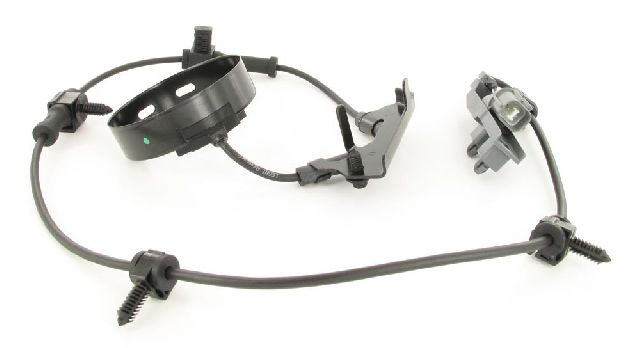
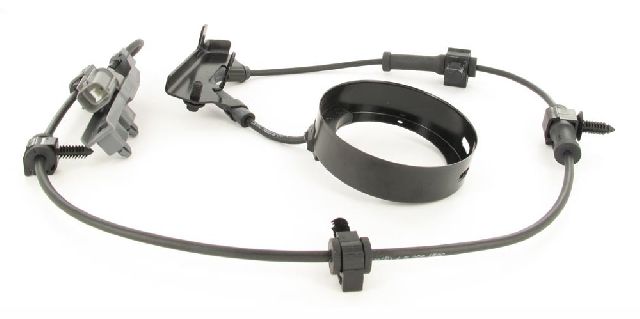
- Front Wheel Speed Sensor / ABS Sensor Harness
(OEM #15176996, 15872372, 25832122)— This is the most common part to fail, either internally or due to wiring damage. It is typically replaced as a single assembly. The part number may vary by 2WD/4WD and left/right side.
Trusted brands: ACDelco (GM Original Equipment or Gold), Delphi, SKF, Dorman, Standard Motor Products (SMP)
OEM price range: $80-$150
Aftermarket price range: $40-$90
Related Codes That Often Appear With This One
- P0106 — Manifold Absolute Pressure (MAP) Sensor Performance. This code, along with P0107, P0171, P0300, P1107, and P2431, is specifically mentioned in TSB #PIP4409F as being related to the same wiring harness failure that can cause P0502.
- C0035 — Left Front Wheel Speed Sensor Circuit. This is a 'C' (Chassis) code that more specifically points to the wheel speed sensor circuit itself, often appearing alongside the generic 'P' code. A scan tool capable of reading ABS codes is needed to see this.
- C0040 — Right Front Wheel Speed Sensor Circuit. Similar to C0035, this chassis code helps pinpoint which wheel sensor is having an issue.
Technical Service Bulletins (TSBs) & Recalls
- PIP4409F: 'Service Engine Soon Malfunction Indicator Lamp on and or engine running rough. Technician may find Diagnostic Trouble Codes P0106, P0107, P0171, P0300, P0502, P1107, and P2431. Technician will need to inspect all Manifold Absolute Pressure sensor circuits for being broken inside of the insulation... Typically, the break will be within inches of the MAP sensor connector.'
Platform-Specific Known Issues
- TSB #PIP4409F: Documents an issue where wires for the MAP sensor circuit break inside the insulation. This harness issue can also affect the wheel speed sensor circuit, causing code P0502 to set simultaneously with engine performance codes like P0106 and P0300. The bulletin specifically applies to the 2.8L, 2.9L, and 3.7L engines in the Colorado, Canyon, and H3.
Mechanic-Grade Diagnostic Values
- Passive Wheel Speed Sensor Resistance — expected: 800 - 1,700 Ohms. Failure: An open circuit (infinite resistance) or a reading significantly outside the expected range. Comparing the reading to the sensor on the opposite wheel is a good validation test.
- Wheel Speed Sensor AC Voltage (while spinning wheel) — expected: Greater than 100mV AC when spinning by hand, increasing with speed. Should produce over 6V AC at highway speeds.. Failure: No voltage or a consistently low voltage (e.g., under 3.5V at highway speed) indicates a weak or failed sensor.
- EBCM Connector Pin Voltage (Key On) — expected: On the two-wire sensor connector harness side, one wire should have a reference voltage (often 5V or 12V) and the other is the signal return.. Failure: Absence of reference voltage indicates a wiring problem between the EBCM and the sensor connector.
Wiring & Ground Locations
- SP105 / G105 — Driver's side of the engine compartment, near the battery or underhood fuse block, often bolted to the fender well.. This is a major ground splice pack that provides the ground path for the Electronic Brake Control Module (EBCM). Corrosion at this point can cause a floating ground, leading to numerous ABS codes, including P0502, and intermittent electrical issues.
- EBCM Connector — The large electrical connector on the ABS hydraulic unit, located under the driver's side of the truck along the frame rail.. This is the central connection point for all wheel speed sensors. Testing for signal, power, and ground at these pins can confirm if the fault is in the sensor, the wiring, or the module itself. For example, on some GM models, the Left Front WSS signal is on Pin 27 (Light Blue wire) and its low reference is on Pin 28 (Yellow wire).
- G106 — Passenger side of the engine compartment, typically behind the air cleaner assembly.. While SP105 is the primary ground, G106 also provides a ground path for the EBCM on some model years and configurations. Verifying all EBCM grounds is crucial.
Real Owner Repair Stories
- 355nation.net forum user (2006 Chevrolet Colorado) — Check Engine Light with codes P0502, P0106, P0300. Speedometer not working.
❌ Tried (didn't work) Initial diagnosis pointed towards separate issues.
✅ What actually fixed it Found a broken purple wire inside the wiring loom, approximately 2 inches away from the MAP sensor connector, exactly as described in TSB PIP4409F. Splicing the wire fixed all codes and the speedometer issue. - ScannerDanner Forum user (Vehicle with similar GM ABS system (Holden Rodeo)) — Intermittent P0502 code, speedometer dropping to zero.
❌ Tried (didn't work) Replacing the VSS sensor initially did not seem to resolve the intermittent nature of the problem.
✅ What actually fixed it The original OEM sensor was weak, producing only 2.8-3.4V AC at highway speed. A new aftermarket sensor produced over 6V AC under the same conditions, which provided a stable enough signal to the module and permanently resolved the code. - Chevrolet Forum user (Chevrolet Silverado with similar ABS system) — ABS light and code U1041 (Loss of EBCM Communication), which is often related to the same power/ground issues that can cause P0502.
❌ Tried (didn't work) Checking fuses and relays.
✅ What actually fixed it The main EBCM ground on the frame rail, located under the driver's side near the front body mount, was heavily corroded. Cleaning the frame to bare metal and re-securing the ground terminal restored proper function to the ABS module.
Model Year Variations Within This Range
- 2007-2012: In 2007, the engines were updated from 2.8L/3.5L to 2.9L/3.7L. While the TSB #PIP4409F applies to both sets of engines, the physical harness routing and appearance may have minor differences. The fundamental wiring issue remains the same.
- 2009-2012: StabiliTrak (Electronic Stability Control) became standard on all models in 2009. Vehicles with StabiliTrak have a more advanced EBCM that also incorporates a yaw rate sensor and steering angle sensor. While P0502 diagnosis remains focused on the wheel speed circuits, the EBCM itself is more complex.
Helpful Videos
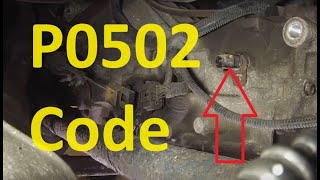
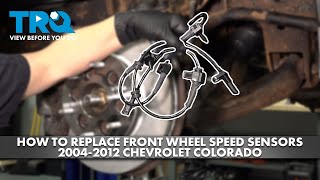
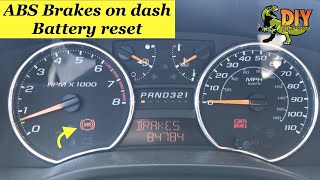
We Have This Part in Stock

The information in this article is provided for general reference and educational purposes only. Vehicle specifications, procedures, and part compatibility can vary by production date, trim level, and region. Always consult your vehicle's factory service manual and verify part numbers before purchasing or performing repairs. Safety-critical components such as airbags, seat belts, and braking systems should be installed by a qualified professional.
- Chevrolet COLORADO:
- 🎬 Helpful Videos
- 🛍️ Shop This Part
- What's Unique About the 2004-2011 Chevrolet COLORADO
- Diagnostic Flowchart
- Symptoms You May Notice
- Most Likely Causes
- Rare But Worth Checking
- Diagnosis Steps
- Parts You'll Likely Need
- Related Codes That Often Appear With This One
- Technical Service Bulletins (TSBs) & Recalls
- Platform-Specific Known Issues
- Mechanic-Grade Diagnostic Values
- Wiring & Ground Locations
- Real Owner Repair Stories
- Model Year Variations Within This Range
- 🎟️ Get 5% Off