

OBD-II Code P0499: EVAP Vent Valve Control Circuit High
The Ultimate 2026 Guide to Diagnosing and Fixing P0499
- P0499 is strictly an electrical circuit fault, not a physical vapor leak, caused by a failed EVAP vent valve solenoid in over 80% of cases.
- You can safely drive with a P0499 code, but your vehicle will automatically fail state emissions testing until the circuit is repaired.
- Do not replace the gas cap to fix P0499; a loose cap causes a leak code (like P0455), whereas P0499 requires testing the vent valve for a resistance of 15-50 ohms.
- Ignoring P0499 for over 6 months saturates the charcoal canister with raw fuel, turning a $100 valve replacement into a $500+ canister repair.
- Always verify the vent valve connector has 12V power with the key on before replacing the valve to rule out a broken wire or blown fuse.
What Does P0499 Mean?

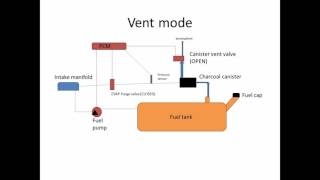
P0499 means your car's Powertrain Control Module (PCM) detects an electrical fault in the Evaporative Emission (EVAP) system. Specifically, the circuit controlling the EVAP vent valve has a voltage that is too high when it should be low. The EVAP system traps and recycles gasoline vapors to prevent atmospheric pollution. 🎬 Watch: A helpful lecture on how your EVAP system works This code indicates an electrical issue is preventing the system from sealing correctly to perform its self-tests.
Technical definition: Evaporative Emission System Vent Valve Control Circuit High. The PCM detects that the voltage on the EVAP vent valve control circuit is higher than the manufacturer's specified threshold (often above 4.5V when it should be near 0V). The vent valve is normally open; the PCM commands it shut by grounding the circuit to seal the system for leak testing. P0499 sets when the voltage remains near battery voltage (12V+), indicating a short to power or an open control circuit.
Can I Drive With P0499?
Yes, But With Caution. Yes, you can safely continue driving with a P0499 code. It does not affect engine performance or safety in the short term, but your vehicle will automatically fail an emissions test. Ignoring the code for over 6 months degrades the charcoal canister as it saturates with fuel vapors, adding $150 to $700 to the final repair cost.
Common Causes

- Defective EVAP Vent Valve/Solenoid (Very Common) — The number one cause. The solenoid coil inside the valve fails electrically, creating an internal short or open circuit. Located under the car near the gas tank, it is heavily exposed to moisture and road salt, causing rust and failure.
- Corroded or Damaged Electrical Connector (Common) — The connector plugging into the vent valve fills with water or corrodes from road salt, shorting the pins together. Bent pins also create a high-resistance fault.
- Shorted Wiring in the Vent Valve Circuit (Common) — The control wire (ground side) for the vent valve chafes against the vehicle's frame or suffers road debris damage, shorting directly to a 12-volt power source.
- Open in the Vent Valve Control Circuit (Common) — A break in the control wire between the PCM and the vent valve prevents the PCM from grounding the circuit. The PCM sees this as a constant high voltage.
- Clogged Vent Valve Filter or Hose (Less Common) — The vent valve's inlet filter or attached hose clogs with dirt, debris, or spider nests. This physical blockage causes the valve to stick, which the PCM misinterprets as a circuit fault.
- Blown Fuse (Rare) — Some vehicle designs share a fuse with other components. A blown EVAP power supply fuse causes unexpected voltage readings.
- Faulty Powertrain Control Module (PCM) or Software (Very Rare) — Extremely rare. The driver circuit inside the PCM that grounds the vent valve fails, or outdated PCM software misinterprets voltage thresholds. Consider this only after exhaustively testing the valve, wiring, and connectors.
Symptoms

- Check Engine Light is On — The most common and often the only symptom. The light remains solid.
- Failed Emissions Test — The EVAP system monitor cannot complete its self-test, causing an automatic failure of state emissions inspections.
- Difficulty Refueling — If the vent valve is stuck closed, it prevents air from escaping the fuel tank. The gas pump nozzle repeatedly clicks off before the tank is full.
- Faint Fuel Smell — You notice a slight gasoline smell near the rear of the vehicle, as unregulated vapors escape when the system fails to seal.
- Hissing Sound from Gas Cap — Pressure builds up in the fuel tank, causing a noticeable 'whoosh' or hissing sound when you remove the gas cap.
Common Fixes & Costs

- Replace EVAP Vent Valve/Solenoid — Parts: $30-$150, Labor: $80-$180, ~0.8 hr book time (DIY)
- Repair Damaged EVAP Wiring or Connector — Parts: $10-$50, Labor: $125-$300, ~1.5 hr book time (Intermediate)
- Replace Charcoal Canister — Parts: $150-$600, Labor: $100-$250, ~1.2 hr book time (Intermediate)
- Replace Blown Fuse — Parts: $1-$10, Labor: $0-$50, ~0.2 hr book time (Beginner)
- Replace Powertrain Control Module (PCM) — Parts: $500-$1000, Labor: $150-$300, ~1.5 hr book time (Professional)
Used vs. New Parts: Buying Guide
When a used part is worth it: For a simple EVAP vent valve, buy new. A used part only makes sense for a complete, expensive charcoal canister assembly if the new price exceeds $400.
Donor-vehicle mileage cap: roughly under 60000 miles for the part to have meaningful remaining life.
Donor quality checklist:
- Verify the part number matches exactly.
- Avoid parts from the 'Salt Belt' or coastal areas; corrosion is the primary failure mode.
- Inspect the electrical connector pins for green or white corrosion before purchasing.
Decision logic:
- If New aftermarket vent valve is available for < $75 → Buy new; the warranty and assurance of a non-corroded part are worth the price.
- If The required part is a complete canister assembly costing > $400 → Buy a used assembly from a low-mileage, non-corroded donor vehicle.
- If Only the electrical pigtail connector is needed → Buy used; it provides OEM-grade wire and terminals for splicing.
Warranty tradeoff: Used salvage parts typically have a 30-90 day warranty. New aftermarket parts offer 1-year to lifetime warranties. New OEM parts carry a 12-month/12,000-mile warranty.
Worst-case if a used part fails: $100-250 if a used valve fails after the warranty period, requiring repeat labor.
Cost of Not Fixing It
- 0-3 months: Guaranteed failure of any OBD-II emissions test. The Check Engine Light remains on, masking new problems. (Added cost: 0)
- 3-12 months: The charcoal canister begins saturating with raw fuel vapors because the system cannot purge correctly, leading to a stronger fuel odor. (Added cost: 0)
- 12+ months: The charcoal canister becomes permanently damaged by liquid fuel saturation. This requires replacing the canister in addition to the original vent valve. (Added cost: $150-700)
Diagnosis Steps

- Scan for Codes and Review Freeze Frame Data
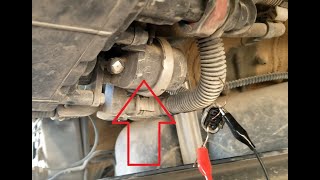
Use an OBD-II scanner to confirm P0499 is present and check for related EVAP codes (e.g., P0498, P0455). Record the freeze-frame data. Clear the codes; if P0499 returns immediately, you have a hard electrical fault. 🎬 Watch: How to test if your vent valve is good or bad
Tools: OBD-II Scanner (Beginner) - Visually Inspect the EVAP System
Locate the EVAP vent valve near the fuel tank or spare tire. Inspect the valve, electrical connector, and wiring harness for cracks, corrosion, melted plastic, or frayed wires. Ensure the vent hose is free of mud or debris.
Tools: Flashlight, Jack and Jack Stands (Beginner) - Test the Vent Valve's Resistance
Unplug the vent valve's electrical connector. Set a multimeter to Ohms (Ω) and touch the probes to the two metal pins on the valve. A healthy valve reads between 15 and 50 ohms. Infinite resistance (OL) indicates an open coil; near 0 ohms indicates a shorted coil. Replace the valve if it fails this test.
Tools: Multimeter, Service Manual (Intermediate) - Check for Power and Ground at the Connector
With the vent valve unplugged, turn the ignition to 'ON' (engine off). Set the multimeter to DC Volts. One terminal in the harness connector must have battery voltage (11V-14V). If there is no voltage, check for a blown fuse or broken wire. If both wires show 12V, the control wire is shorted to power.
Tools: Multimeter (Intermediate) - Check for a Short to Power
Disconnect the battery and the PCM connector. Set the multimeter to Ohms. Check for continuity between the vent valve control wire terminal at the harness connector and the positive battery cable. Continuity confirms the control wire is shorted to a power source in the harness.
Tools: Multimeter, Service Manual (for PCM pinout) (Advanced) - [PRO TIP] Command the Vent Valve with a Bidirectional Scanner
Navigate to the EVAP system tests on a bidirectional scan tool and command the vent valve 'ON' and 'OFF'. Listen for a distinct 'click' from the valve. If you hear the click but the code persists, the problem is intermittent. No click confirms a failure in the valve or circuit.
Tools: Bidirectional Scan Tool (Advanced) - [PRO TIP] Perform a Voltage Drop Test
Connect the positive multimeter lead to the ground pin on the harness connector and the negative lead to a known good chassis ground. Command the vent valve ON with a scan tool. A reading above 0.5V indicates excessive resistance in the ground control circuit, often due to a corroded wire.
Tools: Multimeter, Bidirectional Scan Tool, Back-Probe Kit (Advanced) - Perform a Smoke Test for Blockages
If all electrical tests pass, inject pressurized, non-toxic smoke into the EVAP system's vent hose. If smoke does not flow freely out of the charcoal canister, a hose or the canister itself is clogged.
Tools: EVAP Smoke Machine (Advanced)
When This Code Triggers (Freeze-Frame Conditions)
- Engine Coolant Temp: 170-230°F (Engine is fully warmed up.)
- Fuel Level: 15-85% (The EVAP monitor test requires the fuel tank to be neither full nor empty.)
- Engine Load: 15-35% (During steady, part-throttle cruising.)
- Vehicle Speed: 45-65 mph (Stable highway driving conditions are required for the test to run.)
Related Codes
- P0498 — The opposite code: 'Vent Valve Control Circuit Low.' P0499 points to a short to power or an open circuit; P0498 points to a short to ground.
- P0455 — Indicates a 'Gross Leak'. A vent valve physically stuck open (the root cause of the P0499 electrical fault) prevents the system from sealing, triggering both the electrical code (P0499) and the leak code (P0455).
- P0456 — Indicates a 'Small Leak'. An intermittent electrical fault in the vent valve circuit causes the valve to seal improperly, logging P0456 alongside P0499.
- P0443 — Points to an electrical fault in the 'Purge Valve' circuit. Seeing P0499 and P0443 together suggests a wider wiring harness problem affecting multiple EVAP circuits.
Climate & Environmental Factors
- Road Salt & Humidity: The primary driver of P0499 failures. The vent valve and connector sit under the vehicle. In the 'Salt Belt' or high-humidity regions, corrosion destroys the solenoid's internal coil and electrical connector pins.
- Cold Weather: Extreme cold freezes moisture that has entered the valve assembly, causing mechanical parts to stick and triggering intermittent circuit faults.
- Dust and Debris: In dusty or off-road environments, the vent's fresh air intake filter clogs with dirt. Spiders also build nests in the vent hoses, causing blockages that force the valve to stick.
How to Clear the Code After You Fix It
- Reconnect battery if disconnected for repair.
- Use an OBD-II scan tool to clear the P0499 code.
- Perform the specific EVAP drive cycle to set the readiness monitor.
Drive cycle (~30 minutes): A 'cold soak' (vehicle sitting for 8+ hours) is required. Start the engine and idle for 3 minutes. Drive at a steady speed between 45-65 mph for 15 minutes. Avoid aggressive acceleration. Allow the vehicle to cool down and repeat if the monitor is not 'Ready'.
Readiness monitors affected: Evaporative (EVAP) System, Catalyst (CAT), Oxygen (O2) Sensor
Before emissions retest: drive at least 100 miles to fully set monitors.
Watch out for:
- Clearing the code with a scanner does not complete the repair; the readiness monitors must read 'Ready' to pass an emissions test.
- The EVAP monitor has strict running conditions (fuel level between 15-85%) and requires multiple drive cycles to set.
- Disconnecting the battery resets all readiness monitors, requiring a full drive cycle to be completed.
Will This Fail Emissions / State Inspection?
Yes — this code typically fails an OBD-II emissions inspection.
- California: An illuminated Check Engine Light is an automatic failure. All readiness monitors must be 'Ready'.
- New York: A vehicle fails the OBD-II inspection if the Check Engine Light is on for any emissions-related fault code, including P0499.
- Texas: In emissions-testing counties, an illuminated Check Engine Light results in an automatic failure. You must complete a drive cycle after repair.
Most Commonly Affected Vehicles
- Chevrolet / GM Cruze, Malibu, Silverado, Equinox (2006-2017) — Extremely common. GM calls this a 'canister vent solenoid.' On Silverado/Sierra trucks, the valve notoriously sticks from rust and moisture. 🎬 See this replacement walkthrough for Chevy Silverado and GMC Sierra
- Dodge / Ram Ram 1500, Dakota, Durango (2005-2013) — The vent valve sits on top of the fuel tank on many Ram trucks, requiring the tank to be lowered for access, making the repair labor-intensive.
- Ford F-150, Focus, Fusion (2009-2018) — The F-150 vent valve (often part of the canister assembly) is a frequent culprit. 2012-2018 Focus models suffer from wiring issues near the valve.
- Honda Civic, Accord, Odyssey (2006-2015) — The vent valve mounts directly to the charcoal canister but is purchased separately, making repairs affordable. Corrosion at the connector is the primary checkpoint.
- Hyundai Elantra, Sonata (2001-2015) — Hyundai refers to this as the Canister Close Valve (CCV). Internal valve failures are the most common cause for P0499 on these models.
- Nissan Titan, Altima, Frontier (2004-2015) — The vent control valve solenoid fails internally due to age and heat cycles.
- Subaru Outback, Forester, Impreza (2005-2014) — The vent valve solenoid sticks due to dirt ingestion. The rear wiring harness is highly susceptible to damage from road debris.
Manufacturer-Specific Notes
- General Motors (Chevy, Buick, GMC): GM TSB #09-06-04-028D addresses water intrusion into the vent solenoid on trucks/SUVs. The fix involves replacing the vent valve with an updated design featuring a relocated, filtered air intake box to prevent contamination.
- Dodge / Chrysler / Jeep: Many models use an 'Evaporative System Integrity Monitor' (ESIM) instead of a traditional vent valve. A failure in the ESIM assembly (OEM Part 4861963AA) triggers P0499, as the vent function is integrated into this module.
- Honda: The vent valve is sold separately from the expensive charcoal canister. Always check the wiring harness connection at the valve first, as pin corrosion is the leading cause of failure.
- Toyota: TSB-0089-09 describes an issue where the entire charcoal canister assembly (which includes the integrated vent valve) fails, causing P0499. The official repair requires replacing the entire canister assembly.
Frequently Asked Questions
Can I fix P0499 myself?
Yes, replacing a faulty vent valve is a straightforward job for a DIYer with basic tools. However, diagnosing a wiring short or a faulty PCM requires professional-level electrical skills and a multimeter.
Will replacing the gas cap fix a P0499 code?
No. P0499 is an electrical circuit code, not a system leak code. A bad gas cap causes a leak code (like P0455), but it will never cause a 'circuit high' electrical fault.
What is the difference between a purge valve and a vent valve?
The vent valve (P0499) is normally open to allow fresh air into the EVAP canister and closes to seal the system for tests. The purge valve (P0443) is normally closed and opens to draw stored fuel vapors into the engine to burn.
How much does it cost for a shop to diagnose P0499?
A diagnostic fee typically costs between $100 and $180. This fee is usually applied as a credit toward the final repair if you have the shop perform the work.
Where is the EVAP vent valve located?
The EVAP vent valve is located at the rear of the vehicle, near the fuel tank. It is usually attached directly to the charcoal canister, which looks like a black plastic box.
What happens if I don't fix P0499?
Your vehicle will automatically fail an emissions test. Prolonged neglect saturates the charcoal canister with fuel, eventually requiring a $500+ replacement. The constant check engine light also masks new, more serious engine problems.
Can a bad battery or alternator cause a P0499 code?
It is highly unlikely. P0499 is specific to the vent valve circuit. The fault is almost always isolated to the EVAP system's own components, connectors, or wiring.
Key Takeaways
- P0499 is strictly an electrical circuit fault, not a physical vapor leak, caused by a failed EVAP vent valve solenoid in over 80% of cases.
- You can safely drive with a P0499 code, but your vehicle will automatically fail state emissions testing until the circuit is repaired.
- Do not replace the gas cap to fix P0499; a loose cap causes a leak code (like P0455), whereas P0499 requires testing the vent valve for a resistance of 15-50 ohms.
- Ignoring P0499 for over 6 months saturates the charcoal canister with raw fuel, turning a $100 valve replacement into a $500+ canister repair.
- Always verify the vent valve connector has 12V power with the key on before replacing the valve to rule out a broken wire or blown fuse.
Helpful Videos


The information in this article is provided for general reference and educational purposes only. Vehicle specifications, procedures, and part compatibility can vary by production date, trim level, and region. Always consult your vehicle's factory service manual and verify part numbers before purchasing or performing repairs. Safety-critical components such as airbags, seat belts, and braking systems should be installed by a qualified professional.
- 🎬 Helpful Videos
- What Does P0499 Mean?
- Can I Drive With P0499?
- Common Causes
- Symptoms
- Common Fixes & Costs
- Used vs. New Parts: Buying Guide
- Cost of Not Fixing It
- Diagnosis Steps
- When This Code Triggers (Freeze-Frame Conditions)
- Related Codes
- Climate & Environmental Factors
- How to Clear the Code After You Fix It
- Will This Fail Emissions / State Inspection?
- Most Commonly Affected Vehicles
- Manufacturer-Specific Notes
- Frequently Asked Questions
- Can I fix P0499 myself?
- Will replacing the gas cap fix a P0499 code?
- What is the difference between a purge valve and a vent valve?
- How much does it cost for a shop to diagnose P0499?
- Where is the EVAP vent valve located?
- What happens if I don't fix P0499?
- Can a bad battery or alternator cause a P0499 code?
- Key Takeaways
- 🎟️ Get 5% Off