

OBD-II Code P0498: EVAP Vent Valve Control Circuit Low
What P0498 means, why it triggers, and how to fix it
What Does P0498 Mean?

P0498 means your car's computer (PCM) detects low voltage in the EVAP vent valve's electrical circuit, indicating a short to ground or a failed valve. The vent valve (or canister vent solenoid) normally stays open to let fresh air into the charcoal canister. When the PCM commands it closed to test for leaks, it monitors the circuit voltage. If the voltage drops below the expected threshold, P0498 triggers.
Technical definition: The official SAE definition is "Evaporative Emission System Vent Valve Control Circuit Low". The PCM detects voltage in the EVAP vent valve control circuit below the specified range (e.g., under 2.6V on GM vehicles). The PCM constantly monitors this control line; a short to ground in the wiring or a shorted internal solenoid coil sets this code.
Can I Drive With P0498?
Yes, But With Caution. Yes, you can drive with this code. It rarely causes drivability issues. However, your car will fail an emissions test, release excess fuel vapors, and disable convenience features like remote start. Ignoring it stresses other EVAP components over time. Address the issue within a few weeks to restore full functionality and ensure emissions compliance.
Common Causes

- Defective EVAP Vent Valve/Solenoid (Very Common) — The solenoid coil inside the valve fails, develops an internal short circuit, or sticks. Located near the charcoal canister by the fuel tank, it suffers exposure to road salt, moisture, and debris, causing rapid corrosion.
- Wiring or Connector Issues (Common) — The wiring harness leading to the vent valve becomes damaged, corroded, frayed, or shorted to ground. A poor connection at the plug, often with corroded pins, causes this code. On GM trucks, the harness frequently chafes against the frame (TSB 21-NA-149).
- Blown Fuse (Less Common) — A blown EVAP system fuse cuts power to the vent valve circuit, resulting in a low voltage reading. Always check the fuse box before replacing parts.
- Damaged or Clogged Charcoal Canister (Less Common) — If the canister saturates with fuel (from overfilling the gas tank) or suffers physical damage, the integrated vent valve fails.
- Faulty Fuel Pump Driver Module (FPDM) (Rare) — On 2018+ GM models, the FPDM controls the EVAP vent solenoid. A failed FPDM causes a P0498 code even with a perfect vent valve and wiring, leading to frequent misdiagnoses.
- Faulty Powertrain Control Module (PCM) (Very Rare) — The PCM's internal driver circuit fails. Suspect this only after exhaustively ruling out all other possibilities.
- Outdated PCM Software (Very Rare) — The PCM's software calibration is overly sensitive or contains a glitch. A dealership must perform a software update to correct the logic.
Symptoms

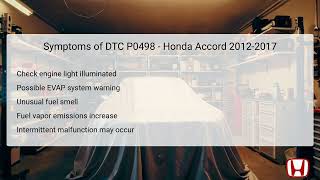
- Check Engine Light On — This is the most common and often the only symptom you notice.
- Failed Emissions Test — An active P0498 code prevents the EVAP monitor from running, causing an automatic failure of state emissions inspections.
- Remote Start Disabled — Modern vehicles disable the remote start feature as a safety precaution when an emissions-related Check Engine Light is active.
- Slight Fuel Odor — You notice a faint smell of gasoline near the rear of the vehicle, as the system fails to contain and purge fuel vapors.
- Rough Idle or Stalling After Refueling — An improperly functioning EVAP system causes drivability issues, especially right after filling the gas tank, where the engine runs rough or stalls.
- Audible 'Pop' or Hiss When Shutting Off Engine — A brief popping or hissing sound from the rear of the vehicle when the engine turns off indicates the vent valve is not sealing correctly.
Common Fixes & Costs
- Replace EVAP Vent Valve/Solenoid — Parts: $30-$250, Labor: $80-$200, ~1.2 hr book time (DIY)
- Replace Blown Fuse — Parts: $1-$5, Labor: $0-$50, ~0.1 hr book time (DIY)
- Repair Damaged Wiring or Connector — Parts: $10-$50, Labor: $100-$350, ~1.5 hr book time (Intermediate)
- Replace Charcoal Canister (if valve is integrated) — Parts: $200-$600+, Labor: $100-$250, ~1.0 hr book time (Intermediate)
- Replace Fuel Pump Driver Module (FPDM) — Parts: $150-$400, Labor: $100-$200, ~0.8 hr book time (Intermediate)
- Replace/Reprogram Powertrain Control Module (PCM) — Parts: $400-$1000+, Labor: $150-$300, ~1.5 hr book time (Advanced)
DIY vs Professional
- Replace Blown Fuse — Beginner: True
- Replace EVAP Vent Valve/Solenoid — Beginner: True
- Replace Charcoal Canister — Beginner: True
- Repair Damaged Wiring or Connector — Beginner: False
- Replace Fuel Pump Driver Module (FPDM) — Beginner: False
- Replace/Reprogram Powertrain Control Module (PCM) — Beginner: False
Used vs. New Parts: Buying Guide
When a used part is worth it: Buying a used standalone EVAP vent valve from a reputable recycler is a cost-effective option for older, high-mileage vehicles. Avoid used parts if the valve is integrated into the charcoal canister, as the donor canister's condition is unknown.
Donor-vehicle mileage cap: roughly under 100000 miles for the part to have meaningful remaining life.
Donor quality checklist:
- Verify the part number matches exactly.
- Choose parts from vehicles in dry, non-rust-belt climates to minimize corrosion risk on electrical pins.
- Ask about the donor vehicle's reason for being scrapped; avoid parts from flood-damaged cars.
Decision logic:
- If The part is a standalone solenoid and under $100 new (aftermarket) → buy new for the warranty and peace of mind.
- If The part is an expensive, integrated canister assembly ($300+) → a used part from a low-mileage donor is a reasonable gamble to save significant money.
- If The vehicle is from a rust-belt state → favor a new part, as corrosion is the most likely failure mode for the original and potentially the used part as well.
Warranty tradeoff: Used parts typically come with a 30-90 day warranty, covering only the part itself, not labor. New aftermarket parts often have a 1-year to limited lifetime warranty. New OEM parts carry a 1-year/12,000-mile warranty.
Worst-case if a used part fails: $150-$300 if a used part fails shortly after installation, representing the cost of repeat labor and the need to purchase another part.
What Happens If You Wait — Timeline
- 0-1 month: Code P0498 is stored and the Check Engine Light is on. Remote start is disabled. The car automatically fails an OBD-II emissions test. No drivability symptoms are noticeable. (MPG impact: 0%% · Added cost: $0)
- 1-6 months: A faint fuel odor becomes noticeable near the rear of the car. If the valve sticks closed, you experience difficulty refueling (the pump clicks off repeatedly). If stuck open, it causes minor fuel economy loss. (MPG impact: 0-2%% · Added cost: $0-$25 in wasted fuel)
- 6-18 months: Combined with habitual overfilling of the fuel tank, the charcoal canister saturates with liquid fuel. This leads to rough idling or stalling immediately after refueling and permanently damages the canister. (MPG impact: 2-5%% · Added cost: $350-$800 if the charcoal canister requires replacement due to saturation.)
- 18+ months: Long-term neglect does not cause direct, catastrophic engine damage. The primary risk is the ongoing failure of emissions tests and the cost of secondary component failure. The persistent Check Engine Light masks new, potentially severe trouble codes. (MPG impact: 2-5%% · Added cost: The main financial risk remains the potential canister replacement ($350-$800) and failed emissions test fees.)
Cost of Not Fixing It
- 0-3 months: Guaranteed failure of any OBD-II emissions test. A slight decrease in fuel economy (1-3%) is possible. Continued release of fuel vapors into the atmosphere. (Added cost: Negligible, other than potential re-test fees.)
- 3-12 months: A stuck vent valve alters system pressure, stressing the purge valve and hoses. Combined with overfilling the fuel tank, this saturates the charcoal canister with liquid fuel. (Added cost: $350-$800 if the charcoal canister becomes saturated and requires replacement.)
- 12+ months: Long-term neglect does not lead to direct engine damage. The primary costs are related to failing emissions and secondary EVAP system component failures. The Check Engine Light remains on, masking new, more serious codes. (Added cost: No significant escalation, but existing risks remain.)
Diagnosis Steps
- Scan for Codes and Review Freeze Frame Data
Use an OBD-II scanner to confirm P0498 is present and check for any other pending or stored codes. Codes like P0499, P0446, or P0497 provide diagnostic clues. Record the freeze frame data to see the vehicle's operating conditions at the moment the fault triggered.
Tools: OBD-II Scanner (Beginner) - Inspect the EVAP System Fuse
Consult your owner's manual to locate the fuse box. Find the fuse labeled for the emissions or EVAP system and visually inspect it. A blown fuse is a simple, frequently overlooked cause.
Tools: Owner's Manual, Fuse Puller or Pliers (Beginner) - Visually Inspect the Vent Valve and Wiring
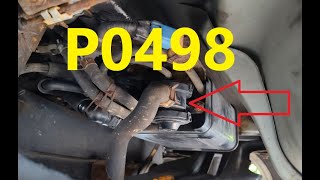
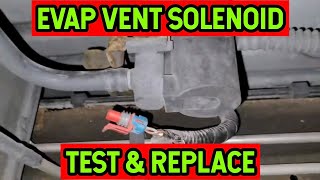
Locate the EVAP vent valve, usually a black plastic part mounted near the charcoal canister by the fuel tank. Look for cracked hoses, and closely inspect the electrical connector for corrosion, loose pins, or frayed wires. Pay special attention to areas where the harness rubs against the frame.
Tools: Flashlight, Safety Glasses, Inspection Mirror (Beginner) - Test the Vent Valve Solenoid Resistance
With the valve unplugged, use a multimeter set to Ohms (Ω) to measure the resistance across the two pins on the valve itself. A typical reading is between 15 and 30 Ohms (25-30 Ohms for Honda). A reading near 0 Ohms indicates a short circuit, confirming the valve is faulty.
Tools: Multimeter (Intermediate) - Test the Vent Valve Circuit for Voltage
With the key on, engine off, unplug the vent valve connector. Use a multimeter to check for battery voltage (typically 12V) on the power feed wire relative to chassis ground. A lack of voltage points to a blown fuse or an open in the power wire. Next, probe the control wire. A reading of 0V on the control wire points directly to a short to ground in the wiring harness.
Tools: Multimeter, Vehicle Wiring Diagram (Intermediate) - Check for a Short to Ground in the Control Wire
Disconnect the connector from the vent valve AND the control module (PCM or FPDM). Set your multimeter to Ohms. Check for continuity between the control wire pin at the valve connector and a known good chassis ground. An 'OL' reading is normal. A resistance reading confirms the control wire is shorted to ground somewhere in the harness.
Tools: Multimeter, Vehicle Wiring Diagram (Advanced) - Perform a Bi-Directional Scan Tool Test
Using an advanced scan tool, directly command the vent valve to close. While cycling the command, listen for a distinct clicking sound from the valve. Monitor the voltage on the control circuit with your multimeter; it drops from battery voltage to near zero when commanded closed and returns when commanded open. This tests the valve, wiring, and control module simultaneously.
Tools: Bi-directional Scan Tool, Multimeter (Advanced)
When This Code Triggers (Freeze-Frame Conditions)
- Engine Coolant Temp: 40-95°F (at startup) (Cold start; engine temp close to ambient air temp.)
- Fuel Level: 15-85% (Not full and not empty, to allow for vapor space.)
- Vehicle Speed: 40-65 mph (Steady-state cruise; the PCM runs tests when conditions are stable.)
- Barometric Pressure: >75 kPa (Usually requires operation at altitudes below 8,000 feet.)
Related Codes
- P0499 — This is the direct opposite: "EVAP System Vent Valve Control Circuit High". P0498 indicates a short or low voltage, while P0499 indicates an open circuit (high voltage) due to a broken wire, unplugged connector, or failed open solenoid coil.
- P0446 — This code means "EVAP Vent Control Circuit Malfunction". It's a more general electrical code for the same circuit. Systems set P0446 when the detected voltage is abnormal but doesn't meet the specific low (P0498) or high (P0499) thresholds.
- P0497 — This is a flow code: "EVAP System Low Purge Flow". While P0498 is electrical, P0497 is performance-based. If the vent valve is stuck open (a mechanical result of the P0498 electrical fault), the system can't achieve target vacuum, triggering P0497.
- P2422 — This is a mechanical code: "EVAP System Vent Valve Stuck Closed". A valve that is electrically shorted (P0498) is often mechanically jammed, causing both codes to appear simultaneously.
Climate & Environmental Factors
- Cold Climates / Road Salt: The vent valve and its wiring are located underneath the vehicle, making them highly susceptible to corrosion from road salt and moisture. This corrosion destroys the valve's internal coil or the electrical connector pins, causing a short or open circuit.
- High Humidity: In consistently humid environments, moisture intrudes into unprotected electrical connectors over time, leading to corrosion and poor connections that trigger a P0498 code even without direct water exposure.
- Altitude: Altitude itself does not directly cause an electrical fault like P0498. However, changes in atmospheric pressure affect the mechanical operation of the EVAP system, unmasking pre-existing or intermittent issues.
How to Clear the Code After You Fix It
- Use an OBD-II scan tool to clear the diagnostic trouble codes.
- Ensure the fuel tank is between 1/4 and 3/4 full.
- Perform the specific EVAP drive cycle for your vehicle.
Drive cycle (~20 minutes): A general EVAP drive cycle involves: 1) A cold start (engine sits for 8+ hours). 2) Idle for 2-3 minutes. 3) Drive for 10-15 minutes at a steady speed between 45-65 mph, avoiding sharp turns or large hills. 4) Let the vehicle sit with the engine off for up to 40 minutes, as some tests run after shutdown.
Readiness monitors affected: Evaporative (EVAP) System, Catalyst (CAT), Oxygen (O2) Sensor
Before emissions retest: drive at least 50 miles to fully set monitors.
Watch out for:
- Clearing the code with a scan tool resets all readiness monitors to 'Not Ready', causing an immediate emissions test failure.
- The EVAP monitor is notoriously difficult to set and requires several attempts at the drive cycle under correct temperature and fuel level conditions.
- The code returns immediately if the underlying electrical fault is not properly repaired.
Will This Fail Emissions / State Inspection?
Yes — this code typically fails an OBD-II emissions inspection.
- California: An active P0498 code is an automatic failure. After repair, all readiness monitors must be 'Ready' (with the potential exception of the EVAP monitor on some older vehicles) before a test can be passed.
- New York: A lit Check Engine Light from code P0498 causes an automatic failure of the NYVIP3 inspection. After clearing the code, you must complete a drive cycle to set the readiness monitors.
- Texas: In counties requiring emissions testing, an illuminated Check Engine Light is an automatic failure. After repair, you may pass with one monitor 'Not Ready', but it's best to complete the drive cycle.
Most Commonly Affected Vehicles
- Honda Accord, Civic, CR-V (2006-2022) — Extremely common on these models due to failure of the EVAP canister vent shut valve. Diagnosis involves a simple resistance check of the valve (spec: 25-30 Ohms).
- Chevrolet / GMC Silverado / Sierra (2014-2021) — TSB 21-NA-149 details a known issue where the engine wiring harness chafes against the frame, causing a short that triggers P0498. On 2019+ models, the Fuel Pump Driver Module controls the vent valve, making it a frequent point of failure.
- Ford Escape, F-150 (2015-2019) — On Escapes, this code is often accompanied by stalling after refueling. Real-world repair costs for a Ford Escape canister assembly exceed $1000 at a dealership.
- Hyundai / Kia Sonata, Elantra, Optima (2011-2018) — These vehicles use a Canister Close Valve (CCV) prone to failure. Often, the entire canister assembly, which includes the valve, requires replacement.
- Nissan Altima, Sentra, Rogue (2013-2019) — The vent control valve is a frequent failure item due to its exposed location under the vehicle, leading to corrosion and internal shorts.
- GMC Acadia, Traverse (2018-2022) — Technicians frequently misdiagnose this code by replacing the vent valve when the actual cause is a faulty Fuel Pump Driver Module (FPDM) that controls the vent circuit.
- Subaru Outback, Forester, Impreza (2010-2018) — Subaru models experience this code due to corrosion on the vent valve connector or internal failure of the valve itself. Inspecting the connector pins for green corrosion is a key diagnostic step.
- Chrysler/Dodge/Jeep Various (2010-2020) — Often caused by a faulty EVAP system integrity module (ESIM) or the associated wiring. The ESIM is a switch that helps the PCM test for leaks, and its failure mimics a vent valve circuit fault.
Manufacturer-Specific Notes
- Honda/Acura: The EVAP canister vent shut valve is a very common failure item. Diagnosis is straightforward, involving a resistance check of the valve. The specification is 25-30 ohms at room temperature. Anything outside this range confirms a bad valve.
- General Motors (GM): Watch for two key issues: wiring harness chafing (TSB 21-NA-149) on trucks/SUVs, and on 2018+ models, the Fuel Pump Driver Module (FPDM) controlling the vent valve. Always check the FPDM and its connector before condemning the PCM.
- Toyota/Lexus: Toyota vehicles use a "leak detection pump" assembly located near the canister. This pump module integrates the vent valve function. A P0498 code on these vehicles frequently requires replacing the entire leak detection pump assembly.
- Hyundai/Kia: These manufacturers refer to the component as the Canister Close Valve (CCV). It is most often sold as part of the complete charcoal canister assembly, making the repair more expensive than a standalone valve.
- All: Check for Federal Emissions Warranty coverage. While most EVAP components are covered for 2 years/24,000 miles, if the P0498 code is caused by a faulty Powertrain Control Module (PCM), the repair is covered under the 8 years/80,000-mile warranty.
Real Owner Stories
2018 Honda Odyssey after hitting a pothole
The Check Engine Light with code P0498 appeared one day after hitting a large pothole that also damaged a strut.
Outcome: Splicing the broken wire and securing the harness resolved the P0498 code. The physical impact from the pothole directly caused the wiring damage.
Lesson: If the code appears immediately after hitting road debris or a pothole, perform a thorough visual inspection of the under-vehicle wiring near the canister before testing components.
2020 GMC Acadia with a recurring P0498
Check Engine Light for P0498 came on. A first shop recommended replacing the vent solenoid. A second shop replaced the vent valve, but the code returned immediately.
Outcome: The root cause was a failed FPDM. The part was on national backorder, highlighting a supply chain issue for this specific component.
Lesson: On modern GM vehicles (2019+), do not automatically replace the vent valve for P0498. The FPDM is a known failure point that controls this circuit and causes frequent misdiagnosis.
2006 Honda CR-V with an intermittent P0498
Check Engine Light came on after replacing the car battery. The vehicle sits for long periods. The owner noted dim dashboard lights flickering when hitting bumps.
Outcome: A resistance test of the valve showed it was electrically failed. Replacing the EVAP canister vent shut valve resolved the code.
Lesson: Replacing a battery resets the ECU, forcing it to re-run all emissions tests. This makes a pre-existing, pending fault appear as a new problem. On older Hondas, the vent valve is a highly common failure point.
How to Prevent This Code From Triggering
- Avoid Topping Off the Fuel Tank (Every fill-up) — Consistently overfilling the gas tank forces liquid fuel into the charcoal canister, which is designed only for vapor. A saturated canister damages the integrated vent valve and causes repair costs exceeding $500.
- Periodically Clean Underbody Components (Once a year, especially in rust-belt states) — Washing the undercarriage around the rear axle and fuel tank removes road salt and debris that accelerate corrosion on the vent valve's connector and wiring.
- Apply Dielectric Grease to Connectors (When replacing the valve or if the connector is exposed) — Applying dielectric grease to the vent valve's electrical connector pins seals out moisture and prevents the corrosion that leads to low voltage conditions and short circuits.
- Inspect the EVAP Harness During Other Maintenance (During tire rotations or brake work) — Visually inspect the EVAP wiring harness for signs of rubbing against the frame, suspension parts, or heat shields. Securing loose wiring with a zip tie prevents future chafing and shorts.
Helpful Videos

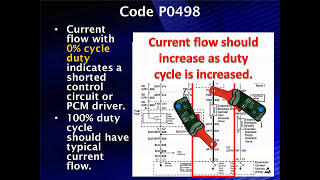

The information in this article is provided for general reference and educational purposes only. Vehicle specifications, procedures, and part compatibility can vary by production date, trim level, and region. Always consult your vehicle's factory service manual and verify part numbers before purchasing or performing repairs. Safety-critical components such as airbags, seat belts, and braking systems should be installed by a qualified professional.
- 🎬 Helpful Videos
- What Does P0498 Mean?
- Can I Drive With P0498?
- Common Causes
- Symptoms
- Common Fixes & Costs
- DIY vs Professional
- Used vs. New Parts: Buying Guide
- What Happens If You Wait — Timeline
- Cost of Not Fixing It
- Diagnosis Steps
- When This Code Triggers (Freeze-Frame Conditions)
- Related Codes
- Climate & Environmental Factors
- How to Clear the Code After You Fix It
- Will This Fail Emissions / State Inspection?
- Most Commonly Affected Vehicles
- Manufacturer-Specific Notes
- Real Owner Stories
- 2018 Honda Odyssey after hitting a pothole
- 2020 GMC Acadia with a recurring P0498
- 2006 Honda CR-V with an intermittent P0498
- How to Prevent This Code From Triggering
- 🎟️ Get 5% Off