

P0497 on 2014-2016 Cadillac ELR: EVAP Low Purge Flow Causes and Fixes
For the 2014-2016 Cadillac ELR, code P0497 is most often caused by either a fuel-saturated EVAP canister from overfilling the gas tank or a failed vapor canister purge valve. Inspecting for fuel in the EVAP lines is the first step, followed by testing the easily accessible purge valve located on top of the engine.
- P0497 on a Cadillac ELR means there's a blockage in the EVAP system.
- The most likely cause, specific to this car, is a fuel-soaked charcoal canister from overfilling the gas tank. Do not 'top off' the tank; stop after the first click.
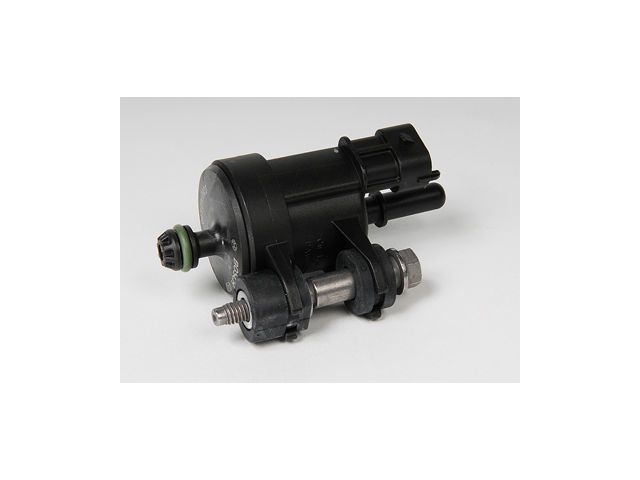
- The second most likely cause is a failed, stuck-closed vapor canister purge valve, which is an inexpensive and easy part to replace located on top of the engine.
- Diagnosis should start with checking for fuel contamination in the EVAP system, as instructed by GM's service bulletin.
- The repair is DIY-friendly, especially if only the purge valve needs replacement, a job that takes under 30 minutes.
What's Unique About the 2014-2016 Cadillac ELR
The Cadillac ELR, which shares its range-extender powertrain with the first-generation Chevrolet Volt, has a well-documented issue that triggers this code. A General Motors Technical Service Bulletin (TSB #PIP4891H) directly links P0497 to the practice of overfilling the fuel tank. Forcing extra fuel in after the pump clicks off (GM advises no more than three extra "clicks") can push liquid gasoline into the EVAP system, saturating the charcoal canister and blocking all vapor flow. The TSB also notes this condition can be triggered by a large temperature change (20°F or more) after an over-filling event. This makes questioning the driver about fueling habits and checking for fuel contamination a critical first diagnostic step, unique to this platform's known issues.
Diagnostic Flowchart
Tap your situation to follow the diagnostic path that matches what you're seeing on this vehicle.
Symptoms You May Notice
- Check Engine Light is on
- Possible faint fuel smell, especially near the rear of the vehicle or after shutting off the engine.
- Failure to pass an emissions inspection.
- Slightly reduced fuel economy.
- In rare cases, a rough or unstable idle.
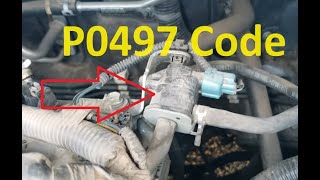
- Replacing the gas cap. While a loose or faulty gas cap can cause other EVAP codes (like P0455 for a large leak or P0457 for a loose cap), it is not a typical cause for a P0497 'low flow' condition, which indicates a blockage rather than a leak. 🎬 See this overview of common P0497 causes and fixes
Most Likely Causes
- Fuel-Saturated EVAP Canister 🔴 High Probability A GM Technical Service Bulletin (PIP4891H) specifically calls out this issue on the ELR and Volt platform, caused by overfilling the fuel tank, which forces liquid fuel into the canister. Owners on forums for the sister vehicle (Chevy Volt) frequently report this exact scenario.
How to confirm: Visually inspect the EVAP canister and connecting lines for any signs of wetness or raw fuel. The canister, located near the fuel tank, may feel unusually heavy or make a sloshing sound when shaken. Disconnecting the line leading from the canister to the purge valve may reveal liquid fuel.
Typical fix: Replace the EVAP charcoal canister and any other components found to be saturated with fuel, which may include the purge valve itself. Per the TSB, it is critical to blow out all EVAP lines with compressed air before reassembly to prevent repeat failure.
Est. part cost: $150-$250 - Failed Vapor Canister Purge Solenoid/Valve 🔴 High Probability This is a common failure item on many modern vehicles, including the shared Volt/ELR platform. The valve can become stuck closed from age, debris from a deteriorating canister, or contamination from liquid fuel, preventing any vapor flow.
How to confirm: Remove the valve, which is easily accessible on top of the engine after removing the plastic cover. With the valve de-energized, try to blow through it; no air should pass. Using a scan tool or by applying 12V and ground to the terminals, command the valve to open; it should click and allow air to pass. A hand vacuum pump can also be used to check if it holds vacuum when closed.
Typical fix: Replace the vapor canister purge solenoid. This is a simple repair, often taking less than 15-30 minutes with a 10mm socket.
Est. part cost: $25-$50 - Blocked or Cracked EVAP Hoses 🟡 Medium Probability Hoses can become brittle and crack over time due to engine heat cycles, or they can be blocked by debris or charcoal particles from a deteriorating canister. The line from the canister to the purge valve is the primary path for flow.
How to confirm: Visually inspect all EVAP lines between the canister, purge valve, and intake manifold for cracks, kinks, or blockages. A smoke test is the most effective method to quickly identify hard-to-see cracks or leaks.
Typical fix: Replace the damaged section of hose.
Est. part cost: $10-$30
Rare But Worth Checking
- Faulty Fuel Tank Pressure (FTP) Sensor: The FTP sensor is what the ECM uses to verify purge flow is occurring by monitoring pressure changes in the tank. If the sensor provides incorrect data, the computer may falsely set a P0497 code. This is less common than a mechanical failure like the purge valve or a blockage.
- Disconnected EVAP line inside fuel tank: TSB PIP4891G and later versions note that for repeat occurrences of P0497 where all other components check out, an EVAP line may have disconnected from the fuel sender assembly inside the tank. This is more likely on low-mileage vehicles or those that have had recent fuel pump service.
Diagnosis Steps
- Read the code with an OBD-II scanner and check for any other stored codes. Note the freeze frame data.
- Question the driver about fueling habits, specifically if they 'top off' the tank after the pump shuts off. Note that GM warns against more than three extra 'clicks'.
- Perform a quick visual inspection of the engine bay. The vapor canister purge solenoid is on top of the engine, easily accessible after removing the plastic engine cover. Check its electrical connector and the attached hoses for obvious damage.
- Test the purge solenoid for proper operation. Remove it (typically one 10mm bolt). It should be closed by default (no air passes). Apply 12V and ground to its pins; it should click audibly and allow air to pass.
- If the purge solenoid works correctly, inspect the EVAP lines for blockages. Disconnect the line from the canister to the purge valve and check for liquid fuel or charcoal debris.
- If fuel saturation is found, the EVAP charcoal canister must be replaced. Per TSB PIP4891H, all associated EVAP lines must be thoroughly blown out with compressed air to remove residual fuel before installing new parts.
- If no fuel is present and the purge valve is good, perform a smoke test on the EVAP system to check for cracks or blockages in the hoses between the canister, purge valve, and intake manifold.
- If all components and lines are clear, consider testing the Fuel Tank Pressure (FTP) sensor for accurate readings against a known-good pressure gauge.
- For repeat issues, investigate the possibility of a disconnected EVAP line inside the fuel tank, as noted in GM service bulletins.
Parts You'll Likely Need
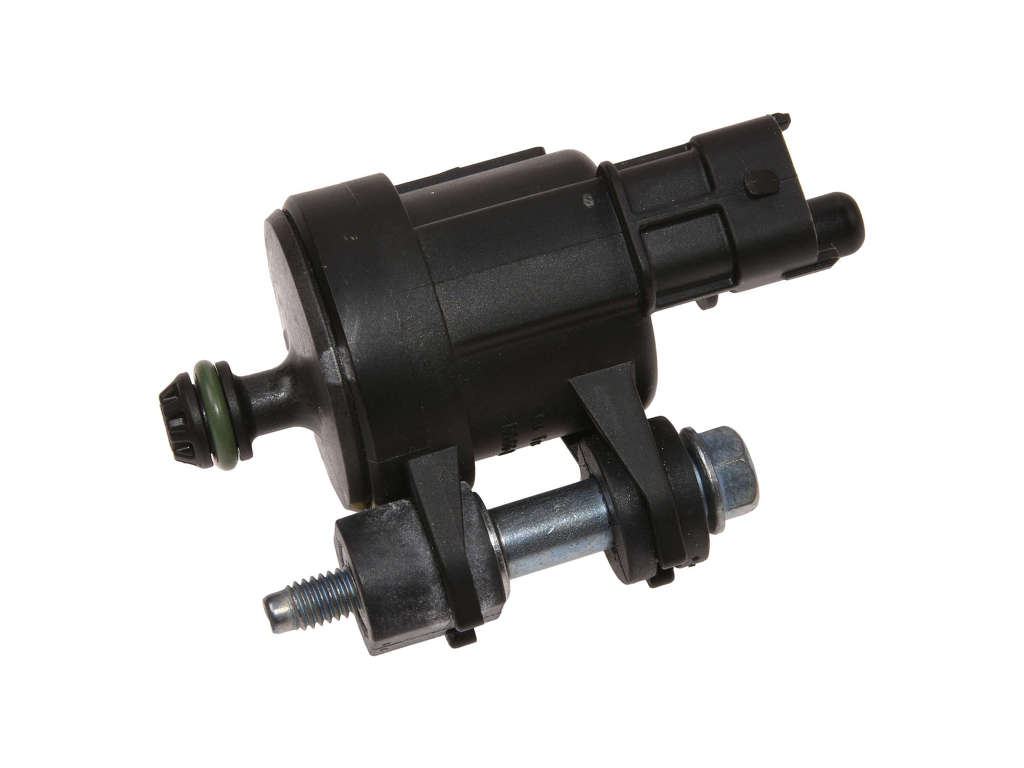
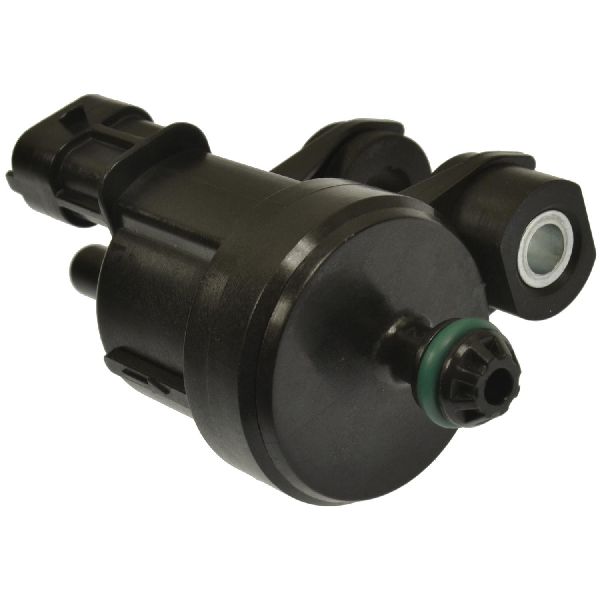
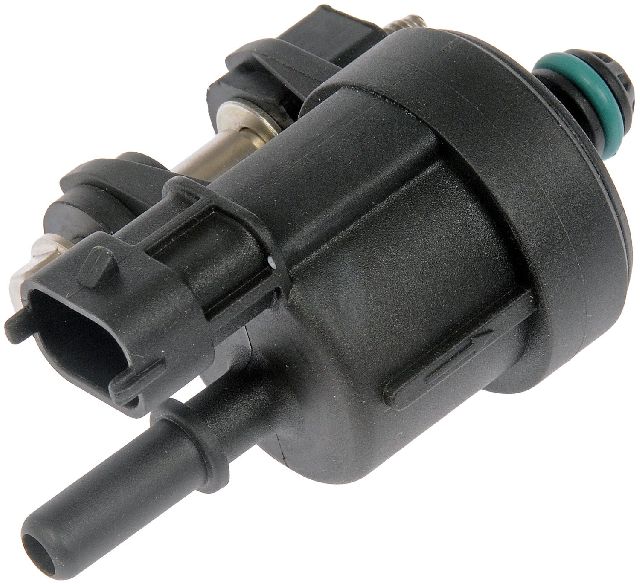
- Vapor Canister Purge Solenoid
(OEM #12690512 (superseded by 12737252))— This valve is the most common failure point that gets stuck closed, directly causing the 'low flow' condition. It is an inexpensive and very easy part to replace first, often taking less than 15 minutes.
Trusted brands: ACDelco, GM Genuine, Dorman, Standard Motor Products
OEM price range: $30-$55
Aftermarket price range: $20-$40 - EVAP Charcoal Canister
(OEM #23294932)— Per GM TSB PIP4891H, this part is frequently ruined by liquid fuel when the gas tank is overfilled, causing a blockage that sets code P0497. Replacement is necessary if fuel saturation is confirmed.
Trusted brands: ACDelco, GM Genuine, Dorman
OEM price range: $200-$275
Aftermarket price range: $150-$220
Related Codes That Often Appear With This One
- P0496 — P0496 indicates 'flow during a non-purge condition,' often from a purge valve stuck open. While opposite to P0497 (stuck closed/blocked), an intermittently failing purge valve or complex canister problems can sometimes cause either code to appear at different times.
- P0449, P0451, P2422 — These codes, seen together with P0497 on a sister-platform Chevy Volt, pointed to a failure of the canister vent valve, which can cause fueling issues and a variety of EVAP system errors.
Technical Service Bulletins (TSBs) & Recalls
- PIP4891H: Notes that DTC P0497 may be found after a customer overfills the fuel tank, requiring inspection and replacement of any EVAP components saturated with liquid fuel. It also advises blowing out all EVAP lines with compressed air.
- PIP4891G: An earlier revision of the same bulletin, also covering the 2014-2016 ELR, with the same diagnostic advice.
- PIP4891C: An even earlier version for the Chevy Volt that established the link between overfilling the tank and P0497.
Platform-Specific Known Issues
- Technical Service Bulletin PIP4891H (and its revisions G, F, etc.) explicitly states that P0497 on the 2014-2016 ELR can be caused by overfilling the fuel tank, leading to fuel saturation of EVAP system components. [Bulletin #PIP4891H]
- The TSB also notes that a significant temperature drop (20°F or more) after an over-fueling event can trigger the code.
Mechanic-Grade Diagnostic Values
- EVAP System Test Pressure — expected: 9.33 mm/Hg (5 in H2O). Failure: This is the target pressure to apply with nitrogen when testing the system for leaks or restrictions.
- Fuel Tank Pressure (FTP) Sensor vs. External Gauge — expected: Within 1.86 mm/Hg (1 in H2O) of the external gauge reading.. Failure: If the FTP sensor parameter on the scan tool is not within the specified range of a known-good external gauge, the sensor is likely faulty.
- FTP Sensor Reading During Purge Solenoid Test — expected: Pressure should drop to less than 1.86 mm/Hg (1 in H2O).. Failure: With the system pressurized, commanding the EVAP purge solenoid to 100% open should cause a rapid pressure drop. If it does not, there is a blockage between the test port and the purge solenoid, or the solenoid itself is not opening.
- Fuel Pressure (Range Extender Engine) — expected: ~55 PSI. Failure: Significantly lower pressure can indicate a weak fuel pump or clogged filter, which can cause various engine performance issues but is not a direct cause of P0497.
Scan Tool Commands That Help
- GM GDS2 / Professional Scan Tool: EVAP Purge/Seal — This bidirectional command is used to seal the EVAP system (closing both the purge and vent valves) to allow for pressure or vacuum testing to find leaks or restrictions.
- GM GDS2 / Professional Scan Tool: Purge Valve Control / Solenoid Test — This function allows the technician to command the purge valve open and closed while the engine is off. A clicking sound should be heard, confirming the solenoid is activating. This helps differentiate a mechanical blockage from an electrical failure.
- Professional Scan Tool: Module Communication Check — Used to verify that the main Engine Control Module (ECM/PCM) can properly communicate with the EVAP control sub-module, ruling out a communication or module fault as the root cause.
Wiring & Ground Locations
- G101 / G106 — G101 is located on the engine block, with a jumper to G106 at the center of the frame cross rail under the crank pulley.. This is a primary ground location for the Engine Control Module (ECM). A poor connection here can cause a wide range of engine codes and unpredictable behavior.
- G103 — Located on the cowl in the left rear of the engine compartment, above the brake booster.. This ground serves the Body Control Module (BCM) and the Data Link Connector (DLC). A fault here could interfere with scan tool communication and diagnostics.
- 12V Battery Location — In the rear compartment, behind the left rear closeout panel.. Technicians should be aware that the main 12V battery is not under the hood, which is relevant for any electrical testing or power cycling during diagnosis.
Real Owner Repair Stories
- YouTube user 'Fixing Things' (2011 Chevrolet Volt (sister platform) with ~120,000 miles) — Check Engine Light with code P0497 would illuminate after about 30 minutes of driving with the gasoline engine running.
❌ Tried (didn't work) No other attempts were mentioned; the first step taken was to replace the suspected part.
✅ What actually fixed it Replacing the vapor canister purge solenoid valve located on top of the engine. - Reddit user 'PleaseUseYourMind' on r/volt (2015 Chevrolet Volt (sister platform) with 95,000 miles) — Check Engine Light with code P0497.
❌ Tried (didn't work) The user had not yet attempted a repair.
✅ What actually fixed it The user reported that a gas pump had malfunctioned and overfilled the fuel tank on the same day the code appeared. The community advice was to drive the vehicle to use up some fuel and clear the code, as the issue was almost certainly a fuel-saturated EVAP system as described in the TSB.
"I Checked Everything" — The Actual Cause
- According to GM Technical Service Bulletins (including PIP4891G), if P0497 repeatedly returns even after all external EVAP components and lines have been tested and confirmed good (e.g., a smoke test passes), the cause may be an EVAP line that has disconnected from the fuel sender assembly *inside* the fuel tank.
OEM Part Supersession History
12610560→12690512, which was then superseded by 12737252— Standard part evolution for improved reliability or manufacturing changes.
Heads up: The latest part number, 12737252, is the correct service replacement for all previous versions.20910150, 22891981→23294932— Standard part evolution for improved reliability or manufacturing changes.
Heads up: Part number 23294932 is the correct service replacement for the Gen 1 Volt platform, which includes the 2014-2016 ELR.
Model Year Variations Within This Range
- 2016: The 2016 model year received significant performance upgrades, including increased total system power to 233 hp and 373 lb-ft of torque, plus revised suspension and braking systems. However, the 1.4L LUU range-extender engine and the associated EVAP system components (purge valve, canister) remained the same as the 2014-2015 models, so the causes and fixes for P0497 are identical across the entire 2014-2016 range.
Helpful Videos
Used OEM Parts in Stock

New Aftermarket Parts Available


The information in this article is provided for general reference and educational purposes only. Vehicle specifications, procedures, and part compatibility can vary by production date, trim level, and region. Always consult your vehicle's factory service manual and verify part numbers before purchasing or performing repairs. Safety-critical components such as airbags, seat belts, and braking systems should be installed by a qualified professional.
- Cadillac ELR:
- 🎬 Helpful Videos
- 🛍️ Shop This Part
- What's Unique About the 2014-2016 Cadillac ELR
- Diagnostic Flowchart
- Symptoms You May Notice
- Most Likely Causes
- Rare But Worth Checking
- Diagnosis Steps
- Parts You'll Likely Need
- Related Codes That Often Appear With This One
- Technical Service Bulletins (TSBs) & Recalls
- Platform-Specific Known Issues
- Mechanic-Grade Diagnostic Values
- Scan Tool Commands That Help
- Wiring & Ground Locations
- Real Owner Repair Stories
- "I Checked Everything" — The Actual Cause
- OEM Part Supersession History
- Model Year Variations Within This Range
- 🎟️ Get 5% Off