

P0496 on 2016-2020 Volkswagen Passat: EVAP Flow During Non-Purge Causes and Fixes
On a 2016-2020 VW Passat, code P0496 is almost always caused by a faulty EVAP purge valve (N80 solenoid) that is stuck open, allowing fuel vapors into the engine when it's not commanded. This is a relatively inexpensive and easy part to replace, typically costing between $25 and $70 for an aftermarket part like a Bosch or Pierburg unit. The most common OEM part number is 06H906517H.
- P0496 on your Passat means the EVAP purge valve (N80) is likely stuck open.
- This is not a critical issue for drivability, but you will not pass an emissions test and may experience hard starting after refueling or a rough idle.
- The most probable fix is replacing the N80 purge valve (OEM part # 06H906517H), which is an inexpensive part and a simple DIY job for most owners.
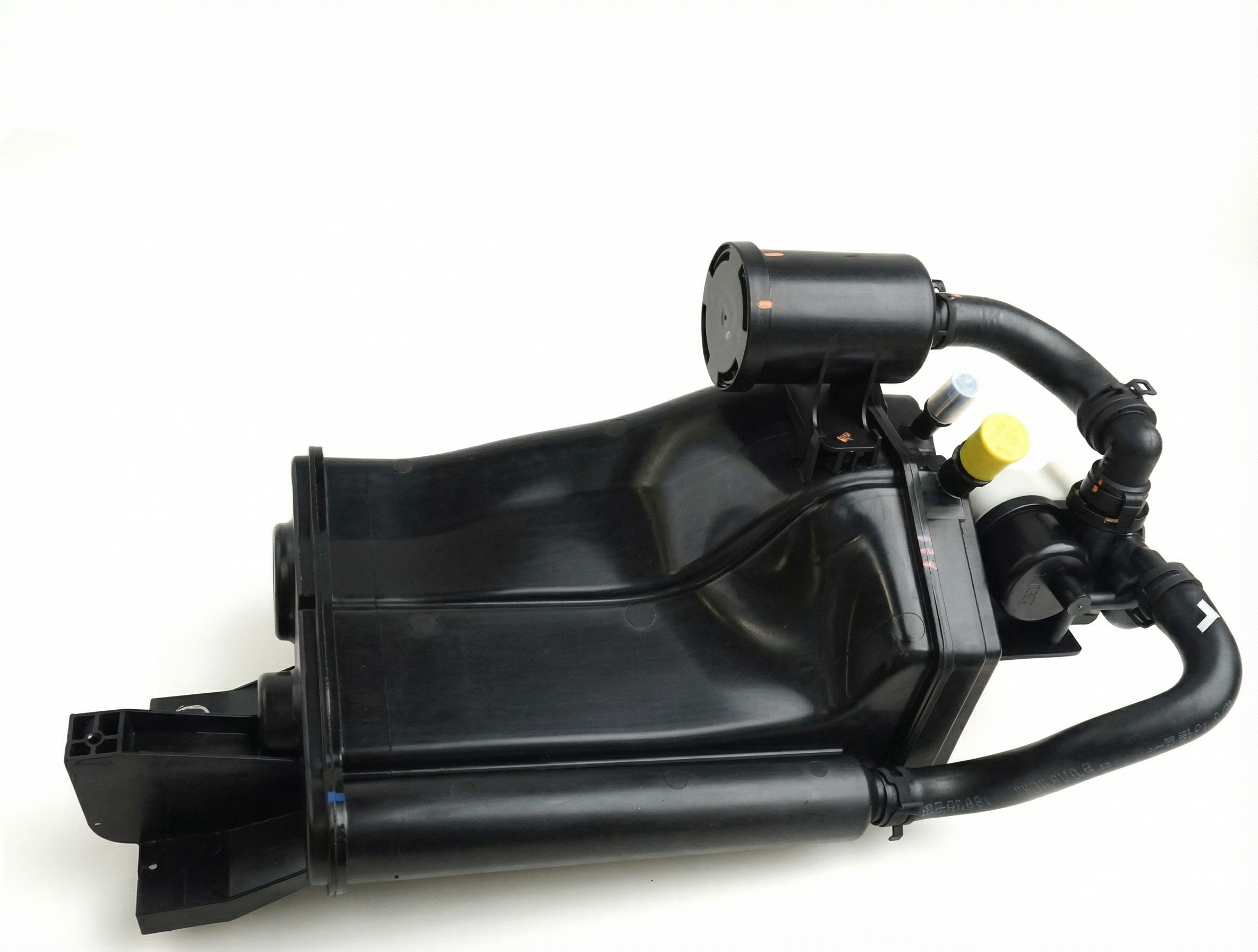
- When replacing the valve, check the hoses for black charcoal particles. If found, the charcoal canister also needs replacement to prevent repeat failure.
- Don't be quick to replace the gas cap; it's rarely the cause of this specific code.
What's Unique About the 2016-2020 Volkswagen PASSAT

For the NMS (New Midsize Sedan) generation Passat (2016-2020), the P0496 code is overwhelmingly linked to the failure of the N80 EVAP purge valve. This part is common across many VW and Audi models with the 1.8T and 2.0T engines, and its failure is a frequent topic in owner forums for this specific platform and its relatives like the Jetta, Tiguan, and Atlas. The provided NHTSA TSBs also link this code to customer complaints, though they confusingly group it with oil leak reports, which are likely separate issues being addressed during the same service visit. A more detailed TSB for the VW Atlas (01-19-09TT) confirms P0496 as a known issue and lists the N80 valve vacuum test as a primary diagnostic step.
Diagnostic Flowchart

Tap your situation to follow the diagnostic path that matches what you're seeing on this vehicle.
Symptoms You May Notice

- Check Engine Light is on
- Difficulty starting the engine, specifically right after refueling.
- Slightly rough or unstable idle.
- Stalling when coming to a stop or inching forward in traffic.
- An error message for the Auto Start/Stop system may appear.
- A subtle fuel smell may be noticeable.
- Replacing the gas cap. While a loose or faulty gas cap can cause other EVAP codes (like P0455, P0457, or P0442), it is not the typical cause for P0496, which points to unwanted flow rather than a large leak.
Most Likely Causes

- Faulty EVAP Purge Valve (N80 Solenoid) 🔴 High Probability The N80 valve is a known common failure item on many Volkswagen models of this era. It's a solenoid that cycles thousands of times and can get stuck open due to wear or contamination from charcoal canister debris.
How to confirm: With the engine off, disconnect the hose leading from the purge valve to the intake manifold. If you can blow through the valve towards the intake side, it is stuck open and faulty. Alternatively, a hand vacuum pump can be used; if the valve fails to hold vacuum when de-energized (not connected electrically), it needs replacement. A scan tool can also be used to perform an output test, listening for an audible 'click' as the valve is commanded to open and close.
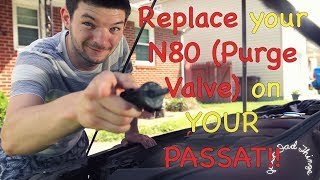
Typical fix: Replace the EVAP Purge Valve (N80). This part is located in the engine bay, often on or near the intake manifold, and is accessible for DIY replacement. 🎬 See this step-by-step N80 purge valve replacement walkthrough
Est. part cost: $25-$70
Rare But Worth Checking
- Leaking or cracked EVAP hoses: While less common than a failed valve for this specific code, hoses can become brittle over time. A smoke test is the best way to identify a leak in the EVAP system lines.
- Faulty Fuel Tank Pressure Sensor: If the sensor that detects EVAP system pressure provides incorrect readings to the computer, it could falsely trigger a P0496 code. This is rare compared to the purge valve failure.
- Saturated or failed Charcoal Canister: Habitually 'topping off' the fuel tank can force liquid gasoline into the charcoal canister, saturating it and causing charcoal granules to break loose. These granules can travel down the purge line and jam the N80 valve open. If you find black charcoal particles when disconnecting the N80 valve, the canister should be replaced along with the valve, and the lines blown out with compressed air.
Diagnosis Steps
- Verify the code with an OBD-II scanner.
- Inspect the gas cap to ensure it is tight and the seal is intact, although this is a low-probability cause for P0496.
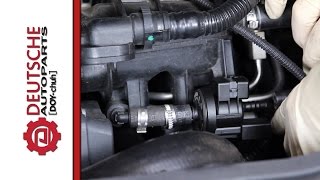
- Locate the EVAP Purge Valve (N80) in the engine bay. It's a small black solenoid with two hoses and an electrical connector, typically mounted on or near the intake manifold. 🎬 Watch: DIY install guide for the 2.0T engine
- With the engine off, disconnect the electrical connector and the hose that runs from the valve to the engine's intake manifold.
- Attempt to blow through the valve from the inlet side (coming from the charcoal canister). If air passes through, the valve is stuck open and must be replaced.
- If the valve appears sealed, check for charcoal debris in the valve or hose. If found, the charcoal canister is likely compromised and should also be replaced.
- If the valve is not stuck open, inspect the EVAP hoses for visible cracks or damage, particularly around the connections.
- For advanced diagnosis, use a scan tool like VCDS to command the N80 valve to cycle (Output Test). You should hear an audible clicking sound. A vacuum gauge can also be connected to the intake port of the valve; with the engine running and the valve de-energized, there should be no vacuum reading.
- If no issues are found, the next step would be a professional smoke test to check for hard-to-find leaks in the system.
Parts You'll Likely Need
- EVAP Canister Purge Valve (N80 Solenoid)
(OEM #06H906517H)— This valve is the most common component to fail and cause a P0496 code by getting stuck in the open position.
Trusted brands: Bosch (OEM supplier), Pierburg, Dorman
OEM price range: $50-$90
Aftermarket price range: $25-$70
Related Codes That Often Appear With This One
- P0441 — Incorrect Purge Flow. This code is very closely related and often points directly to a malfunctioning N80 purge valve.
- P04F0 — EVAP System High Pressure Purge Line Performance. This code was noted alongside P0496 in a TSB, indicating a related fault within the purge side of the EVAP system.
- P0172 — System Too Rich (Bank 1). If the purge valve is stuck open, it allows un-metered fuel vapor into the engine, which can cause a rich running condition.
Technical Service Bulletins (TSBs) & Recalls
- Bulletin #VIN4APIN20200911: Mentions customer complaints of MIL-on with P0496 for 2020 Passat.
- Bulletin #VIN4APIN20200916: Mentions customer complaints of MIL-on with P0496 for 2019 Passat.
- Bulletin #VIN4APIN20200812: Mentions customer complaints of MIL-on with P0496 for 2019 Passat.
- Bulletin #01-19-09TT: A Tech Tip for 2018-2019 Atlas that includes P0496 in a list of EVAP faults, recommending checking the N80 valve and charcoal canister.
Platform-Specific Known Issues
- Multiple Technical Service Bulletins (TSBs) for 2019 and 2020 models list P0496 as a potential customer complaint, indicating it's a recognized issue by the manufacturer.
- A VW Tech Tip (01-19-09TT) for the related Atlas platform explicitly details diagnostic procedures for P0496, starting with checking for charcoal debris from the canister and performing a vacuum test on the N80 valve.
Mechanic-Grade Diagnostic Values
- N80 Purge Valve Solenoid Resistance — expected: 15 to 25 Ohms. Failure: A reading significantly outside this range indicates a faulty coil within the valve.
- N80 Purge Valve Connector Voltage (Key On, Engine Off) — expected: Approximately 12V (battery voltage) at Pin 1. Failure: Low or no voltage suggests a wiring issue or a problem with the power supply from the ECU.
- N80 Purge Valve Vacuum Test — expected: Valve should hold approximately -0.6 Bar (-450 mmHg) of vacuum without leaking down when de-energized.. Failure: If the vacuum gauge shows a loss of vacuum, the valve is leaking internally and is faulty.
Scan Tool Commands That Help
- VCDS or ODIS: Output Diagnostic Test Mode (DTM) for EVAP Canister Purge Regulator Valve -N80- — This command actively cycles the N80 valve, allowing a technician to listen for an audible 'click'. The absence of a click confirms an electrical or mechanical failure of the valve itself.
- VCDS or ODIS: Guided Fault Finding test plan for Activated charcoal filter system, solenoid valve 1 -N80- — This is the manufacturer-specified diagnostic routine to follow. It guides the technician through a series of checks, including the output test, to systematically diagnose the N80 valve and its circuit.
Wiring & Ground Locations
- N80 Valve Connector Pin 1 — On the two-pin electrical connector for the N80 Purge Valve in the engine bay.. This pin should receive battery voltage with the key on. A lack of voltage points to a wiring fault upstream of the valve, not the valve itself.
- N80 Valve Connector Pin 2 — On the two-pin electrical connector for the N80 Purge Valve in the engine bay.. This pin is the ground, which is controlled (pulsed) by the Engine Control Module (ECM) to open the valve. A continuity test from this pin to the corresponding pin at the ECM can identify a broken ground wire.
- Engine Block Ground — Main ground strap from the battery negative terminal to the transmission or engine block.. While not a direct cause, a poor main engine ground can cause a variety of electrical issues and erratic sensor readings across the engine, potentially contributing to control module faults. Ensuring this ground is clean and tight is a basic diagnostic step.
Real Owner Repair Stories
- YouTube - NarBrosGarage (Volkswagen Atlas VR6 (shares EVAP components with Passat)) — P0496 code, vehicle randomly stalling/shutting off while driving.
❌ Tried (didn't work) The video implies that just replacing the N80 valve might not be enough if the root cause is contamination.
✅ What actually fixed it The final fix involved replacing BOTH the charcoal canister (which had failed internally) and the N80 purge valve. The technician also blew out the EVAP line between the two components with compressed air to clear any loose charcoal debris before installing the new parts. The check engine light went off on its own after a few drive cycles.
OEM Part Supersession History
06H906517H→06H906517K, 06H906517T— Standard part revisions by the manufacturer for improvements or supplier changes.
Heads up: Part number 06E906517A is also commonly used and cross-compatible for many EA888 applications. However, it is always critical to verify the correct part number for a specific vehicle's VIN before purchasing.
Model Year Variations Within This Range
- 2018-2020: Starting in the 2018 model year, the Passat began using a 2.0L version of the EA888 Gen3 engine (codenamed CXBA/CXBB) instead of the previous 1.8L. While the engine displacement changed, the core design of the EVAP system and the N80 purge valve (P/N 06H906517H and its successors) remained consistent, meaning the cause and fix for P0496 are identical for both the 1.8T and 2.0T engines in this generation.
Helpful Videos

Used OEM Parts in Stock

New Aftermarket Parts Available


The information in this article is provided for general reference and educational purposes only. Vehicle specifications, procedures, and part compatibility can vary by production date, trim level, and region. Always consult your vehicle's factory service manual and verify part numbers before purchasing or performing repairs. Safety-critical components such as airbags, seat belts, and braking systems should be installed by a qualified professional.
- Volkswagen PASSAT:
- 🎬 Helpful Videos
- 🛍️ Shop This Part
- What's Unique About the 2016-2020 Volkswagen PASSAT
- Diagnostic Flowchart
- Symptoms You May Notice
- Most Likely Causes
- Rare But Worth Checking
- Diagnosis Steps
- Parts You'll Likely Need
- Related Codes That Often Appear With This One
- Technical Service Bulletins (TSBs) & Recalls
- Platform-Specific Known Issues
- Mechanic-Grade Diagnostic Values
- Scan Tool Commands That Help
- Wiring & Ground Locations
- Real Owner Repair Stories
- OEM Part Supersession History
- Model Year Variations Within This Range
- 🎟️ Get 5% Off