

P0496 on 2009-2016 Volkswagen Jetta: EVAP High Purge Flow Causes & Fixes
On a 2009-2016 VW Jetta, code P0496 is almost always caused by a faulty EVAP purge valve (N80) that is stuck open, allowing un-metered fuel vapor into the engine. The most common and telling symptom is difficulty starting the engine right after refueling. Replacing the N80 valve is a simple, low-cost repair, typically under $100 for the part and can be done with basic tools.
- P0496 on a 2009-2016 Jetta means fuel vapor is entering the engine when it shouldn't be.
- The most likely cause by far is a stuck-open EVAP purge valve, also known as the N80 valve.
- A key symptom is the engine running rough or having trouble starting right after you get gas.
- Replacing the N80 purge valve is a beginner-friendly DIY repair that usually takes less than 30 minutes.
- Always check that the gas cap is tight, but do not be surprised when that does not fix this particular code.
What's Unique About the 2009-2016 Volkswagen JETTA

For this generation of Volkswagen Jetta (both Mk5 and Mk6), the EVAP Purge Valve, known as the N80 valve, is a well-documented, common failure item that leads directly to code P0496. The symptoms, especially a rough start or stall after filling the gas tank, are classic indicators of this specific part failing on this platform. Volkswagen has issued a Technical Tip (TT 01-19-06) that guides technicians to check the N80 valve for leaks when P0496 is present, confirming it as the primary suspect. The failure is so common that many owners diagnose it based on symptoms alone.
Diagnostic Flowchart

Tap your situation to follow the diagnostic path that matches what you're seeing on this vehicle.
Generation note: This year range covers two Jetta generations: the Mk5 (2009-2010) and the Mk6 (2011-2016). The primary cause of P0496, a failing N80 purge valve, is a common issue across both generations and multiple engine types (2.5L, 2.0T, 1.8T). The exact part number and location of the valve vary by engine, but the failure mode and symptoms are consistent. The Mk6 was designed to be simpler and potentially cheaper to maintain, with fewer electronic components in some areas compared to the Mk5.
Symptoms You May Notice

- Difficulty starting the engine immediately after refueling. The engine may crank for a long time, start and then immediately stall, or require you to press the gas pedal to keep it running.
- Rough, fluctuating, or unstable idle.
- Check Engine Light is on.
- Slightly reduced fuel economy due to the rich running condition.
- A faint smell of fuel inside or outside the car.
- On newer models, the Auto Start/Stop system may become disabled when the fault code is active.
- Replacing the oxygen sensors. A rich condition from the stuck purge valve might affect O2 sensor readings, but the root cause is the EVAP system, especially with the classic hard-start-after-fueling symptom.
- Replacing the gas cap. While a cheap and easy first step, a bad gas cap typically causes large or small leak codes (like P0455 or P0456), not a high-flow code like P0496.
- Replacing the Fuel Tank Pressure Sensor without proper diagnosis. This is a possible but rare cause, and the N80 valve should always be tested first.
Most Likely Causes

- Stuck-Open EVAP Purge Valve (N80 Valve) 🔴 High Probability The N80 valve on VWs from this era is a frequent failure point due to internal wear or debris from the charcoal canister, causing it to no longer seal properly. VW has issued technical guidance (TT 01-19-06) for diagnosing this part for this code.
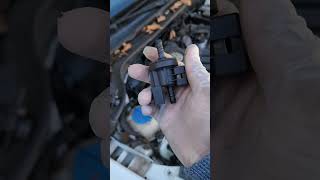
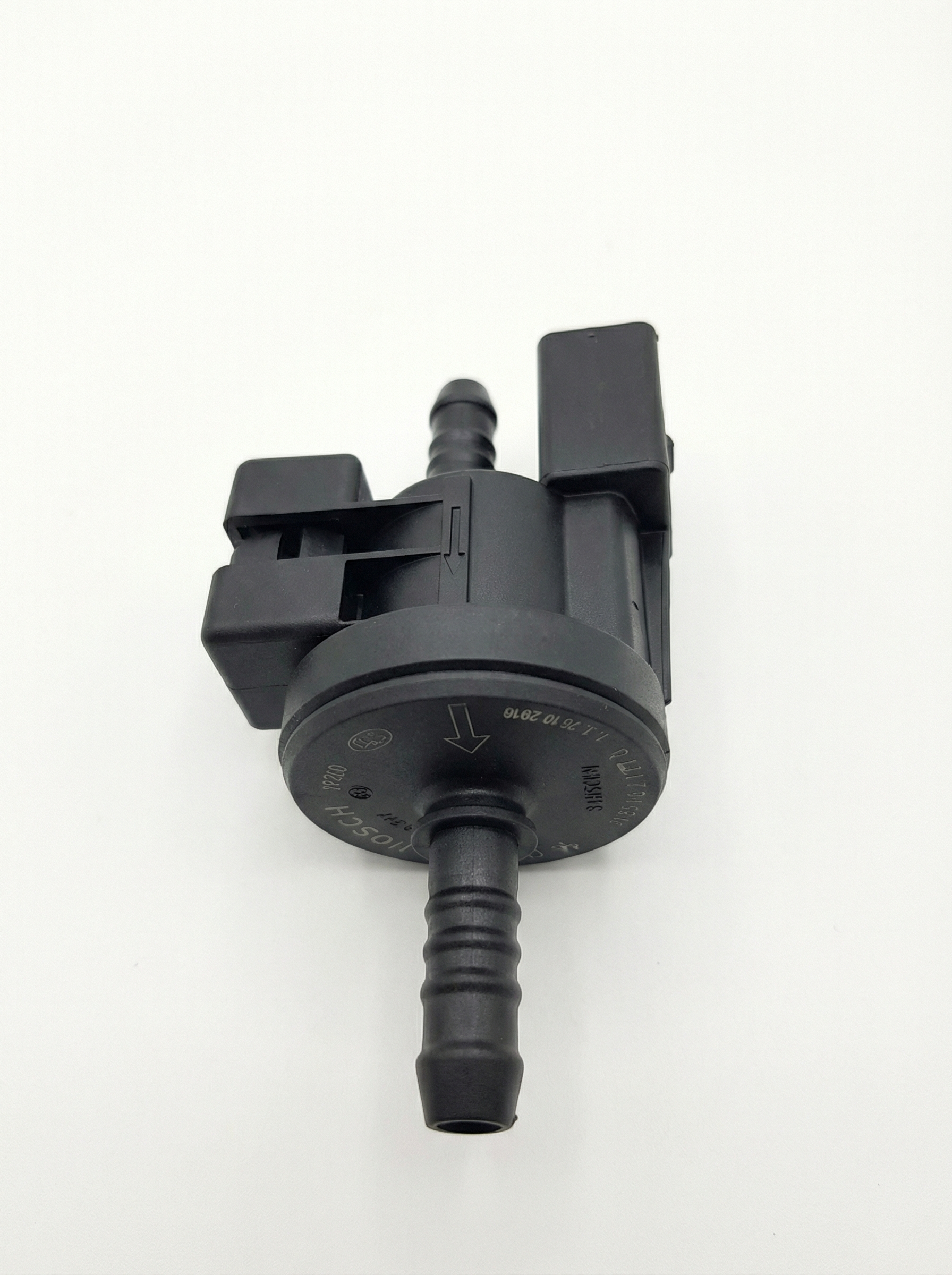
How to confirm: With the engine off, remove the valve. Try to blow through it in the direction of the arrow printed on it. If any air passes through, it is stuck open and faulty. A more definitive test involves using a handheld vacuum pump on the valve's outlet port; it should hold a vacuum without leaking down.
Typical fix: Replace the EVAP purge valve (N80). This is a straightforward DIY job for most owners.
Est. part cost: $30-$95 - Cracked or Disconnected EVAP Hose ⚪ Low Probability The plastic and rubber hoses in the engine bay can become brittle with age and heat cycles, leading to cracks, especially at connection points to the purge valve.
How to confirm: Visually inspect all hoses connected to the purge valve and charcoal canister for cracks, loose connections, or deterioration. A smoke test is the professional method to definitively identify hard-to-see leaks.
Typical fix: Replace the damaged hose section. Ensure clamps are secure.
Est. part cost: $15-$50 - Faulty Gas Cap ⚪ Low Probability While more commonly associated with large leak codes (P0455), a faulty gas cap seal can sometimes contribute to general EVAP system problems. However, it is an unlikely cause for P0496, which detects improper flow, not a system-wide leak.
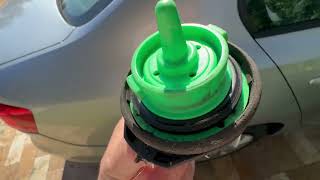
How to confirm: Check the gas cap for visible cracks in the seal or damage. Ensure it clicks at least once when tightened. Some owners replace it as a cheap first step, but it rarely fixes this specific code.
Typical fix: Replace the gas cap with an OEM part.
Est. part cost: $20-$40
Rare But Worth Checking
- Faulty Fuel Tank Pressure Sensor: A bad sensor can send incorrect data to the ECU, making it think there is flow when there isn't. This is much less common than the mechanical failure of the purge valve. Diagnosis requires a scan tool to monitor sensor voltage.
- Clogged or Saturated Charcoal Canister: If the charcoal media inside the canister breaks down, it can send black granules into the purge valve, causing it to stick open. This can also happen if you habitually 'top off' your fuel tank after the pump clicks off, which can flood the canister with liquid fuel. If a new purge valve fails quickly, investigate the canister and its lines for debris.
- Wiring Issue to the N80 Valve: A short in the wiring harness could theoretically cause the valve to stay open, but this is extremely rare. A visual inspection of the connector and nearby wiring for damage is a simple check.
Diagnosis Steps
- Verify the code with an OBD-II scanner. Note any other codes present, especially P0441.
- Confirm the primary symptom: Does the car have trouble starting specifically after you get gas? If yes, the N80 valve is the prime suspect.
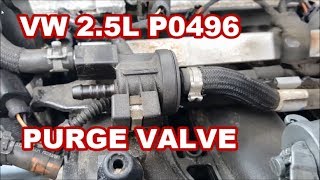
- Locate the EVAP purge valve (N80). On the 2.5L engine, it's on top, under the engine cover. On 2.0T/1.8T engines, it's often near the intake manifold.
- Perform a functional test on the purge valve. With the engine off, disconnect the two hoses and the electrical connector. Try to blow through the valve (from the canister side to the intake side, following the arrow). It should be normally closed, so no air should pass. If it does, it's faulty and needs replacement.
- Visually inspect the vacuum hoses connected to the purge valve for any obvious cracks or disconnections.
- If the valve passes the blow test, check the charcoal canister line for black charcoal granules. If found, the canister is failing and will likely cause the new purge valve to fail as well.
- If the valve and hoses are good, the next step would be a professional smoke test to check the entire EVAP system for hidden leaks.
- As a final, less likely step, use an advanced scan tool to monitor the Fuel Tank Pressure sensor to ensure it is reading correctly.
Parts You'll Likely Need
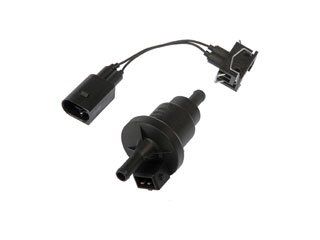
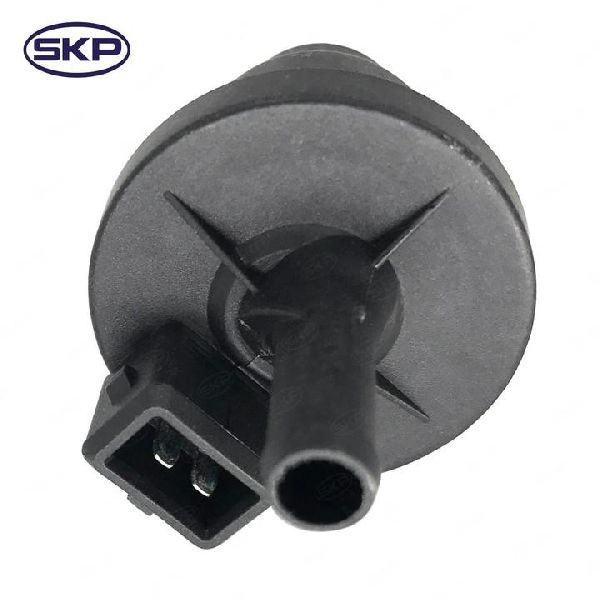
- EVAP Canister Purge Valve (N80 Valve)
(OEM #Multiple - Engine Specific)— This is the most common failure point for code P0496 on this vehicle, as it gets stuck open and allows unregulated fuel vapor into the engine.
Trusted brands: Bosch (OEM), Pierburg, Standard Motor Products
OEM price range: $60-$110
Aftermarket price range: $25-$60
Related Codes That Often Appear With This One
- P0441 — This code indicates 'Incorrect Purge Flow,' which is closely related to P0496. They often appear together when the purge valve is malfunctioning, as a stuck-open valve causes both incorrect flow and flow when not commanded.
- P0420 — A long-term rich condition caused by a stuck-open purge valve can overwhelm the catalytic converter, reducing its efficiency and potentially triggering a P0420 code.
Technical Service Bulletins (TSBs) & Recalls
- TT 01-19-06: EVAP Canister Purge Valve - N80- Leak Checking with Faults P0441, P0442, P0455, P0456 or P0496. This VW Technical Tip directly points technicians to test the N80 valve for this code.
- 01-19-02: An update programming TSB for 2018+ models that addresses a list of EVAP codes including P0441, indicating software can sometimes be a factor on newer platforms.
- VIN4APIN... series: The numerous NHTSA TSBs listed in the source data (e.g., VIN4APIN20200401) simply log that a customer complaint of MIL-on with P0496 was recorded, without providing diagnostic details.
Platform-Specific Known Issues
- The 'Hard Start After Fueling' Symptom: The most reliable indicator of a failed N80 valve on a Jetta is the engine stumbling, cranking excessively, or stalling right after a fuel fill-up. This happens because the open valve allows the high concentration of vapor from the freshly filled tank to flood the intake manifold, creating a temporary, overly rich mixture that the engine can't properly ignite.
- Charcoal Canister Contamination: A known failure pattern involves the charcoal canister breaking down internally. Small black pellets of charcoal travel up the EVAP line and jam the N80 purge valve open. If you replace the valve and the P0496 code returns, it is critical to inspect the line for this debris and likely replace the charcoal canister to prevent repeat failures.
- N80 Valve Location Varies by Engine: On the common 2.5L 5-cylinder engine, the N80 valve is easily accessible on top of the engine under the plastic cover. On turbocharged engines like the 2.0T and 1.8T, it is typically located near the intake manifold, sometimes requiring removal of the engine cover to access.
Mechanic-Grade Diagnostic Values
- N80 Purge Valve Coil Resistance — expected: 15 to 35 Ohms. A common range is 22-30 Ohms, but some sources report values as low as 15 or as high as 35 being within spec.. Failure: A reading of 0 Ohms (short circuit) or infinite/OL (open circuit). A reading significantly outside the 15-35 Ohm range may also indicate an impending failure.
- N80 Purge Valve Connector Voltage (Key On, Engine Off) — expected: Pin 1 should show battery voltage (approx. 12V). Pin 2 is the ground, controlled by the ECU.. Failure: Significantly low or no voltage on Pin 1 suggests a wiring or fuse issue upstream. A user reported measuring only 1.25V on a faulty circuit, while a working car showed over 9V.
- EVAP System Pressure (via Scan Tool) — expected: Should be near 0 kPa or atmospheric pressure when the purge valve is commanded closed at idle.. Failure: If the scan tool shows a vacuum (negative pressure) building in the tank when the purge valve should be closed, it confirms unwanted flow and points to a stuck-open N80 valve.
Scan Tool Commands That Help
- VCDS (VAG-COM): Output Test Sequence (OTS) — With the key on and engine off, you can run the Output Test for the engine controller. This will cycle through various components, including the N80 purge valve, allowing you to hear it click on and off to confirm electrical function.
- VCDS (VAG-COM): Basic Settings - Group 070 (or 071 for LDP systems) — This runs the EVAP system's self-test. It can be used to verify if a repair was successful. The test will pressurize the system and monitor for leaks or flow issues. If the test fails, it confirms a problem still exists.
- Advanced Scan Tool (e.g., iCarsoft CR Pro+): EVAP Purge Solenoid Activation Test — This is a bidirectional command that allows you to manually open and close the N80 valve from the scan tool. While monitoring fuel tank pressure or vacuum at the valve's port, you can definitively determine if the valve is sealing properly when commanded closed.
Wiring & Ground Locations
- N80 Valve Connector — Connected directly to the N80 EVAP Purge Valve, typically on top of the engine (2.5L) or near the intake manifold (turbo models).. This is where you test for voltage and ground signal from the ECU. Pin 1 is typically the 12V supply (often a Red/Green wire), and Pin 2 is the ECU-controlled ground (often a Brown wire).
- G12 / G640 / (12) — Main engine compartment ground point, located on the chassis rail below or behind the battery tray on the driver's side (left side).. A corroded or loose main ground point can cause a variety of electrical issues, including intermittent or incorrect operation of ECU-controlled solenoids like the N80 valve. This is a common source of electrical gremlins on older VWs.
- ECU Ground — The Engine Control Unit (ECU) itself has a ground connection, often near its mounting location in the engine bay's plenum chamber (under the windshield cowl).. The ECU provides the ground path to activate the N80 valve. If the ECU's own ground is poor, its ability to control the valve can be compromised, though this would likely cause many other fault codes as well.
Real Owner Repair Stories
- VWVortex Forum User (MK5 GTI (similar 2.0T engine and EVAP system)) — Check Engine Light with code P0444 (EVAP Purge Control Valve Circuit Open), which is an electrical fault related to the same component that causes P0496.
❌ Tried (didn't work) Checked resistance of the N80 valve, which was in spec (~34 Ohms).
✅ What actually fixed it The user measured the voltage at the N80 connector and found only 1.25V, whereas a known-good car had ~10V. This pointed to a wiring issue or a fault in the Engine Control Module (ECU) not providing proper power. The final resolution wasn't posted, but the diagnosis correctly moved beyond the valve itself to the electrical supply circuit. - Reddit r/Volkswagen (2019 Jetta) — Check Engine Light with P0496, and the Auto Start/Stop system became disabled.
❌ Tried (didn't work) Clearing the code would make it go away temporarily, but it would return after a tank or two of gas.
✅ What actually fixed it The consensus from other users was that the purge valve was the most likely culprit, even on a newer model year. One user noted that a software update for this issue might also exist, indicating a potential ECU logic problem that could be fixed by a dealer.
OEM Part Supersession History
6e906517→06E906517A— Standard part revision and improvement by Volkswagen/Audi.
Heads up: The part number 06E906517A is widely used across many VW and Audi models with 2.5L and some 2.0T engines from this era. The OEM part is manufactured by Bosch, and their corresponding part number is 0280142431.
Model Year Variations Within This Range
- 2009-2010 (Mk5): The Mk5 Jetta features a more complex independent rear suspension and generally had more sophisticated electronics and interior materials compared to the early Mk6. The EVAP system principles are the same, but some electrical infrastructure is more complex.
- 2011-2016 (Mk6): The Mk6 Jetta was engineered to be simpler and less expensive to produce. Many 2.5L models used a less complex torsion beam rear suspension and drum brakes in the rear. The electrical system was also simplified in some areas. While the N80 valve failure is still common, the surrounding components and wiring harnesses may differ slightly from the Mk5.
Helpful Videos

Used OEM Parts in Stock
New Aftermarket Parts Available



The information in this article is provided for general reference and educational purposes only. Vehicle specifications, procedures, and part compatibility can vary by production date, trim level, and region. Always consult your vehicle's factory service manual and verify part numbers before purchasing or performing repairs. Safety-critical components such as airbags, seat belts, and braking systems should be installed by a qualified professional.
- Volkswagen JETTA:
- 🎬 Helpful Videos
- 🛍️ Shop This Part
- What's Unique About the 2009-2016 Volkswagen JETTA
- Diagnostic Flowchart
- Symptoms You May Notice
- Most Likely Causes
- Rare But Worth Checking
- Diagnosis Steps
- Parts You'll Likely Need
- Related Codes That Often Appear With This One
- Technical Service Bulletins (TSBs) & Recalls
- Platform-Specific Known Issues
- Mechanic-Grade Diagnostic Values
- Scan Tool Commands That Help
- Wiring & Ground Locations
- Real Owner Repair Stories
- OEM Part Supersession History
- Model Year Variations Within This Range
- 🎟️ Get 5% Off