

P0496 on 2010-2017 Volkswagen Golf: EVAP High Purge Flow Causes and Fixes
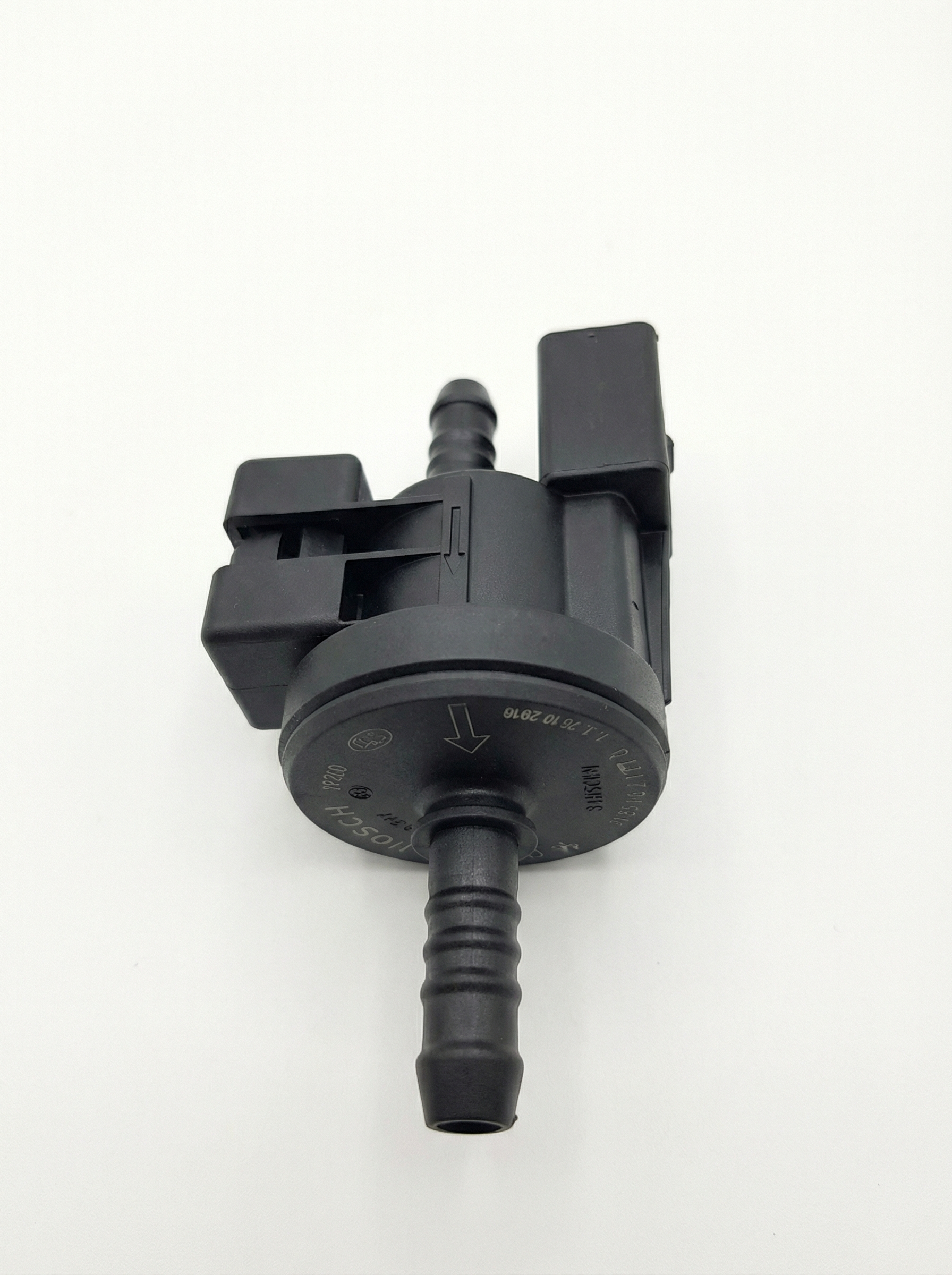
On a 2010-2017 VW Golf, code P0496 almost always points to a faulty EVAP Purge Valve (N80). This valve gets stuck open, causing fuel vapors to enter the engine when they shouldn't. This is a well-documented issue across VW platforms sharing the 2.5L, 2.0T, and 1.8T engines. It's an affordable and easy DIY fix, with the genuine Bosch part costing around $20-$40 and replacement taking under 30 minutes.
- P0496 on a VW Golf almost always means the EVAP Purge Valve (N80) has failed and is stuck open.
- Symptoms include a Check Engine Light, rough idle, and difficulty starting after refueling.
- This is a very DIY-friendly repair that can be done in under 30 minutes with basic tools.
- Before buying parts, check that your gas cap is tight.
- Always verify the correct part number for your specific year and engine, as it can vary between the Mk6 and Mk7 generations.
What's Unique About the 2010-2017 Volkswagen GOLF

The 2010-2017 Golf spans two generations, the Mk6 (2010-2014) and Mk7 (2015-2017), and used several common VW engines (e.g., 2.5L, 2.0T, 1.8T). While the P0496 code has the same meaning for all, the specific part number and location for the N80 purge valve can differ. On these VW engines, the N80 valve is a notoriously common failure item. It often gets stuck open, either intermittently or permanently, due to internal wear or contamination from charcoal canister debris. While other causes are possible, the purge valve is the primary suspect for this platform, a fact corroborated by numerous owner forums and repair videos.
Diagnostic Flowchart

Tap your situation to follow the diagnostic path that matches what you're seeing on this vehicle.
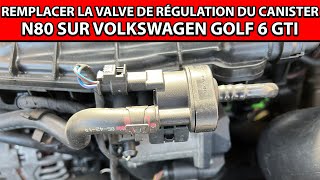
Generation note: This range covers the Volkswagen Golf Mk6 (2010-2014) and Mk7 (2015-2017). The primary cause, the N80 purge valve, is a common failure on both generations, but part numbers and locations vary by engine. For the Mk6 2.5L and 2.0T engines, the common part is Bosch 0280142431 (VW P/N 06E906517A). 🎬 See this step-by-step N80 valve install guide for Mk6 GTI. For Mk7 models with the 1.8T/2.0T MQB engines, the part number is often 06H906517AE. Always verify the correct part for your specific engine and year, as some owners report buying the wrong valve due to connector differences.
Symptoms You May Notice
- Check Engine Light is on.
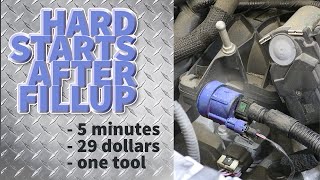
- Difficulty starting the engine, especially right after getting gas. 🎬 Watch: A 5-minute fix for hard starting after refueling.
- Rough or unstable idle.
- Slightly reduced fuel economy.
- A faint fuel smell near the engine bay.
- Audible rapid clicking noise from the N80 valve that is louder than usual or erratic.
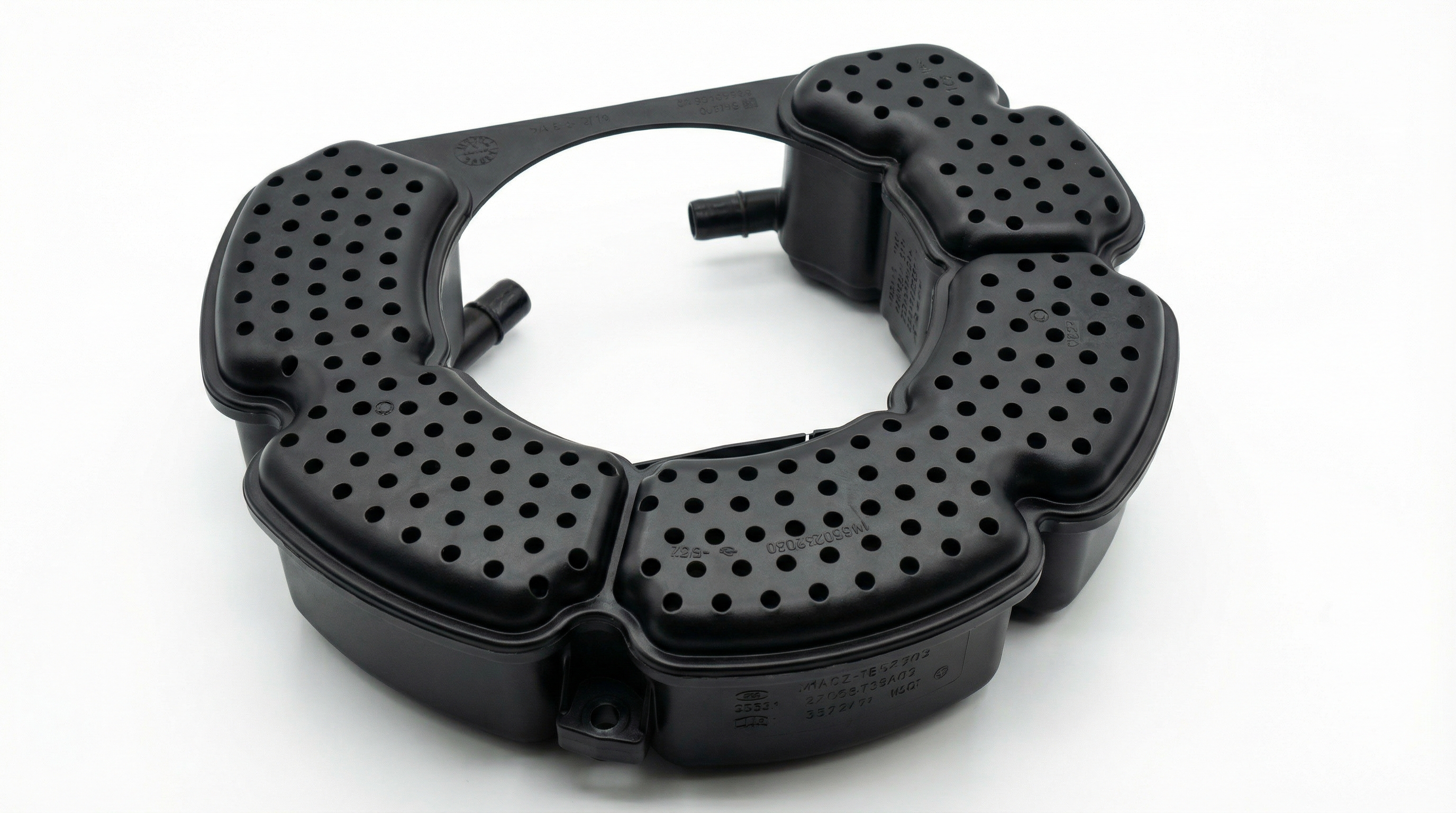
- Replacing the charcoal canister. While possible, a canister failure is much less common than a purge valve failure for this specific code. The canister is more likely to be the root cause if the replacement purge valve also fails quickly from charcoal contamination.
- Replacing the fuel tank pressure sensor without proper diagnosis. This is often replaced needlessly when the purge valve is the actual culprit.
- Replacing the gas cap. While a good first step, it rarely fixes a P0496 code.
Most Likely Causes

- Faulty EVAP Purge Valve (N80) 🔴 High Probability The N80 valve is a well-documented common failure point on many VW and Audi models of this era. It can become stuck open due to internal mechanical failure or get clogged with charcoal particles from an aging charcoal canister, a problem exacerbated by habitually overfilling the gas tank.
How to confirm: With the engine off, disconnect the electrical connector and the hose leading from the purge valve to the intake manifold. Use a hand vacuum pump to apply vacuum to the valve's port; if it fails to hold vacuum, it is leaking internally and is bad. A simpler method is to start the engine and place your finger over the port on the valve where the intake hose was connected. If you feel any suction at idle, the valve is stuck open and needs replacement.
Typical fix: Replace the EVAP Purge Valve. It is typically located on top of the engine, easily accessible after removing the engine cover, and is a straightforward DIY job requiring basic tools like pliers and Torx drivers.
Est. part cost: $20-$130 - Loose or Faulty Gas Cap ⚪ Low Probability While a loose gas cap more commonly causes codes for EVAP leaks (like P0455, P0456), it's a simple first check. However, for P0496 specifically, which detects flow when there should be none, the gas cap is an unlikely culprit compared to the purge valve.
How to confirm: Ensure the gas cap is tightened until it clicks at least once. Inspect the cap's seal for cracks or damage. If the seal is worn, replace the cap.
Typical fix: Tighten or replace the gas cap. Use an OEM cap for best results, as some aftermarket caps do not seal correctly.
Est. part cost: $15-$40
Rare But Worth Checking
- Leaking EVAP System Hoses: The rubber or plastic hoses connected to the purge valve and charcoal canister can become brittle and crack over time, creating a vacuum leak that could potentially confuse the system's pressure readings.
- Faulty Fuel Tank Pressure Sensor: The sensor that monitors the pressure in the EVAP system can fail and send incorrect data to the ECU, making it think there is flow when there isn't. This is less common than the N80 valve failure.
- Wiring Issue to Purge Valve: A short in the wiring could cause the purge valve to stay energized (open) when it shouldn't be, or a damaged connector could cause intermittent issues.
- Contaminated Charcoal Canister: If the charcoal canister has failed internally, it can send small bits of charcoal into the EVAP lines, which then get lodged in the N80 purge valve, holding it open. If you replace the valve and find charcoal debris, the canister should also be replaced to prevent repeat failure.
Diagnosis Steps

- Check the Gas Cap: Ensure it is tight and the seal is in good condition. A loose or damaged cap is a simple but sometimes overlooked cause of EVAP issues.
- Locate the Purge Valve (N80): On most Golf engines (like the 2.5L), it's on top of the engine, mounted to the airbox or intake manifold, making it easy to access after popping off the plastic engine cover.
- Test the Purge Valve (Engine Off): Disconnect the valve's electrical connector and both hoses. Try to blow through the valve. If any air passes through, it has failed internally and is stuck open. A properly functioning valve is normally closed.
- Test the Purge Valve (Engine On): An alternative test is to disconnect the electrical plug and the hose that goes to the intake manifold. Start the engine. If you can feel any vacuum suction with your finger on the valve's port, it is stuck open and must be replaced.
- Inspect Hoses for Debris: When you remove the hoses from the old valve, inspect them for black granules. If you find charcoal debris, the charcoal canister is likely failing and should be replaced along with the purge valve to prevent a repeat failure.
- Check Wiring: Examine the electrical connector and wiring going to the purge valve for any signs of damage, corrosion, or loose pins.
- Smoke Test (If Needed): If the purge valve tests good and is not the issue, the next step is to perform a smoke test on the EVAP system. This involves injecting smoke into the system to find any hard-to-see leaks in hoses or other components.
Parts You'll Likely Need

- EVAP Canister Purge Valve (N80 Valve)
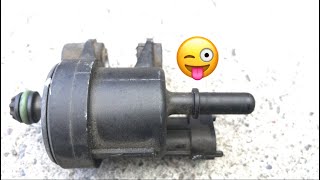
(OEM #06E906517A)— This is the most common failure part for code P0496 on this vehicle. It gets stuck open, causing unauthorized vapor flow. This part number corresponds to the Bosch 0280142431 and fits many Mk6 era engines.
Trusted brands: Bosch (OEM), Genuine VW/Audi
OEM price range: $20-$40
Aftermarket price range: $15-$30 - EVAP Canister Purge Valve (N80 Valve) - MQB
(OEM #06H906517AE)— This is a common part number for the N80 valve on the newer Mk7 Golf models with the MQB platform 1.8T and 2.0T engines.
Trusted brands: Genuine VW/Audi
OEM price range: $80-$130
Aftermarket price range: $50-$90
Related Codes That Often Appear With This One
- P0441 — This code for 'Incorrect Purge Flow' is very closely related and often appears for the exact same reason: a faulty N80 purge valve.
- P0456 — This code for a 'Very Small Leak' can sometimes be triggered by a faulty N80 valve, though it's more often a gas cap or hose leak. A VW Technical Tip document groups P0496 with leak codes like P0456 as being potentially caused by the N80 valve.
- P0171 — A 'System Too Lean' code can be caused by a stuck-open purge valve, which creates an unmetered vacuum leak, introducing extra air into the intake manifold and disrupting the air-fuel ratio.
Technical Service Bulletins (TSBs) & Recalls
- VW Technical Tip 01-19-06 (NHTSA ID: 10181040): While addressing Jetta models, this TSB provides the definitive diagnostic test for a stuck-open N80 purge valve causing P0496 and other EVAP codes. The procedure is directly applicable to the Golf. It instructs technicians to check for vacuum at the valve with the engine running and the valve de-energized. If vacuum is present, the valve must be replaced.
Platform-Specific Known Issues
- Incorrect Replacement Part Connector: A common frustration for Mk6 GTI owners is ordering a replacement N80 valve and discovering the electrical connector is different from their car's harness. There appears to be a mid-generation change. Owners should visually inspect their existing valve's connector before ordering.
- Hard-Piped N80 Valve on Mk6 GTI: On some Mk6 GTI models, the plastic line from the N80 valve to the intake manifold is a single, non-serviceable piece. Instead of replacing the entire intake manifold, a common DIY workaround is to carefully cut the plastic line and splice the new valve in using a small piece of rubber fuel hose and hose clamps.
Mechanic-Grade Diagnostic Values
- N80 Purge Valve Coil Resistance — expected: 22 to 30 Ohms.. Failure: A reading outside this range, especially an open circuit (infinite resistance) or a short (near zero ohms), indicates a failed valve coil. Some real-world tests show values between 15-25 Ohms on a 2.5L engine.
- N80 Purge Valve Connector Voltage (Key On) — expected: Pin 1 should have battery voltage (approx. 12V) supplied from the Fuel Pump relay or Engine Component Power Supply Relay. Pin 2 is the ground side, controlled (pulsed) by the Engine Control Module (ECM).. Failure: Low or no voltage on Pin 1 points to a wiring, fuse, or relay issue, not a bad N80 valve. For example, one owner measured only 1.25V, indicating a harness or ground problem.
Scan Tool Commands That Help
- VCDS (VAG-COM) / OBDeleven: Engine (01) -> Output Tests (03) -> EVAP Purge Valve (N80) — This is a direct, bi-directional test to command the N80 valve to cycle on and off. You should hear an audible clicking from the valve under the hood as it actuates. If it doesn't click, it indicates a failure in the valve's solenoid or the wiring circuit.
- VCDS (VAG-COM) / OBDeleven: Engine (01) -> Basic Settings (04) -> Group 070 — This runs the complete EVAP system leak test. The car must be warm. The test will pressurize the system and monitor for pressure drops. It will provide a "Test ON/OFF" and "EVAP OK/NOT OK" status. This is useful after replacing a part to confirm the entire system is sealed and functioning correctly.
Wiring & Ground Locations
- Engine Bay Ground Points (General) — For Mk6/Mk7 Golfs, common engine bay ground points are located on the body below the battery tray, on the transmission housing, on the cylinder head (for ignition coils), and on the longitudinal members (frame rails) near the headlamps.. A poor ground connection for the ECU or related sensors can cause erratic voltage readings and incorrect operation of components like the N80 valve, potentially leading to a P0496 code even if the valve itself is good. VW typically uses brown wires for ground connections.
- N80 Valve Connector Pinout — The 2-pin connector on the N80 valve itself.. Pin 1 is the 12V+ power supply, typically from a relay. Pin 2 is the ground signal, which is pulse-width modulated (PWM) by the ECU (J623) to control the valve's opening. Testing for voltage at Pin 1 and continuity from Pin 2 back to the ECU connector can isolate a wiring fault from a component fault.
- Mk7 Main Earth Point — On the bulkhead behind the battery, typically a stud with multiple brown wires attached.. This is a primary grounding location for many engine bay components and circuits controlled by the ECU. Corrosion or looseness here can cause widespread electrical issues.
Real Owner Repair Stories
- Golfmk6.com forum user (VW Golf GTI Mk6) — Check Engine Light with code P0444 (EVAP Purge Control Valve Circuit Open), which is a related electrical fault to P0496.
❌ Tried (didn't work) The N80 valve itself tested good for resistance (~34 Ohms), matching a known-good car.
✅ What actually fixed it The diagnosis pointed to an electrical supply issue. The user measured only 1.25V at the N80 valve's harness connector, whereas a working car showed 9-10V. The problem was determined to be in the wiring or grounding providing power to the valve, not the valve itself.
OEM Part Supersession History
6e906517→06E906517A— Standard part revision and improvement by Volkswagen.
Heads up: Part number 06E906517A is the widely accepted replacement for many 2.0T and 2.5L engines in the Mk6 generation.
Helpful Videos


We Have This Part in Stock


The information in this article is provided for general reference and educational purposes only. Vehicle specifications, procedures, and part compatibility can vary by production date, trim level, and region. Always consult your vehicle's factory service manual and verify part numbers before purchasing or performing repairs. Safety-critical components such as airbags, seat belts, and braking systems should be installed by a qualified professional.
- Volkswagen GOLF:
- 🎬 Helpful Videos
- 🛍️ Shop This Part
- What's Unique About the 2010-2017 Volkswagen GOLF
- Diagnostic Flowchart
- Symptoms You May Notice
- Most Likely Causes
- Rare But Worth Checking
- Diagnosis Steps
- Parts You'll Likely Need
- Related Codes That Often Appear With This One
- Technical Service Bulletins (TSBs) & Recalls
- Platform-Specific Known Issues
- Mechanic-Grade Diagnostic Values
- Scan Tool Commands That Help
- Wiring & Ground Locations
- Real Owner Repair Stories
- OEM Part Supersession History
- 🎟️ Get 5% Off