

P0496 on 2017-2021 Ford Transit: Causes, Fixes, and TSBs
On a 2017-2021 Ford Transit, code P0496 is most often caused by a stuck-open canister purge valve or a kinked EVAP vent line. A classic symptom is difficulty starting the engine immediately after refueling. Before replacing the purge valve (a $50-$150 part), inspect the EVAP lines for kinks as noted in Ford TSB 21-2106. Using an OEM Motorcraft purge valve is highly recommended over aftermarket alternatives.
- P0496 means fuel vapor is flowing into your engine when it shouldn't be.
- The most common cause is a stuck-open canister purge valve, but don't replace it without testing it first.
- On 2017 models, check for a kinked EVAP vent line near the charcoal canister, as specified in Ford TSB 21-2106.
- Always start with the simplest checks: make sure your gas cap is tight and its seal is intact.
- Driving with this code is generally safe, but it will cause you to fail an emissions test and can make refueling difficult.
What's Unique About the 2017-2021 Ford TRANSIT

For the Ford Transit, this code has specific, documented causes beyond the usual failed part. Ford issued a Technical Service Bulletin (TSB 21-2106) for 2017-2021 models built before November 30, 2020, noting that a kinked fresh air vent line for the EVAP system could trigger P0496 and other codes. Additionally, another bulletin (SSM 50306) covering 2020-2021 Transits warns technicians that many replaced canister purge valves are tested and found to be working perfectly, suggesting misdiagnosis is common and thorough testing should be performed before replacement.
Diagnostic Flowchart

Tap your situation to follow the diagnostic path that matches what you're seeing on this vehicle.
Symptoms You May Notice

- Check Engine Light is on
- Difficulty starting, especially after filling the gas tank (This is a hallmark symptom, caused by excess fuel vapor flooding the engine when the purge valve is stuck open).
- Slightly rough idle
- Reduced fuel economy
- Possible fuel smell.
- Replacing the canister purge valve without testing it first. As per TSB SSM 50306, many returned valves are found to be fully functional, indicating the actual problem was elsewhere in the EVAP system.
- Confusing the canister purge valve (located on the engine) with the EVAP vent valve/solenoid (located near the charcoal canister under the vehicle). Owners often replace the vent valve by mistake when troubleshooting P0496.
Most Likely Causes

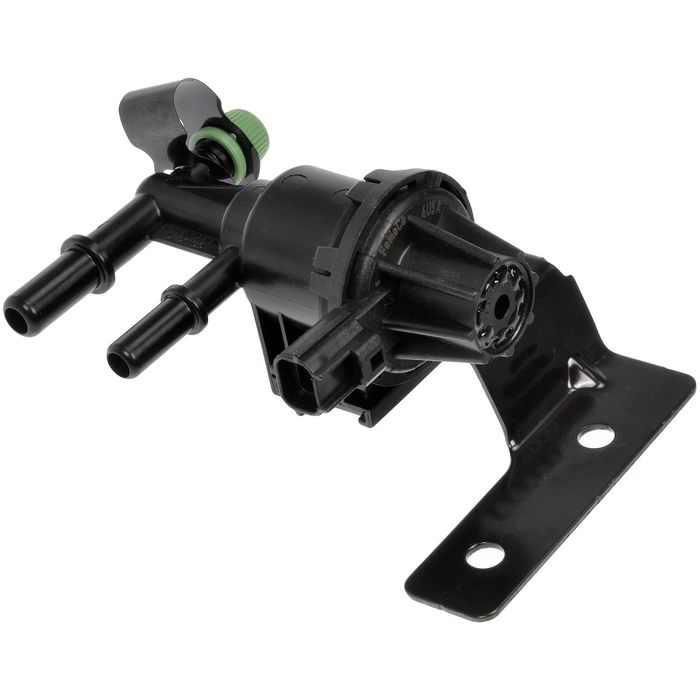
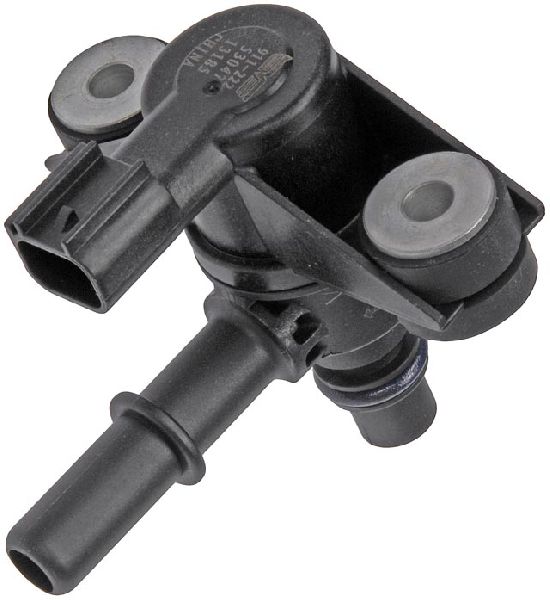
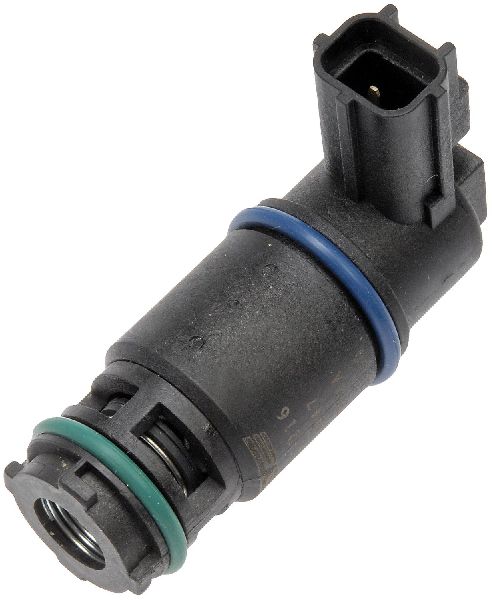
- Faulty Canister Purge Valve 🔴 High Probability This is the most common failure point for this code across many Ford models, including the Transit. The valve gets stuck open, allowing un-commanded vapor flow. However, Ford TSB SSM 50306 warns that this part is often replaced unnecessarily, so testing is crucial. Owners in forums strongly recommend using the OEM Motorcraft part, as aftermarket versions have been reported to fail quickly.
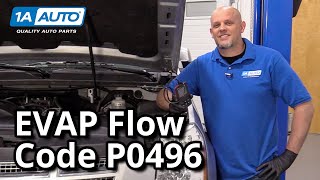
How to confirm: With the engine off, disconnect the purge valve. Try to blow through it. If air passes through, it is stuck open and has failed. 🎬 Watch: A mechanic explains common P0496 causes and fixes. Alternatively, disconnect the vapor line from the purge valve that leads to the intake manifold. Use a hand-held vacuum pump to see if the valve holds a vacuum; it should not lose vacuum when unpowered. A definitive test with a scan tool involves commanding the purge valve closed and the vent valve closed, then monitoring the FTP sensor; a drop in pressure indicates the purge valve is leaking vacuum.
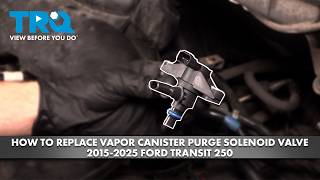
Typical fix: Replace the canister purge valve. It is typically located on the top driver's side of the engine and is a relatively simple replacement. 🎬 Watch: See this step-by-step purge valve replacement walkthrough.
Est. part cost: $50-$150 - Kinked EVAP Fresh Air Vent Line 🟡 Medium Probability Ford TSB 21-2106 specifically calls out this issue on 2017-2021 Transits built before 30-Nov-2020 as a cause for P0496 and other EVAP codes. The line can become kinked, restricting airflow and causing pressure imbalances that the system interprets as a fault.
How to confirm: Visually inspect the EVAP vent lines running from the charcoal canister to the fresh air source. Look for sharp bends, kinks, or damage as described in TSB 21-2106.
Typical fix: Reroute the line to remove the kink and secure it with a new clip or zip-tie per the TSB instructions.
Est. part cost: $0-$20 - Loose or Damaged Gas Cap ⚪ Low Probability While a common cause for general EVAP leak codes (like P0455/P0457), it's less likely to specifically cause P0496 (flow when not commanded). However, it's a simple and free check that should always be performed first.
How to confirm: Ensure the gas cap is tightened until it clicks. Inspect the rubber seal on the cap for cracks, dirt, or damage.
Typical fix: Tighten or replace the gas cap. Always opt for an OEM cap if a replacement is needed, as aftermarket caps can cause sealing issues.
Est. part cost: $15-$40
Rare But Worth Checking
- Faulty Fuel Tank Pressure (FTP) Sensor: The FTP sensor is what the computer uses to detect the unwanted vacuum flow. If the sensor itself is faulty and providing incorrect readings, it can trigger the P0496 code even if there is no actual flow problem.
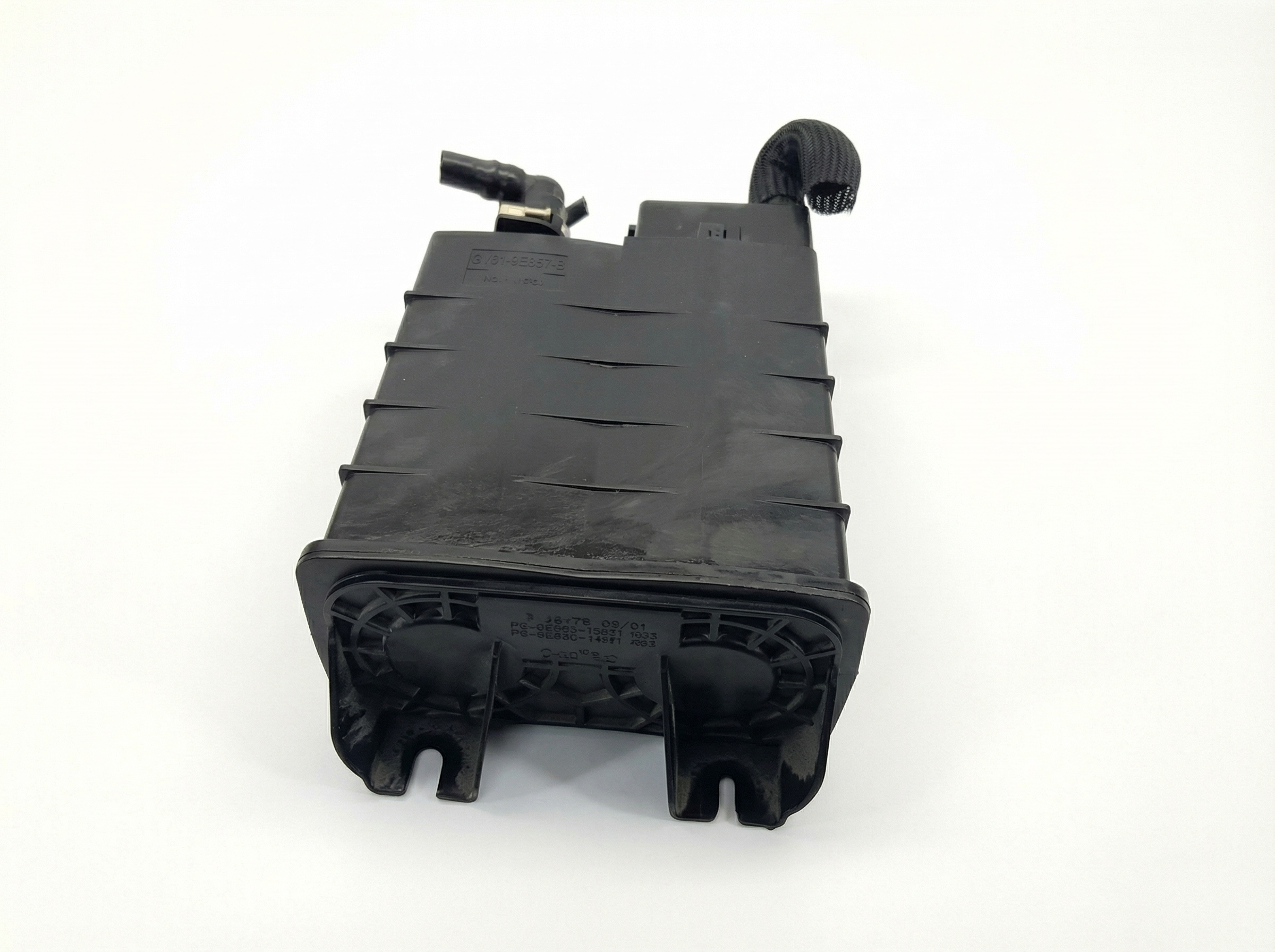
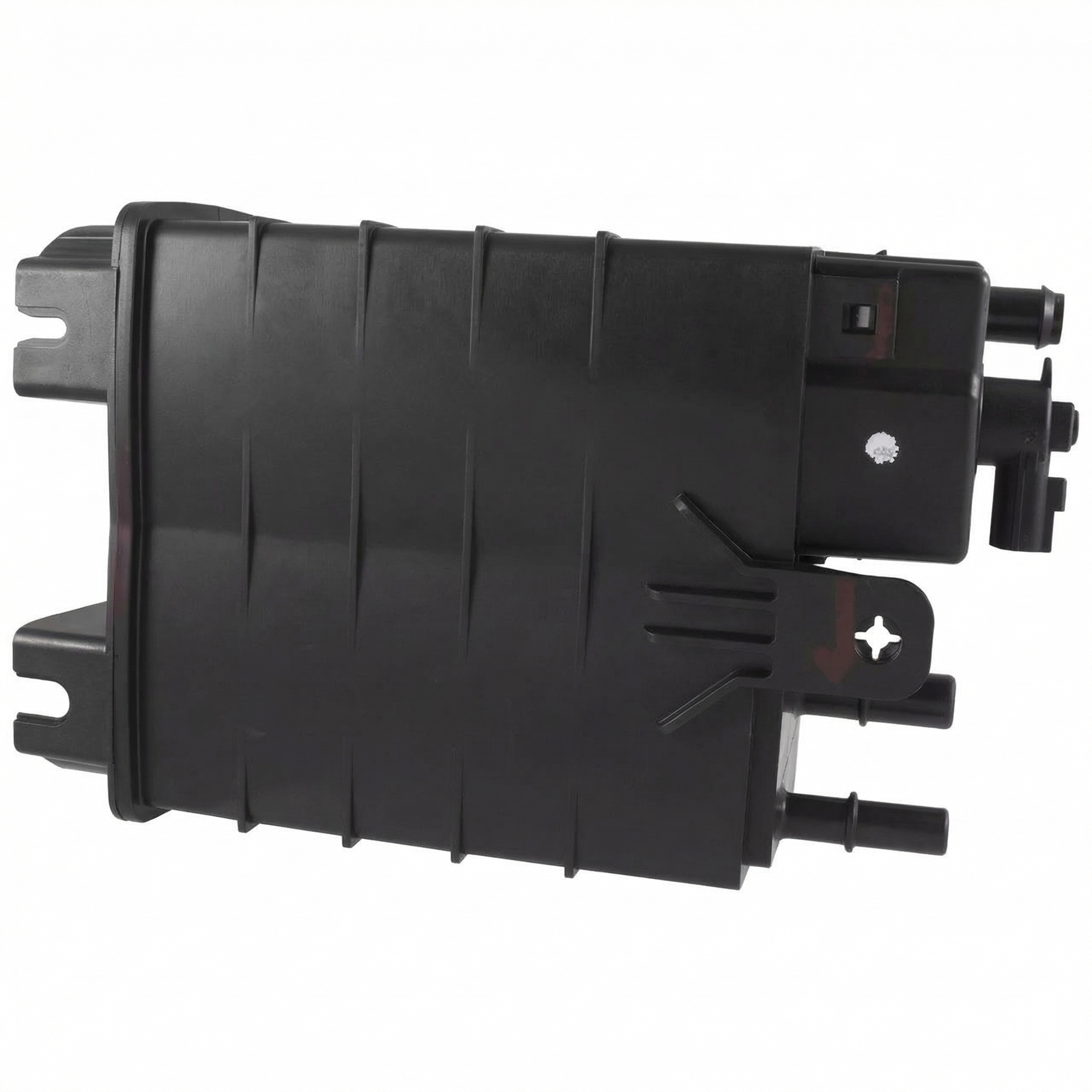
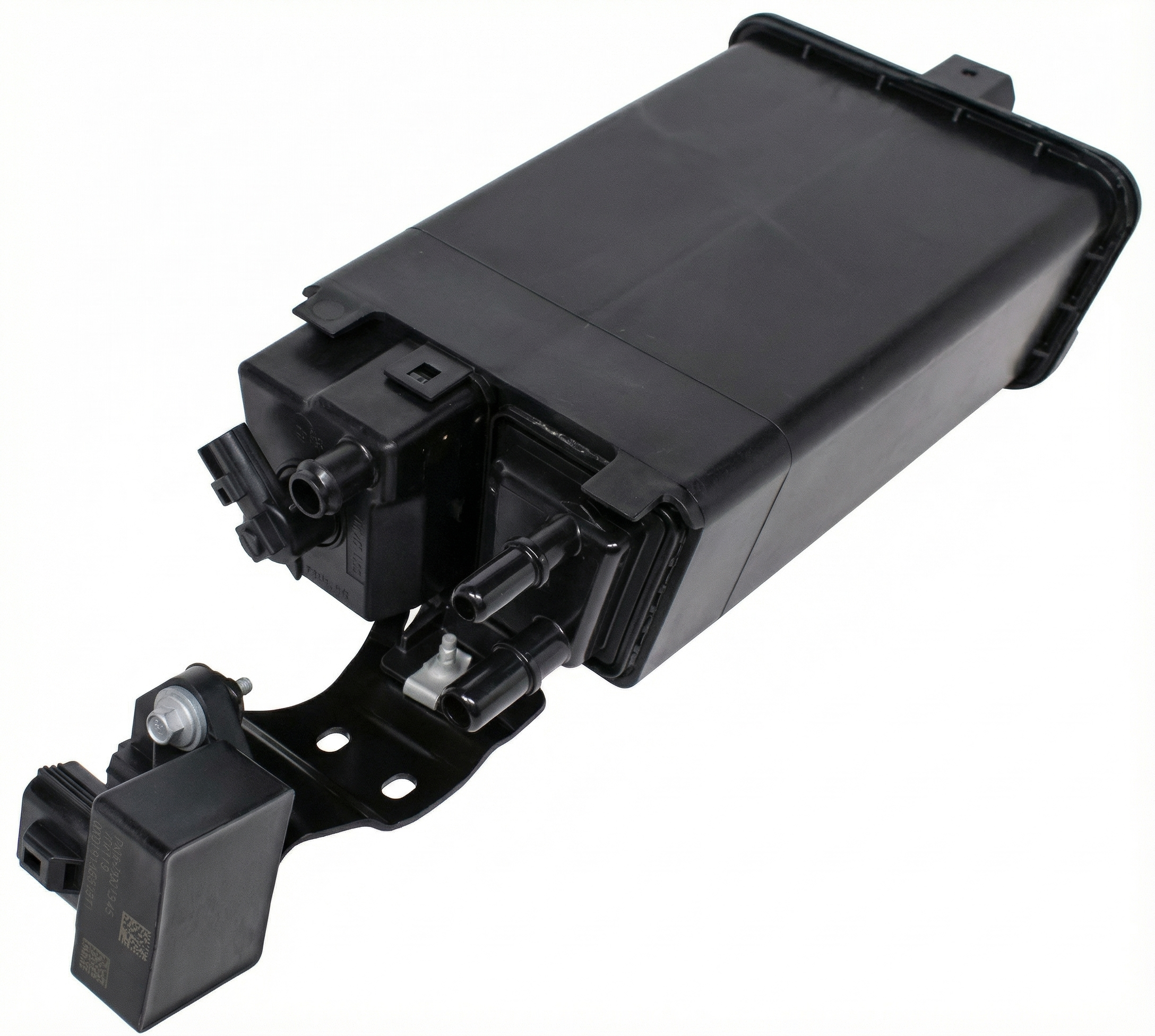
- Saturated or Damaged EVAP Canister: If the charcoal canister becomes saturated with fuel (often from habitually over-filling the gas tank past the first click), it can release liquid fuel into the vapor lines, damaging the purge valve and causing flow issues.
- Stuck EVAP Blocking Valve: In a detailed repair story for a Ford F-150 with a persistent P0496 code, the final culprit was a stuck EVAP 'Blocking Valve' after the purge valve, vent solenoid, and FTP sensor had all been replaced. This appears to be a newer, less common component in some Ford EVAP systems that can also fail.
Diagnosis Steps
- Read the code with an OBD-II scanner and check for any other accompanying codes.
- Check the gas cap to ensure it is tight and the seal is in good condition.
- Visually inspect all accessible EVAP hoses for cracks, disconnections, or kinks, paying special attention to the fresh air vent line as noted in TSB 21-2106 for vehicles built before late 2020.
- Locate the canister purge valve on the engine. Disconnect it from its electrical connector and hoses. Attempt to blow through the valve. If air passes through, it is stuck open and must be replaced. This is the most common failure.
- If the purge valve tests good, the next step is to use a scan tool to monitor the Fuel Tank Pressure (FTP) sensor data while the vehicle is running to check for abnormal vacuum readings. A normal reading with Key On, Engine Off is around 2.6 volts.
- If advanced diagnostics are needed, a smoke machine can be used to pressurize the EVAP system and check for any hard-to-see leaks in the lines or canister.
- Be sure to differentiate between the purge valve (on the engine) and the vent valve (by the tank), as they are often confused.
Parts You'll Likely Need
- Canister Purge Valve
(OEM #AU5Z-9C915-B (Motorcraft CX-2349))— This is the most frequent cause of a P0496 code, as the valve can fail and stick in the open position. Part number AU5Z-9C915-B is listed for a wide range of 2015-2024 Transits with 3.5L and 3.7L engines. Always verify fitment with your VIN.
Trusted brands: Motorcraft (OEM, highly recommended), Bosch, Standard Motor Products
OEM price range: $60-$120
Aftermarket price range: $40-$90 - Gas Cap — A faulty gas cap seal can cause various EVAP system issues and is an inexpensive and easy part to replace as a first step.
Trusted brands: Motorcraft, Stant
OEM price range: $25-$40
Aftermarket price range: $15-$30
Related Codes That Often Appear With This One
- P1450 — Stands for 'Unable to Bleed Up Fuel Tank Vacuum.' This code often appears with P0496 when there is a restriction in the EVAP system, such as the kinked vent line mentioned in TSB 21-2106. 🎬 Watch: How to fix a P1450 code on your Transit.
- P0451 — Relates to the Fuel Tank Pressure Sensor performance. It can be triggered alongside P0496 because the computer relies on this sensor to detect the improper purge flow.
- P0455 / P0456 — These codes indicate a large or small EVAP leak, respectively. They can appear with P0496 if the purge valve is stuck wide open, which the system may interpret as a large leak.
Technical Service Bulletins (TSBs) & Recalls
- TSB 21-2106: Addresses a kinked EVAP fresh air vent line causing P0496 and other codes on 2017-2021 models built before 30-Nov-2020.
- SSM 50306: Warns against the unnecessary replacement of the EVAP canister purge valve on 2020-2021 models and advises specific diagnostic tests.
Platform-Specific Known Issues
- TSB 21-2106: Some 2017-2021 Transits built on or before 30-Nov-2020 may experience a slow fuel fill condition and/or trigger P0496 due to a kinked evaporator emissions fresh air vent line. The fix involves repositioning the line and securing it with a zip-tie.
- SSM 50306: On 2020-2021 Transits (and other Fords), the canister purge valve is often misdiagnosed. Ford advises performing specific scan tool tests before replacing the valve, as returned parts often test as fully functional.
Mechanic-Grade Diagnostic Values
- Fuel Tank Pressure (FTP) Sensor Voltage, Key On Engine Off (KOEO) — expected: Approximately 2.6 - 2.65 Volts.. Failure: If voltage immediately drops upon starting the engine, it suggests the purge valve is stuck open and pulling a vacuum when it shouldn't be.
- EVAP System Pressure During Active Purge — expected: Approximately -2.0 to -4.0 inches of water (in-H2O).. Failure: Readings outside this range may indicate a blockage or other issue.
- EVAP System Pressure During Gross Leak Test — expected: System should pull down to a target of approximately -8.0 inches of water (in-H2O).. Failure: Failure to achieve this vacuum may set a P0455 (gross leak) code. Exceeding this vacuum may set a P1450 (excessive vacuum) code.
Hidden / Shadow Codes Worth Checking
- Mode $06, Monitor ID $3B: This monitor relates to the EVAP system leak test. Advanced scan tools can read the raw test data from this monitor, allowing a technician to see if the system is borderline failing even if a Check Engine Light has not been triggered. It provides the test value and the upper/lower limits for passing, which can reveal intermittent or developing issues before a code like P0496 is permanently set. (see via A scan tool with Mode $06 capability, such as Ford's IDS, FORScan, or other professional-grade scanners.)
Scan Tool Commands That Help
- Ford IDS, FORScan, or equivalent bidirectional scanner: EVAP System Test / Purge/Vent Solenoid Command — To definitively test for a mechanically stuck-open purge valve. With the engine running, command the purge valve (Vapor Management Valve) to 0% or OFF, and command the vent valve to ON (closed). Then, monitor the Fuel Tank Pressure (FTP) sensor data. If the pressure begins to drop (indicating a vacuum is forming), it proves the purge valve is leaking engine vacuum into the sealed EVAP system and must be replaced.
Wiring & Ground Locations
- Main Ground Points — The Ford Body and Equipment Mounting Manual (BEMM) for the specific model year is the authoritative source for all official chassis ground point locations. There are numerous ground points throughout the chassis; for engine components, key grounds are located in the engine bay, often on the frame rails or engine block.. A poor ground for the PCM or the EVAP system components could cause erratic sensor readings or incorrect solenoid operation, potentially triggering a false P0496 code. Verifying clean and tight grounds is a crucial step in diagnosing electrical faults.
- Instrument Panel Fuse Box — Located in the passenger compartment, typically behind a panel at the driver's knee bolster area.. This fuse box contains fuses for various modules that control or interact with the emissions system. A blown or loose fuse could cause a loss of power to a relevant controller.
Real Owner Repair Stories
- YouTube channel 'adma' (2020 Ford Transit Connect 2.0L) — Check Engine Light with a pending and current P0496 code for 'EVAP high purge flow'.
❌ Tried (didn't work) The diagnosis went directly to the suspected component.
✅ What actually fixed it The canister purge valve assembly was replaced. A smoke test on the old part clearly showed smoke flowing through the valve when it was supposed to be closed, confirming it was stuck open. The new valve did not leak.
OEM Part Supersession History
AU5Z-9C915-A→AU5Z-9C915-E— Standard part revision and improvement by the manufacturer.
Heads up: The part has been through multiple revisions (A, B, C, D, E). Using the latest version, AU5Z-9C915-E, is recommended to ensure the most up-to-date design. The previous part numbers it replaces are au5z9c915a, au5z9c915b, au5z9c915c, and au5z9c915d.
Model Year Variations Within This Range
- 2017-2020 (built on or before 30-Nov-2020): These models are specifically called out in TSB 21-2106 as being susceptible to a kinked EVAP fresh air vent line that can cause P0496. Vehicles built after this date likely have a revised hose routing from the factory.
- 2020-2021: The 2020 model year marked a significant refresh for the Transit, including new powertrain options (3.5L PFDI V6 replacing the 3.7L) and a 10-speed transmission. TSB SSM 50306, which warns against misdiagnosing the purge valve, specifically covers these 2020-2021 models, suggesting the issue may be more prevalent or was first noted with the updated vehicle architecture.
Helpful Videos

Used OEM Parts in Stock

New Aftermarket Parts Available


The information in this article is provided for general reference and educational purposes only. Vehicle specifications, procedures, and part compatibility can vary by production date, trim level, and region. Always consult your vehicle's factory service manual and verify part numbers before purchasing or performing repairs. Safety-critical components such as airbags, seat belts, and braking systems should be installed by a qualified professional.
- Ford TRANSIT:
- 🎬 Helpful Videos
- 🛍️ Shop This Part
- What's Unique About the 2017-2021 Ford TRANSIT
- Diagnostic Flowchart
- Symptoms You May Notice
- Most Likely Causes
- Rare But Worth Checking
- Diagnosis Steps
- Parts You'll Likely Need
- Related Codes That Often Appear With This One
- Technical Service Bulletins (TSBs) & Recalls
- Platform-Specific Known Issues
- Mechanic-Grade Diagnostic Values
- Hidden / Shadow Codes Worth Checking
- Scan Tool Commands That Help
- Wiring & Ground Locations
- Real Owner Repair Stories
- OEM Part Supersession History
- Model Year Variations Within This Range
- 🎟️ Get 5% Off