

P0496 on 2013-2017 Ford Fusion Energi: Causes and Fixes for High Purge Flow
For a 2013-2017 Ford Fusion Energi, code P0496 almost always points to a faulty canister purge valve that is stuck open. This is a common, inexpensive, and relatively easy part to replace yourself, typically costing between $35 for an aftermarket part and $65 for an OEM Motorcraft part. The latest OEM part number is AU5Z-9C915-E, which supersedes several previous versions.
- P0496 on a Fusion Energi is overwhelmingly caused by a bad canister purge valve.
- Symptoms often include a check engine light and difficulty starting the car after getting gas.
- This is a beginner-friendly DIY repair that requires minimal tools and can be completed in under 30 minutes.
- Do not replace the gas cap or charcoal canister first; the purge valve is the primary suspect.
- Using an OEM Motorcraft part (AU5Z-9C915-E) is recommended for longevity, as the part has been updated multiple times by Ford.
What's Unique About the 2013-2017 Ford FUSION ENERGI
The Ford Fusion Energi is a Plug-in Hybrid Electric Vehicle (PHEV), which has a slightly different EVAP system than a standard gasoline car. To handle pressure changes from both gasoline operation and electric-only driving, the system is robust. However, this also means components like the purge valve are frequently activated. Ford has issued Technical Service Bulletins (TSB) that include or are related to the P0496 code for this vehicle, acknowledging a pattern of EVAP-related faults. [SSM 48301, TSB 19-2207]
Diagnostic Flowchart
Tap your situation to follow the diagnostic path that matches what you're seeing on this vehicle.
Symptoms You May Notice
- Check Engine Light is on
- Difficulty starting the engine immediately after refueling. Owners report needing to try starting multiple times; one owner reported it took 5 tries to start after pumping gas. 🎬 Watch: Real-world symptoms of P0496 and hard starting after refueling.
- Engine may run rough or stall after starting, especially after refueling.
- Slight decrease in fuel economy.
- Audible 'whooshing' or 'hissing' noise from the engine bay or near the gas tank as vacuum is released (less common).
- Replacing the gas cap. A bad gas cap or a dirty capless fuel filler neck typically causes a small leak code (like P0456), not a high flow code like P0496.
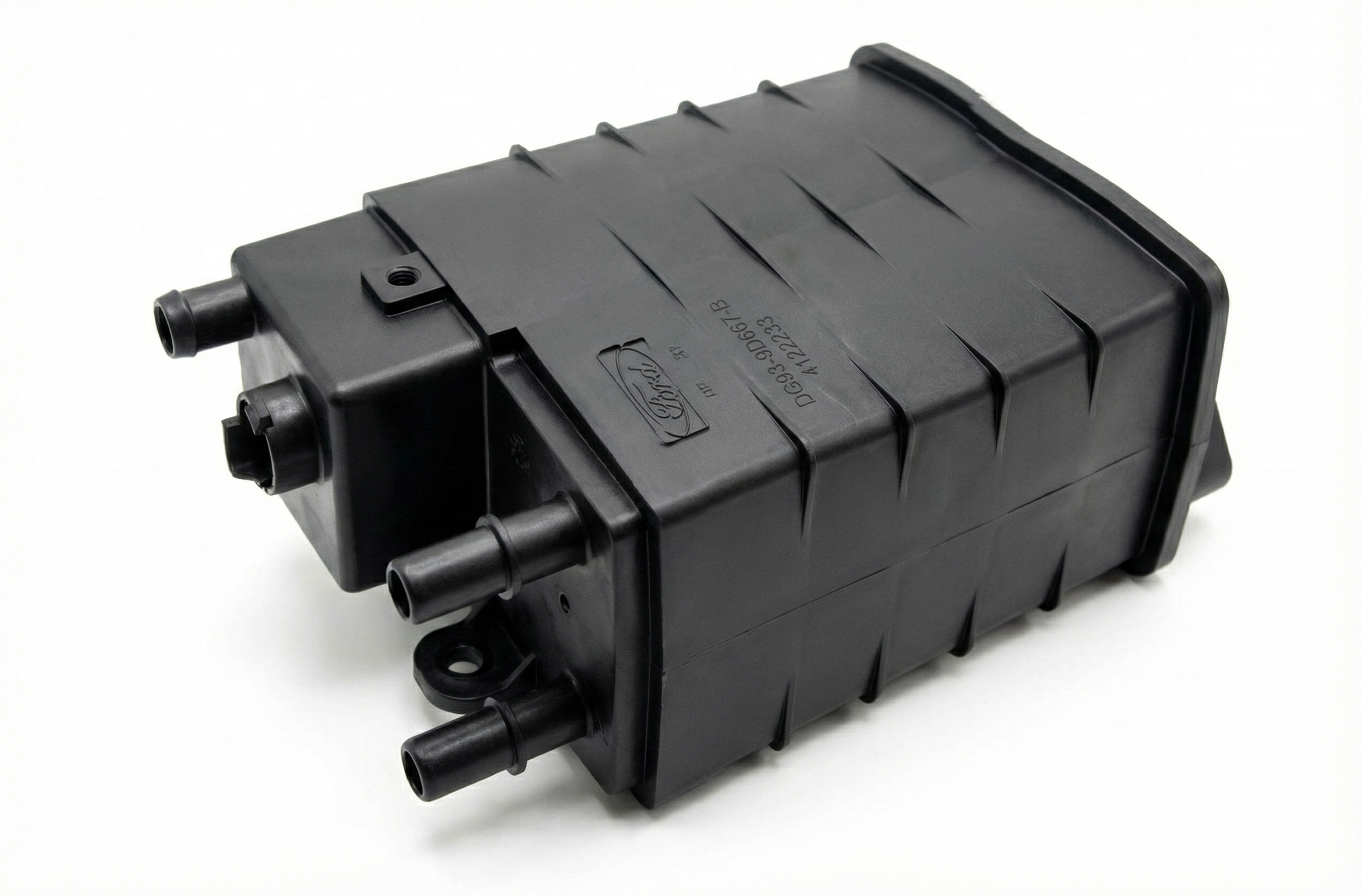
- Replacing the charcoal canister. The canister is a storage device; it is rarely the cause of a high flow code unless it has been saturated with liquid fuel from a long-term stuck-open purge valve, which is a secondary failure.
Most Likely Causes
- Faulty Canister Purge Valve 🔴 High Probability This part is a known common failure item across many Ford vehicles, including the Fusion Hybrid platform. Ford TSB 19-2207 for the closely related P1450 code explicitly states the sealing capability of the original valve may be insufficient. The valve gets stuck open due to wear or fuel debris, allowing constant vacuum to be pulled on the fuel tank.
How to confirm: With the engine off, disconnect the hose leading from the purge valve to the intake manifold. If you can blow air through the valve or pull a vacuum on it with a hand pump, it is stuck open and needs to be replaced. A properly functioning valve should be completely sealed when no power is applied. Another test is to start the car with the valve's electrical connector unplugged; if the Fuel Tank Pressure (FTP) sensor shows a developing vacuum, the valve is leaking internally.
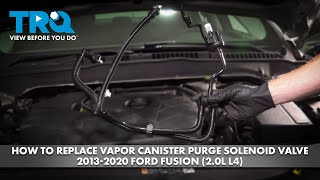
Typical fix: Replace the canister purge valve assembly. The part is located on top of the engine and is relatively easy to access after removing the engine cover.
Est. part cost: $35-$65
Rare But Worth Checking
- Faulty Fuel Tank Pressure (FTP) Sensor: The FTP sensor tells the computer the pressure within the EVAP system. If it provides a false reading (e.g., it is biased and reads a slight vacuum when at atmospheric pressure), it could incorrectly trigger a P0496 code. This is much less common than a failed purge valve.
- Wiring Harness Issue: A short or break in the wiring to the purge valve solenoid could cause it to malfunction, though this is rare. Visually inspect the connector and wiring for any obvious damage during replacement. A poor connection at a primary ground point like G101 could also cause erratic behavior.
- Blocked EVAP Canister or Vent Valve: A restriction in the EVAP canister or a stuck-closed vent valve can lead to excessive vacuum buildup when the purge valve opens, sometimes triggering a P0496 or the more common P1450. This is less likely than the purge valve itself failing. In some cases, both the purge valve and vent valve may need replacement to resolve the code.
Diagnosis Steps
- Verify the Check Engine Light is on and scan for codes. Confirm P0496 is present.
- Check for other related EVAP codes like P1450, which strongly reinforces the diagnosis.
- Locate the canister purge valve on the engine. On the 2.0L engine, it is visible on top after removing the plastic engine cover. It's a small solenoid with an electrical connector and two hoses attached.
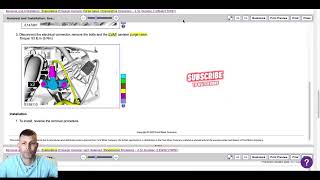
- With the engine off, disconnect the electrical connector and the two hoses from the purge valve. The hose connectors may have green or yellow locking tabs that need to be squeezed or pried to release.
- Attempt to blow through the valve from the inlet (from canister) to the outlet (to intake). If any air passes through, the valve is stuck open and is faulty. It should be completely sealed when no power is applied.
- If the valve tests good, inspect the wiring and connector for damage. Check for battery voltage at the power pin of the connector with the key on.
- If the valve and wiring are good, the issue may be more complex, such as a faulty Fuel Tank Pressure sensor or a blockage in a vent line, and may require advanced diagnostics like a smoke test or bidirectional scan tool commands.
Parts You'll Likely Need
- Canister Purge Valve
(OEM #AU5Z-9C915-E)— This is the most frequent failure point for code P0496. It gets stuck open, allowing fuel vapor to flow into the engine when it shouldn't. The -E version is the latest revision, superseding -A, -B, -C, and -D versions, indicating Ford has updated the part over time.
Trusted brands: Motorcraft (OEM), Dorman, Duralast
OEM price range: $50-$65
Aftermarket price range: $35-$50
Related Codes That Often Appear With This One
- P1450 — This code means 'Unable to Bleed Up Fuel Tank Vacuum.' It's a very common companion code to P0496 on Fords and points directly to a stuck purge valve or a blocked vent system. TSB 19-2207 was issued for this code on this platform, identifying the purge valve as the cause.
- P0456 — This code for 'EVAP System Small Leak Detected' can sometimes appear alongside P0496, as the system may interpret the stuck-open valve as a leak under certain test conditions.
- P04ED, P04EF, P04EE, P2450, P2451 — These are all various EVAP system codes mentioned in TSB SSM 48301 for the Fusion Hybrid platform, indicating a general susceptibility to EVAP faults that often lead technicians to inspect the entire system, with the purge valve being a primary component. [SSM 48301]
Technical Service Bulletins (TSBs) & Recalls
- SSM 48301: Notes that Fusion Hybrid vehicles may exhibit an illuminated MIL with DTC P0496, among others, and directs technicians to specific diagnostic procedures.
- TSB 19-2207: Supersedes an older TSB to address codes P1450, P0456, P0457, P04EE, and P04EF on 2013-2017 Fusion/C-Max/MKZ hybrids due to a faulty canister purge valve, recommending replacement and a PCM software update.
Platform-Specific Known Issues
- Ford issued Technical Service Bulletin (TSB) SSM 48301 for 2013-2020 Fusion Hybrid models, which lists P0496 as one of several common EVAP-related trouble codes, indicating a known pattern of issues with this system.
- Ford also issued TSB 19-2207 for 2013-2017 Fusion/C-Max/MKZ Hybrid and Energi models for codes like P1450, P0456, etc., caused by the canister purge valve's poor sealing capability. The fix involves replacing the valve and updating PCM software. While P0496 isn't listed, the root cause and repair are identical.
Mechanic-Grade Diagnostic Values
- Fuel Tank Pressure (FTP) Sensor Voltage at KOEO — expected: 2.4 - 2.8 Volts (at atmospheric pressure). Failure: A voltage significantly outside this range suggests a biased or faulty sensor that could falsely trigger the code.
- EVAP System Vacuum with Purge Valve Commanded Closed — expected: Less than 10 inches of H2O of vacuum. Failure: If the PCM detects a vacuum greater than 10 inches of H2O during a non-purge condition, it will set code P0496, indicating an unwanted flow, likely from a stuck-open purge valve. 🎬 See a detailed explanation of EVAP flow during non-purge conditions.
- EVAP Canister Vent Valve Solenoid Resistance — expected: 12 - 80 Ohms. Failure: A reading outside this range (open circuit or short) indicates a faulty solenoid coil. While this is for the vent valve, it provides a solid baseline for what to expect from a similar EVAP solenoid.
Scan Tool Commands That Help
- Ford IDS, FORScan, or advanced bidirectional scanner: EVAP Purge Valve Control / Purge Solenoid Command — This is the definitive test for a stuck purge valve. With the engine running, command the valve to 0% (closed). While monitoring the Fuel Tank Pressure (FTP) sensor PID, if vacuum continues to build (pressure drops), the valve is mechanically stuck open and must be replaced.
- Ford IDS, FORScan, or advanced bidirectional scanner: PCM Reprogramming / Software Update — After replacing the canister purge valve, Ford TSB 19-2207 (for the related P1450 code) requires a PCM software update to fully correct the condition and prevent the code from returning. This should be considered for a P0496 repair as well.
- Ford IDS, FORScan, or advanced bidirectional scanner: EVAP Vent Valve Control / Vent Solenoid Command — Used to test the function of the vent solenoid, which is normally open. This command forces it closed, which is useful for sealing the system for other tests or checking if the vent solenoid itself is stuck.
Wiring & Ground Locations
- G101 — Left front of the engine compartment.. This is a primary engine bay ground point. A loose or corroded connection here could cause erratic voltage and behavior in various engine sensors and solenoids, including the EVAP system components.
- G108 (PHEV) — Right rear of the engine compartment.. This is a ground point specific to the PHEV models. Ensuring it is clean and tight is crucial for the proper operation of all vehicle electronics, including emissions systems.
- Canister Purge Valve Connector — On the canister purge valve solenoid, located at the top/rear of the engine.. This 2-pin connector provides power and the control signal from the PCM. One pin should have battery voltage with Key On Engine Off (KOEO), and the other is the ground-side control from the PCM. Checking for power here is a key step if the valve doesn't respond to scan tool commands.
Real Owner Repair Stories
- Reddit user on r/fordfusion (2019 Ford Fusion SEL, 40,000 miles) — Check Engine Light with code P0496, poor MPG, and extreme difficulty starting after refueling (took 5 tries).
✅ What actually fixed it The diagnosis pointed directly to replacing the canister purge valve, confirming the classic symptom pattern for this failure. - Reddit user on r/FordEcoSport (2021 Ford EcoSport 2.0L (similar EVAP system logic)) — Persistent P0496 code and ongoing vehicle issues.
❌ Tried (didn't work) Replacing only the EVAP vent valve (located near the charcoal canister at the rear of the car). This cleared the code temporarily, but it returned.
✅ What actually fixed it The P0496 code was only permanently resolved after replacing BOTH the rear vent valve AND the engine-mounted canister purge valve.
"I Checked Everything" — The Actual Cause
- A smoke test is generally not the correct primary diagnostic tool for a P0496 code. This code indicates 'high flow' when none is commanded, which is almost always an internal leak within the purge valve (stuck open), not an external leak to the atmosphere. A smoke machine pressurizes the EVAP system to find cracks or loose hoses that leak vapor *out*. For P0496, the problem is un-commanded vacuum from the engine pulling vapor *in*. Therefore, a smoke test on a vehicle with only a P0496 code will typically pass (show no leaks), leading to confusion. The correct test is to command the purge valve closed with a scan tool and check if the FTP sensor still detects a vacuum being pulled.
When the Usual Fixes Don't Work
- While replacing the canister purge valve is the fix for P0496 in over 90% of cases, there are documented instances where this does not solve the problem. In one case involving a similar Ford system, a vehicle owner replaced the rear EVAP vent valve first, which only cleared the P0496 code temporarily. The code and symptoms returned until the engine-mounted purge valve was also replaced. This suggests that in some scenarios, a complete fix may require replacing both major EVAP system solenoids.
OEM Part Supersession History
AU5Z-9C915-A, AU5Z-9C915-B, AU5Z-9C915-C, AU5Z-9C915-D→AU5Z-9C915-E— Ford has iteratively updated this part, likely to improve the internal sealing capability and prevent it from sticking open, which is the root cause of P0496 and related EVAP codes mentioned in TSBs.
Heads up: The newer -E version is a direct, improved replacement for all previous versions. There are no known incompatibility issues. Other superseded numbers for the same part include CX-2409 and CX-2470.
Helpful Videos

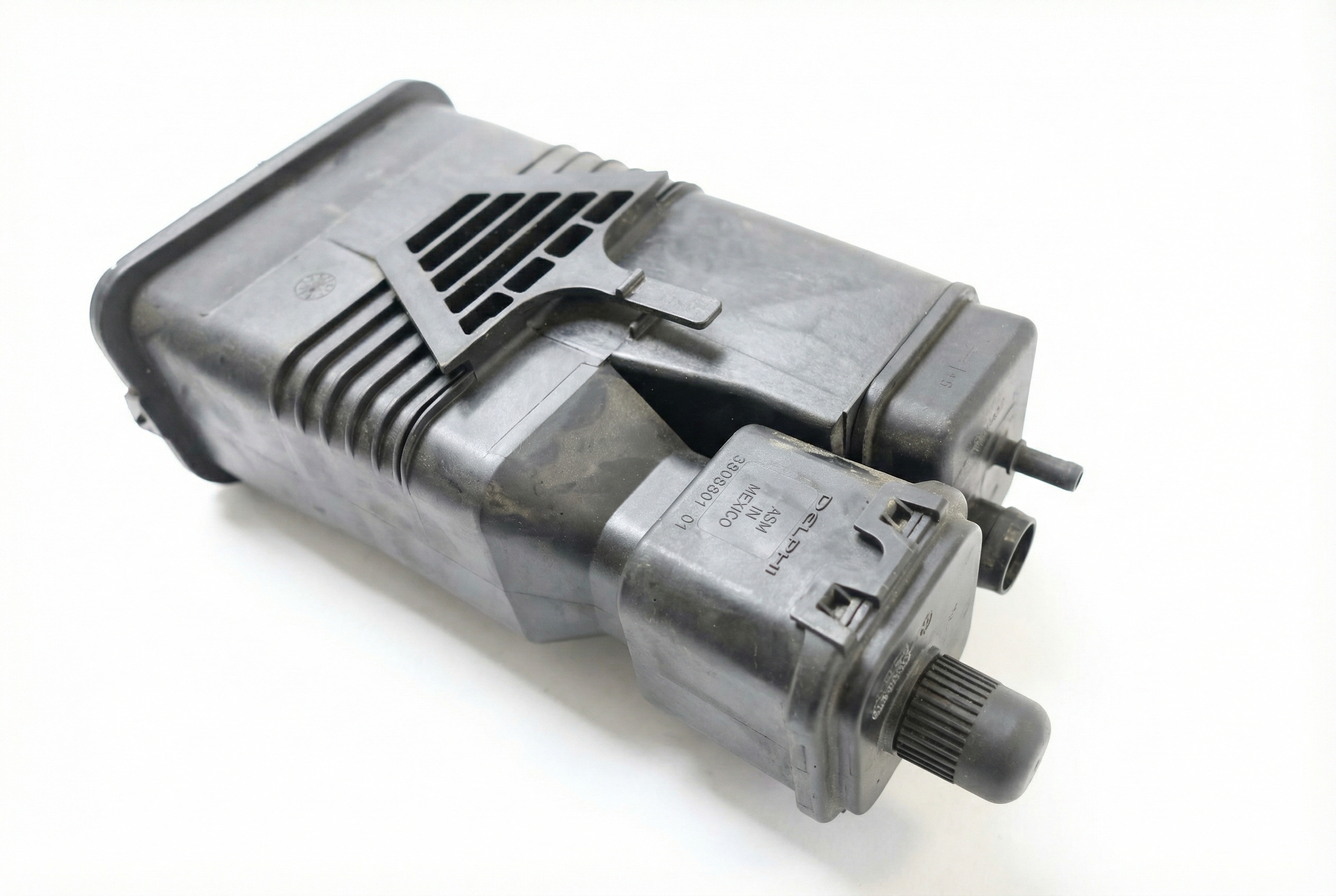
Used OEM Parts in Stock
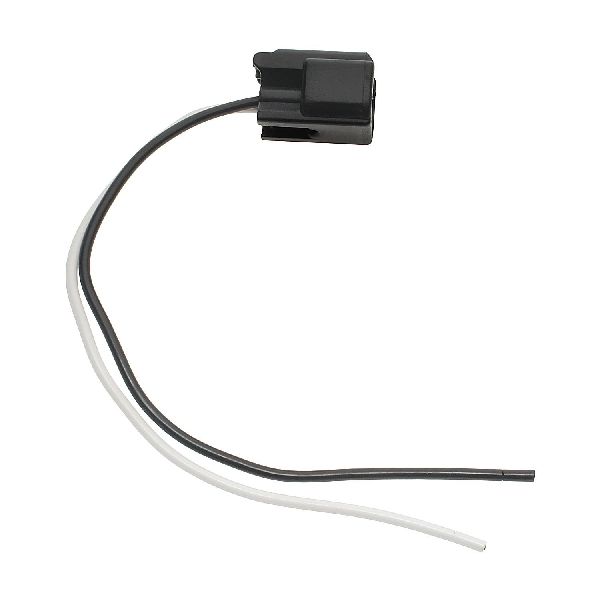
New Aftermarket Parts Available


The information in this article is provided for general reference and educational purposes only. Vehicle specifications, procedures, and part compatibility can vary by production date, trim level, and region. Always consult your vehicle's factory service manual and verify part numbers before purchasing or performing repairs. Safety-critical components such as airbags, seat belts, and braking systems should be installed by a qualified professional.
- Ford FUSION ENERGI:
- 🎬 Helpful Videos
- 🛍️ Shop This Part
- What's Unique About the 2013-2017 Ford FUSION ENERGI
- Diagnostic Flowchart
- Symptoms You May Notice
- Most Likely Causes
- Rare But Worth Checking
- Diagnosis Steps
- Parts You'll Likely Need
- Related Codes That Often Appear With This One
- Technical Service Bulletins (TSBs) & Recalls
- Platform-Specific Known Issues
- Mechanic-Grade Diagnostic Values
- Scan Tool Commands That Help
- Wiring & Ground Locations
- Real Owner Repair Stories
- "I Checked Everything" — The Actual Cause
- When the Usual Fixes Don't Work
- OEM Part Supersession History
- 🎟️ Get 5% Off