

P0496 on 2020-2022 Ford Explorer: EVAP High Purge Flow Causes and Fixes
On a 2020-2022 Ford Explorer, code P0496 is most often caused by a faulty EVAP canister purge valve that is stuck open. Before replacing the valve, it is critical to inspect the wiring harness at connector C1198, as Ford has issued multiple Technical Service Bulletins (TSBs) highlighting this as a common point of failure that can mimic a bad valve.
- P0496 means fuel vapor is flowing into the engine when it shouldn't be.
- Before buying parts, inspect the wiring harness at connector C1198 on the driver's side frame, as this is a known issue on these Explorers.
- The most common failed part is the EVAP canister purge valve, which gets stuck open.
- Symptoms often include a Check Engine Light and difficulty starting the vehicle right after you get gas.
- This is a DIY-friendly repair for many, but careful diagnosis is needed to avoid replacing a perfectly good purge valve.
What's Unique About the 2020-2022 Ford EXPLORER

For this generation of Ford Explorer, Ford has issued multiple Technical Service Bulletins (TSBs) that are critical to diagnosing P0496. TSBs SSM 51247 and SSM 50348 point to a specific wiring harness connector (C1198) as a common failure point causing this code, particularly on the 2.3L engine. This connector is located on the driver's side lower frame area underneath the brake lines near the electric brake booster. Furthermore, TSB SSM 50306 explicitly states that many returned canister purge valves are tested and found to be fully functional, warning technicians against replacing the part without thorough diagnosis using the Ford Diagnosis and Repair System (FDRS) scan tool. This indicates a high likelihood of misdiagnosis, where the wiring is the true fault, not the valve itself.
Diagnostic Flowchart

Tap your situation to follow the diagnostic path that matches what you're seeing on this vehicle.
Symptoms You May Notice
- Check Engine Light (Malfunction Indicator Lamp, MIL) is on
- Difficulty starting the engine, especially after filling the gas tank
- Rough or unstable idle
- Long crank time when starting
- Hesitation or stalling during acceleration [ODI #11675126]
- Slightly reduced fuel economy
- Possible fuel smell
- Buildup of gunk on exhaust tips
- Replacing the EVAP canister purge valve when the actual problem is a wiring fault at connector C1198, as warned in TSB SSM 50306.
- Replacing the gas cap. While a faulty gas cap can cause other EVAP codes, it is not a typical cause for P0496, which indicates flow when none is commanded, not a system leak.
Most Likely Causes

- Faulty EVAP Canister Purge Valve 🔴 High Probability This is the most common failure point for P0496 across most vehicles. The valve can get stuck open, allowing un-commanded vapor flow. Forum users report this as a frequent fix. However, Ford TSB SSM 50306 notes this part is often replaced unnecessarily when the true fault lies elsewhere.
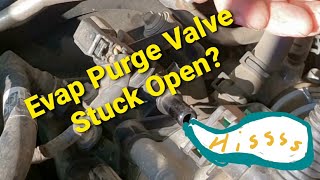
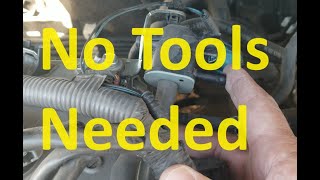
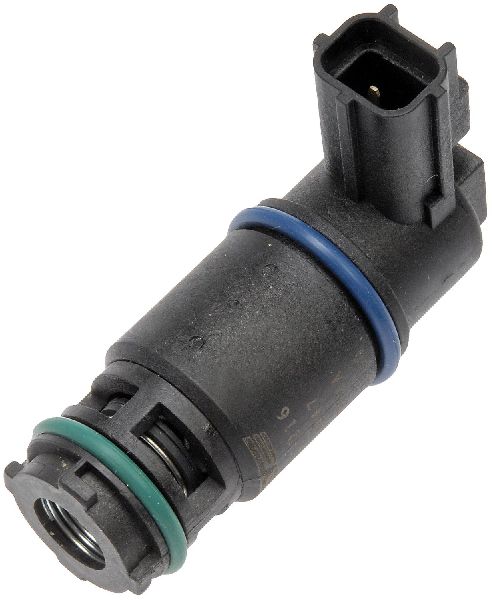
How to confirm: With the engine off, disconnect the purge valve. Try to blow air through it or apply vacuum with a hand pump. If air or vacuum passes through, the valve is stuck open and needs replacement. A mechanic can command the valve closed with a scan tool and use a smoke machine to check for leaks through the valve. A simple DIY test is to remove the hoses, start the car, 🎬 Watch: How to test for a stuck valve without tools. and hold a piece of paper over the inlet; if it's held by suction, the valve is stuck open.
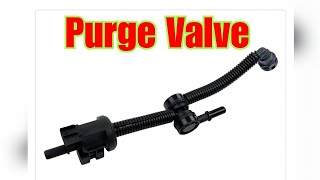
Typical fix: Replace the EVAP canister purge valve assembly.
Est. part cost: $40-$150 - Wiring Harness Issue at Connector C1198 🔴 High Probability Ford identified this specific issue in TSBs SSM 51247 and SSM 50348, especially for the 2.3L engine. The wiring harness connection at connector C1198, located on the driver's side lower frame area underneath the brake lines near the electric brake booster (EBB), can become damaged or corroded, leading to this and other EVAP codes.
How to confirm: Visually inspect the wiring and pins at connector C1198 for damage, corrosion, or loose connections. This should be done before replacing any components. The TSB recommends checking the three voltage reference (VREF) wires at this connector.
Typical fix: Repair the damaged wiring or replace the connector pigtail.
Est. part cost: $20-$50 - Faulty Fuel Tank Pressure (FTP) Sensor ⚪ Low Probability
How to confirm: The FTP sensor's voltage can be monitored with a capable scan tool during various EVAP system states (engine on/off, purge on/off) to see if its readings are logical. An incorrect reading when a vacuum is not present can trigger the code. The sensor reports pressure changes to the PCM, so a faulty sensor can send bad data.
Typical fix: Replace the Fuel Tank Pressure sensor.
Est. part cost: $40-$100
Rare But Worth Checking
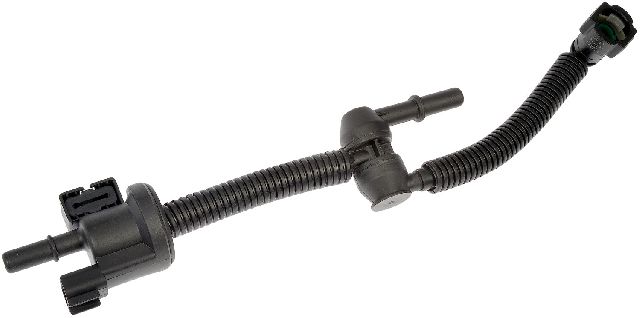
- Faulty EVAP Vent Valve/Solenoid: Located near the charcoal canister, this valve can also fail, though it's less common for this specific code. Some owners have reported needing to replace both the purge and vent valves to fully resolve EVAP issues.
- Leaking EVAP Hoses: A crack or leak in one of the EVAP system hoses can sometimes trigger this code, though it's more commonly associated with leak codes like P0455 or P0456. A smoke test is the best way to find such leaks.
Diagnosis Steps
- Verify the Check Engine Light is on and scan the computer for P0496 and any other related codes.
- Carefully inspect the gas cap to ensure it is tight and the seal is not cracked or worn, though this is an unlikely cause.
- Locate and inspect the wiring harness at connector C1198 on the driver's side lower frame area, as specified in TSBs SSM 51247 and SSM 50348. Look for any signs of corrosion, damage, or loose pins.
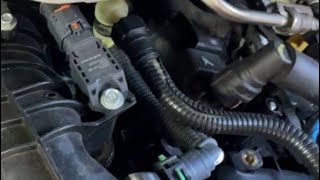
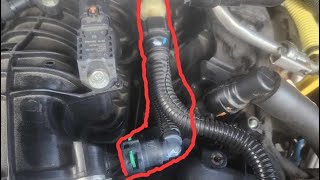
- If the wiring appears intact, locate the EVAP canister purge valve on the engine. It is located near the top of the engine, often under a plastic cover. 🎬 See this step-by-step purge valve replacement walkthrough.
- With the valve disconnected and the engine off, attempt to blow through the valve. If air passes, the valve is stuck open and has failed. It must be replaced.
- If the valve holds pressure, the issue may be electrical. Use a multimeter to check for proper voltage and ground at the purge valve connector when the key is on.
- If the valve and wiring are good, a technician would use a diagnostic tool like the Ford FDRS to perform a 'CPV Check' (Canister Purge Valve Check) as recommended by TSB SSM 50306.
- If no other cause is found, consider testing the Fuel Tank Pressure (FTP) sensor for accurate readings using a scan tool.
Parts You'll Likely Need

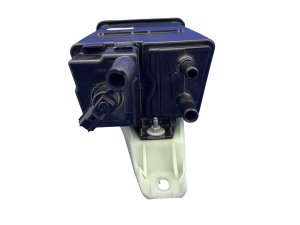
- EVAP Canister Purge Valve
(OEM #FR3Z-9C915-A (Motorcraft CX2500))— This valve is the most frequent component to fail by sticking open, directly causing the P0496 code. Forum members confirm this part number and successful replacement.
Trusted brands: Motorcraft, Bosch, Dorman
OEM price range: $80-$150
Aftermarket price range: $40-$100
Related Codes That Often Appear With This One
- P0451 — This code for 'EVAP Pressure Sensor Range/Performance' often appears with P0496 because both relate to the EVAP system's pressure readings. The TSBs list them together. [SSM 51247, SSM 50348, SSM 50306]
- P0455 — This code indicates a 'Gross EVAP Leak'. It can be triggered alongside P0496 if the system interprets the high flow from a stuck purge valve as a large leak. [SSM 51247, SSM 50348, SSM 50306]
- P0456 — This code indicates a 'Small EVAP Leak'. It can appear with P0496 for similar reasons as P0455, and is also mentioned in the provided TSBs and owner forums. [SSM 51247, SSM 50348, SSM 50306, 18]
- P04F0 — This code relates to 'EVAP System High Pressure Purge Line'. It's directly related to the purge side of the system and is listed in the TSBs as a commonly co-occurring code. [SSM 51247, SSM 50348, SSM 50306]
Technical Service Bulletins (TSBs) & Recalls
- SSM 51247: Notes that P0496 and other DTCs may be due to the wiring harness connection at connector C1198 on 2.3L engines. Advises inspecting the connector and harness for damage or pin fitment issues before replacing parts.
- SSM 50348: Also points to connector C1198 and advises inspection before replacing any components. [NHTSA #10207096]
- SSM 50306: Warns that returned EVAP canister purge valves are often found to be functional and advises against replacement without proper diagnostic tests using the FDRS scan tool. This TSB applies to a wide range of Ford/Lincoln vehicles, including the Explorer and Aviator.
Platform-Specific Known Issues
- Wiring Harness at Connector C1198: Ford has issued multiple Technical Service Bulletins regarding this code. TSBs SSM 51247 and SSM 50348 point to a wiring harness connection at connector C1198 on the driver's side lower frame as a potential cause for P0496 and other EVAP codes, especially on 2.3L models.
- Misdiagnosis Warning from Ford: TSB SSM 50306 cautions that many EVAP canister purge valves returned to Ford under warranty were found to be fully functional, indicating that misdiagnosis is common. It recommends specific scan tool tests before replacing the valve.
- DIY Repair Difficulty: While replacing the purge valve is a common DIY fix, its location on the engine can make it difficult to access. Owners report needing to remove a bracket with four bolts to get enough clearance for the rear connections. The rearmost electrical and hose clips are particularly tough to reach.
Mechanic-Grade Diagnostic Values
- EVAP System Vacuum Detection Threshold — expected: Less than 10 inches of H2O. Failure: If vacuum is detected at more than 10 inches of H2O when the purge valve is commanded closed, it will trigger code P0496.
- Canister Purge Valve Power Supply — expected: Battery Voltage (approx. 12V) at the power feed wire with key on, engine off.. Failure: No voltage indicates a wiring or fuse issue. The purge valve and other EVAP components are powered by fuse F22 in the under-hood fuse box (BJB).
Scan Tool Commands That Help
- Ford Diagnosis and Repair System (FDRS): Full System EVAP Leak Test — As recommended by TSB SSM 50306, this should be performed before replacing parts to verify if a system leak exists. FDRS Location: TOOLBOX > PCM > PCM - Evap Emissions System Test.
- Ford Diagnosis and Repair System (FDRS): EVAP Purge Valve Leak Test (CPV Check) — This specific test, cited in TSB SSM 50306, directly checks the canister purge valve's function to determine if it's leaking, helping to avoid unnecessary replacement. FDRS Location: TOOLBOX > PCM > Evap Emission System Toolbox > CPV Check.
Wiring & Ground Locations

- C1198 — On the driver's side lower frame area, located underneath the brake lines that route near the electric brake booster (EBB).. This connector is a known weak point identified in TSBs SSM 51247 and SSM 51132 for the 2.3L Explorer. Damage or corrosion here can interrupt signals for multiple EVAP components, including the three Voltage Reference (VREF) wires, directly causing P0496 and other codes.
- Fuse F22 (BJB) — In the Battery Junction Box (BJB), also known as the under-hood fuse box.. This fuse supplies power to the Canister Purge Valve, Canister Vent Solenoid, and other EVAP system components. A blown fuse here will disable the system and can set various codes.
- G105 — On the left (driver's) side of the engine compartment.. This is a primary engine compartment ground point. A loose or corroded G105 could potentially cause erratic behavior in various engine sensors and solenoids, including those in the EVAP system that rely on a solid ground reference.
Real Owner Repair Stories
- YouTube video from '2020 Ford Explorer ST P0456, P0496 - Fixed with Purge Valve' (2020 Ford Explorer ST) — Intermittent Check Engine Light with codes P0456 (Small Leak) and P0496.
❌ Tried (didn't work) Multiple system smoke tests were performed, and no leak was ever found.
✅ What actually fixed it The technician removed the purge valve and tested it independently by applying smoke with the solenoid commanded closed. Smoke was observed escaping the valve, confirming it was leaking internally despite the system passing a standard smoke test. Replacing the purge valve fixed the issue. - YouTube video from '2020+ Ford Explorer ST Evap Valve Replacement.' (2020 Ford Explorer ST) — Check Engine Light with code P0456 (Small Leak), which is commonly associated with P0496.
✅ What actually fixed it The owner replaced the EVAP purge valve. The video provides a detailed walkthrough, noting the extreme difficulty in reaching the rear electrical and hose connections without first unbolting and moving an A/C line bracket (two 10mm bolts) for better access.
"I Checked Everything" — The Actual Cause
- In one documented case on a 2020 Explorer ST, the vehicle repeatedly passed full system smoke tests for codes P0456 and P0496. The issue was only found when the technician isolated the purge valve itself and applied smoke directly to it while it was commanded closed; the valve was leaking internally. This indicates that a stuck-open purge valve may not always present as a system leak during a standard smoke test, making direct valve testing critical.
OEM Part Supersession History
FR3Z-9C915-A→FR3Z-9C915-A (no supersession found)— The part number appears to be stable for this application.
Helpful Videos
Used OEM Parts in Stock

New Aftermarket Parts Available


The information in this article is provided for general reference and educational purposes only. Vehicle specifications, procedures, and part compatibility can vary by production date, trim level, and region. Always consult your vehicle's factory service manual and verify part numbers before purchasing or performing repairs. Safety-critical components such as airbags, seat belts, and braking systems should be installed by a qualified professional.
- Ford EXPLORER:
- 🎬 Helpful Videos
- 🛍️ Shop This Part
- What's Unique About the 2020-2022 Ford EXPLORER
- Diagnostic Flowchart
- Symptoms You May Notice
- Most Likely Causes
- Rare But Worth Checking
- Diagnosis Steps
- Parts You'll Likely Need
- Related Codes That Often Appear With This One
- Technical Service Bulletins (TSBs) & Recalls
- Platform-Specific Known Issues
- Mechanic-Grade Diagnostic Values
- Scan Tool Commands That Help
- Wiring & Ground Locations
- Real Owner Repair Stories
- "I Checked Everything" — The Actual Cause
- OEM Part Supersession History
- 🎟️ Get 5% Off