

P0496 on 2013-2017 Ford C-MAX ENERGI: Causes and Fixes for EVAP High Purge Flow
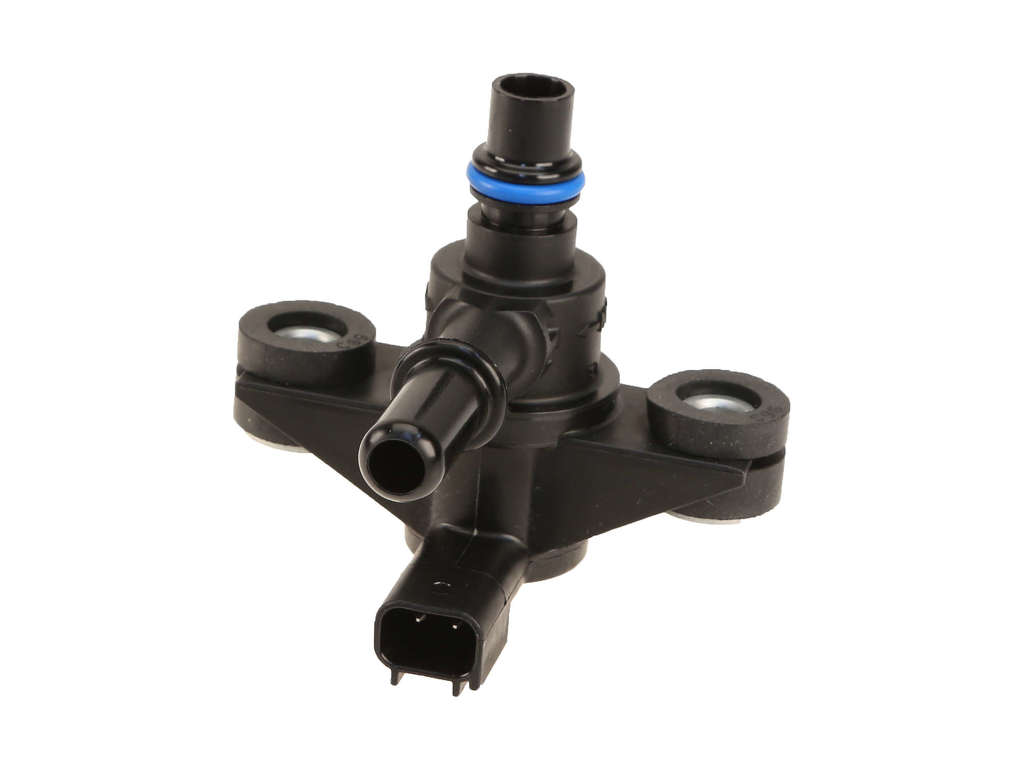
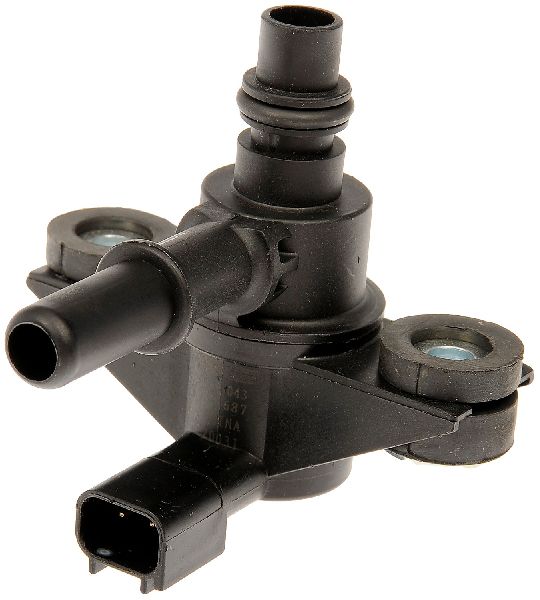
On a 2013-2017 Ford C-MAX ENERGI, code P0496 is almost always caused by a faulty canister purge valve that is stuck open. This allows un-commanded fuel vapors into the engine, leading to symptoms like a rough idle and difficulty starting after refueling. It is a common, relatively simple, and affordable DIY repair, with the part costing between $40 and $80.
- P0496 on your C-MAX ENERGI almost certainly means the canister purge valve is stuck open.
- The most telling symptom, besides the check engine light, is difficulty starting the car right after you finish refueling.
- The most reliable diagnostic is to start the engine and check for vacuum at the purge valve's outlet port; there should be none.
- Replacing the purge valve (OEM Part # AU5Z-9C915-E) is a simple, beginner-friendly DIY job that usually requires only basic hand tools and takes less than 30 minutes.
What's Unique About the 2013-2017 Ford C-MAX ENERGI
The Ford C-MAX shares its hybrid powertrain and many components with the Ford Fusion Hybrid and Lincoln MKZ Hybrid. Ford has issued technical service bulletins (TSBs) for these platforms concerning a pattern of EVAP codes, including P0496 and P1450, often caused by a stuck-open canister purge valve (CPV). This indicates a known issue with the valve on these vehicles, sometimes leading to fuel tank deformation due to excessive vacuum if left unaddressed. The issue was so prevalent on the related Ford Focus that it prompted a safety recall (18S32).
Diagnostic Flowchart
Tap your situation to follow the diagnostic path that matches what you're seeing on this vehicle.
Symptoms You May Notice
- Check Engine Light is on
- Rough, unstable, or surging idle
- Difficulty starting or stalling immediately after refueling 🎬 See why Ford vehicles often struggle to start after refueling.
- Slightly reduced fuel economy
- A faint fuel odor near the engine bay
- Audible 'farting' or vacuum noises from the fuel tank area as it's being pulled into a vacuum.
- Replacing the gas cap. The C-MAX has a capless fuel filler system. While a dirty or faulty seal on the filler neck flap can cause EVAP leak codes (like P0455 or P0457), it is not a typical cause for P0496, which specifically points to flow when none is commanded.
- Replacing the charcoal canister. While overfilling the fuel tank can saturate the canister with raw fuel and eventually damage it, this is an expensive and unlikely fix for an isolated P0496 code. The purge valve should always be diagnosed first.
Most Likely Causes
- Faulty Canister Purge Valve (Solenoid) 🔴 High Probability This is a very common failure point across many Ford vehicles of this era using this style of valve, as acknowledged in TSBs and recalls for similar platforms. The valve's internal seal can degrade or it can get stuck open due to internal wear or debris, allowing constant, un-commanded vacuum to the fuel tank.
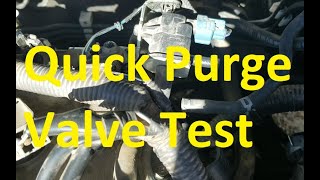
How to confirm: With the engine running at idle, disconnect the vapor hose leading from the purge valve to the intake manifold. There should be no vacuum present at the valve's port since it is normally closed. If you feel suction with your finger or a vacuum gauge shows a reading, the valve is stuck open and has failed. This is the definitive test. 🎬 Watch: How to test your purge valve without any tools. A scan tool can also be used to monitor the Fuel Tank Pressure (FTP) sensor; if vacuum builds with the purge valve commanded off, it confirms the leak.
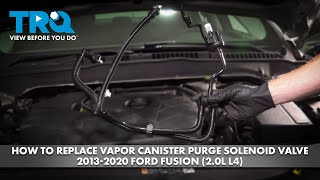
Typical fix: Replace the canister purge valve. On the 2.0L Hybrid engine, it is located on top of the intake manifold and is a straightforward replacement, often taking less than 15-30 minutes with basic tools. 🎬 Watch this step-by-step guide to replacing the purge valve.
Est. part cost: $40-$80
Rare But Worth Checking
- Leaking EVAP System Hose: A crack or split in one of the EVAP hoses, particularly between the purge valve and the intake manifold, can cause a vacuum leak that the system may interpret as improper flow. This is less common than a failed valve for this specific code.
- Faulty Fuel Tank Pressure (FTP) Sensor: The FTP sensor is what the computer uses to detect the unwanted vacuum. If the sensor provides an incorrect reading (e.g., showing a vacuum when there is none), it can falsely trigger the P0496 code. Diagnosis requires a scan tool to observe live data.
- Faulty Canister Vent Valve/Solenoid: The vent valve is normally open to allow air into the tank. If it gets stuck closed, it can trap vacuum in the system when the purge valve operates, sometimes contributing to or being misdiagnosed as a P0496, although it more commonly sets a P1450 code.
Diagnosis Steps
- Verify the code with an OBD-II scanner.
- Visually inspect the capless fuel filler neck for debris and ensure the flap is sealing correctly. Clean it with a rag if necessary.
- Locate the canister purge valve on the top of the engine's intake manifold. It will have an electrical connector and two vapor hoses attached.
- Start the engine and let it idle. Carefully disconnect the electrical connector from the purge valve.
- Carefully disconnect the vapor hose that runs from the purge valve's outlet port to the engine intake manifold.
- Place your finger over the port on the valve itself where the hose was connected. If you feel any suction (vacuum), the valve is internally stuck open and must be replaced. This is the most common failure and confirms the diagnosis.
- If no vacuum is present, the issue may be intermittent or could lie with the wiring or the Fuel Tank Pressure (FTP) sensor. A more advanced scan tool would be needed to command the valve open and closed while monitoring FTP sensor voltage to verify electrical function and sensor accuracy.
- If the valve and sensor function correctly, a smoke test of the EVAP system is the most effective way to find hard-to-see cracks or leaks in the vapor lines.
Parts You'll Likely Need
- Vapor Canister Purge Valve
(OEM #AU5Z-9C915-E)— This valve is the most frequent point of failure for a P0496 code, as it gets stuck open and allows un-commanded fuel vapor flow.
Trusted brands: Motorcraft (OEM), Dorman, Standard Motor Products
OEM price range: $60-$90
Aftermarket price range: $40-$70
Related Codes That Often Appear With This One
- P1450 — Stands for 'Unable to Bleed Up Fuel Tank Vacuum.' This code is frequently seen with P0496 because a stuck-open purge valve creates a constant vacuum on the fuel tank that the system cannot release. They are often caused by the same failed part.
- P0455/P0456 — Indicates a large or small EVAP leak. While seemingly contradictory, a stuck-open purge valve can sometimes be interpreted by the PCM as a major leak, or the constant vacuum can cause other seals in the system to fail over time, creating a secondary leak.
- P0172/P0175 — Indicates 'System Too Rich.' Un-metered fuel vapors entering the engine through the stuck purge valve can enrich the air-fuel mixture beyond what the PCM can compensate for, causing the engine to run rich.
Technical Service Bulletins (TSBs) & Recalls
- SSM 48301: Notes that P0496 can appear with other EVAP codes on similar hybrid platforms and directs technicians to a specific diagnostic pinpoint test.
- TSB 19-2207: Specifically for 2013-2017 C-MAX, identifies a faulty canister purge valve (CPV) as the cause for various EVAP codes and recommends replacing the valve and updating PCM software.
Platform-Specific Known Issues
- Ford has a recall (18S32 / NHTSA 18V735) for 2012-2018 Ford Focus vehicles with 2.0L engines for a stuck canister purge valve that could cause excessive vacuum, deforming the fuel tank and potentially leading to an engine stall. While the C-MAX was not officially included in this specific recall, it uses a similar engine and the same failure-prone part, exhibiting the exact same symptoms.
- TSB 19-2207 was issued for 2013-2017 C-MAX models for codes P1450, P0456, etc., explicitly stating the canister purge valve's sealing capability could degrade and instructing technicians to replace the valve and update the PCM software. This directly confirms the known issue on the C-MAX platform.
- TSB #SSM 48301 mentions P0496 as part of a group of EVAP-related DTCs on 2013-2020 Fusion/MKZ Hybrid vehicles, which share the same platform, pointing to a known pattern of issues and directing technicians to specific diagnostic tests.
Mechanic-Grade Diagnostic Values
- Fuel Tank Pressure (FTP) Sensor Voltage — expected: ~2.5 Volts at normal atmospheric pressure (tank not in vacuum or under pressure).. Failure: A voltage reading significantly higher than 2.5V (e.g., closer to 4.5V) with the engine running and purge valve commanded closed indicates an unwanted vacuum, confirming the P0496 condition. A reading near 0.5V indicates positive pressure.
- Canister Purge Valve Solenoid Resistance — expected: Approximately 14-18 Ohms.. Failure: A reading of infinite resistance (open circuit) or zero resistance (short circuit) indicates a failed solenoid coil.
Scan Tool Commands That Help
- FORScan: EVAP Purge Solenoid Valve (VMV) Duty Cycle & Fuel Tank Pressure (FTP) PID — This is a definitive bidirectional test. Command the purge valve to 0% (closed) at idle. While monitoring the FTP PID, if the pressure value begins to drop (indicating a vacuum is forming), it confirms the purge valve is physically stuck open and leaking vacuum when it should be sealed.
Wiring & Ground Locations
- Canister Purge Valve Connector (C1580) — On the canister purge valve itself, located on the top of the intake manifold.. This is the primary connection point to test for power and the PCM control signal. Pin 2 (typically Violet/Orange wire) should have battery voltage with the key on. Pin 1 (typically Yellow/Blue wire) is the ground-side control from the PCM.
- G105 / G108 — G105 is on the left side of the engine compartment. G108 is on the top of the transmission.. These are primary engine compartment ground points. A corroded or loose ground at these locations can cause erratic behavior in sensors and solenoids, including the purge valve, potentially leading to incorrect operation or false codes. Checking ground integrity is a crucial step if electrical issues are suspected.
Real Owner Repair Stories
- Ford Escape Forum User (2019 Ford Escape SEL (similar platform/parts)) — Intermittent P0496 check engine light, no other symptoms.
❌ Tried (didn't work) Replacing the canister purge valve.
✅ What actually fixed it The issue was suspected to be a faulty Fuel Tank Pressure (FTP) sensor. The owner noted that since the sensor is on top of the fuel tank, it's a lengthy job to replace and was considering putting it off. This highlights that a new P0496 after a purge valve replacement can point to the FTP sensor. - Ford EcoSport Reddit User (2021 Ford EcoSport 2.0L (similar platform/parts)) — P0496 code, car would not start after refueling.
❌ Tried (didn't work) Replacing the canister VENT valve (located near the charcoal canister), which was misidentified as the purge valve.
✅ What actually fixed it The user discovered there are two valves. The P0496 code was ultimately resolved by replacing the correct canister PURGE valve located in the engine bay. This story emphasizes the common confusion between the 'purge' and 'vent' valves.
"I Checked Everything" — The Actual Cause
- In some cases reported by technicians, a P0496 and/or P1450 code can be present even if a smoke test shows no leaks and the purge valve has been replaced. The root cause was found to be a partial blockage in the EVAP vapor line running from the charcoal canister to the purge valve. Debris from a slowly deteriorating charcoal canister had clogged the line, restricting flow and causing the FTP sensor to register a vacuum under certain conditions, mimicking a stuck-open valve. The fix required blowing out the vapor line and replacing the charcoal canister to prevent recurrence.
OEM Part Supersession History
AU5Z-9C915-A, -B, -C, -D→AU5Z-9C915-E— Ford has released multiple revisions of this purge valve to address the high failure rate of the internal seal. Each supersession represents an attempt to improve the part's durability and prevent it from sticking open.
Heads up: The Motorcraft part number for AU5Z-9C915-D was CX-2409. The latest OEM part, AU5Z-9C915-E, corresponds to Motorcraft part number CX-2634. While physically interchangeable, it is always recommended to use the latest revision (AU5Z-9C915-E / CX-2634) to get the most updated design.
Model Year Variations Within This Range
- 2013-2017: While the core hardware remained consistent, Ford issued TSB 19-2207 which instructed dealers to not only replace the faulty canister purge valve but also to update the Powertrain Control Module (PCM) software. This software update likely changed the parameters for the EVAP monitor, making it better able to detect a failing valve or less sensitive to minor fluctuations.
Helpful Videos
Used OEM Parts in Stock
New Aftermarket Parts Available


The information in this article is provided for general reference and educational purposes only. Vehicle specifications, procedures, and part compatibility can vary by production date, trim level, and region. Always consult your vehicle's factory service manual and verify part numbers before purchasing or performing repairs. Safety-critical components such as airbags, seat belts, and braking systems should be installed by a qualified professional.
- Ford C-MAX ENERGI:
- 🎬 Helpful Videos
- 🛍️ Shop This Part
- What's Unique About the 2013-2017 Ford C-MAX ENERGI
- Diagnostic Flowchart
- Symptoms You May Notice
- Most Likely Causes
- Rare But Worth Checking
- Diagnosis Steps
- Parts You'll Likely Need
- Related Codes That Often Appear With This One
- Technical Service Bulletins (TSBs) & Recalls
- Platform-Specific Known Issues
- Mechanic-Grade Diagnostic Values
- Scan Tool Commands That Help
- Wiring & Ground Locations
- Real Owner Repair Stories
- "I Checked Everything" — The Actual Cause
- OEM Part Supersession History
- Model Year Variations Within This Range
- 🎟️ Get 5% Off