

P0496 on 2013-2019 Chevrolet Trax: EVAP High Purge Flow Causes and Fixes
On a 2013-2019 Chevy Trax, code P0496 is almost always caused by a failed EVAP canister purge valve that is stuck open or has a torn internal diaphragm. This allows un-commanded fuel vapor into the engine, causing a rough idle and hard starting after refueling. It is a common, inexpensive, and easy DIY repair, with the part costing between $25 and $60. Before purchasing, owners should check with a GM dealer for eligibility under special coverage programs that may provide a free replacement.
- P0496 on a 2013-2019 Trax almost always means the EVAP purge valve has failed and is stuck open.
- Symptoms include a rough idle, trouble starting after getting gas, and a Check Engine Light.
- This is a very common failure on the 1.4L Turbo engine, and GM has issued warranty extensions for some model years. Check with a dealer before buying the part.
- The fix is simple, inexpensive, and highly accessible for a DIY repair, requiring minimal tools.
- Do not misdiagnose the issue by replacing the gas cap or the incorrect (vent) solenoid.
What's Unique About the 2013-2019 Chevrolet TRAX

The 1.4L turbocharged engine used in the first-generation Chevrolet Trax and its platform mates—the Buick Encore, Chevrolet Sonic, and Chevrolet Cruze—is well-known for this specific issue. The problem is so common that General Motors issued several Special Coverage programs (similar to extended warranties) for the purge valve on certain model years due to a high failure rate of the original part. While P0496 can occur on any vehicle, its high frequency on this platform points to a specific component failure rather than a complex diagnostic problem.
Diagnostic Flowchart

Tap your situation to follow the diagnostic path that matches what you're seeing on this vehicle.
Symptoms You May Notice
- Check Engine Light is on
- Rough or unstable idle
- Difficulty starting the engine, especially after refueling. The engine may crank for an extended period (10-15 seconds) before finally starting.
- Reduced fuel economy
- Hesitation or poor engine performance.
- "Engine Power Reduced" message on the dash.
- A slight fuel odor may be noticeable.
- Replacing the gas cap. A loose or faulty gas cap typically causes EVAP leak codes like P0442 or P0455, not a high purge flow code like P0496.
- Replacing the EVAP Vent Solenoid. The vent solenoid is located near the charcoal canister by the fuel tank and controls fresh air entering the system. The purge solenoid/valve is the component under the hood that controls vapor flow to the engine and is the cause of P0496.
Most Likely Causes

- Faulty EVAP Canister Purge Valve/Solenoid 🔴 High Probability This specific part has a high failure rate on GM's 1.4L turbo engine, leading to GM issuing extended warranties for it on some models. The internal rubber diaphragm is known to tear or rupture, or the valve can get stuck open with carbon deposits or debris. This failure is confirmed in multiple owner and mechanic videos where the old part is cut open, revealing a torn diaphragm.
How to confirm: The most common test is to disconnect the purge valve's electrical connector and the hose leading to the intake manifold. With the engine off, try to blow through the valve from the inlet side (often marked with an arrow). If any air passes through, the valve is stuck open and faulty. A second method is to start the engine with the EVAP line disconnected from the valve and feel the port for suction with your finger; if vacuum is present with the valve electrically disconnected, it is bad.
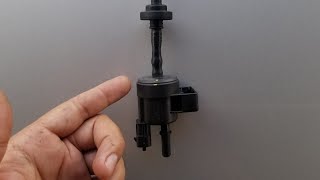
Typical fix: Replace the EVAP canister purge valve assembly. It is located on the back of the intake manifold and is typically held by a simple bracket and two quick-connect hoses and an electrical connector. The repair takes less than 15 minutes and requires no special tools. 🎬 Watch: A quick 2015-2019 Trax purge valve replacement walkthrough.
Est. part cost: $25-$85
Rare But Worth Checking
- Faulty Fuel Tank Pressure (FTP) Sensor: The FTP sensor is what the ECM uses to detect the unwanted vacuum. If the sensor is faulty and sending incorrect readings, it can trigger the P0496 code even if the purge valve is working correctly. This is far less common than a failed purge valve.
- Short in the Purge Valve Control Circuit or Blown Fuse: A damaged wire or poor connection could prevent the purge valve from closing when commanded. On related models like the Cruze, a specific fuse in the under-hood fuse box powers the EVAP system; a blown fuse can mimic valve failure and should be checked.
- Customer Driving Cycle: A GM Technical Service Bulletin (PIP5284A) notes that if the code persists after diagnostics, the customer's driving habits could be a contributing factor, though it does not specify how. This is an unusual edge case to be considered only after the purge valve has been confirmed to be good.
- Clogged EVAP Canister: If a faulty purge valve is left unrepaired for too long, the charcoal canister can become saturated with liquid fuel, leading to blockage and other EVAP codes. This is usually a secondary failure caused by the P0496 fault.
Diagnosis Steps
- Verify the code with an OBD-II scanner.
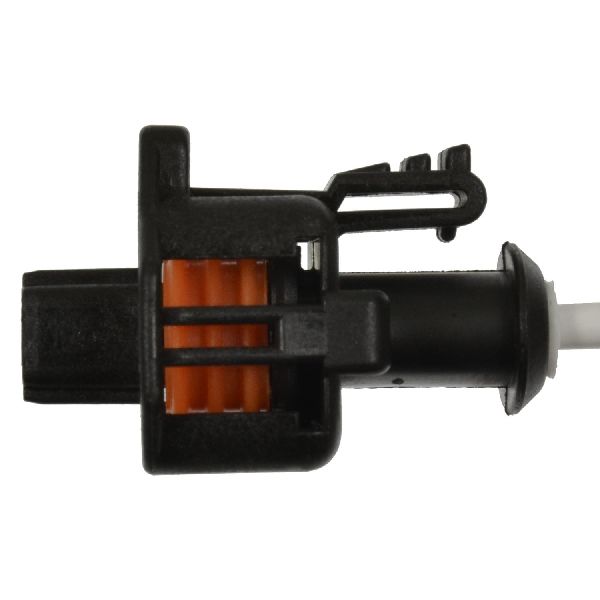
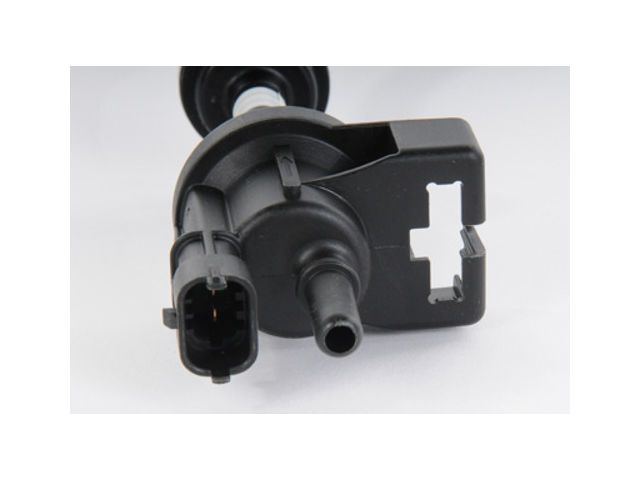
- Locate the EVAP canister purge valve on the rear of the intake manifold. It is a small black plastic valve with two lines and one electrical connector.
- With the engine off, disconnect the electrical connector from the purge valve.
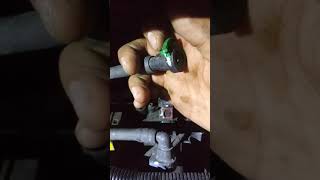
- Disconnect the EVAP lines from the valve. The connectors have small clips (sometimes green or blue) that need to be released. Be gentle, as the plastic can become brittle.
- Attempt to blow air through the valve from the inlet side (the side coming from the firewall/canister). No air should pass through. If you can blow through it, the valve is stuck open and must be replaced. 🎬 See how to troubleshoot and repair the P0496 code. Some mechanics note that sucking on the port may also reveal the leak.
- If the valve is sealed, the problem may be electrical. Check the EVAP system fuse in the under-hood fuse box. A wiring diagram may be needed to check for voltage at the control circuit.
- If the valve, fuse, and wiring are good, the issue could be a faulty Fuel Tank Pressure (FTP) sensor, though this is much less common.
Parts You'll Likely Need

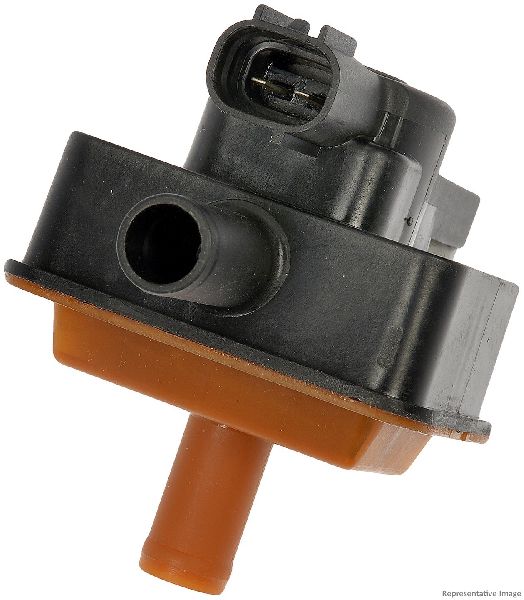
- EVAP Vapor Canister Purge Valve
(OEM #55573017)— This is the overwhelming cause of P0496 on the 1.4L Trax. It fails by sticking open or via a torn internal diaphragm, allowing fuel vapor to flow into the engine when it is not commanded.
Trusted brands: ACDelco (GM Genuine), Dorman (e.g., 911-409, 911-430), Standard Motor Products (e.g., CP780, PV704)
OEM price range: $30-$55
Aftermarket price range: $20-$45
Related Codes That Often Appear With This One
- P0171 — System Too Lean. A stuck-open purge valve creates a vacuum leak, allowing un-metered fuel vapors into the intake manifold, which can cause the engine to run lean.
- P0300 — Random/Multiple Misfire Detected. The lean condition and unstable idle caused by the vacuum leak can lead to engine misfires.
- P0299 — Turbocharger Underboost. A significant vacuum leak from a stuck purge valve can affect the intake manifold pressure, potentially contributing to an underboost condition. 🎬 Watch: Diagnosing multiple codes including P0300, P0171, and P0496.
- P0442 — EVAP System Small Leak Detected. While less common, a faulty purge valve can sometimes also be interpreted by the system as a leak. The owner complaint for ODI #11710113 shows these codes appearing together, and TSB N232395300 also lists it as a possible related code.
Technical Service Bulletins (TSBs) & Recalls
- PIP5284A: Advises dealers that if P0496 continues to set after normal diagnostics, the customer's driving cycle may be a contributing factor. This TSB covers 2013-2019 Trax and Encore models.
- PIP5284: An earlier bulletin from 2015 instructing technicians to contact GM Technical Assistance for persistent P0496 codes on 2013-2015 models, indicating it was a known issue early on.
- N232395300: Special Coverage bulletin extending the warranty on the purge valve to 15 years/150,000 miles for certain 2020 models, including the Trax. It notes that DTCs P0496, P0442, P0455, P0171, or P0174 may lead to purge valve replacement under this coverage.
Platform-Specific Known Issues
- GM has issued Special Coverage adjustments for this part on vehicles related to the Trax. Owners should check with a Chevrolet dealer with their VIN to see if their specific vehicle is covered before purchasing the part. Known programs include:
- Special Coverage N232395300: Covers certain 2020 Trax models for 15 years or 150,000 miles.
- Special Coverage N192210240: Covers certain 2016-2018 models for 10 years/120,000 miles.
- An owner of a 2019 Trax reported experiencing P0496 along with multiple other codes (P0171, P0299, P0300, P0442, P0449) leading to rough running and an 'Engine Power Reduced' warning.
- A video by a mechanic shows cutting open the failed valve from a 1.4L engine, clearly showing a tear in the rubber diaphragm as the point of failure.
Mechanic-Grade Diagnostic Values
- EVAP Canister Purge Valve Solenoid Coil Resistance — expected: 15 to 30 Ohms is a general range for many vehicles. A specific test on a similar GM 1.4L engine part showed 28 Ohms.. Failure: A reading of 0 Ohms indicates a short, while an infinite (OL) reading indicates an open circuit. A value far outside the expected range suggests a failing coil.
- Fuel Tank Pressure (FTP) Sensor Voltage (Key On, Engine Off) — expected: Approximately 1.5 Volts (atmospheric pressure). A normal range is typically 1.4V to 1.6V.. Failure: With the engine running and purge commanded off, a voltage climbing towards 2.0V or higher indicates an unwanted vacuum is being pulled, strongly suggesting a leaking purge valve.
- Fuel Tank Pressure (FTP) Sensor (Scan Tool Data) — expected: -0.5 to +0.5 in. H2O (-0.9 to +0.9 mm Hg) at idle with the purge valve commanded closed.. Failure: If the pressure drops into a vacuum (a negative value larger than -0.5 in. H2O) with the purge valve electrically disconnected, the valve is mechanically stuck open.
Scan Tool Commands That Help
- GDS2 / Tech2 (or equivalent professional scanner): EVAP Purge/Seal — This function allows a technician to command the EVAP vent solenoid to close (seal the system) while monitoring the Fuel Tank Pressure (FTP) sensor. With the purge valve commanded OFF, if the FTP sensor shows a vacuum building, it confirms the purge valve is leaking. This is a definitive, non-invasive test.
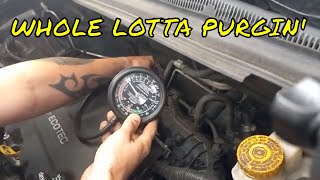
- GDS2 / Tech2 (or equivalent professional scanner): EVAP Purge Solenoid Valve Test — This allows the technician to command the purge valve on and off to verify electrical circuit integrity and solenoid function. It can be used in conjunction with a vacuum gauge or by listening for the solenoid to click.
Wiring & Ground Locations
- Purge Valve Connector — On the EVAP purge valve itself, located on the rear of the intake manifold.. This 2-pin connector provides power and ground control from the ECM. A poor connection, corrosion, or damaged wire here can cause a P0443 (circuit code) but could also potentially prevent the valve from closing, contributing to a P0496. The connector has a red safety lock tab that must be pulled back before disconnecting.
- G103 / G105 — G103 is often located on the cowl, above the brake booster. G105 is at the left front of the engine compartment. On similar GM platforms, a primary engine block ground is on the left front of the engine block, part of the main negative battery cable harness.. The Engine Control Module (ECM) relies on a solid ground connection for accurate sensor readings and actuator control. A poor engine or chassis ground can cause erratic behavior in any system, including the EVAP purge valve control, potentially leading to incorrect operation and codes.
Real Owner Repair Stories
- Chevrolet Forum user 'TrailBlazer' (Unknown year Chevrolet) — Check Engine Light with code P0496.
❌ Tried (didn't work) Replaced the purge solenoid valve (BWD brand), which fixed the code for two months before it returned.
✅ What actually fixed it The user replaced the purge valve a second time (using an OEM ACDelco part) but also installed an inline fuel filter on the hose leading *to* the purge valve. The theory was that debris from the charcoal canister was causing the new valves to fail prematurely. This modification solved the recurring problem. - YouTube video by 'The Car Doctor' (2017 Chevy Trax Premier AWD) — Hard starting after refueling, illuminated CEL, 'hot engine' warning on dash.
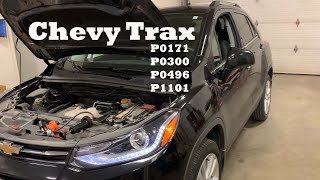
✅ What actually fixed it Diagnosis using an XTOOL scanner confirmed a leaking purge valve. The valve was physically tested after removal and found to be stuck open. Replacing the EVAP purge valve (solenoid) resolved all symptoms and codes (P0171, P0300, P0496, P1101).
OEM Part Supersession History
Unknown, multiple revisions exist→55573017 (ACDelco GM Genuine)— Part improvement to address high failure rates.
Heads up: While many aftermarket versions exist (e.g., Dorman 911-409), some owners report that only the OEM ACDelco part provides a long-term fix. Some replacement parts may have plastic components where the original had metal.
Helpful Videos
Used OEM Parts in Stock


New Aftermarket Parts Available



The information in this article is provided for general reference and educational purposes only. Vehicle specifications, procedures, and part compatibility can vary by production date, trim level, and region. Always consult your vehicle's factory service manual and verify part numbers before purchasing or performing repairs. Safety-critical components such as airbags, seat belts, and braking systems should be installed by a qualified professional.
- Chevrolet TRAX:
- 🎬 Helpful Videos
- 🛍️ Shop This Part
- What's Unique About the 2013-2019 Chevrolet TRAX
- Diagnostic Flowchart
- Symptoms You May Notice
- Most Likely Causes
- Rare But Worth Checking
- Diagnosis Steps
- Parts You'll Likely Need
- Related Codes That Often Appear With This One
- Technical Service Bulletins (TSBs) & Recalls
- Platform-Specific Known Issues
- Mechanic-Grade Diagnostic Values
- Scan Tool Commands That Help
- Wiring & Ground Locations
- Real Owner Repair Stories
- OEM Part Supersession History
- 🎟️ Get 5% Off