

P0496 on 2004-2011 Chevrolet Aveo: EVAP High Purge Flow Causes and Fixes
On a 2004-2011 Aveo, code P0496 is almost always caused by a stuck-open EVAP canister purge valve. This is a simple, inexpensive fix, typically costing $25-$50 for an aftermarket part. The most telling symptom is difficulty starting the engine right after you get gas.
- P0496 on your Aveo almost certainly means you need a new EVAP canister purge valve
What's Unique About the 2004-2011 Chevrolet Aveo
The Chevrolet Aveo exhibits a classic failure pattern for this code that is very common across many General Motors vehicles. The primary symptom of a hard start immediately after refueling is a tell-tale sign of a stuck-open EVAP purge valve. This happens because when you fill the tank, a large volume of fuel vapor is forced into the EVAP canister. A stuck-open purge valve then allows this raw vapor to be sucked directly into the intake manifold, creating a rich fuel mixture that floods the engine and makes it difficult to start. While the code can have other causes, on this specific platform, the diagnosis is often straightforward and points directly to this single, common component.
Generation note: The 2004-2011 year range covers the entire first generation of the Chevrolet Aveo, including the initial T200 models and the facelifted T250 models (starting in 2007 for the sedan and 2009 for the hatchback). The 1.6L E-TEC II engine and the associated EVAP system design are consistent across this generation, meaning the causes and fixes for P0496 are the same for all years in this range.
Symptoms You May Notice
- Difficulty starting the engine, especially right after refueling. The engine may crank for an extended period before finally starting.
- Rough or erratic idle, particularly after starting.
- Engine may sputter or feel like it's misfiring immediately after a fill-up.
- Illuminated Check Engine Light.
- A faint smell of fuel may be noticeable.
- Hesitation when accelerating, especially under load or up hills.
- Replacing the EVAP Canister Vent Valve instead of the Purge Valve. The vent valve is located near the gas tank, while the purge valve (the common failure) is in the engine bay. P0496 specifically points to a purge flow issue, making the purge valve the primary suspect.
- Replacing the charcoal canister. The canister itself rarely fails in a way that causes this specific code. It is more likely to be the valves that control flow in and out of it, or the canister is degrading and sending debris to the valves.
Most Likely Causes
- Faulty EVAP Canister Purge Valve (Solenoid) 🔴 High Probability This is a very common failure item on many GM vehicles of this era. The valve gets stuck open, allowing un-commanded engine vacuum to constantly pull fuel vapors from the charcoal canister. Sometimes, small bits of charcoal from an aging canister can break loose and get lodged in the valve, causing it to stick.
How to confirm: With the engine off, disconnect the EVAP line that runs from the purge valve to the intake manifold. Try to blow through the valve; if any air passes, it is stuck open and faulty. A more definitive test is to start the engine, disconnect the electrical connector from the valve, and place your finger over the inlet port (from the canister). If you feel any suction (vacuum), the valve is stuck open and must be replaced. 🎬 Watch: Quick test for a stuck open purge valve
Typical fix: Replacement of the EVAP canister purge valve. It is located on the intake manifold and is a straightforward replacement held by one bolt and two hose connections.
Est. part cost: $25-$75
Rare But Worth Checking
- Faulty Gas Cap: While a loose or faulty gas cap more commonly causes codes for small or large EVAP leaks (P0442, P0455), a damaged seal could potentially contribute to incorrect pressure readings. It's the easiest and cheapest thing to check first.
- Cracked or Disconnected EVAP Hoses: A crack in one of the EVAP lines, particularly between the purge valve and the intake manifold, could cause a vacuum leak that might trigger this code. A visual inspection and/or smoke test can identify leaks. 🎬 See: How to diagnose GM EVAP problems
- Faulty EVAP Canister Vent Valve: This valve, located near the charcoal canister under the car, is normally open and closes to seal the system for testing. If it gets stuck closed, it can cause abnormal vacuum levels in the system when the purge valve opens, potentially confusing the system's pressure readings.
- Faulty Fuel Tank Pressure (FTP) Sensor: The FTP sensor is what the computer uses to detect the vacuum in the EVAP system. If the sensor provides an incorrect reading, the computer may believe there is flow when there isn't. This is an uncommon cause.
- Deteriorated Charcoal Canister: Over time, the charcoal canister can degrade, sending small particles of charcoal into the EVAP lines. These particles can travel to the purge valve and cause it to stick open, leading to repeat failures. One owner on a Chevrolet forum reported adding an in-line fuel filter before the new purge valve to prevent this from happening again.
Technical Service Bulletins (TSBs) & Recalls
Manufacturer service bulletins for similar GM platforms provide additional insight into persistent P0496 issues. For instance, TSB Bulletin #PIP6037A notes that this code can fail due to damaged purge solenoid valve O-rings. Additionally, if the code continues to set after standard diagnostics, TSB Bulletin #PIP5284A suggests that the customer's specific drive cycle may be contributing to the concern.
Diagnosis Steps
- Confirm the most common symptom: Does the car have trouble starting immediately after refueling? If yes, the purge valve is highly suspect.
- Check the gas cap. Ensure it is tight and the seal is not cracked or damaged. A loose cap is a common cause of many EVAP codes.
- Locate the EVAP Canister Purge Valve on the engine's intake manifold. It will have two hoses and an electrical connector.
- Perform a functional test: With the engine running, disconnect the electrical connector from the purge valve. Disconnect the hose coming from the charcoal canister (the inlet side) and place your finger over the port on the valve. If you feel any suction, the valve is stuck open and is faulty. A properly functioning valve should have no vacuum flow when it is not electrically commanded to open.
- If the valve tests good, visually inspect all accessible EVAP hoses for cracks, brittleness, or loose connections between the engine, purge valve, and the line running back to the charcoal canister.
- If no issues are found, the next step would be to test the EVAP Canister Vent Valve (near the gas tank) and the Fuel Tank Pressure sensor, which may require a professional scan tool and smoke machine for proper diagnosis.
Parts You'll Likely Need
- EVAP Canister Purge Valve
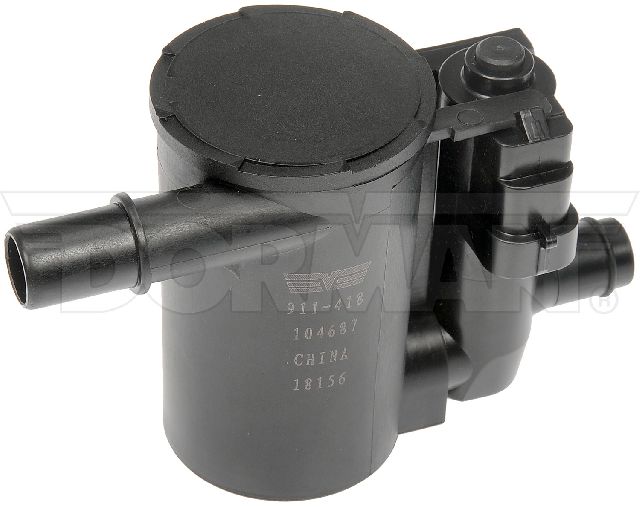
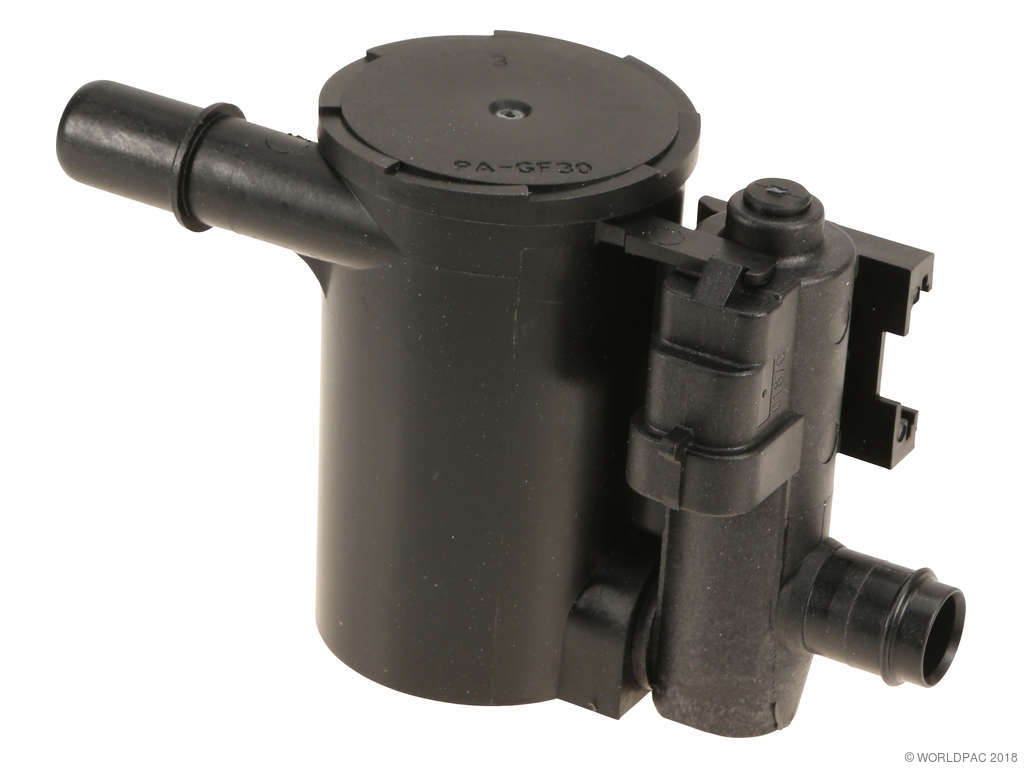
(OEM #GM: 96450090, ACDelco Service #: 214-1680, GM: 12597567)— This is the most common failure point for code P0496 on this vehicle, causing it to stick open and allow fuel vapor to flow when not commanded. The ACDelco 214-1680 and GM 12597567 are widely used across many GM vehicles for this function.
Trusted brands: ACDelco, Dorman, Standard Motor Products
OEM price range: $45-$75
Aftermarket price range: $25-$50
Related Codes That Often Appear With This One
- P0441 — Incorrect Purge Flow. This code can appear alongside P0496 as they both relate to the function of the purge valve.
- P0443 — EVAP Purge Control Valve Circuit. This indicates an electrical problem with the purge valve circuit, which could be seen alongside P0496 if the valve has an internal electrical fault.
Mechanic-Grade Diagnostic Values
- Fuel Tank Pressure (FTP) Sensor Voltage — expected: 1.3V to 1.7V with the gas cap off (atmospheric pressure).. Failure: A reading stuck low (e.g., below 0.5V) or high (e.g., near 5V) regardless of actual tank pressure points to a faulty sensor or circuit issue.
- EVAP Canister Purge Valve Solenoid Resistance — expected: Approximately 30 to 38 ohms.. Failure: A reading of infinite resistance (open circuit) or near zero ohms (short circuit) indicates a failed solenoid coil.
- EVAP Canister Purge Valve Connector Voltage — expected: Approximately 12V (battery voltage) on the Pink/Black wire (Pin B) with the key in the ON position.. Failure: No voltage suggests a blown fuse or a break in the power supply wire.
Scan Tool Commands That Help
- Tech2 / GDS2 (or equivalent professional scanner): EVAP Purge/Seal — This bidirectional command allows the technician to manually command the purge solenoid ON and OFF and seal the system by closing the vent valve. It's used to verify the electrical circuit and mechanical function of the valve without relying on the ECM's automatic control, confirming if the valve responds to commands.
- Tech2 / GDS2 (or equivalent professional scanner): EVAP System Test — This is an automated test that runs the vehicle's own onboard EVAP leak test procedure on demand. It can help confirm if the P0496 condition (uncommanded flow) is consistently detected by the ECM after a repair attempt.
Wiring & Ground Locations
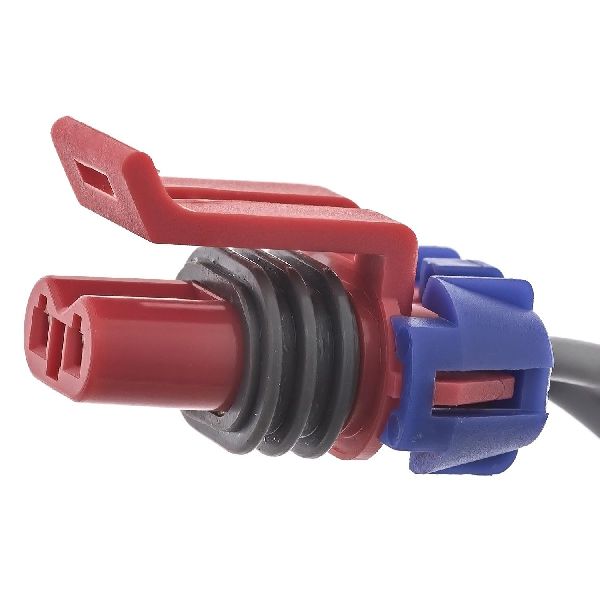
- EVAP Purge Valve Connector — On the EVAP purge valve itself, located on the intake manifold.. This is where you test for power and the control signal. Pin B (Pink/Black wire) is the 12V+ supply. Pin A (Brown/White wire) is the pulse-width modulated ground signal from the ECM.
- G105 — On the engine block, near the starter motor.. This is a primary engine ground point. While not directly for the purge valve circuit, a poor engine ground can cause a host of erratic sensor readings and actuator problems, potentially including issues with the systems that monitor and control the EVAP system.
Real Owner Repair Stories
- chevroletforum.com user (Chevrolet vehicle with recurring P0496 (specific model not Aveo, but same GM issue)) — Recurring P0496 code after replacing the purge valve.
❌ Tried (didn't work) Replacing the EVAP purge valve multiple times.
✅ What actually fixed it The root cause was a deteriorating charcoal canister sending charcoal pellets into the EVAP lines, which would jam the new purge valves open. The final fix was to install a small, clear in-line fuel filter in the vapor line just before the purge valve to act as a trap for the debris, preventing future valve failures. - NHTSA ODI #11606943 — An owner reported a rough idle and code P0496 for "evap flow during non purge." Even after replacing the purge solenoid, the engine was still not 100 percent fixed.
- NHTSA ODI #11710113 — A driver experienced rough running and multiple codes including P0496 and P0442. While driving at approximately 60 mph uphill, the engine shook and the dashboard displayed "Engine Power Reduced."
- NHTSA ODI #11088522 — A report describes a stuck open EVAP purge solenoid setting the SES light. Diagnosis found P0496 and P0300, and an injector balance test revealed bank 1 injectors were out of specs, requiring replacement of injectors 1, 3, and 5.
Helpful Videos
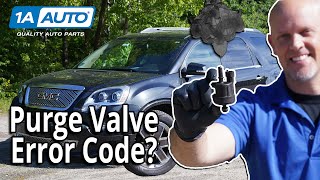
We Have This Part in Stock



The information in this article is provided for general reference and educational purposes only. Vehicle specifications, procedures, and part compatibility can vary by production date, trim level, and region. Always consult your vehicle's factory service manual and verify part numbers before purchasing or performing repairs. Safety-critical components such as airbags, seat belts, and braking systems should be installed by a qualified professional.
- Chevrolet Aveo:
- 🎬 Helpful Videos
- 🛍️ Shop This Part
- What's Unique About the 2004-2011 Chevrolet Aveo
- Symptoms You May Notice
- Most Likely Causes
- Rare But Worth Checking
- Technical Service Bulletins (TSBs) & Recalls
- Diagnosis Steps
- Parts You'll Likely Need
- Related Codes That Often Appear With This One
- Mechanic-Grade Diagnostic Values
- Scan Tool Commands That Help
- Wiring & Ground Locations
- Real Owner Repair Stories
- 🎟️ Get 5% Off