

P0492 on 2009-2011 Audi A6: Secondary Air Insufficient Flow Causes and Fixes
On a 2009-2011 Audi A6, P0492 almost always points to carbon-clogged secondary air ports inside the cylinder heads, especially on 3.0T and 3.2L engines. This is a known issue requiring a complex cleaning procedure. A failed air pump is less common but possible, often caused by the restriction from the clogged ports.
- P0492 on a 2009-2011 Audi A6 is almost always accompanied by P0491.
- The most probable cause is not a bad part, but carbon buildup blocking the air passages in the cylinder heads, a known design issue.
- Do not replace the air pump unless you have confirmed it is not running at all; otherwise, you are likely wasting money.
- The correct fix for clogged ports is a labor-intensive pressure-washing procedure that is best left to a professional or a very experienced DIYer with special tools.
- The vehicle is safe to drive with this code, but it will not pass an emissions test.
What's Unique About the 2009-2011 Audi A6

The C6 generation Audi A6, particularly with the 3.0L Supercharged (CCAA) and 3.2L FSI (CALA) V6 engines, is notorious for a specific design flaw leading to this code. Over time, carbon deposits from the exhaust accumulate and completely block the small air passages drilled inside the cylinder heads. This means that even with a perfectly functioning air pump, the air cannot reach the exhaust manifolds, triggering the P0491 and P0492 codes, often simultaneously. Audi has acknowledged this with multiple revisions of Technical Service Bulletin (TSB) 2033001, which outlines a special pressure-washing procedure to clear the ports.
Diagnostic Flowchart
Tap your situation to follow the diagnostic path that matches what you're seeing on this vehicle.
Symptoms You May Notice
- Check Engine Light is on.
- Failing an emissions inspection.
- A loud 'jet engine' or 'vacuum cleaner' noise for 30-90 seconds on a cold start, which indicates a failing air pump motor, not clogged ports. A pump that is failing due to the backpressure from clogged ports may also make this noise before it burns out completely.
- No unusual noises may be present if the ports are clogged and the pump is either still functioning quietly or has already failed silently.
- Replacing the Secondary Air Pump when the ports are clogged. If the pump runs but the code is present, the pump is likely not the problem. This is a very common and expensive mistake, as the new pump will be working against the same blockage.
- Replacing oxygen sensors. While the O2 sensors are used to detect the airflow, they are rarely the cause of the insufficient flow codes themselves.
Most Likely Causes

- Clogged Secondary Air Injection Ports in Cylinder Head 🔴 High Probability This is a widely documented design issue on Audi's 3.0T and 3.2L engines from this era. Carbon slowly builds up and restricts the passages. Audi issued TSB 2033001 (with multiple revisions like /3, /5, /16) to address this specific problem. An extended warranty for 10 years/120,000 miles was offered for this issue, but has since expired for most vehicles.
How to confirm: If the secondary air pump can be heard running on a cold start (or activated with a scan tool like VCDS) but codes P0491 and P0492 persist, the ports are almost certainly clogged. Diagnosis requires ruling out other simpler failures first. A borescope can be used to visually inspect the ports after removing the exhaust manifolds.
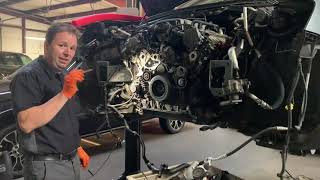
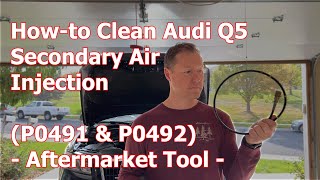
Typical fix: A complex cleaning procedure is required. The official method involves putting the vehicle's front end into 'service position' and using a special tool (VAS6825) with a pressure washer to clear the carbon from the ports. Some DIYers have fabricated their own tools from brake lines 🎬 Watch: How to clean clogged ports using an affordable tool. and pressure washer fittings. The exhaust manifolds must be removed to access the ports. Some shops may attempt a manual cleaning with picks and chemicals, but this is less effective than pressure washing.
Est. part cost: $50-$150 (for exhaust manifold and other required gaskets) - Failed Secondary Air Injection (SAI) Pump 🟡 Medium Probability The pump motor can fail from age or, more commonly, from being overworked due to the backpressure from clogged SAI ports. Moisture getting past a faulty check valve can also cause the motor to seize and blow its fuse.
How to confirm: Listen for the pump on a cold start. It should sound like a vacuum cleaner for about a minute. If there is no sound, check the fuse and relay first. If the fuse and relay are good, test for 12V power at the pump connector when activated via a scan tool. If power is present but the pump doesn't run, it has failed.
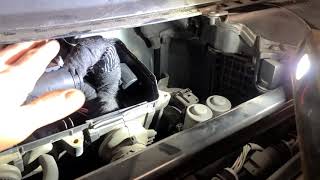
Typical fix: Replace the secondary air injection pump 🎬 See this step-by-step guide for replacing the secondary air pump. and its associated relay. It is highly recommended to inspect or replace the combi/check valves and confirm the air passages are clear to prevent the new pump from failing prematurely.
Est. part cost: $200-$450 - Blown Fuse or Faulty Relay for SAI Pump ⚪ Low Probability
How to confirm: If the SAI pump makes no noise on cold start, locate and test the fuse (often a 40A or 50A fuse) and the relay (J299). On the A6 C6, the relay is often in the plenum chamber (under the windshield on the passenger side) in position #3. A failed pump drawing too much current will cause the fuse to blow repeatedly.
Typical fix: Replace the blown fuse or faulty relay. If the fuse blows again, the pump motor is likely seized and needs replacement. A stuck relay can cause the pump to run continuously, draining the battery.
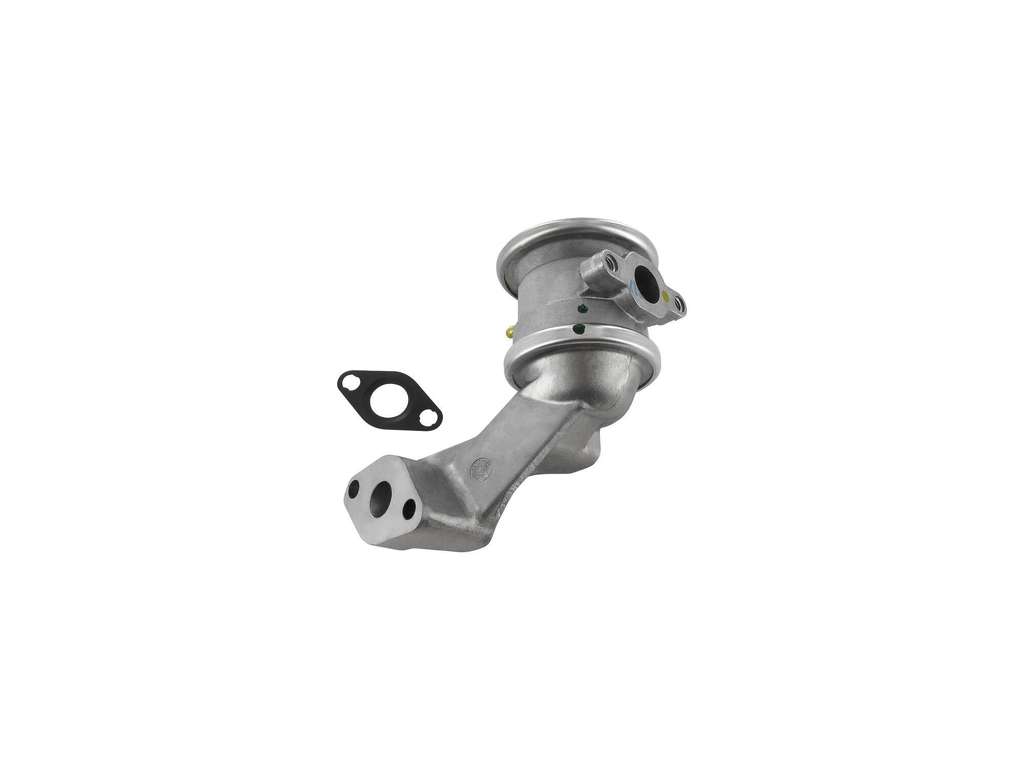
Est. part cost: $5-$40 - Leaking Hoses or Faulty Combination (Combi) Valve ⚪ Low Probability
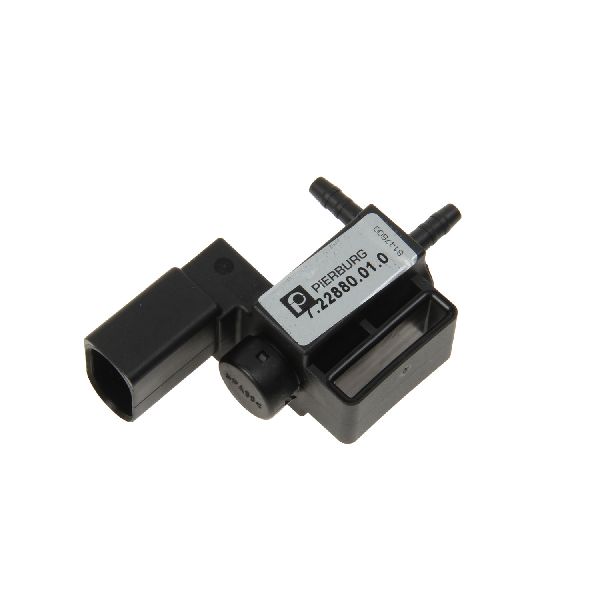
How to confirm: Visually inspect all hoses between the air pump and the engine for cracks or disconnections. The combi valves (one for each bank) are vacuum-actuated. They can be tested with a hand-held vacuum pump to see if they hold vacuum and open correctly. A failed diaphragm is a common issue.
Typical fix: Replace the cracked hose or the faulty combi valve. The combi valve for the 3.2L engine can be part number 022131101E or similar.
Est. part cost: $50-$170 per valve
Diagnosis Steps
- Scan for codes. Note if P0491 is also present, 🎬 Watch: A quick overview of these common Audi fault codes. which is highly likely.
- On a cold start (engine off for several hours), listen for the SAI pump located behind the front bumper/headlight area. It should run for 30-90 seconds and sound like a loud vacuum cleaner.
- If no sound is heard, check the SAI pump fuse and relay (J299). The relay is often located in the plenum chamber (under the windshield cowl, passenger side).
- If the fuse and relay are good but the pump doesn't run, use a scan tool (like VCDS) to perform an output test on the pump. This may require pressing the brake and gas pedals simultaneously on some models. If it still doesn't run, test for power and ground at the pump's electrical connector. If power is present, the pump has failed.
- If the pump runs (either on its own or during an output test), but the code persists, the most likely cause is clogged air passages in the cylinder heads.
- As a secondary check, inspect all vacuum lines to the combi valves and the larger plastic air hoses for any cracks or leaks. Use a vacuum pump to test the combi valves to ensure they open and hold vacuum.
Parts You'll Likely Need

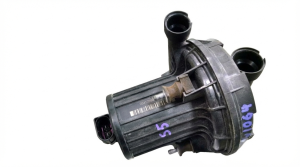
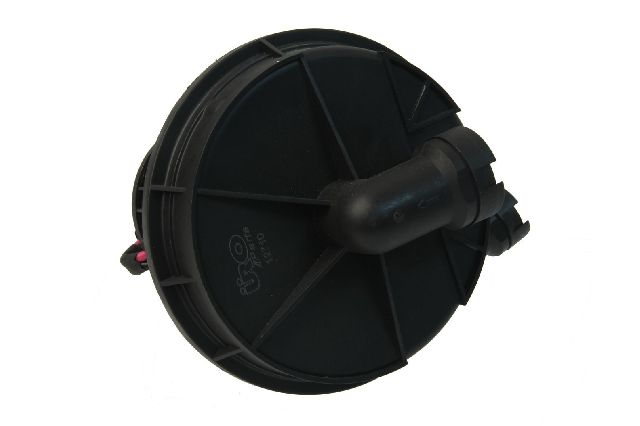
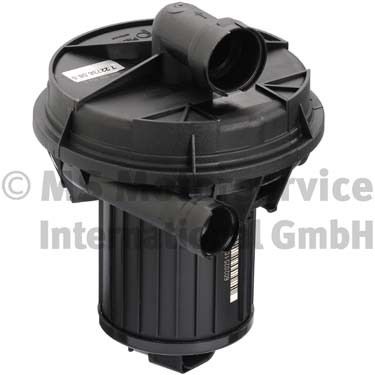
- Secondary Air Injection Pump
(OEM #06A959253E (or B))— This is the second most common failure after clogged ports. The motor burns out or seizes, often due to backpressure from blockages or moisture intrusion. If the pump is not running and its fuse/relay are good, it needs replacement.
Trusted brands: Bosch, Pierburg, URO Parts
OEM price range: $400-$850
Aftermarket price range: $150-$350 - Gaskets for Port Cleaning
(OEM #06E198717 (Intake Manifold Gasket Set))— If performing the carbon cleaning procedure for clogged ports, the exhaust manifold gaskets and potentially intake manifold gaskets will need to be replaced as part of the reassembly process.
Trusted brands: Victor Reinz, Elring
OEM price range: $75-$150
Aftermarket price range: $40-$80 - Combination (Combi) Valve
(OEM #022131101E)— These valves can fail, with the internal diaphragm rupturing, causing a vacuum leak or preventing the valve from opening. A stuck-open valve can allow exhaust moisture back into the SAI pump, causing it to fail.
Trusted brands: Pierburg (OEM supplier), Genuine Audi
OEM price range: $165
Aftermarket price range: $100-$140
Related Codes That Often Appear With This One
- P0491 — P0491 is the identical 'Insufficient Flow' code but for Bank 1. Since the most common cause is carbon buildup affecting ports on both cylinder heads, or a single failed air pump that supplies both banks, these two codes are almost always stored together. The manufacturer TSB #26 12 15 2026528 explicitly states they are stored at the same time.
Technical Service Bulletins (TSBs) & Recalls
- 26 12 15 2026528: Notes that DTC P0491 and P0492 are stored at the same time.
- 2033001 (also referenced as 01 13 35, 01 18 93, etc.): Details the condition of carbon accumulation in secondary air ports and the procedure for cleaning them using a pressure washer. Multiple revisions exist, expanding the model years and engines covered.
Platform-Specific Known Issues
- A Technical Service Bulletin (TSB #2033001, with numerous revisions) was issued by Audi for the 3.0L and 3.2L engines due to the high frequency of carbon buildup in the secondary air ports, causing codes P0491 and P0492.
Mechanic-Grade Diagnostic Values
- Secondary Air System Pressure — expected: Approx. 90 mbar (increase). Failure: A pressure reading higher than expected indicates a blockage (clogged ports), while a lower reading suggests a leak or weak pump. This is monitored by the Secondary Air Injection Sensor G609.
Scan Tool Commands That Help
- VCDS (VAG-COM): Engine (01) -> Basic Settings -> Group 077 — This function initiates the secondary air injection system test sequence. The ECU will run the pump and monitor the system's response, eventually showing 'Test ON' and then 'System OK' or 'System NOT OK'. This is the primary method to test the complete system function after a repair or during diagnosis.
- VCDS (VAG-COM): Engine (01) -> Output Tests -> Select 'Secondary Air Injection (AIR) Pump Relay' — This allows a technician to manually command the SAI pump relay to activate, turning on the pump. It is used to verify if the pump motor, relay, and wiring are functional. If you can hear the pump run during this test but still get an insufficient flow code, the problem is a blockage or leak, not the pump itself.
Wiring & Ground Locations

- J299 - Secondary Air Pump Relay — In the electronics box (e-box) located in the plenum chamber, under the windshield cowl, typically on the passenger side. It is often in relay position #3.. This relay provides power to the high-current SAI pump. If the relay fails open, the pump will not run, causing insufficient flow. If it fails closed (contacts welded), the pump may run continuously, draining the battery and burning out the pump motor.
- S130 - Secondary Air Pump Fuse — In the electronics box (e-box) in the plenum chamber, often near the J299 relay. It is a large amperage fuse, typically 50A or 60A.. This is the main fuse for the SAI pump motor. A seized or failing pump will draw excess current and blow this fuse. If the pump does not run, this fuse should be the first component checked after verifying the relay clicks.
- Engine Ground Points — Multiple ground points exist in the engine compartment, with a key one often located on the chassis rail near the left side of the engine compartment.. A poor ground connection for the SAI pump can cause it to run slowly or not at all, leading to insufficient flow codes. Verifying a clean, tight ground connection is a crucial step in diagnosing an inoperative pump.
Real Owner Repair Stories
- Reddit user comment in r/Audi (2013 Audi S4 (3.0T engine, similar platform)) — Intermittent Check Engine Light with codes P0491 and P0492.
❌ Tried (didn't work) A responding user noted that their dealer first replaced the SAI pump for $1000, which did not fix the issue.
✅ What actually fixed it The root cause was confirmed to be clogged secondary air ports, which is a known issue subject to a TSB. The proper fix is a high-pressure cleaning of the air passages inside the cylinder heads, a labor-intensive job quoted by a dealer at $3400. - AudiWorld Forums user (2004 Audi A6 4.2 (C5 platform, but demonstrates a relevant system failure)) — SAI pump continued to run after the engine was shut off, draining the battery.
❌ Tried (didn't work) Initially thought the pump would shut off on its own, but it would restart and drain the battery.
✅ What actually fixed it The SAI pump relay (J299) had failed with its internal contacts welded shut. This caused the pump to run whenever it had power, even with the engine off. Replacing the faulty relay resolved the issue.
Model Year Variations Within This Range
- 2009-2011: The 3.0T supercharged engine was introduced for the 2009.5/2010 model year, based on the existing 3.2L V6. Both engines share the same fundamental design flaw where secondary air ports in the cylinder heads become clogged with carbon, making P0491/P0492 a common issue for both engine types within this vehicle range.
Helpful Videos
Used OEM Parts in Stock
New Aftermarket Parts Available



The information in this article is provided for general reference and educational purposes only. Vehicle specifications, procedures, and part compatibility can vary by production date, trim level, and region. Always consult your vehicle's factory service manual and verify part numbers before purchasing or performing repairs. Safety-critical components such as airbags, seat belts, and braking systems should be installed by a qualified professional.
- Audi A6:
- 🎬 Helpful Videos
- 🛍️ Shop This Part
- What's Unique About the 2009-2011 Audi A6
- Diagnostic Flowchart
- Symptoms You May Notice
- Most Likely Causes
- Diagnosis Steps
- Parts You'll Likely Need
- Related Codes That Often Appear With This One
- Technical Service Bulletins (TSBs) & Recalls
- Platform-Specific Known Issues
- Mechanic-Grade Diagnostic Values
- Scan Tool Commands That Help
- Wiring & Ground Locations
- Real Owner Repair Stories
- Model Year Variations Within This Range
- 🎟️ Get 5% Off