

P0492 on 2009-2011 Audi A4: Secondary Air Insufficient Flow (Bank 2) Causes & Fixes
On a 2009-2011 Audi A4 with the 2.0T engine, code P0492 almost always points to carbon-clogged secondary air injection ports in the cylinder head, a well-documented issue. The fix is a labor-intensive cleaning process, though it's wise to first check for a failed air pump or leaky hoses. This code is often accompanied by P0491 for Bank 1.
- P0492 on a 2009-2011 Audi A4 almost always points to carbon buildup in the secondary air passages, a known design flaw of the 2.0T direct-injection engine.
- Do not immediately replace the expensive SAI pump. First, check its fuse/relay and listen for its operation on a cold start. If the pump runs, the problem is a blockage, not the pump itself.
- The correct fix for carbon buildup is a professional cleaning of the cylinder head ports, which is a labor-intensive and costly repair.
- This code is often paired with P0491 (Bank 1), as the carbon buildup issue typically affects both sides of the engine simultaneously. [⭐ MANUFACTURER TSB — highest authority]
What's Unique About the 2009-2011 Audi A4
The 2009-2011 Audi A4 (B8 generation) with the 2.0T TFSI engine (engine code CAEB) is a direct-injection engine. This design is highly susceptible to carbon buildup on intake valves and in secondary air passages because fuel is injected directly into the cylinder, meaning no gasoline washes over the valves to keep them clean. This carbon buildup is the most frequent cause of P0492 on this specific vehicle, a fact acknowledged by Audi in technical service bulletins which detail a specific cleaning procedure.
Diagnostic Flowchart
Tap your situation to follow the diagnostic path that matches what you're seeing on this vehicle.
Symptoms You May Notice
- Check Engine Light is on
- A loud whining or 'vacuum cleaner' noise from the front of the engine for 30-90 seconds after a cold start, which indicates a failing SAI pump.
- Failure to pass a state emissions inspection.
- Replacing the oxygen sensors. While emissions-related, O2 sensors do not typically cause this specific insufficient flow code.
- Replacing the SAI pump when the actual problem is clogged ports. If the pump runs but the code persists, the issue is almost certainly a blockage downstream. A Reddit user reported a dealer made this mistake, charging $1000 for a pump that didn't fix the issue before an extended warranty covered the necessary port cleaning.
Most Likely Causes
- Carbon Buildup in Cylinder Head Ports 🔴 High Probability The 2.0T direct-injection (TFSI) engine design allows oil vapors and combustion byproducts to bake onto the air passages without being cleaned by fuel spray. This is a widely documented issue for this engine family, acknowledged by Audi TSBs. Under certain driving conditions, the secondary air ports can accumulate carbon over time, causing a restriction.
How to confirm: After confirming the SAI pump and valves are working, this is the most likely cause. A borescope can be used to visually inspect the ports, which requires some disassembly. Audi has a specific test procedure using a scan tool (like VAG-COM or ODIS) to run a "Secondary Air System Check" and measure the relative mass air flow values (MASS_SA_REL and MASS_SA_REL) to confirm a restriction.
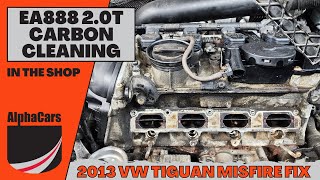
Typical fix: The ports must be professionally cleaned. This is a labor-intensive job that involves removing components to access the ports and using special tools, brushes, or walnut shell blasting to remove the carbon. Audi has a specific TSB-outlined procedure that involves using a special wand kit (VAS6825) and a pressure washer to clean the passages. Some owners report dealer quotes from $1500 to over $3000 for this service.
Est. part cost: $0-$50 (for gaskets and seals) - Failed Secondary Air Injection (SAI) Pump 🟡 Medium Probability The pump can fail from normal wear or from moisture damage. If the combi valve fails and sticks open, hot exhaust gas can flow back and send condensation into the pump, destroying its bearings.
How to confirm: Listen for a loud 'jet engine' noise on cold start, which signals a failing pump. If there is no noise, check the pump's fuse and relay first. A diagnostic scan tool can be used to command the pump to turn on to test its function. A seized pump will often blow its fuse.
Typical fix: Replace the secondary air injection pump. It is critical to also inspect the combi valve to ensure it is not the root cause of the pump failure. One owner on Reddit noted they replaced the pump, but the issue persisted until a carbon cleaning was performed.
Est. part cost: $717-$1,164 - Leaking Hoses or Faulty Combi Valve 🟡 Medium Probability
How to confirm: Visually inspect all vacuum lines and the larger air hoses for cracks, brittleness, or disconnection. The combi valve (a combination check and control valve) can be tested with a hand-held vacuum pump to see if it holds vacuum and opens correctly. Spraying it with brake cleaner while operating it can help dislodge carbon and test for smooth operation.
Typical fix: Replace the cracked hoses or the faulty combi valve. Hoses are inexpensive, but the valve is more costly.
Est. part cost: $50-$950 (hoses are inexpensive; the valve is more costly) - Blown Fuse or Faulty Relay for SAI Pump ⚪ Low Probability
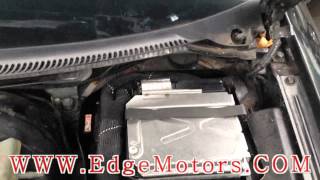
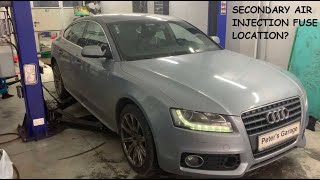
How to confirm: Locate and test the fuse and relay for the secondary air pump. On the B8 A4, these are often located in the ECU box in the engine bay, under the plastic cowl near the windshield. A seized pump can often blow its fuse.
Typical fix: Replace the blown fuse or faulty relay. If the fuse blows again, it indicates a deeper electrical problem or a seized SAI pump that is drawing too much current.
Est. part cost: $5-$30
Diagnosis Steps
- Scan the vehicle for codes. Note if P0491 is also present, which is highly likely.
- On a cold start, listen for the SAI pump. It should run for 30-90 seconds and sound like a small vacuum cleaner. A very loud whining noise suggests the pump is failing.
- If no sound is heard, check the fuse and relay for the SAI pump, located in the plenum chamber (ECU box).
- If the fuse and relay are good, use a scan tool (like VCDS/VAG-COM) to perform an output test on the SAI pump to see if it can be commanded on.
- Inspect all visible vacuum lines and the large-diameter air hoses connected to the pump and combi valve for cracks or leaks.
- Test the combi valve using a vacuum pump to ensure it opens and closes correctly. It should hold vacuum.
- If the pump, valve, and hoses are all functional, use a scan tool to run the "Secondary Air System Check" in Basic Settings, Group 077. If the flow values are low, the cause is almost certainly carbon buildup in the cylinder head ports.
- Visually confirm the blockage using a borescope camera inserted into the SAI ports if accessible.
Parts You'll Likely Need
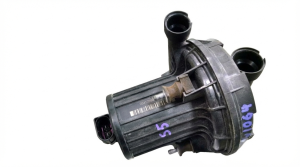
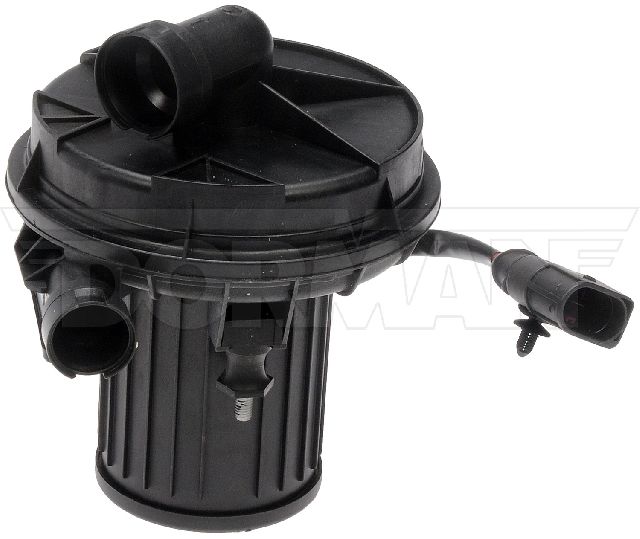
- Secondary Air Injection Pump
(OEM #06A959253B)— The pump motor fails due to wear or moisture intrusion from a faulty combi valve.
Trusted brands: Bosch, Pierburg, Hella
OEM price range: $850
Aftermarket price range: $250-$650 - Secondary Air Injection Combi Valve
(OEM #06F131102A)— This valve can get stuck or fail to hold vacuum, preventing air from entering the exhaust or allowing exhaust to flow back and damage the pump.
Trusted brands: Vaico, Vemo, Pierburg
OEM price range: $850-$950
Aftermarket price range: $100-$300 - Gaskets and Seals for Carbon Cleaning — When performing a carbon cleaning of the intake or secondary air ports, the intake manifold gasket and other related seals must be replaced.
Trusted brands: Victor Reinz, Elring
OEM price range: $40-$80
Aftermarket price range: $20-$50 - SAI Port Cleaning Tool Kit
(OEM #VAS6825)— This is the special tool set specified by Audi for pressure-washing the carbon from the secondary air ports. Aftermarket versions are available.
Trusted brands: Audi Genuine, AHM CNC (aftermarket)
OEM price range: $1000+
Aftermarket price range: $300
Related Codes That Often Appear With This One
- P0491 — P0491 is the identical code for Bank 1. Since carbon buildup often affects the single passage from the pump before it splits to both banks, it is extremely common for these two codes to appear together, as noted in Audi's TSB 2026528. The Ross-Tech Wiki also highlights that these codes are often stored at the same time.
Technical Service Bulletins (TSBs) & Recalls
- 26 12 15 2026528: Notes that DTC P0491 and P0492 are often stored at the same time due to insufficient flow in the secondary air system. It provides a diagnostic flow using a VAS tester to check the system.
- 2033001 / 26-18-21: A later, more detailed TSB that describes the carbon cleaning procedure for SAI ports on various engines, including the 3.2L and 3.0T. This TSB specifies using the VAS6825 tool kit with a pressure washer.
Platform-Specific Known Issues
- The 2.0T (CAEB) engine used in 2009-2011 models is known for significant carbon buildup in both the intake ports (affecting performance) and the secondary air injection passages (causing P0491/P0492).
- Audi has issued a Technical Service Bulletin (TSB 2033001 / 26-18-21) acknowledging the carbon buildup in secondary air ports and outlining a specific, complex cleaning procedure using a pressure washer and special tools (VAS6825). This procedure requires putting the vehicle in a 'service position' and removing numerous components.
- Some owners have noted that Audi offered a warranty extension for this specific issue on some models, though many vehicles are now outside the age/mileage limits.
Scan Tool Commands That Help
- VCDS (VAG-COM) or ODIS: Engine -> Basic Settings -> Group 077 — To manually run the Secondary Air Injection system test to check for readiness and diagnose flow issues. The test will activate the pump and measure flow.
- VCDS (VAG-COM) or ODIS: Engine -> Output Tests -> Secondary Air Pump Relay (J299) — To directly command the SAI pump relay to activate. This is used to confirm if the pump motor runs, helping to isolate a problem between the ECU signal, relay, and the pump itself.
Wiring & Ground Locations
- J299 — In the electronics box (E-box) in the plenum chamber, under the plastic cowl near the windshield on the driver's side.. This is the specific relay that controls power to the Secondary Air Injection pump (V101). A failure of this relay will prevent the pump from running, causing an insufficient flow code.
- S130 — A 40A or 50A fuse located in the plenum chamber electronics box, often near the J299 relay.. This is the main fuse for the SAI pump. A seized pump will often blow this fuse. Checking it is a primary step if the pump does not run.
- Ground Point 12 — In the engine compartment, on the left side.. This is a primary chassis ground point in the engine bay. A poor connection here could affect various systems, including the SAI pump's electrical circuit.
- Ground Point on Left Front Long Member (G671) — On the left front longitudinal frame member in the engine bay.. This is another critical engine bay ground point. Ensuring it is clean and tight is essential for proper operation of engine electronics, including the SAI system.
Real Owner Repair Stories
- Reddit user GuvnaGruff (2011 Audi S5 (similar SAI system design)) — Intermittent P0491 and P0492 codes.
❌ Tried (didn't work) Initially just driving with the light on.
✅ What actually fixed it The final fix required two steps: first, replacing a failed secondary air pump, and second, performing a full carbon cleaning of the air passages. The total cost at a dealership, including a water pump replacement done at the same time, was approximately $2900. - Reddit user [deleted] (2013 S4 (similar SAI system design)) — P0491 and P0492 codes.
❌ Tried (didn't work) A dealership replaced the secondary air pump for $1000, which did not resolve the check engine light.
✅ What actually fixed it The actual problem was clogged secondary air injection ports. The repair was eventually covered by an extended warranty/recall campaign after the initial misdiagnosis. This highlights the common mistake of replacing the pump when the ports are the root cause.
OEM Part Supersession History
06A959253B→06A959253E— Component revision or manufacturer change.
Heads up: The parts are generally interchangeable, but it is critical to check the electrical connector style on the pump body before purchasing, as some variations exist.
Model Year Variations Within This Range
- 2009-2012 vs 2013-2016: The 2009-2012 B8 generation A4s use the CAEB engine. The refreshed B8.5 generation (2013+) introduced engine updates (CAED, CPMx), but the fundamental design of the secondary air injection system and its susceptibility to carbon buildup remained the same.
Helpful Videos
Used OEM Parts in Stock
New Aftermarket Parts Available

The information in this article is provided for general reference and educational purposes only. Vehicle specifications, procedures, and part compatibility can vary by production date, trim level, and region. Always consult your vehicle's factory service manual and verify part numbers before purchasing or performing repairs. Safety-critical components such as airbags, seat belts, and braking systems should be installed by a qualified professional.
- Audi A4:
- 🎬 Helpful Videos
- 🛍️ Shop This Part
- What's Unique About the 2009-2011 Audi A4
- Diagnostic Flowchart
- Symptoms You May Notice
- Most Likely Causes
- Diagnosis Steps
- Parts You'll Likely Need
- Related Codes That Often Appear With This One
- Technical Service Bulletins (TSBs) & Recalls
- Platform-Specific Known Issues
- Scan Tool Commands That Help
- Wiring & Ground Locations
- Real Owner Repair Stories
- OEM Part Supersession History
- Model Year Variations Within This Range
- 🎟️ Get 5% Off