

P0491 on 2009-2011 Audi A6: Secondary Air Insufficient Flow Causes and Fixes
On a 2009-2011 Audi A6, P0491 (often with P0492) is most commonly caused by carbon-clogged secondary air ports in the cylinder heads. This is a known issue requiring a special, labor-intensive cleaning procedure that can cost over $2,000. A failing air pump is the next most likely cause, often identifiable by a loud 'jet engine' noise on cold starts.
- P0491 on a 2009-2011 Audi A6 is most often caused by carbon-clogged air passages in the cylinder heads, not a bad air pump.
- If you also have code P0492, the likelihood of clogged ports is extremely high.
- Diagnose carefully before replacing parts. If the air pump runs on a cold start and sounds healthy, do not replace it. The problem is almost certainly a blockage.
- The correct fix for clogged ports is a labor-intensive pressure-washing procedure that is expensive and best left to a specialist familiar with Audi TSB 2033001.
- The vehicle is safe to drive with this code, but it will not pass an emissions test.
What's Unique About the 2009-2011 Audi A6
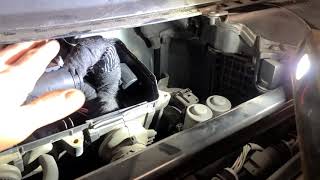
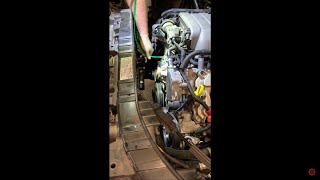
The C6 generation Audi A6, particularly with the 3.0T (CCAA) and 3.2L (CALA) engines, is notoriously prone to a specific design flaw that causes this code. Over time, carbon from the exhaust gradually accumulates and completely blocks the small air passages inside the cylinder heads. This issue is so common that Audi issued multiple revisions of Technical Service Bulletin (TSB) 2033001, detailing a complex cleaning procedure using a high-pressure washer and a special tool set (VAS 6825). 🎬 Watch: See the carbon buildup and specialized cleaning process. As a result, unlike on many other vehicles where a bad pump is the primary suspect, clogged ports are the leading cause of P0491/P0492 on this platform, especially when both codes appear together and the pump is not making excessive noise.
Diagnostic Flowchart
Tap your situation to follow the diagnostic path that matches what you're seeing on this vehicle.
Symptoms You May Notice
- Check Engine Light (MIL) is on.
- Vehicle will fail an emissions inspection.
- Loud 'vacuum cleaner' or 'jet engine' noise from the front passenger side of the car for 60-90 seconds after a cold start (indicates a failing SAI pump).
- No noticeable impact on drivability or fuel economy in most cases.
- In rare cases, sluggish acceleration or stalling at idle has been reported.
- Replacing the SAI pump when the ports are clogged. Many owners and shops replace the pump first, only to find the P0491/P0492 codes return. If the pump runs and sounds healthy, it is likely not the cause.
- Replacing only the SAI pump without checking the combi valves. A stuck-open combi valve will quickly destroy a new pump with exhaust moisture.
Most Likely Causes

- Clogged Secondary Air Ports in Cylinder Heads 🔴 High Probability This is a well-documented design flaw on Audi's 3.0T and 3.2L V6 engines where carbon buildup restricts the air passages. The issue is addressed in Audi TSB 2033001 (also listed as 01 18 93 and other revisions) which applies when both P0491 and P0492 are present and mileage is over 15,000.
How to confirm: If the SAI pump runs and sounds healthy, and there are no leaks in the hoses, clogged ports are the most likely cause, especially if both P0491 and P0492 are present. Diagnosis is a process of elimination. A scan tool like VCDS can run an output test on the pump; if the pump runs but the test fails (or pressure readings are low), it points to a blockage.
Typical fix: A specialized cleaning procedure is required. This involves removing components to access the front of the engine, removing freeze plugs, and using special tool VAS6825 with a high-pressure washer (at least 1800 psi) to force the carbon out. This is a very labor-intensive job that also requires removing spark plugs and lowering the exhaust to allow water to drain. Some independent shops may perform a manual cleaning with brushes and solvents after removing the exhaust manifolds.
Est. part cost: $50-$150 (for new gaskets, seals, and freeze plugs) - Failed Secondary Air Injection (SAI) Pump 🟡 Medium Probability The pump can fail from normal wear or, more commonly, from moisture damage. When a combi valve fails to close, it can allow hot, wet exhaust gas to flow back into the pump, destroying its plastic fan and motor bearings.
How to confirm: Listen for the pump during a cold start. A very loud grinding or 'jet engine' noise indicates it's failing. If it makes no noise, check its fuse and relay first. The fuse is a 50A fuse in the engine bay plenum chamber (E-box). The relay (J299) is also in the E-box under the ECU. 🎬 See this walkthrough for locating the SAI fuse and relay. If fuse/relay are good, test for power at the pump connector when commanded on with a scan tool.
Typical fix: Replace the secondary air injection pump. The pump is located in the front passenger-side fender well area. It is critical to also inspect and likely replace the combi valve(s) to prevent the new pump from failing prematurely.
Est. part cost: $750-$1050 - Leaking or Cracked Hoses ⚪ Low Probability The plastic and rubber hoses in the engine bay become brittle over time due to heat cycles. This includes the main air hose from the pump to the engine and the smaller vacuum lines that control the combi valves.
How to confirm: Perform a visual inspection of all hoses connected to the SAI pump and combi valves. A smoke test is the most effective 🎬 Watch: How to diagnose and test the secondary air system. way to find small leaks in the air delivery hoses. Pay close attention to the plastic T-fittings and connections under the supercharger.
Typical fix: Replace the cracked or broken hose section. Vacuum hose is inexpensive and can be cut to length.
Est. part cost: $10-$80 - Failed Combination (Combi) Valve ⚪ Low Probability The combi valve is a one-way check valve that can get stuck open or closed due to carbon buildup or diaphragm failure. If stuck closed, it blocks airflow. If stuck open, it allows exhaust backflow, which can destroy the SAI pump with moisture.
How to confirm: Use a handheld vacuum pump to test the valve's diaphragm; it should hold vacuum. With the engine running and the valve actuated via a scan tool, you should feel/hear air flowing from the pump through the valve. There is one valve for each cylinder bank, located at the rear of the cylinder heads.
Typical fix: Remove and clean or replace the faulty combi valve. Given the labor to access them, replacement is often recommended.
Est. part cost: $100-$200
Rare But Worth Checking
- Blown Fuse or Faulty SAI Pump Relay: This is a simple and inexpensive check that should be performed first. If the SAI pump makes no noise at all during a cold start, a bad fuse or relay is a likely culprit. The main 50A fuse and the relay (J299) are located in the electronics box (E-Box) in the engine plenum, under the ECU.
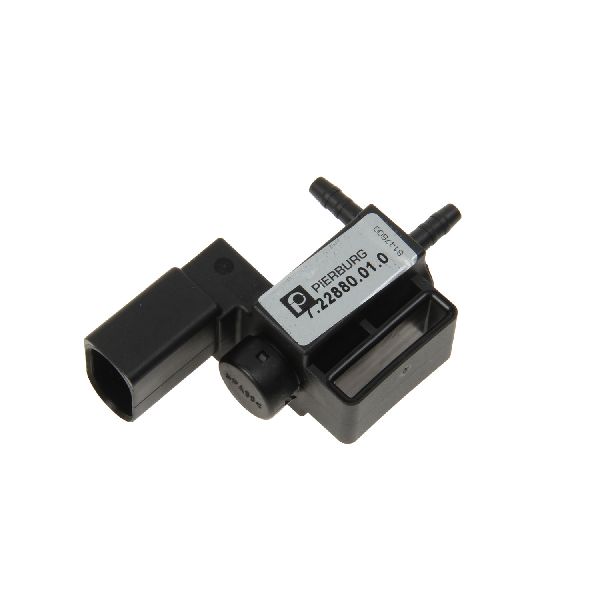
- Failed SAI Pressure Sensor: The system uses a pressure sensor (G609) to verify airflow. If this sensor fails, it may incorrectly report insufficient flow even if the system is working properly. This is less common than mechanical failures but is a possible cause noted by Ross-Tech.
Diagnosis Steps

- Read the fault codes with an OBD-II scanner. Note if P0491 is alone or present with P0492.
- On a cold start (engine off for several hours), listen for the SAI pump. It should run for 30-90 seconds and sound like a strong vacuum cleaner. It is located in the front passenger fender area.
- If no sound is heard, check the 50A fuse and the relay (J299) for the SAI pump located in the plenum E-box. If they are good, use a scan tool (like VCDS) to run an output test on the pump and test for power at the pump connector.
- If the pump runs but is excessively loud (grinding, whining, 'jet engine' noise), the pump motor is failing and needs replacement.
- If the pump runs and sounds healthy, the issue is likely a blockage or leak downstream. Visually inspect all air hoses from the pump to the combi valves for cracks or disconnections.
- Perform a smoke test on the SAI hoses to definitively check for leaks.
- Test the combi valves using a handheld vacuum pump to ensure their diaphragms hold vacuum. Use a scan tool to actuate them and confirm they open.
- If the pump, relay, fuse, hoses, and valves all test good, the cause is almost certainly carbon buildup in the cylinder head ports, especially if both P0491 and P0492 are present.
Parts You'll Likely Need
- Secondary Air Port Cleaning Service — This is not a part, but a labor-intensive service that is the most common fix for P0491/P0492 on this vehicle due to a design flaw causing carbon buildup. Dealer quotes range from $3000-$4200.
OEM price range: $3000-$4200 (at dealer)
Aftermarket price range: $1500-$2500 (at independent specialist) - Secondary Air Injection (SAI) Pump
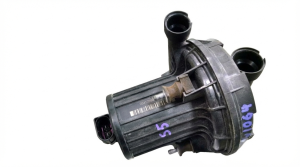
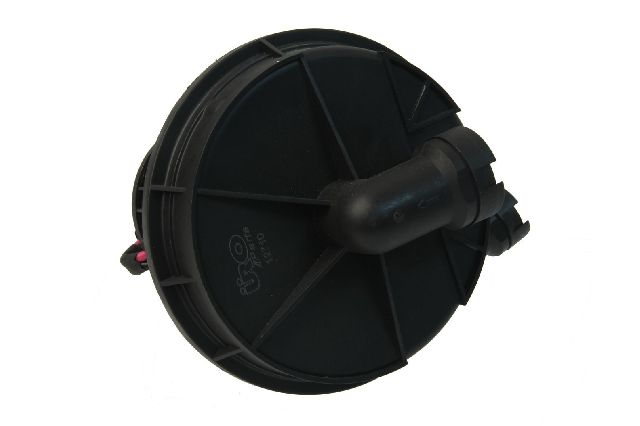
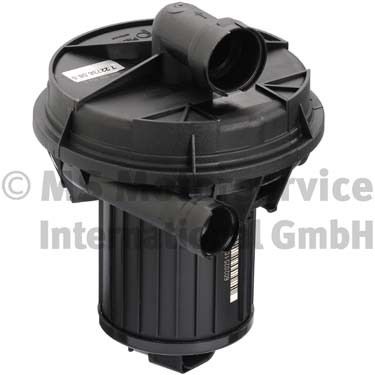
(OEM #079959231L (supercedes 079959231, 079959231K))— The second most common failure. The pump motor wears out or is damaged by moisture from a failed combi valve. A loud noise on startup is the key symptom.
Trusted brands: Bosch, Pierburg (OEM supplier)
OEM price range: $800-$1050
Aftermarket price range: $250-$500 - Combination (Combi) Valve
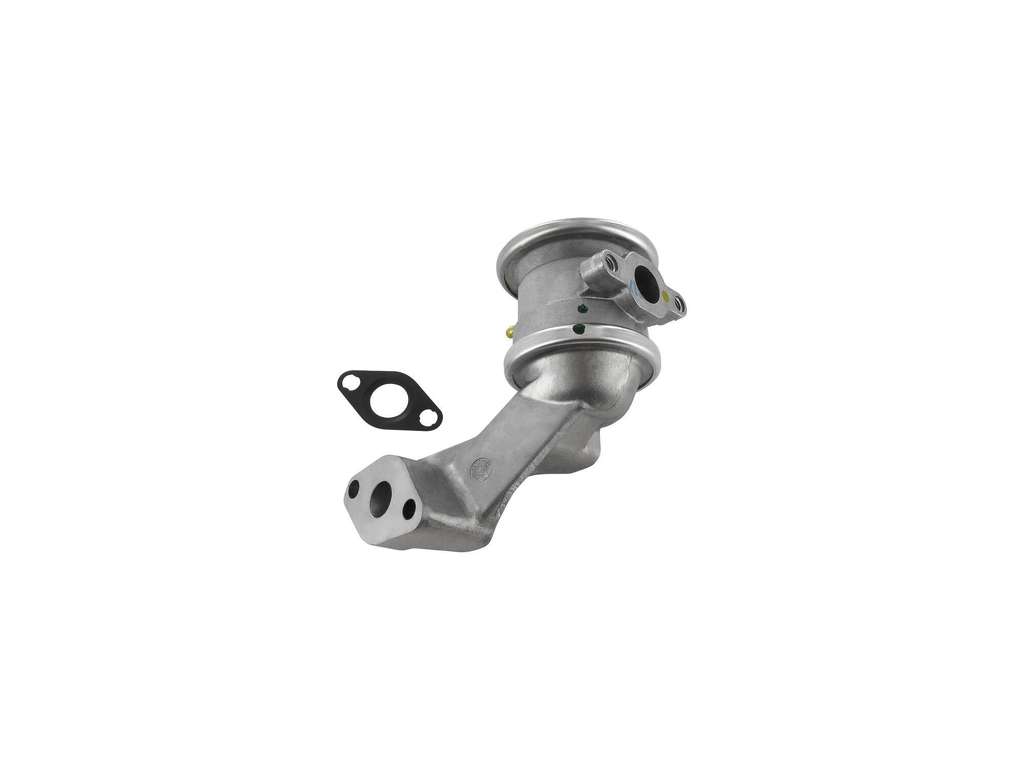
(OEM #06E131101K (supercedes 06E131101J, 06E131101E))— Can get stuck open or closed from carbon, or the internal diaphragm can fail. A stuck-open valve is a common cause of repeat SAI pump failures due to moisture backflow.
Trusted brands: Genuine Audi, Pierburg
OEM price range: $180-$250
Aftermarket price range: $80-$150
Related Codes That Often Appear With This One
- P0492 — P0492 is the identical code for Bank 2. They frequently appear together, as stated in multiple revisions of TSB 2033001. When both are present, it strongly points to a common cause affecting both banks, such as clogged ports on both cylinder heads or a failure of the single SAI pump.
Technical Service Bulletins (TSBs) & Recalls

- 2033001 / 01-13-24 / 26 12 15 2026528 (Multiple revisions exist for this TSB, covering the clogged port issue and cleaning procedure)
Platform-Specific Known Issues
- Warranty Extension for Carbon Buildup: For certain model years including the 2009-2011 A6, Audi of America extended the emissions warranty to 10 years or 120,000 miles to cover the cost of cleaning the clogged secondary air ports. Owners reported that dealers would perform the expensive repair for free under this extension, but it often required both P0491 and P0492 codes to be present. This extension has likely expired for most of these vehicles due to age.
- Owner Experience: Dealer vs. Independent Shop Costs: Forum discussions highlight the significant cost of the carbon cleaning procedure. One Reddit user reported a dealer quote of $3,400 for a 2013 S4 with the same issue. Another AudiWorld forum member was quoted nearly $1,600 just for parts related to the port cleaning. This reinforces that seeking an independent specialist familiar with the Audi TSB can be a more cost-effective solution.
- DIY Port Cleaning - High Difficulty: While a full DIY is possible, it is complex. Videos show the process involves either removing the exhaust manifolds to manually scrape and brush the ports, or using the special Audi tool (VAS 6825) with a powerful pressure washer. The pressure washer method requires putting the front of the car in 'service position', removing spark plugs, and lowering the exhaust to drain water, making it a job for experienced DIYers only.
Mechanic-Grade Diagnostic Values
- SAI Pressure Sensor (G609) Reading during pump operation — expected: 150-210 mbar. Failure: A reading significantly below 150 mbar, or a reading that doesn't change when the pump is activated, indicates a blockage or failed pump.
- SAI System Air Mass Flow via VCDS Basic Settings — expected: Greater than a specified threshold (e.g., 7.2 g/s), which varies by ECU software.. Failure: A value below the specified threshold in the TSB indicates insufficient flow.
Hidden / Shadow Codes Worth Checking
- P0491 + P0492 (simultaneously): While not a single 'shadow code', the simultaneous presence of both Bank 1 and Bank 2 insufficient flow codes is the key indicator that triggers the specific diagnostic path in Audi's Technical Service Bulletin (2033001). It strongly suggests a systemic issue like clogged ports or a failed pump, rather than a bank-specific problem like a single faulty combi valve. (see via Any standard OBD-II scanner will show both codes. The critical step is interpreting their combined presence as a single, significant diagnostic clue.)
Scan Tool Commands That Help
- VCDS (VAG-COM) or equivalent: 01-Engine -> Basic Settings -> Group 077 — This is the primary function to test the entire SAI system on the A6. It will command the SAI pump to run and then report the system status (e.g., 'Test ON', 'System OK', or 'Abort'). A failure or abort here, while the pump can be heard running, points toward a blockage.
- VCDS (VAG-COM) or equivalent: 01-Engine -> Output Tests -> Secondary Air Pump Relay (J299) — Use this test if the pump makes no noise at all during a cold start or during the Basic Settings test. You should hear the relay (J299) click in the plenum E-box when this test is activated. If it clicks but the pump doesn't run, it points to a bad pump motor or a wiring issue between the relay and the pump.
Wiring & Ground Locations
- SAI Pump Relay J299 — In the electronics box (E-Box) located in the plenum chamber, underneath the Engine Control Unit (ECU).. This relay provides power to the SAI pump. If the relay fails, is loose, or has corroded contacts, the pump will not run, leading to a P0491 code. It is a critical component to check if the pump is silent.
- SAI Pump Fuse S130 / S234 — A large 40A or 50A strip fuse located in the same plenum E-Box as the relay.. This is the main fuse for the high-current SAI pump motor. A failing pump can draw excess current and blow this fuse. If the pump and relay are silent, this fuse is the first thing to check.
- Engine Ground Straps — Multiple locations, with key grounds connecting the engine block to the chassis frame rail. One is typically located on the left side of the engine bay near the frame.. While not specific to the SAI system, a corroded or loose main engine ground can cause a myriad of electrical issues, including intermittent or weak operation of high-draw components like the SAI pump. Always ensure main grounds are clean and tight during electrical diagnosis.
Real Owner Repair Stories
- AudiWorld Forums user 'C6Avant' (2010 Audi A6 3.2L, 75,000 miles) — Check Engine Light with codes P0491 and P0492. No drivability issues.
❌ Tried (didn't work) Initial dealer diagnosis confirmed the codes and, after running through the TSB tests, concluded the ports were clogged., Owner was concerned about the high cost of the dealer's 'powerwash' method.
✅ What actually fixed it The owner found an independent shop that specialized in this issue. The shop used a manual cleaning technique with brushes and solvents instead of the pressure washer method, which they claimed was more effective and cost-efficient. The total cost was around $800, which successfully cleared the codes.
"I Checked Everything" — The Actual Cause
- This code is typically caused by a blockage, not a leak. Therefore, a smoke test on the secondary air system will almost always come back 'clean' (no leaks found). A common misdiagnosis occurs when a technician performs a smoke test, finds no leaks, and incorrectly concludes the system is sealed and therefore the pump must be weak. They replace the pump, but the code returns. The correct interpretation is that a clean smoke test combined with a running pump strongly points to an internal blockage in the cylinder head ports.
OEM Part Supersession History
06E-131-101-E, 06E-131-101-J→06E-131-101-K— Standard part revision and improvement by the manufacturer.
Heads up: The newer part number 06E131101K is the correct and current replacement for the older versions on this platform.
Model Year Variations Within This Range
- 2009-2016: The underlying issue of carbon-clogged secondary air ports is not specific to the 2009-2011 model years. Audi's own Technical Service Bulletins (e.g., TSB 2033001/16) explicitly cover the A6 up to model year 2016 for the 3.0T and 3.2L engines, indicating the design vulnerability persists across the entire C6 and early C7 generations.
Helpful Videos
Used OEM Parts in Stock
New Aftermarket Parts Available



The information in this article is provided for general reference and educational purposes only. Vehicle specifications, procedures, and part compatibility can vary by production date, trim level, and region. Always consult your vehicle's factory service manual and verify part numbers before purchasing or performing repairs. Safety-critical components such as airbags, seat belts, and braking systems should be installed by a qualified professional.
- Audi A6:
- 🎬 Helpful Videos
- 🛍️ Shop This Part
- What's Unique About the 2009-2011 Audi A6
- Diagnostic Flowchart
- Symptoms You May Notice
- Most Likely Causes
- Rare But Worth Checking
- Diagnosis Steps
- Parts You'll Likely Need
- Related Codes That Often Appear With This One
- Technical Service Bulletins (TSBs) & Recalls
- Platform-Specific Known Issues
- Mechanic-Grade Diagnostic Values
- Hidden / Shadow Codes Worth Checking
- Scan Tool Commands That Help
- Wiring & Ground Locations
- Real Owner Repair Stories
- "I Checked Everything" — The Actual Cause
- OEM Part Supersession History
- Model Year Variations Within This Range
- 🎟️ Get 5% Off