

P0491 on 2009-2011 Audi A4: Secondary Air System Insufficient Flow Causes and Fixes
On a 2009-2011 Audi A4, code P0491 is most often caused by carbon buildup clogging the secondary air ports in the cylinder head, a known issue on these direct-injection engines. Other common causes include a failed secondary air (combi) valve or a faulty air pump, often due to moisture damage. The port cleaning is an involved, labor-intensive repair, while component replacement is more straightforward.
- P0491 means the secondary air injection system isn't working correctly on Bank 1.
- The most common symptom, besides the check engine light, is a loud whining noise from the air pump on a cold start.
- On V6 models, the most likely cause is clogged air passages in the cylinder head, which is a complex and expensive repair.
- On all models, a failed combi valve can allow moisture to destroy the air pump. Always inspect the valve when replacing the pump.
- The vehicle is safe to drive with this code, but it will not pass an emissions test.
What's Unique About the 2009-2011 Audi A4
On the Audi A4 (B8 generation), particularly those with V6 engines but also seen on the 2.0T, a very common cause for P0491 (and its partner code P0492 for Bank 2) is not a simple part failure, but severe carbon buildup inside the small air passages within the cylinder head itself. This makes the diagnosis more complex than on other vehicles, as a perfectly functioning air pump and valves can still trigger the code due to the internal blockage. Audi has issued multiple Technical Service Bulletins (TSBs), such as 2026528 and 2033001, acknowledging this specific issue and outlining a complex cleaning procedure.
🎬 Watch: A detailed breakdown of P0491 and P0492 fault codes.Diagnostic Flowchart
Tap your situation to follow the diagnostic path that matches what you're seeing on this vehicle.
Symptoms You May Notice
- Check Engine Light (MIL) is on.
- Loud whining or "vacuum cleaner" / "jet engine" noise from the front passenger side of the engine bay for 30-90 seconds after a cold start, indicating a failing air pump, often due to water ingestion.
- Failure to pass an emissions inspection.
- No noticeable difference in engine performance or drivability once the engine is warm.
- Replacing the oxygen (O2) sensors. While O2 sensors are used by the ECM to monitor the system's effectiveness, they are not the cause of the insufficient airflow itself.
- Replacing only the air pump without checking the combi valve or for clogged ports. If the ports are clogged or the valve is stuck open, the new pump will either not resolve the code or will fail prematurely.
Most Likely Causes
- Clogged Secondary Air Injection Ports in Cylinder Head 🔴 High Probability Direct injection engines like the 2.0T and 3.2L V6 are inherently prone to carbon accumulation. Over time, this carbon chokes the small secondary air passages drilled into the cylinder head, completely blocking airflow. This is the root cause addressed by multiple Audi TSBs.
How to confirm: If the air pump runs (or has been replaced) and the combi valve tests good, but the code returns, the ports are the confirmed culprit. A shop will use a scan tool (like VCDS/ODIS) to run a system check and measure flow rates; if the pressure is high but flow is low, it indicates a blockage. A borescope can be used to visually inspect the ports after removing the combi valve.
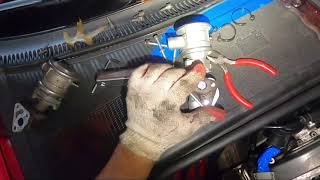
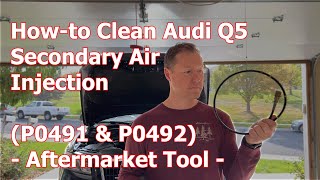
Typical fix: Requires a complex cleaning procedure using a special tool set (VAS6825) and a pressure washer with hot water to blast the carbon out of the passages. This is a labor-intensive job that requires putting the vehicle's front end into the 'service position' or removing it entirely. Some owners have found aftermarket versions of the cleaning tool. 🎬 See how to clean clogged ports using an affordable aftermarket tool.
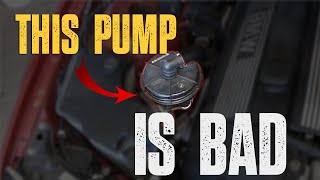
Est. part cost: $0 (if cleaning only), $100-$300 (for aftermarket cleaning tool) - Failed Secondary Air Injection (Combi) Valve 🟡 Medium Probability The valve can get stuck open or closed due to carbon buildup or diaphragm failure. If stuck open, it allows hot, moist exhaust gases to flow backward into the air pump, corroding the motor and causing it to fail. 🎬 Watch: Why these secondary air pumps fail and how to prevent it.
How to confirm: With the engine off, remove the large hose from the valve and try to blow through it. If air passes, the valve is stuck open and is bad. Use a hand vacuum pump on the vacuum port to see if it holds vacuum and actuates the valve.
Typical fix: Replacement of the combination valve. It is strongly recommended to replace this valve whenever the air pump is replaced to prevent a repeat failure of the new pump.
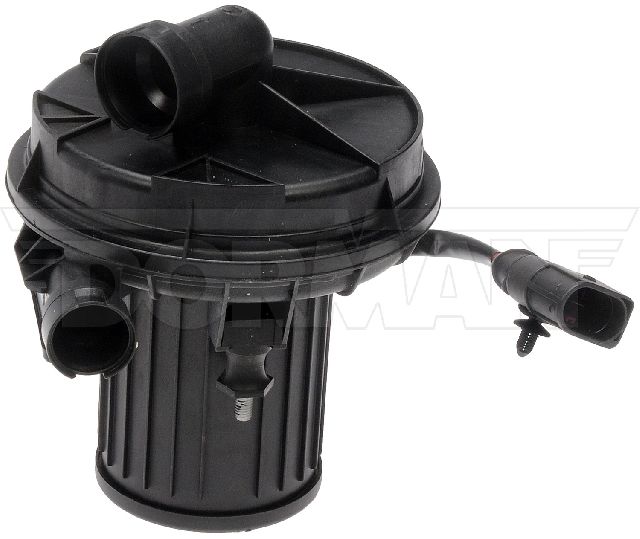
Est. part cost: $150-$550 - Failed Secondary Air Injection Pump 🟡 Medium Probability The primary cause of pump failure is moisture intrusion from a faulty combi valve, which corrodes the pump's motor and bearings, causing the loud 'jet engine' noise. It can also fail from being overworked due to the high back-pressure from clogged ports.
How to confirm: Listen for the pump during the first 30-90 seconds of a cold start. If it makes a very loud grinding/whining noise, it's failing. If it makes no noise, check its fuse and relay first. Then, use a scan tool (VCDS/VAG-COM) to run an output test on the pump or directly apply 12V power to the pump's connector to see if it runs.
Typical fix: Replace the secondary air injection pump. Always inspect/replace the combi valve at the same time to prevent repeat failure.
Est. part cost: $200-$600 - Leaking Hoses or Pipes ⚪ Low Probability The plastic hoses and pipes in the system can become brittle from heat cycles and crack over time, causing air leaks. The main hose from the pump is a common point of failure.
How to confirm: Visually inspect all hoses between the air pump and the combi valve for cracks or breaks. Listen for audible air leak sounds or use a smoke machine to find elusive leaks during a system test.
Typical fix: Replace the cracked or broken hose section.
Est. part cost: $50-$100
Rare But Worth Checking
- Faulty Secondary Air Pump Relay or Fuse: This is a simple and inexpensive check that should be performed before condemning the pump itself. If the pump makes no noise at all, a bad fuse or relay is a likely cause. On the B8 A4, the relay (J299) and fuse (S130, typically 40A) are located in the ECU box in the engine bay plenum.
- Faulty Secondary Air Injection Pressure Sensor: Less common than other component failures, but a faulty sensor can incorrectly report low flow to the ECM, triggering the code even if the system is mechanically sound.
Diagnosis Steps
- Scan for codes using a VAG-specific tool like VCDS or ODIS. Note if P0492 is also present (on V6 engines).
- On a cold start, listen for the secondary air pump running for the first 30-90 seconds. It is located at the front passenger side of the engine bay and sounds like a small vacuum cleaner. A loud, high-pitched whine indicates a failing pump.
- If the pump makes no noise, check the fuse (typically a 40A or 50A fuse, S130) and relay (J299) for the SAI pump system. These are often in the waterproof ECU box in the engine plenum area.
- If the fuse and relay are good, use a scan tool to perform an output test on the pump. Go to Engine (01) -> Output Tests -> and cycle through to the Secondary Air Pump Relay. Listen for the relay clicking and the pump running. If the relay clicks but the pump doesn't run, test for 12V power at the pump connector. If power is present, the pump has failed.
- If the pump runs, inspect the system for leaks. Check the large plastic hoses for cracks. A smoke test is the most effective way to find leaks.
- Test the combi valve. With the engine off, remove the large air hose from the valve. Try to blow through it; if air passes, it's stuck open and must be replaced. Use a hand vacuum pump on the small vacuum nipple to verify it holds vacuum and opens/closes smoothly.
- If the pump, hoses, and combi valve all function correctly, the cause is almost certainly clogged secondary air ports inside the cylinder head. This is the most common failure on this platform.
- To confirm clogged ports, a technician can use a scan tool to run the 'Secondary Air System Check' in Basic Settings (e.g., Group 077 in VCDS) and monitor pressure and flow values. High pressure with low flow confirms a blockage.
Parts You'll Likely Need
- Secondary Air Injection (Combi) Valve
(OEM #06E131102K (for 3.2L V6), 06F131102B (for 2.0T))— This valve fails by sticking open or closed. A stuck-open valve allows moisture into the air pump, causing it to fail. It's a common failure point and should be replaced with the pump.
Trusted brands: Pierburg, Genuine Volkswagen/Audi
OEM price range: $400-$600
Aftermarket price range: $100-$250 - Secondary Air Injection Pump
(OEM #06E906601D (V6), 8E0906601 (2.0T))— Fails due to moisture from a bad combi valve or from being overworked by a clogged system. A loud whining noise on startup is the classic symptom.
Trusted brands: Bosch, Genuine Volkswagen/Audi
OEM price range: $500-$700
Aftermarket price range: $200-$400
Related Codes That Often Appear With This One
- P0492 — This is the identical code for Bank 2. On V6 engines (like the 3.2L), it's extremely common for both codes to appear together, as the carbon buildup issue typically affects both cylinder banks. The provided TSB #26 12 15 2026528 specifically notes that these codes are often stored at the same time.
Technical Service Bulletins (TSBs) & Recalls
- 26 12 15 2026528: Notes that DTC P0491 and P0492 are often stored at the same time.
- TPI 2033001 (referenced by Ross-Tech and other sources): Addresses clogged secondary air ports on 2009-2016 Audi models with 3.0L or 3.2L engines.
Platform-Specific Known Issues
- A Technical Service Bulletin (TSB 2033001 / TSB #26 12 15 2026528) exists for V6 engines (3.0L/3.2L) from this era specifically for clogged secondary air ports causing P0491 and P0492. The fix involves an extensive cleaning procedure with special tools and a pressure washer. There was also a warranty extension for this issue, but most vehicles are now outside the age/mileage window.
- The diagnosis on VAG vehicles is greatly aided by a scan tool like Ross-Tech VCDS, which can run specific output tests and basic settings checks for the SAI system that generic scanners cannot.
Scan Tool Commands That Help
- VCDS (VAG-COM): [01 - Engine] -> [Output Tests - 03] -> Secondary Air Pump Relay (J299) — To manually activate the SAI pump to verify if the relay clicks and the pump motor runs. This is a key step to take if the pump is not heard running on a cold start.
- VCDS (VAG-COM): [01 - Engine] -> [Basic Settings - 04] -> Group 077 — To initiate the ECU's diagnostic test for the secondary air system. The ECU will run the pump and measure the flow rate, reporting a 'Pass' or 'Fail' status. This can confirm a blockage if the pump is known to be working.
- VCDS (VAG-COM): [Readiness] -> [Set Readiness] (Guided Readiness Script) — After a repair, this function guides the user through the necessary driving and idling cycles to make the emissions monitors, including the SAI system, run their self-tests and become 'Ready' for an emissions inspection.
Wiring & Ground Locations
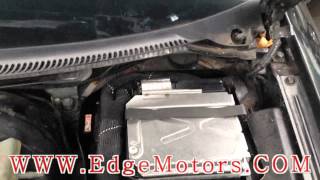
- J299 / S130 — In the waterproof electronics box (E-Box) located in the engine bay plenum chamber, at the base of the windshield on the driver's side.. This is the physical location of the Secondary Air Injection Pump Relay (J299) and its corresponding high-amperage fuse (S130). If the pump makes no noise on startup, checking this fuse and relay is the first electrical diagnostic step before condemning the pump itself.
- SAI Pump Ground — General location is a ground point on the left side of the engine compartment.. A corroded or loose ground connection for the SAI pump motor (V101) will prevent it from running, even if the fuse, relay, and power-side wiring are intact.
Real Owner Repair Stories
- Reddit user comment in r/Audi (2013 Audi S4 (B8.5, similar 3.0T engine and SAI system)) — Check Engine Light with codes P0491 and P0492.
❌ Tried (didn't work) A dealer replaced the secondary air pump at a cost of $1000, which did not resolve the codes.
✅ What actually fixed it The root cause was clogged secondary air injection ports in the cylinder heads. The cleaning procedure was the correct fix and was eventually covered by an extended warranty campaign. This highlights the common misdiagnosis of replacing the pump first. - YouTube repair shop video (PAD Auto Precision) (Audi V6 with P0491 and P0492) — Check Engine Light, rough running, and multiple cylinder misfires.
❌ Tried (didn't work) The video implies that simply replacing parts without addressing the root cause is a common mistake.
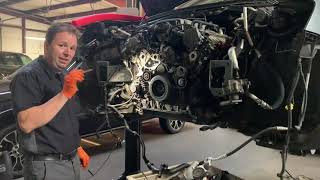
✅ What actually fixed it The primary fix was a deep cleaning of the carbon-blocked secondary air passages using the official Audi pressure-washer tool (VAS6825). Because the ports had been blocked for so long, the backpressure had burned out the SAI pump, which also required replacement. The job also revealed other necessary 'while you're in there' repairs like brittle plastic hoses that broke on removal.
OEM Part Supersession History
Varies→06K 906 052— Part revision and update by the manufacturer.
Heads up: This part number is for the Secondary Air Injection Pressure Sensor (G609). TSB 2035002 specifically calls out this updated part number for the repair procedure, suggesting it may be a more robust or accurate revision. Using an older or incorrect sensor could lead to inaccurate flow readings.
Helpful Videos
Used OEM Parts in Stock
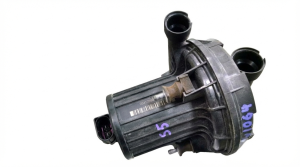
New Aftermarket Parts Available

The information in this article is provided for general reference and educational purposes only. Vehicle specifications, procedures, and part compatibility can vary by production date, trim level, and region. Always consult your vehicle's factory service manual and verify part numbers before purchasing or performing repairs. Safety-critical components such as airbags, seat belts, and braking systems should be installed by a qualified professional.
- Audi A4:
- 🎬 Helpful Videos
- 🛍️ Shop This Part
- What's Unique About the 2009-2011 Audi A4
- Diagnostic Flowchart
- Symptoms You May Notice
- Most Likely Causes
- Rare But Worth Checking
- Diagnosis Steps
- Parts You'll Likely Need
- Related Codes That Often Appear With This One
- Technical Service Bulletins (TSBs) & Recalls
- Platform-Specific Known Issues
- Scan Tool Commands That Help
- Wiring & Ground Locations
- Real Owner Repair Stories
- OEM Part Supersession History
- 🎟️ Get 5% Off