

OBD-II Code P0474: Exhaust Pressure Sensor 'A' Circuit Intermittent/Erratic
What P0474 means, why it triggers, and how to fix it like a pro
- Over 80% of P0474 codes stem from a soot-clogged exhaust pressure sensor tube or manifold port, not a failed sensor, so always clean these passages with a stiff wire and brake cleaner before buying parts.
- Driving with an active P0474 code on a diesel engine prevents DPF regeneration, leading to a completely clogged filter that costs $2,000 to $5,000 to replace.
- A healthy exhaust pressure sensor must read 0 PSI (gauge) or approximately 14.7 PSI (absolute) with the key on and engine off (KOEO); any deviation indicates a biased sensor requiring replacement.
- On 2017-2019 Ford 6.7L Powerstroke trucks, check for Technical Service Bulletin (TSB) 19-2082 before replacing parts, as a simple PCM software update often resolves falsely triggered P0474 codes.
- Perform a 'wiggle test' on the sensor's wiring harness while monitoring live scanner data; erratic pressure spikes instantly confirm an intermittent electrical short or open circuit.
What Does P0474 Mean?

P0474 means your car's Powertrain Control Module (PCM) is receiving an unstable or unpredictable signal from the exhaust pressure sensor. This sensor measures exhaust backpressure to control the variable geometry turbocharger (VGT) and emissions components like the Diesel Particulate Filter (DPF). An intermittent signal means the sensor cuts out or sends irrational data, preventing the PCM from accurately adjusting fuel delivery and turbo boost.
Technical definition: The official SAE/OBD-II definition is "Exhaust Pressure Sensor 'A' Circuit Intermittent/Erratic". This indicates the PCM detects the primary exhaust pressure sensor signal is unstable or changing illogically compared to engine load, RPM, intake manifold pressure, or ambient air pressure.
Can I Drive With P0474?
Yes, But With Caution. You can drive short distances to a repair shop, but avoid long trips or heavy towing. Ignoring this code causes significant power loss, poor fuel economy, and turbocharger damage. On diesel engines, the biggest risk is a clogged Diesel Particulate Filter (DPF), a repair costing $2,000 to $5,000. Excessive backpressure also causes thermal stress and bearing failure in the turbocharger.
Common Causes

- Clogged Exhaust Pressure Sensor Tube or Port (Very Common) — The metal tube or exhaust manifold port connecting to the sensor clogs with soot and hard carbon. This is the most frequent cause on diesel trucks, physically blocking accurate pressure from reaching the sensor.
- Faulty Exhaust Pressure Sensor (Common) — The sensor fails internally due to extreme heat, constant vibration, and age, causing it to send erratic voltage spikes or dropouts to the PCM.
- Damaged Wiring, Corrosion, or Moisture Intrusion (Common) — Engine heat and vibration chafe the sensor's wiring harness, or moisture enters the connector. This creates variable resistance, leading to intermittent signal dropouts.
- Exhaust System Leaks (Less Common) — A cracked exhaust manifold, broken flex pipe, or blown gasket upstream of the sensor causes fluctuating pressure readings that confuse the PCM.
- Intake or Boost System Leaks (Less Common) — The PCM compares exhaust pressure to intake pressure. A leak in the charge air cooler hoses or EGR system throws off this comparison, indirectly triggering P0474.
- Malfunctioning VGT/VNT Turbocharger (Rare) — If the variable geometry turbo vanes stick due to carbon buildup, the turbo creates unexpected, erratic exhaust backpressure that the PCM flags as a sensor fault.
- PCM Software or Hardware Issue (Rare) — A software glitch in the PCM requires a dealer update (common on 2017-2019 Ford 6.7L diesels). Rarely, the PCM's internal circuit fails.
Symptoms

- Check Engine Light is On — The light illuminates and often flashes or turns off and on intermittently as the erratic fault occurs.
- Reduced Engine Power / Limp Mode — The vehicle feels sluggish, accelerates slowly, and struggles to pull loads as the computer restricts performance to prevent turbo damage.
- Poor Fuel Economy — Fuel efficiency drops 5-15% because the PCM cannot properly manage the turbocharger and fuel injection timing.
- Excessive Black Smoke from Exhaust — Erratic sensor readings force improper fuel mixture control, causing heavy black smoke under acceleration.
- Rough Idle or Stalling — The engine runs unevenly or stalls at stops due to erratic data disrupting air-fuel management.
- Failed DPF Regeneration (Diesel Engines) (also visible on scanner) — The system fails to clean the Diesel Particulate Filter, leading to a completely clogged exhaust and a potential no-start condition.
Diagnostic Flowchart

Tap your situation to follow the diagnostic path that matches what you're seeing on this code.
Common Fixes & Costs
- Clean or Replace Exhaust Pressure Sensor Tube — ~1.0 hr book time (Intermediate)
- Replace Exhaust Pressure Sensor — ~0.8 hr book time (DIY)
- Repair Damaged Wiring or Connector — ~1.5 hr book time (Intermediate)
- Reprogram Powertrain Control Module (PCM) — ~1.0 hr book time (Professional)
DIY vs Professional
- Clean or Replace Exhaust Pressure Sensor Tube — Beginner: Yes
Tools: Wrench set, penetrating oil, brake cleaner, stiff wire, safety glasses. - Replace Exhaust Pressure Sensor — Beginner: Yes
Tools: Wrench or deep socket set. - Repair Damaged Wiring or Connector — Beginner: No
Tools: Multimeter, wire strippers, soldering iron, heat shrink tubing, replacement pigtail.
Used vs. New Parts: Buying Guide
When a used part is worth it: Buying a used exhaust pressure sensor or tube rarely makes sense. The risk of inheriting a clogged tube or internally failing sensor is too high. Only buy used if a new OEM part is globally backordered.
Donor-vehicle mileage cap: roughly under 30000 miles for the part to have meaningful remaining life.
Donor quality checklist:
- Verify the donor vehicle was not scrapped for an emissions or engine failure.
- Visually inspect the sensor for corrosion and the tube for internal soot buildup.
- Ensure the part number matches exactly; similar sensors output different voltages.
Decision logic:
- If The part is an electronic sensor or a tube prone to clogging. → Buy new. The minimal cost savings of a used part do not justify the risk of repeat labor.
- If A new part is discontinued and the vehicle is inoperable. → Buy a used part from a low-mileage salvage yard as a temporary fix.
Warranty tradeoff: Used parts carry a 30-day warranty. New aftermarket parts offer 1-year to lifetime warranties. New OEM parts carry a 1-2 year warranty.
Worst-case if a used part fails: $200-$450 if a used part fails, accounting for repeat diagnostic and labor costs.
What Happens If You Wait — Timeline
- 0-1 month: Intermittent Check Engine Light appears. No consistent symptoms. DPF regeneration cycles become slightly less efficient. (MPG impact: 0-5%% · Added cost: $0-$50 in wasted fuel.)
- 1-3 months: Check Engine Light stays on. Noticeable loss of power and sluggish acceleration. DPF regeneration becomes overly frequent as the PCM struggles with bad data. (MPG impact: 5-15%% · Added cost: $50-$200 in wasted fuel.)
- 3-6 months: Vehicle enters 'limp mode,' severely restricting power. The DPF is at high risk of clogging because regeneration is inhibited. Excessive backpressure stresses turbocharger seals. (MPG impact: 15-25%% · Added cost: $2,000-$5,000 for DPF replacement.)
- 6+ months: Catastrophic failure. The DPF completely blocks, causing a no-start condition. The turbocharger fails from prolonged backpressure. (MPG impact: >25%% · Added cost: $4,000-$8,000+ for combined DPF and turbocharger replacement.)
Cost of Not Fixing It
- 0-1 month: Noticeable drop in fuel economy (5-15%) and reduced engine power when towing. DPF regeneration becomes less effective. (Added cost: Negligible, but fuel costs increase.)
- 1-6 months: High risk of a fully clogged Diesel Particulate Filter (DPF) due to failed regenerations. Excessive backpressure damages turbocharger seals and bearings. (Added cost: $2,000-$5,000 for DPF replacement, $1,500-$3,500 for turbocharger replacement.)
- 6+ months: Catastrophic DPF failure causing a no-start condition. Severe turbocharger damage and potential damage to exhaust valves. (Added cost: $4,000-$8,000+ for combined DPF, turbo, and engine repairs.)
Diagnosis Steps
- Read Freeze Frame Data
Use an OBD-II scanner to pull freeze frame data. Note the engine RPM, load, and vehicle speed when P0474 triggered to help recreate the exact conditions during your test drive.
Tools: OBD-II Scanner (Beginner) - Visually Inspect the Sensor, Tube, and Wiring
Locate the exhaust pressure sensor. Check the electrical connector for green corrosion or loose pins. Inspect the metal tube for kinks. Trace the wiring harness for melted insulation or chafing against metal brackets.
Tools: Flashlight, Inspection Mirror (Beginner) - Inspect and Clean the Sensor Tube and Manifold Port
Remove the metal tube connecting the exhaust manifold to the sensor. Use a stiff wire (like a speedometer cable) and brake cleaner to clear soot blockages. Crucially, use a pick or drill bit turned by hand to break up hard carbon inside the exhaust manifold port itself.
Tools: Wrenches, Safety Glasses, Brake Cleaner, Stiff Wire/Pick (Intermediate) - Test Sensor with Live Data (KOEO and KOER)
Monitor the 'Exhaust Pressure' PID on your scanner. With Key On, Engine Off (KOEO), it must read 0 PSI gauge (or ~14.7 PSI absolute) and match the Barometric Pressure (BARO) PID. Start the engine (KOER); pressure must increase smoothly as you rev. If readings jump erratically or freeze, the sensor or circuit is faulty.
Tools: OBD-II Scanner with Live Data (Intermediate) - Perform a Harness Wiggle Test
With the engine idling and live data on screen, vigorously wiggle the wiring harness at the sensor connector and along its path. If the scanner's pressure reading spikes or drops to zero, you have located an intermittent wiring break or short.
Tools: OBD-II Scanner with Live Data, Protective Gloves (Intermediate) - Check for Exhaust and Boost Leaks
Start the engine and listen for hissing sounds around the exhaust manifold and turbocharger. Use a smoke machine to inject pressurized smoke into the intake and exhaust to pinpoint hairline cracks or blown gaskets.
Tools: Smoke Machine, Flashlight (Intermediate) - Test the Sensor Circuit with a Multimeter
Disconnect the sensor. With the key on, probe the harness connector. You must find a steady 5-volt reference signal from the PCM, a solid ground (less than 100mV), and a signal wire. If the 5V reference fluctuates, the wiring to the PCM is compromised.
Tools: Multimeter, Backprobe Pins (Advanced) - Analyze the Sensor with an Oscilloscope
Backprobe the sensor's signal wire with an oscilloscope. A healthy sensor shows a clean voltage line that rises smoothly with RPM. An intermittent sensor displays sharp dropouts to zero or a noisy, 'hairy' signal, confirming internal failure.
Tools: Oscilloscope, Backprobe Pins (Professional)
When This Code Triggers (Freeze-Frame Conditions)
- Engine Coolant Temp: 180-210°F (Engine is fully warmed up and at normal operating temperature.)
- RPM: 1500-2500 RPM (Vehicle is under steady load, such as cruising on the highway.)
- Engine Load: 30-70% (The engine is working moderately, common during highway driving or light acceleration.)
- Vehicle Speed: 45-65 mph (The fault often appears at constant highway speeds where pressure is expected to be stable but shows erratic behavior.)
Related Codes
- P0471 — Indicates a 'Range/Performance' issue where the signal is steady but incorrect. P0474 means the signal is unstable and cutting out.
- P0472 — Indicates the sensor voltage is consistently 'Low' (often a short to ground). P0474 logs when the signal fluctuates erratically instead of staying low.
- P0473 — Indicates the sensor voltage is consistently 'High' (often a short to power). P0474 logs when the signal spikes and drops unpredictably.
- P0470 — A general 'Malfunction' code for the exhaust pressure sensor circuit. P0474 is the specific variant pointing to an intermittent signal.
Climate & Environmental Factors
- Cold Weather: Moisture freezes inside the sensor tube or the sensor itself, causing a temporary blockage and erratic readings upon startup. The code often clears once the engine reaches operating temperature.
- High Humidity: Moisture penetrates weathered wiring harnesses or unsealed connectors, corroding pins and creating intermittent electrical shorts.
- High Altitude: Lower baseline atmospheric pressure forces the PCM to compensate. A borderline faulty sensor produces readings the PCM flags as irrational when compared to the expected lower pressure.
How to Talk to a Mechanic About This Code
Say this: "I have an OBD-II code P0474 for an intermittent exhaust pressure sensor circuit. Please start by inspecting the sensor's tube and the exhaust manifold port for soot blockages before testing or replacing the sensor itself."
This proves you know the most common cause of P0474 is a simple blockage. It directs the technician to perform the cheapest fix first, preventing them from immediately selling you an unnecessary sensor.
Avoid saying:
- 'My check engine light is on, can you just fix it?'
- 'I think I need a new exhaust sensor.'
- 'Just do whatever you think is best.'
Questions to ask before authorizing the repair:
- Did you find a blockage in the sensor tube or the manifold port? Was the port cleaned thoroughly?
- If the tube and port were clear, how did you test the sensor and its wiring to confirm they are faulty?
- Can you show me the erratic voltage or pressure readings from the old sensor on your scan tool?
- Have you checked for any Technical Service Bulletins (TSBs) related to a P0474 code for my vehicle?
Where to Take It: Dealer vs Independent vs Chain
- Dealer:
Best for: Vehicles under powertrain or emissions warranty., 2017-2019 Fords where a software update (TSB) is the known fix., Complex diagnostics involving potential PCM failure.
Downsides: Highest labor rates, typically 1.5-2x more than independent shops., May default to replacing the sensor and tube assembly rather than cleaning it. (Typical cost: +50% vs. baseline) - Independent Shop:
Best fit for most out-of-warranty cases. An experienced diesel mechanic knows to check for clogged tubes and wiring issues first.
Best for: Out-of-warranty diesel trucks (Ford, Ram, GM)., Cost-conscious owners who want a mechanic to attempt the 'clean-first' approach., Finding a brand-specific specialist (e.g., VW/Audi TDI).
Downsides: Quality varies; vet shops based on diesel-specific experience., May lack access to the latest manufacturer PCM flashing equipment. (Typical cost: +0% vs. baseline) - Chain Shop:
Avoid for P0474. The risk of misdiagnosis and paying for an unnecessary sensor is high. This code requires diesel-specific expertise.
Best for: Simple maintenance like oil changes or tire rotations.
Downsides: Technician experience with specific diesel emissions systems is highly variable., High pressure to sell parts leads to unnecessary sensor replacements. (Typical cost: -10% vs. baseline)
When to Walk Away From the Repair
If the total estimated repair cost exceeds 40-50% of your vehicle's current private-party value, seriously consider selling or trading it in.
- Car worth $20000, fix is $350: Fix it. The repair cost is minor and prevents much costlier future DPF damage.
- Car worth $8000, fix is $4500: Walk away. If P0474 is accompanied by a failed DPF and damaged turbo, the combined repair cost exceeds 50% of the truck's value.
- Car worth $5000, fix is $2500: Borderline. If P0474 caused a complete DPF blockage, the repair cost is exactly 50% of the vehicle's value. Get a second opinion.
What Scan Tool You Need for This Code
Minimum: An OBD-II reader that displays and graphs live data for the 'Exhaust Pressure' PID.
A basic $20 code reader only tells you P0474 exists. It cannot show the live pressure signal required to diagnose if the signal is erratic, frozen, or responding to a wiring wiggle test.
Budget: BlueDriver Pro (~$100) — Connects to your smartphone to provide freeze frame data and live data graphing for the exhaust pressure sensor. Perfect for KOEO/KOER tests and harness wiggle tests.
Mid-range: Foxwell NT510 Elite (~$180) — Offers robust live data and bidirectional controls. Useful for commanding related components like the VGT actuator if the diagnosis points toward a complex turbo issue.
Professional: Autel MaxiCOM MK808S (~$500) — Provides professional-level depth for diagnosing related systems like the DPF, EGR, and turbo controls. Overkill for just P0474, but essential for serious diesel DIYers.
Rent vs buy: For a one-time diagnosis, auto parts stores rent live-data scanners for free. If you own a modern diesel truck, buying a tool like the BlueDriver is a mandatory investment for emissions maintenance.
How to Clear the Code After You Fix It
- Use an OBD-II scan tool to clear the diagnostic trouble codes (DTCs).
- Perform a complete drive cycle to allow the readiness monitors to run and verify the fix.
Drive cycle (~20 minutes): Start the engine cold and idle for 3 minutes. Drive in mixed city/highway conditions for 15-20 minutes, including 5 minutes of steady cruising above 45 mph. Allow the vehicle to cool down completely.
Readiness monitors affected: Comprehensive Component Monitor, Catalyst Monitor, EGR System Monitor
Before emissions retest: drive at least 50 miles to fully set monitors.
Watch out for:
- Clearing the code without cleaning the manifold port guarantees the code returns within a day.
- Disconnecting the battery erases all readiness monitors, causing an automatic emissions test failure until a full drive cycle completes.
- Failing to test drive the vehicle under the exact speed and load conditions noted in the freeze frame data.
Will This Fail Emissions / State Inspection?
Yes — this code typically fails an OBD-II emissions inspection.
- California: An active P0474 code is an automatic smog check failure. All OBD-II readiness monitors must be set to 'Ready' after the repair.
- New York: An illuminated Check Engine Light from a P0474 code causes an automatic NYS emissions failure.
- Texas: In emissions-testing counties, an active P0474 code results in an automatic OBD-II test failure.
Most Commonly Affected Vehicles
- Ford F-250/F-350 Super Duty (6.0L or 7.3L Powerstroke) (1997-2007) — Extremely prone to soot-clogged EBP sensor tubes. The 7.3L sensor is on the front of the engine; the 6.0L sensor is near the firewall.
- Ram 2500/3500 (6.7L Cummins) (2007-Present) — The exhaust manifold port clogs with hard carbon, requiring manual cleaning with a drill bit. Covered under extended emissions warranties on some 2013-2023 models.
- Chevrolet / GMC Silverado/Sierra 2500/3500 (6.6L Duramax) (2004-2016) — LML engines (2011-2016) frequently chafe the sensor wiring harness against the hot-side intercooler pipe, causing intermittent shorts.
- Volkswagen / Audi Jetta, Golf, A3 (2.0L TDI) (2009-2015) — The small rubber hoses connecting to the DPF Differential Pressure Sensor become brittle and crack, causing intermittent pressure leaks.
- Ford F-Super Duty (6.7L Powerstroke) (2017-2019) — TSB 19-2082 addresses a PCM software glitch that falsely triggers P0474. A dealer re-program is the required fix, not part replacement.
- Mercedes-Benz Sprinter, E-Class, GL-Class (BlueTEC Diesel) (2007-2017) — Highly susceptible to sensor failure and soot clogging within the DPF pressure differential sensor assembly.
Manufacturer-Specific Notes
- Ford: On 2017-2019 Super Duty 6.7L trucks, TSB 19-2082 dictates a PCM software update to fix falsely triggered P0474 codes. Do not replace parts before checking this TSB.
- Ram (Cummins): The exhaust manifold port mounts the sensor and clogs with rock-hard carbon. Mechanics must carefully twist a drill bit by hand into the port to break up the soot.
- Volkswagen/Audi: The plastic and rubber hoses connecting to the sensor crack and leak before the sensor itself fails. Always inspect these hoses first on TDI engines.
- General Motors (Duramax): On 2011-2016 LML engines, the sensor wiring harness runs over the hot-side intercooler pipe. The conduit melts, shorting the wires and triggering erratic codes.
Real Owner Stories
2006 Ford F-250 6.0L Powerstroke at 160K miles
Check Engine Light illuminated with P0474. The truck felt sluggish and lacked throttle response while towing.
What they tried:
- Replaced the Exhaust Back Pressure (EBP) sensor, but the code returned the next day.
- Removed the tube connecting the exhaust manifold to the sensor.
Outcome: Found the tube completely blocked with hard carbon. Cleaned the tube and used a drill bit by hand to clear the exhaust manifold port. Reinstalled the original sensor. The code cleared permanently. Total cost: $200 for shop labor.
Lesson: Never replace the sensor without cleaning the tube and manifold port first. A new sensor cannot read pressure through a solid wall of soot.
2015 VW Jetta TDI at 110K miles
Intermittent Check Engine Light for P0474. The light turned off and on weekly with no noticeable performance issues.
What they tried:
- A general mechanic failed to find the cause.
- Took the car to a VW TDI specialist.
Outcome: The specialist found a hairline crack in one of the small rubber hoses connected to the DPF pressure sensor. Replaced the $30 hose, permanently resolving the intermittent pressure leak and the code.
Lesson: On VW/Audi diesels, brittle rubber hoses connected to the sensor fail more often than the sensor itself. Inspect them closely for cracks.
2012 Ram 2500 6.7L Cummins at 145K miles
P0474 appeared alongside P0299 (Turbo Underboost). The truck lost significant power on hills.
What they tried:
- Performed a harness wiggle test while watching live scanner data.
- Noticed exhaust pressure readings spiked erratically when moving the harness near the top of the engine.
Outcome: Discovered the sensor's wiring harness rubbed against a metal bracket, wearing through the insulation and causing a short. Repaired the wires and secured the harness. Both codes resolved.
Lesson: When turbo codes accompany P0474, suspect a wiring issue affecting multiple components. An intermittent electrical short perfectly matches the 'erratic' definition of P0474.
2017 Ford F-350 6.7L Powerstroke at 75K miles
Check Engine Light on with only P0474 stored. No performance loss noted.
What they tried:
- Prepared to order a new sensor and tube.
- Checked for Technical Service Bulletins (TSBs) online first.
Outcome: Found Ford TSB 19-2082, which identifies P0474 as a false trigger caused by a PCM software glitch. The dealership performed the PCM update under warranty, permanently clearing the code.
Lesson: Always check for TSBs before buying parts for newer vehicles. A simple software update often fixes the issue for free under warranty.
How to Prevent This Code From Triggering
- Use high-quality diesel fuel and a reputable fuel additive. (Every fill-up.) — Detergents reduce soot and carbon deposits during combustion, preventing the sensor tube and port from clogging.
- Perform regular long-distance, highway-speed drives. (At least once every 1-2 weeks.) — Sustained highway driving generates high exhaust temperatures, burning off soot deposits (passive regeneration) and keeping sensor passages clear.
- Use the correct specification low-ash (Low SAPS) engine oil. (Every oil change.) — Low-ash oils minimize deposits from burned oil, protecting the DPF and reducing the soot that clogs the sensor tube.
- Minimize engine idling time. (Daily habit.) — Extended idling lowers exhaust temperatures, causing incomplete combustion and rapid soot accumulation in the sensor pathways.
- Periodically clean the EGR system. (Every 60,000-80,000 miles.) — A sticking EGR valve alters the air-fuel mixture, increasing soot production. A clean EGR ensures efficient combustion and less soot.
Frequently Asked Questions
Can I fix P0474 myself?
Yes, if you have basic mechanical skills. The most common fix is cleaning the sensor tube, which requires only basic hand tools and brake cleaner. Electrical diagnosis with a multimeter is more advanced but achievable for many DIYers.
What happens if I ignore P0474?
Ignoring it causes poor performance and a 5-15% drop in fuel mileage. On a diesel, it eventually clogs your DPF, costing $2,000 to $5,000 to replace. Severe cases also cause turbocharger bearing failure due to excessive backpressure.
Will a fuel additive or 'mechanic in a can' fix this?
No. The problem is a physical blockage of soot or an electrical failure. No chemical fuel or oil additive clears a clogged sensor tube or fixes a broken wire.
My mechanic replaced the sensor, but the code came back. What now?
This happens when the root cause is misdiagnosed. The top reasons for the code returning are a clogged manifold port that wasn't cleaned, or an overlooked wiring problem. On certain 2017-2019 Ford vehicles, a software update (TSB 19-2082) is the required fix.
Is the Exhaust Pressure Sensor the same as an O2 sensor or EGR sensor?
No, they are different parts. The Exhaust Pressure Sensor measures exhaust gas pressure in PSI, while an Oxygen (O2) Sensor measures unburned oxygen. Confusing the pressure sensor with the nearby EGR valve is a common diagnostic mistake.
Can a bad turbo cause a P0474 code?
Yes, though it is less common. A variable geometry turbo (VGT) with sticking vanes creates erratic exhaust backpressure, which the PCM misinterprets as a sensor circuit fault. Always rule out the sensor, tube, and wiring before condemning the turbo.
Can the P0474 code clear itself?
Because the fault is intermittent, the check engine light turns off if the PCM sees normal readings for several drive cycles. However, the code remains stored in the computer's memory. The light will return until the underlying physical or electrical problem is fixed.
What does 'Sensor A' mean?
In OBD-II terminology, 'A' designates the primary or first sensor in a circuit when multiple sensors exist. For P0474, it refers to the main exhaust pressure sensor. This sensor is usually located on the exhaust manifold before the turbocharger or DPF.
Key Takeaways
- Over 80% of P0474 codes stem from a soot-clogged exhaust pressure sensor tube or manifold port, not a failed sensor, so always clean these passages with a stiff wire and brake cleaner before buying parts.
- Driving with an active P0474 code on a diesel engine prevents DPF regeneration, leading to a completely clogged filter that costs $2,000 to $5,000 to replace.
- A healthy exhaust pressure sensor must read 0 PSI (gauge) or approximately 14.7 PSI (absolute) with the key on and engine off (KOEO); any deviation indicates a biased sensor requiring replacement.
- On 2017-2019 Ford 6.7L Powerstroke trucks, check for Technical Service Bulletin (TSB) 19-2082 before replacing parts, as a simple PCM software update often resolves falsely triggered P0474 codes.
- Perform a 'wiggle test' on the sensor's wiring harness while monitoring live scanner data; erratic pressure spikes instantly confirm an intermittent electrical short or open circuit.
Helpful Videos
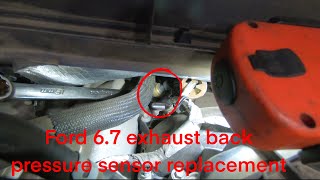
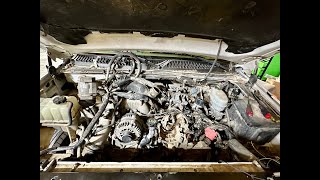

The information in this article is provided for general reference and educational purposes only. Vehicle specifications, procedures, and part compatibility can vary by production date, trim level, and region. Always consult your vehicle's factory service manual and verify part numbers before purchasing or performing repairs. Safety-critical components such as airbags, seat belts, and braking systems should be installed by a qualified professional.
- 🎬 Helpful Videos
- What Does P0474 Mean?
- Can I Drive With P0474?
- Common Causes
- Symptoms
- Diagnostic Flowchart
- Common Fixes & Costs
- DIY vs Professional
- Used vs. New Parts: Buying Guide
- What Happens If You Wait — Timeline
- Cost of Not Fixing It
- Diagnosis Steps
- When This Code Triggers (Freeze-Frame Conditions)
- Related Codes
- Climate & Environmental Factors
- How to Talk to a Mechanic About This Code
- Where to Take It: Dealer vs Independent vs Chain
- When to Walk Away From the Repair
- What Scan Tool You Need for This Code
- How to Clear the Code After You Fix It
- Will This Fail Emissions / State Inspection?
- Most Commonly Affected Vehicles
- Manufacturer-Specific Notes
- Real Owner Stories
- 2006 Ford F-250 6.0L Powerstroke at 160K miles
- 2015 VW Jetta TDI at 110K miles
- 2012 Ram 2500 6.7L Cummins at 145K miles
- 2017 Ford F-350 6.7L Powerstroke at 75K miles
- How to Prevent This Code From Triggering
- Frequently Asked Questions
- Can I fix P0474 myself?
- What happens if I ignore P0474?
- Will a fuel additive or 'mechanic in a can' fix this?
- My mechanic replaced the sensor, but the code came back. What now?
- Is the Exhaust Pressure Sensor the same as an O2 sensor or EGR sensor?
- Can a bad turbo cause a P0474 code?
- Can the P0474 code clear itself?
- What does 'Sensor A' mean?
- Key Takeaways
- 🎟️ Get 5% Off