

OBD-II Code P0472: Exhaust Pressure Sensor 'A' Circuit Low
The Ultimate Guide to Diagnosing and Fixing P0472
- P0472 triggers when the exhaust pressure sensor voltage drops below 0.25V, signaling a short to ground, an open circuit, or a dead sensor.
- Always clean the metal sensor tube before buying parts; a hard carbon soot clog in this tube is the #1 cause of false sensor failures.
- Expect an immediate 10-15% drop in fuel economy, sluggish acceleration (limp mode), and halted DPF regeneration cycles on diesel engines.
- Never ignore P0472 on a diesel vehicle; driving without DPF regeneration permanently clogs the filter, turning a $50 fix into a $2,500+ replacement.
- Diagnose the issue by checking live scanner data with the engine off; a reading stuck at 0.0V confirms a dead short or a completely failed sensor.
What Does P0472 Mean?

The P0472 code means the Engine Control Module (ECM) detects the exhaust pressure sensor voltage is stuck below the minimum 0.25V threshold. This sensor measures exhaust gas pressure, allowing the ECM to control turbocharger boost, manage Exhaust Gas Recirculation (EGR), and trigger Diesel Particulate Filter (DPF) regeneration. A continuous low signal indicates a hard electrical fault or physical blockage, immediately compromising engine performance, fuel efficiency, and emissions control.
Technical definition: SAE/OBD-II defines P0472 as "Exhaust Pressure Sensor 'A' Circuit Low". The Powertrain Control Module (PCM) flags this fault when the sensor's voltage remains below its calibrated minimum range. The PCM cross-references this reading with the Manifold Absolute Pressure (MAP) and ambient air pressure sensors at key-on/engine-off; a mismatch confirms a short to ground, an open circuit, or a dead sensor.
🎬 Watch: A quick overview of diagnosing and fixing P0472.Can I Drive With P0472?
Yes, But With Caution. You can drive for short, essential trips under 50 miles, but avoid long distances, high-speed driving, or heavy towing. Ignoring the code causes an immediate 10-15% drop in fuel economy and leads to progressive, irreversible damage to the Diesel Particulate Filter (DPF), a repair costing over $2,500. If DPF regeneration becomes completely blocked, the vehicle enters a severe limp mode or a crank-no-start condition.
Common Causes

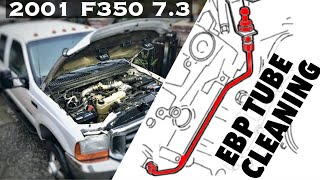
- Blocked Sensor Tube or Port (Very Common) — The metal tube connecting the sensor to the exhaust manifold clogs with hard carbon soot. This isolates the sensor from exhaust pressure, locking its reading at the low baseline voltage and triggering a false sensor failure. 🎬 See how to clean a clogged sensor tube and port.
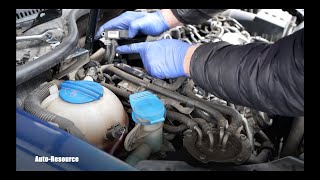
- Faulty Exhaust Pressure Sensor (Very Common) — Internal components fail from extreme exhaust heat and engine vibration, causing the sensor to send a permanently low voltage signal (near 0V) regardless of actual pressure. 🎬 Watch: How to locate and replace the sensor on VW TDI engines.
- Damaged Wiring or Connectors (Common) — High engine bay heat melts or chafes the sensor's wiring harness, causing a short to ground. Water intrusion also corrodes connector pins, creating an open circuit.
- Clogged DPF or Catalytic Converter (Less Common) — A severely blocked Diesel Particulate Filter (DPF) or catalytic converter disrupts normal pressure readings, dropping system pressure below the expected threshold.
- Exhaust System Leaks (Less Common) — A cracked exhaust manifold or blown gasket upstream of the sensor vents pressure into the engine bay, dropping the sensor reading below the minimum threshold.
- Faulty PCM or Software (Rare) — The PCM suffers an internal circuit failure or requires a manufacturer software calibration update to correctly process the sensor signal.
Symptoms

- Check Engine Light is On — The Malfunction Indicator Lamp illuminates immediately upon the PCM detecting the low voltage circuit fault.
- Reduced Engine Power / Limp Mode — The vehicle enters a protective limp mode, causing sluggish acceleration and capping turbocharger boost to prevent engine damage.
- Decreased Fuel Economy — The engine defaults to a rich, inefficient fueling strategy, resulting in a noticeable 10-15% drop in MPG.
- Rough Idle and Black Smoke — Incorrect exhaust pressure data disrupts the air-fuel mixture, causing an unstable idle and excessive black smoke from the tailpipe.
- Crank-No-Start Condition — In severe cases where failed DPF regeneration completely blocks the exhaust, excessive backpressure chokes the engine and prevents it from starting.
- DPF Regeneration Failure (also visible on scanner) — On diesel vehicles, the PCM halts all DPF regeneration cycles due to missing pressure data, rapidly clogging the filter with soot.
Diagnostic Flowchart
Tap your situation to follow the diagnostic path that matches what you're seeing on this code.
Common Fixes & Costs
- Cleaning the Exhaust Pressure Sensor Tube and Port — Parts: $0-$20, Labor: $50-$150, ~0.8 hr book time (DIY)
- Replacing the Exhaust Pressure Sensor
— Parts: $50-$200, Labor: $100-$200, ~0.7 hr book time
(DIY)
Ford F-250/F-350 (6.7L Power Stroke): OEM BC3Z-9J460-C, HC3Z-9J460-F (Alt: Dorman 904-566, Motorcraft DPFE-20)
Chevrolet/GMC Silverado/Sierra (Duramax): OEM 12644218 (Alt: Walker 274-1025, Dorman 904-7163)
Volkswagen/Audi (TDI): OEM 076906051B (Alt: Bosch 0281006082) - Repairing Damaged Wiring or Connectors — Parts: $10-$50, Labor: $150-$400, ~2.5 hr book time (Intermediate)
- Repairing Exhaust Leaks — Parts: $20-$100, Labor: $150-$450, ~2 hr book time (Intermediate)
- PCM Reprogramming or Replacement — Parts: $0-$1000, Labor: $100-$300, ~1.5 hr book time (Professional)
DIY vs Professional
- Cleaning Sensor Tube/Port — Beginner: Yes
Tools: Basic wrenches, safety glasses, wire brush/pick, brake cleaner. - Replacing Sensor — Beginner: Yes
Tools: Wrench set, socket set, penetrating oil. - Wiring Repair — Beginner: No
Tools: Digital multimeter, wiring diagrams, wire strippers, soldering iron, heat shrink tubing.
Used vs. New Parts: Buying Guide
When a used part is worth it: Buying a used exhaust pressure sensor is never recommended. The low cost of a new aftermarket or OEM sensor does not justify the risk of installing a faulty used electronic part.
Donor-vehicle mileage cap: roughly under 40000 miles for the part to have meaningful remaining life.
Donor quality checklist:
- Source from a low-mileage vehicle in a dry climate to minimize corrosion risk.
- Match the OEM part number exactly; superseded numbers have different calibrations.
- Avoid sensors from vehicles scrapped due to engine or emissions failures.
Decision logic:
- If The cost of a new OEM or reputable aftermarket sensor is less than $200 → Always buy new. The savings from a used part are minimal compared to the risk of premature failure.
- If The vehicle is very old and the OEM part is discontinued → Purchase a tested, warranted used part from a reputable auto recycler with a clear return policy.
- If Budget is the absolute primary concern → A used part is a gamble; expect a significantly shorter lifespan and be prepared for it to be faulty on arrival.
Warranty tradeoff: Used parts offer a 30-90 day warranty. New aftermarket sensors include a 1-3 year warranty, while new OEM parts carry a 1-year/12,000-mile warranty.
Worst-case if a used part fails: 200-400 if a used sensor fails after installation, requiring a second purchase and repeat labor costs.
What Happens If You Wait — Timeline
- 0-1 month: Check Engine Light illuminates. Vehicle enters limp mode with noticeable power loss. DPF regeneration cycles are paused. (MPG impact: 10-15%% · Added cost: $50-150 in wasted fuel)
- 1-3 months: The DPF becomes progressively clogged with soot. Exhaust backpressure rises, straining turbocharger seals and bearings. (MPG impact: 15-20%% · Added cost: $200-400 in wasted fuel and early turbo wear)
- 3-6 months: The DPF reaches a critical soot level, triggering the DPF warning light. A forced regeneration at a dealer may no longer be possible. (MPG impact: 20-30%% · Added cost: $1,500-2,500 for DPF replacement)
- 6+ months: Catastrophic DPF failure. Extreme exhaust backpressure causes engine oil leaks, turbocharger failure, or a crank-no-start condition. (MPG impact: 30%+% · Added cost: $2,500-8,000+ for DPF, turbocharger, and engine repair)
Cost of Not Fixing It
- 0-1 Month: Noticeable 10-15% drop in fuel economy and sluggish performance. Vehicle fails emissions testing. (Added cost: 50-150)
- 1-6 Months: Progressive clogging of the DPF due to failed regeneration cycles. Excessive backpressure strains turbocharger seals. (Added cost: 600-1500)
- 6+ Months: Catastrophic failure of the DPF, requiring complete replacement. Extreme backpressure causes engine damage or a no-start condition. (Added cost: 2500-8000)
Diagnosis Steps

- Read Codes and Analyze Freeze Frame Data
Use an OBD-II scanner to confirm P0472 is active. Analyze the Freeze Frame data to see the engine RPM, load, and temperature at the exact moment the fault occurred.
Tools: Advanced OBD-II Scanner (Beginner) - Inspect and Clean the Sensor Tube
Disconnect the metal tube running from the exhaust manifold to the sensor. If it is clogged with hard carbon soot, clean it thoroughly with a flexible wire and brake cleaner until completely clear.
Tools: Wrenches, Flexible Wire, Brake Cleaner, Safety Glasses (Intermediate) - Live Data Voltage Check (KOEO)
View live data for the exhaust pressure sensor with Key On, Engine Off (KOEO). Voltage should be stable between 0.5V and 1.0V. A reading below 0.25V or stuck at 0.0V confirms a wiring short or a dead sensor.
Tools: Advanced OBD-II Scanner (Intermediate) - Visually Inspect Wiring and Connectors
Inspect the sensor, its connector, and the wiring harness for melting, chafing, or corrosion. Ensure the connector pins are straight and free of green copper oxidation.
Tools: Flashlight, Inspection Mirror (Beginner) - Test 5V Reference and Ground
Disconnect the sensor. With the key on, use a multimeter on the harness connector. Pin 1 (VREF) to Ground must read 5V ± 0.5V. Pin 2 (Ground) to chassis ground must have less than 5 ohms resistance. Missing voltage indicates a wiring or PCM fault.
Tools: Digital Multimeter, Vehicle-Specific Wiring Diagram (Advanced) - Check for Short to Ground
Disconnect the sensor and PCM connectors. Set the multimeter to Ohms (Ω). Check continuity between the signal wire pin and chassis ground. A reading under 1,000 ohms confirms a short to ground in the harness.
Tools: Digital Multimeter, Vehicle-Specific Wiring Diagram (Advanced) - Perform a Wiggle Test
While watching live sensor voltage on the scanner, aggressively wiggle the wiring harness along its path to the PCM. If the voltage jumps or cuts out, you have located an internal wire break or loose connection.
Tools: Advanced OBD-II Scanner (Advanced) - Manually Test Backpressure
Connect a dedicated backpressure gauge to the sensor port. At operating temperature, idle pressure should not exceed 1.25 PSI. At 2500 RPM, it should not exceed 3 PSI. Higher readings confirm a clogged DPF or catalytic converter.
Tools: Exhaust Backpressure Gauge (Advanced) - Test the PCM and Check for Updates
If the sensor, wiring, and tube test perfectly, check for Technical Service Bulletins (TSBs) regarding a PCM software update. A dealer re-flash often corrects false low-voltage logic errors.
Tools: Professional Scan Tool, Access to TSBs (Professional)
When This Code Triggers (Freeze-Frame Conditions)
- Engine Coolant Temp: 180-200°F (82-93°C) (Fully warmed up)
- Engine RPM: 1500-2500 RPM (Cruise or steady throttle)
- Calculated Load: 30-60% (Steady state driving, not during heavy acceleration or deceleration)
- Vehicle Speed: 40-65 mph (Highway or steady city driving)
Related Codes
- P0471 — A Range/Performance code indicating the sensor's signal is irrational compared to the MAP sensor. P0472 is a hard electrical fault (stuck low), while P0471 is usually mechanical (partial clog or exhaust leak).
- P0473 — The direct opposite of P0472, meaning the circuit voltage is too high (stuck near 5V). P0472 is a short to ground; P0473 is a short to a voltage source.
- P0470 — A general malfunction code for the exhaust pressure sensor circuit. P0472 provides a more precise diagnostic starting point by specifying the voltage is low.
- P0474 — Indicates the sensor signal is intermittent. This strongly suggests a loose connector pin or a frayed wire making and breaking contact with engine vibration.
Climate & Environmental Factors
- High Humidity and Road Salt: Moisture and road salt accelerate corrosion on the sensor's electrical connector pins, creating a short-to-ground or open circuit that directly triggers P0472.
- Extreme Cold: Wiring insulation becomes brittle and cracks in sub-zero temperatures. Condensation freezes within the sensor tube, causing erratic readings or total blockage upon startup.
- High Altitude: Altitude lowers the baseline atmospheric pressure reading. A weak sensor fails to accurately read this lower ambient pressure, pushing the voltage below the PCM's acceptable threshold.
How to Talk to a Mechanic About This Code
Say this: "I have an active P0472 code. I need you to start by checking for a clogged exhaust pressure sensor tube and testing the sensor's 5V reference and ground before quoting a sensor replacement."
This proves you understand the common, cheaper failure points (clogged tube, bad wire). It forces the mechanic to perform a proper diagnosis instead of immediately upselling an expensive sensor replacement.
Avoid saying:
- My check engine light is on, can you look at it?
- Just fix whatever's wrong.
- I think I need a new exhaust sensor.
Questions to ask before authorizing the repair:
- Did you find the sensor tube was clogged with soot?
- What voltage did you read from the sensor's signal wire with the key on and engine off?
- Did you test the 5V reference and ground at the sensor connector?
- Will you guarantee the new part and your labor with a warranty?
Where to Take It: Dealer vs Independent vs Chain
- Dealer:
Recommended for warranty claims or if an independent diesel specialist is unavailable. Expect higher costs.
Best for: Vehicles under powertrain or emissions warranty (especially VW TDI Extended Emissions Warranty)., Complex electrical issues or suspected PCM software problems., Owners who prioritize OEM parts and a manufacturer-backed warranty.
Downsides: Highest labor rates, often 1.5-2x more than independent shops., Quick to replace the entire sensor and tube assembly rather than cleaning components. (Typical cost: +50% vs. baseline) - Independent Shop:
Best fit for most cases. A reputable independent diesel specialist diagnoses P0472 efficiently and cost-effectively.
Best for: Out-of-warranty diesel trucks (Ford Power Stroke, Duramax)., Cost-conscious owners who want a thorough diagnosis., Diesel specialty shops with extensive experience diagnosing this exact code.
Downsides: Quality varies widely. Vet the shop through reviews and ASE certifications., May lack access to the latest manufacturer software updates for PCM re-flashing. (Typical cost: +0% vs. baseline) - Chain Shop:
Avoid for initial diagnosis. Acceptable only if you have already diagnosed a bad sensor yourself and just need it swapped.
Best for: Simple part replacements when you are certain the sensor itself has failed.
Downsides: Technician skill varies dramatically., High pressure to upsell services., Unlikely to perform detailed diagnostics like cleaning soot-clogged tubes or tracing wiring shorts. (Typical cost: -10% vs. baseline)
When to Walk Away From the Repair
If the estimated repair cost exceeds 40-50% of the car's private-party value, pause and seriously consider selling or trading in the vehicle.
- Car worth $15000, fix is $400: Fix it. This is a standard repair cost and well below the threshold.
- Car worth $8000, fix is $3500: Borderline. The P0472 was ignored, leading to DPF failure. The repair cost approaches 50% of the vehicle's value. Get a second opinion.
- Car worth $4000, fix is $2800: Walk away. The repair cost is over 50% of the car's value. It is not economically sensible to proceed.
What Scan Tool You Need for This Code

Minimum: A scanner that reads and graphs live sensor data is essential. A basic code reader that only provides the P-code cannot diagnose P0472.
A $20 code reader only confirms the code. It cannot display the live voltage from the sensor, which is the only way to know if the sensor is dead, the wiring is shorted, or the tube is clogged.
Budget: BlueDriver Pro (~$99) — Connects to your smartphone to display live data for the exhaust pressure sensor, allowing you to see if the voltage is stuck near zero. Reads freeze frame data.
Mid-range: Foxwell NT510 Elite (~$180) — Offers manufacturer-specific diagnostics and bidirectional controls to test related components. A powerful handheld tool for serious DIYers.
Professional: Autel MaxiCOM MK808BT (~$549) — Provides full bidirectional control to command actuators. Crucially for diesel vehicles, it forces a DPF regeneration after the P0472 fault is repaired.
Rent vs buy: Auto parts stores offer free loaner scanners, but they are usually basic code readers. For P0472, you need live data, making a budget pick like BlueDriver a mandatory investment.
How to Clear the Code After You Fix It
- Use an OBD-II scan tool to clear the P0472 code.
- Perform a complete drive cycle to allow the vehicle's readiness monitors to run.
- Re-scan the vehicle to ensure the code does not return.
Drive cycle (~30 minutes): Start the vehicle from a cold start (coolant temp below 122°F/50°C). Let it idle for 2-3 minutes. Drive in stop-and-go traffic for 5-10 minutes. Drive at a steady highway speed (55-60 mph) for 15-20 minutes. Let the vehicle cool down completely.
Readiness monitors affected: Catalyst Monitor, EGR/VVT System Monitor, O2 Sensor Monitor
Before emissions retest: drive at least 100 miles to fully set monitors.
Watch out for:
- Disconnecting the battery clears the code but resets emissions readiness monitors, causing an automatic test failure.
- The code returns immediately upon startup if the electrical short or soot blockage was not properly repaired.
Will This Fail Emissions / State Inspection?
Yes — this code typically fails an OBD-II emissions inspection.
- California: An illuminated Check Engine Light due to P0472 is an automatic smog check failure. All OBD-II readiness monitors must be set to 'Ready', requiring a complete drive cycle after the repair.
- New York: The NYS DMV emissions inspection includes an OBD-II scan. P0472 causes an immediate failure, preventing registration renewal until fixed.
- Texas: In the 17 counties requiring emissions testing, an active P0472 code fails the OBD-II inspection. Non-commercial vehicles are exempt from safety inspections but not emissions tests.
Most Commonly Affected Vehicles
- Ford F-250/F-350 with Power Stroke Diesel (2008-2024) — Extremely common. The metal tube leading to the sensor notoriously clogs with soot. P0472 is frequently accompanied by P0471.
- Chevrolet / GMC Silverado / Sierra with Duramax Diesel (2011-2024) — Commonly caused by corroded sensor wiring or connectors. The wiring harness routes near high-heat areas, making it susceptible to chafing.
- Volkswagen / Audi Golf TDI, Jetta TDI, A3 TDI (2010-2015) — Frequently caused by water intrusion and corrosion in the sensor connector. Cleaning the connector and applying dielectric grease is the primary fix.
- Mercedes-Benz Sprinter (2010-2022) — Often caused by a soot-clogged pressure hose. Live data typically shows voltage stuck near 0.08V until the hose is cleaned.
- BMW X5, 3-Series, 5-Series (Diesel Models) (2009-2018) — Related to wiring issues or corrosion on the sensor connector, leading to intermittent low voltage readings and limp mode.
- Mazda CX-5, Mazda6 with Skyactiv-D 2.2 Diesel (2012-2018) — Caused by a secondary exhaust pressure sensor failing downstream, triggering a cascade of unrelated warning lights (TPMS, SCBS).
- Hyundai Santa Fe (Diesel Models) (2007-2015) — Often due to a short to ground in the signal circuit or an open in the power circuit.
- Kia Sorento (Diesel Models) (2010-2018) — Appears alongside other DPF-related codes, pointing directly to a faulty sensor or wiring harness short.
Manufacturer-Specific Notes
- Ford: On 6.4L and 6.7L Power Stroke diesels, the metal tube leading to the sensor clogs with soot constantly. Always clean this tube before condemning the sensor. Check TSBs for known wiring harness chafing issues.
- Volkswagen/Audi: On TDI engines, water intrusion causes severe corrosion inside the sensor connector. Inspect, clean, and pack the connector with dielectric grease. This repair may be covered under the TDI Extended Emissions Warranty.
- General Motors: On Duramax engines, the exhaust pressure sensor wiring harness routes poorly, making it highly susceptible to chafing against brackets and shorting to ground.
- Mazda: On 2.2L Skyactiv-D engines, P0472 is frequently caused by a secondary exhaust pressure sensor located further downstream, not the primary DPF sensor.
Real Owner Stories
2018 Mercedes Sprinter 2.1L with low power
The van triggered a P0472 code and experienced severe turbo power loss.
What they tried:
- Used a professional scanner to read live data.
- Observed the exhaust pressure sensor voltage stuck at 0.08V.
Outcome: Inspection revealed the hose leading to the sensor was completely clogged with soot. Cleaning the hose restored the voltage to a normal 1.2V and permanently cleared the code.
Lesson: Live scanner data is critical. A voltage reading stuck near zero strongly points to a clogged tube. Always check for a physical clog before buying replacement parts.
2006 Ford F-250 6.0L with P0472 after EGR delete
The Check Engine Light illuminated immediately after performing an EGR delete. The truck suffered low-end power loss and maxed out at 22 psi of boost instead of 30 psi.
What they tried:
- Posted on a diesel forum seeking advice.
- Located the Exhaust Back Pressure (EBP) sensor based on forum feedback.
Outcome: The owner discovered the EBP sensor was unplugged, forgotten during the EGR delete. Reconnecting it instantly resolved the code and restored full boost.
Lesson: If a code appears immediately after a repair, re-inspect the work area for disconnected sensors. This simple check prevents unnecessary diagnostic fees.
2009 Ford 6.4L Power Stroke with recurring low power
The truck experienced intermittent power loss, running fine at idle but refusing to build boost during acceleration. Codes P0471 and P0472 were active.
What they tried:
- Ruled out a clogged tube because the problem was intermittent.
- Traced the wiring harnesses for related sensors.
Outcome: The owner found the Manifold Absolute Pressure (MAP) sensor wiring harness chafing against the alternator, causing a short. Because the MAP and EBP sensors share a circuit, the MAP short triggered the P0472 code. Repairing the wires fixed the issue.
Lesson: Intermittent codes usually indicate wiring faults. Inspect harnesses for chafing, especially where they route near moving parts or high-heat areas.
How to Prevent This Code From Triggering
- Use high-quality diesel fuel and a fuel system cleaner additive (Every fill-up / Every oil change) — High-quality fuel and detergents ensure complete combustion, reducing soot creation. Cleaner injectors prevent rich spots that lead to excessive soot.
- Avoid excessive idling and short trips (Daily habit) — Idling and short trips prevent the engine from reaching full operating temperature, leading to incomplete combustion and accelerating soot buildup in the exhaust system.
- Perform regular oil changes with high-quality oil (Per manufacturer schedule) — High-quality oils contain dispersant additives that prevent soot particles from clumping together and forming sludge, protecting overall engine health.
- Inspect and clean air filter regularly (Every 15,000 miles) — A clogged air filter restricts airflow, creating a richer air-fuel mixture. This incomplete combustion is a primary cause of soot formation.
- Periodically inspect sensor wiring and apply dielectric grease (Annually or during other maintenance) — Visually checking the harness catches chafing early. Dielectric grease repels moisture and prevents corrosion, a common cause of P0472.
Frequently Asked Questions
What is the most common mistake when diagnosing P0472?
The most common mistake is replacing the exhaust pressure sensor without cleaning the sensor's metal tube. In many cases, the sensor works perfectly, but a hard carbon soot clog blocks the pressure reading. Always clean the tube and test the wiring first.
Why did P0472 come back after replacing the sensor?
If the code returns, the sensor was not the root cause. The problem is a clogged sensor tube that wasn't cleaned or a persistent short-to-ground in the wiring harness. You must diagnose the electrical circuit with a multimeter.
How serious is code P0472?
It is moderately serious and requires immediate attention on diesel vehicles. It causes poor performance, a 10-15% drop in fuel economy, and halts DPF regeneration. Ignoring it destroys the DPF and turbocharger, leading to repairs exceeding $2,500.
Can I fix P0472 myself?
Yes, cleaning the sensor tube or replacing the sensor requires only basic hand tools and brake cleaner. However, diagnosing complex electrical shorts in the wiring harness requires a multimeter and wiring diagrams. If the tube is clean and a new sensor doesn't fix it, take it to a professional.
Will P0472 clear on its own?
No. P0472 indicates a hard electrical fault or physical blockage. The code remains stored and the check engine light stays on until the underlying problem is permanently repaired and the code is cleared with a scanner.
How much does it cost to fix P0472?
Cleaning a clogged sensor tube costs under $20 in DIY supplies or $50-$150 at a shop. Replacing the sensor costs $150-$400 for parts and labor. Complex wiring repairs or exhaust leak fixes range from $200 to $600.
Can a bad exhaust pressure sensor cause a DPF problem?
Yes. The PCM relies on this sensor's data to trigger DPF regeneration cycles. A bad signal halts regeneration, permanently clogging the DPF with soot and requiring a replacement that costs over $2,000.
Can a bad sensor cause a crank-no-start condition?
Indirectly, yes. If the faulty sensor prevents DPF regeneration for too long, the DPF becomes completely blocked with soot. This creates extreme exhaust backpressure that chokes the engine and prevents it from starting.
Key Takeaways
- P0472 triggers when the exhaust pressure sensor voltage drops below 0.25V, signaling a short to ground, an open circuit, or a dead sensor.
- Always clean the metal sensor tube before buying parts; a hard carbon soot clog in this tube is the #1 cause of false sensor failures.
- Expect an immediate 10-15% drop in fuel economy, sluggish acceleration (limp mode), and halted DPF regeneration cycles on diesel engines.
- Never ignore P0472 on a diesel vehicle; driving without DPF regeneration permanently clogs the filter, turning a $50 fix into a $2,500+ replacement.
- Diagnose the issue by checking live scanner data with the engine off; a reading stuck at 0.0V confirms a dead short or a completely failed sensor.
Helpful Videos

The information in this article is provided for general reference and educational purposes only. Vehicle specifications, procedures, and part compatibility can vary by production date, trim level, and region. Always consult your vehicle's factory service manual and verify part numbers before purchasing or performing repairs. Safety-critical components such as airbags, seat belts, and braking systems should be installed by a qualified professional.
- 🎬 Helpful Videos
- What Does P0472 Mean?
- Can I Drive With P0472?
- Common Causes
- Symptoms
- Diagnostic Flowchart
- Common Fixes & Costs
- DIY vs Professional
- Used vs. New Parts: Buying Guide
- What Happens If You Wait — Timeline
- Cost of Not Fixing It
- Diagnosis Steps
- When This Code Triggers (Freeze-Frame Conditions)
- Related Codes
- Climate & Environmental Factors
- How to Talk to a Mechanic About This Code
- Where to Take It: Dealer vs Independent vs Chain
- When to Walk Away From the Repair
- What Scan Tool You Need for This Code
- How to Clear the Code After You Fix It
- Will This Fail Emissions / State Inspection?
- Most Commonly Affected Vehicles
- Manufacturer-Specific Notes
- Real Owner Stories
- 2018 Mercedes Sprinter 2.1L with low power
- 2006 Ford F-250 6.0L with P0472 after EGR delete
- 2009 Ford 6.4L Power Stroke with recurring low power
- How to Prevent This Code From Triggering
- Frequently Asked Questions
- What is the most common mistake when diagnosing P0472?
- Why did P0472 come back after replacing the sensor?
- How serious is code P0472?
- Can I fix P0472 myself?
- Will P0472 clear on its own?
- How much does it cost to fix P0472?
- Can a bad exhaust pressure sensor cause a DPF problem?
- Can a bad sensor cause a crank-no-start condition?
- Key Takeaways
- 🎟️ Get 5% Off