

P0471 on 2019-2023 Ram 3500 6.7L Cummins: Exhaust Pressure Sensor Fault Causes & Fixes
On a 2019-2023 Ram 3500 with the 6.7L Cummins, code P0471 is most often caused by a soot-clogged exhaust pressure sensor tube or the sensor port itself. Before replacing the expensive sensor, the first and most effective step is to remove and thoroughly clean the tube and sensor port. This is often a no-cost fix that resolves the issue. If the code persists after cleaning, a faulty sensor is the next likely cause.
- P0471 on a 6.7L Cummins is most likely a clogged sensor tube, not a bad sensor.
- Always start by cleaning the tube and sensor port; this is a very common, low-cost fix.
- Do not replace the sensor without verifying its feed tube is clear first.
- Ignoring this code can lead to reduced power and more expensive repairs to the DPF and turbocharger.
- If other codes like P2463 or P1451 are present, suspect a clogged DPF as a possible underlying cause.
What's Unique About the 2019-2023 Ram 3500

On the 5th generation 6.7L Cummins engine (2019+), the exhaust pressure sensor is a critical input for managing the Variable Geometry Turbocharger (VGT) and the Exhaust Gas Recirculation (EGR) system. The design of the aftertreatment system makes the sensor's feed tube and the port where the sensor mounts highly susceptible to clogging with soot, a natural byproduct of diesel combustion. This soot buildup is the most common reason for a P0471 code on these trucks, often leading to a simple cleaning fix rather than a part replacement.
🎬 Watch: How to clean the sensor and tube to fix P0471.Diagnostic Flowchart

Tap your situation to follow the diagnostic path that matches what you're seeing on this vehicle.
Generation note: While this issue is extremely common on 2019-2023 models, the same P0471 code and its primary cause (soot clogging the sensor tube/port) affect all 6.7L Cummins engines from 2007.5 to the present day. The location of the sensor and tube may vary slightly on older generations.
Symptoms You May Notice

- Check Engine Light (Malfunction Indicator Lamp) is on
- Reduced engine power and acceleration (limp mode)
- Poor fuel economy
- Exhaust brake may not function correctly or at all.
- Vehicle may have issues entering or completing DPF regeneration cycles.
- Noticeable change in engine or exhaust sound
- Hard starting in some cases.
- Replacing the exhaust pressure sensor without first cleaning the tube and port. This is the most common mistake, as a new sensor will still read incorrectly if the pressure pathway is blocked.
- Replacing the turbocharger. Because the sensor's reading affects VGT operation, a faulty signal can mimic turbo problems, leading to a P2262 code and an incorrect diagnosis.
- Replacing the DPF assembly when the root cause is an incorrect sensor reading preventing proper regeneration.
Most Likely Causes

- Clogged Exhaust Pressure Sensor Tube or Port 🔴 High Probability The 6.7L Cummins produces significant soot, which accumulates in the narrow tube and the small orifice in the sensor's mounting base, restricting or blocking pressure from reaching the sensor. This is the most frequent point of failure.
How to confirm: Remove the sensor and the tube that connects to the exhaust manifold. Visually inspect for heavy carbon and soot buildup. A common technique is to use a thin, stiff wire (like a piece of welding wire or a speedometer cable) or a small drill bit turned by hand to check if the passage is clear.
Typical fix: Thoroughly clean the tube and the port on the manifold. A combination of a wire brush, brake cleaner, compressed air, and sometimes letting EGR cleaner soak in the port is effective. Some mechanics will carefully use a drill bit to clear hardened carbon. With the tube removed, briefly starting the engine can blow out loose debris from the manifold port. If the tube is cracked or cannot be fully cleaned, it must be replaced.
Est. part cost: $0 if cleaned, $110-$170 for a new OEM tube. - Failed Exhaust Pressure Sensor 🟡 Medium Probability The sensor operates in a harsh, high-heat, high-pressure environment and can fail electronically over time. The internal diaphragm is delicate and can be damaged by debris, moisture, or improper cleaning (i.e., poking objects into the sensor itself).
How to confirm: After confirming the tube and port are perfectly clean, the sensor is the next suspect. With a scan tool, monitor the sensor's voltage or pressure reading at Key-On, Engine-Off. It should read close to 0 PSI/atmospheric pressure, matching the barometric and boost pressure sensors. If the reading is stuck high or low, or doesn't change rationally with RPM, the sensor is bad.
Typical fix: Replace the exhaust pressure sensor. The sensor should be torqued to 13 ft-lbs.
Est. part cost: $100-$265 for an OEM sensor. - Wiring or Connector Issue ⚪ Low Probability The wiring harness is close to the hot engine, making it susceptible to heat damage over time, though it's not a common failure point.
How to confirm: Visually inspect the sensor's electrical connector and wiring harness for damage, melting, corrosion, or loose connections. The connector has a red secondary lock that must be disengaged before the primary lock can be released. Check for 5-volt reference, ground, and signal continuity using a multimeter.
Typical fix: Repair the damaged wiring or clean/replace the connector pigtail.
Est. part cost: $15-$50
Rare But Worth Checking
- Restricted DPF or Exhaust System: A genuinely clogged Diesel Particulate Filter (DPF) will cause high exhaust back pressure, which can trigger a P0471. TSB S2118000001RevB explicitly states that if the exhaust is restricted, the restriction is the root cause, not the sensor. Technicians are advised to inspect for exhaust restrictions before replacing the sensor.
- Powertrain Control Module (PCM) Fault: This is extremely rare and should be considered a last resort. All other possibilities, including wiring, sensor, and mechanical blockages, must be thoroughly exhausted before considering a PCM replacement.
Diagnosis Steps
- Scan the PCM for P0471 and any other stored codes. Note codes that often appear with P0471, like those for the DPF or turbo (P2262, P1451, P2463).
- Perform a visual inspection of the exhaust pressure sensor, its electrical connector, and the associated wiring. Look for any signs of damage, melting, or corrosion.
- Disconnect the electrical connector. Slide the red secondary lock to the side, then press the primary release tab.
- Remove the exhaust pressure sensor. It typically requires a special oil pressure switch socket or a 1-1/16" (27mm) deep socket. A standard O2 sensor socket may not fit.
- Inspect the sensor's port for soot. Carefully clean it with a soft cloth, but do not poke anything into the sensor's orifice, as this can damage the diaphragm.
- Loosen the fitting (typically 12mm) connecting the metal tube to the sensor mount. Also, loosen any bracket nuts holding the tube to the engine block for easier movement.
- Remove the metal tube that runs from the sensor's mounting location to the exhaust manifold.
- Thoroughly inspect the tube and the sensor mounting port for blockages. Clean them out with a flexible wire (speedometer cable works well), small bottle brush, and brake cleaner until completely clear.
- With the tube removed, you can briefly start the engine for a second to blow out any remaining debris from the port on the exhaust manifold. Be prepared for loud noise and exhaust fumes.
- Reinstall the clean tube and sensor. Torque the sensor to approximately 13 ft-lbs. Clear the codes and perform a test drive to see if the code returns.
- If the code returns, and you are certain the tube and port are clear, the sensor itself is the most likely culprit. Replace the exhaust pressure sensor.
Parts You'll Likely Need
- Exhaust Manifold Pressure Sensor
(OEM #68444078AA)— This sensor fails electronically or can be damaged by debris after the feed tube gets clogged. It's the second most common failure point after the tube itself. Always use a high-quality OEM or equivalent part, as cheap aftermarket sensors are known to fail quickly.
Trusted brands: Mopar, Bosch, Standard Motor Products
OEM price range: $160-$265
Aftermarket price range: $40-$90 - Exhaust Manifold Pressure Sensor Tube
(OEM #68444150AA)— This tube is the single most common cause of P0471 due to its tendency to clog with soot. While it can often be cleaned, it may need replacement if it's cracked, corroded, or the blockage is too severe to remove.
Trusted brands: Mopar
OEM price range: $110-$170
Aftermarket price range: $60-$100
Related Codes That Often Appear With This One
- P2262 — Turbocharger Boost Pressure Not Detected - Mechanical. The PCM uses the exhaust pressure reading to control the VGT. An incorrect reading can cause the turbo to perform poorly, triggering this code.
- P1451 — Diesel Particulate Filter System Performance. Incorrect exhaust pressure readings can disrupt the DPF regeneration process, leading to performance codes for the DPF system.
- P2463 — Diesel Particulate Filter Restriction - Soot Accumulation. This is a direct consequence of failed DPF regeneration, which can be caused by a faulty exhaust pressure sensor signal.
- P242F — Diesel Particulate Filter Restriction - Ash Accumulation. Similar to P2463, this indicates a severely clogged DPF, which can be a result of the P0471 fault.
Technical Service Bulletins (TSBs) & Recalls
- S2118000001RevB: Malfunction Indicator Lamp (MIL) Illumination. Diagnostic Trouble Code (DTC) P0471 – Exhaust Pressure Sensor 1 Performance, Set.
- 08-350-25: Lists P0471-00 - Exhaust Pressure Sensor 1 Performance among other DPF and EGR related codes.
Platform-Specific Known Issues
- TSB #S2118000001RevB was issued for Malfunction Indicator Lamp (MIL) Illumination due to DTC P0471. It advises technicians to inspect for and repair any restrictions in the exhaust system (like a clogged DPF) before replacing the sensor, as a clogged exhaust is a likely root cause for the P0471 code.
- TSB #08-350-25 lists P0471 as one of several codes that can set together related to the aftertreatment and EGR systems, highlighting how interconnected these components are.
- Owners and technicians on forums frequently advise using a speedometer cable or a long, flexible wire to clean the tube, as it's effective at breaking up the hardened soot.
Helpful Videos
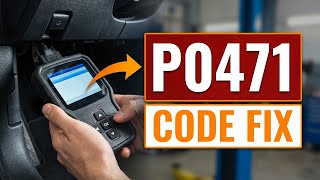
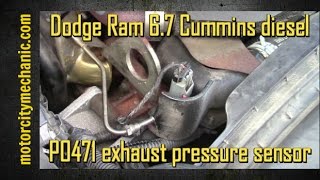
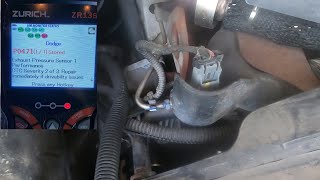

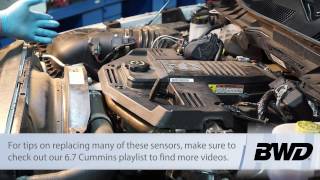

We Have This Part in Stock

The information in this article is provided for general reference and educational purposes only. Vehicle specifications, procedures, and part compatibility can vary by production date, trim level, and region. Always consult your vehicle's factory service manual and verify part numbers before purchasing or performing repairs. Safety-critical components such as airbags, seat belts, and braking systems should be installed by a qualified professional.
- Ram 3500:
- 🎬 Helpful Videos
- 🛍️ Shop This Part
- What's Unique About the 2019-2023 Ram 3500
- Diagnostic Flowchart
- Symptoms You May Notice
- Most Likely Causes
- Rare But Worth Checking
- Diagnosis Steps
- Parts You'll Likely Need
- Related Codes That Often Appear With This One
- Technical Service Bulletins (TSBs) & Recalls
- Platform-Specific Known Issues
- 🎟️ Get 5% Off