

P0463 on 2013-2020 Volkswagen Passat: Fuel Level Sensor 'A' Circuit High
This code means the fuel gauge is unreliable because of a problem with the primary fuel level sensor. The most common fix is replacing the fuel level sending unit, which is often part of the fuel pump assembly. Expect to pay between $300 and $600 for a professional repair.
- P0463 on a VW Passat means your fuel gauge is not working correctly due to a high voltage signal from the main fuel level sensor.
- The most likely cause is a failed fuel level sending unit, which is part of the fuel pump assembly under the rear passenger seat.
- Don't be surprised to see code P2068 along with P0463; this points to the secondary sensor and confirms the issue is with the in-tank components.
- While you can drive the car, you must manually track your fuel consumption using the trip odometer to avoid running out of gas.
- For DIYers, the repair involves removing the rear seat to access the fuel pump module, but be sure to work in a well-ventilated area, disconnect the battery, and have a fire extinguisher nearby.
What's Unique About the 2013-2020 Volkswagen PASSAT

The Volkswagen Passat uses a saddle-shaped fuel tank to fit around the driveshaft or exhaust tunnel, which requires two separate fuel level sensors to get an accurate reading from both lobes of the tank. P0463 refers to the primary sensor ('A' or 'G'), which is integrated into the main fuel pump assembly on the passenger side of the vehicle. A related code, P2068, refers to the secondary sensor ('B' or 'G169'), which is part of a suction-jet pump on the driver's side. The provided NHTSA technical service bulletins show that it's common for these codes to appear together, which strongly points to a failure in the in-tank fuel sending units rather than a random wiring issue. [VIN4APIN20201112, VIN4APIN20201021] A jet pump system actively transfers fuel from the secondary (driver's) side to the primary (passenger's) side where the main fuel pump resides, ensuring the engine is fed even when fuel is sloshing. On some models, the fuel level signals are processed by the J538 Fuel Pump Control Module before being sent to the instrument cluster.
Diagnostic Flowchart

Tap your situation to follow the diagnostic path that matches what you're seeing on this vehicle.
Generation note: The 2013-2020 range covers the North American Market (NMS) Passat. This includes the initial generation (2012-2015), a major facelift (2016-2019), and the first year of the next generation (2020). While styling and features changed, the underlying platform (related to the B7) and its saddle-tank fuel system design are similar, so the causes and fixes for P0463 are generally consistent across these years.
Symptoms You May Notice
- Check Engine Light is on
- Fuel gauge reads full and never moves
- Fuel gauge reads empty when the tank has fuel
- Fuel gauge fluctuates erratically.
- Low fuel warning light stays on.
- Distance-to-Empty (DTE) display is inaccurate or shows zero.
- Replacing the fuel pump without confirming the sending unit is the cause. While they are often in the same assembly, the pump can function perfectly even if the level sensor has failed.
- Replacing the instrument cluster before thoroughly testing the sensor and wiring.
- Confusing the P0463 code with a catalytic converter issue, as one forum user's shop incorrectly diagnosed.
Most Likely Causes

- Faulty Fuel Level Sending Unit 🔴 High Probability The sending unit is a mechanical component with a float and a variable resistor that can wear out or fail over time, leading to an open circuit (infinite resistance). Forum users frequently report this as the cause, often after the fuel gauge starts behaving erratically.
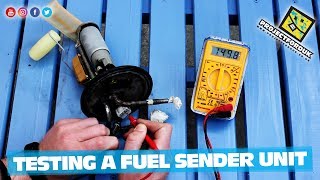
How to confirm: Access the sensor connector under the rear passenger-side seat. Use a multimeter to check the resistance across the sensor's pins. An infinite reading (OL) confirms an open circuit. While specific VW values vary, a healthy sender should show a sweep of resistance as the float moves. A 'high input' code strongly suggests an open circuit. A scan tool can also show live data, which will be stuck at a maximum value, such as 510 ohms.
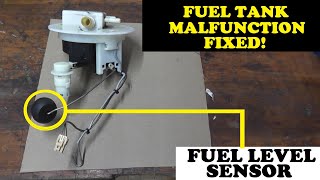
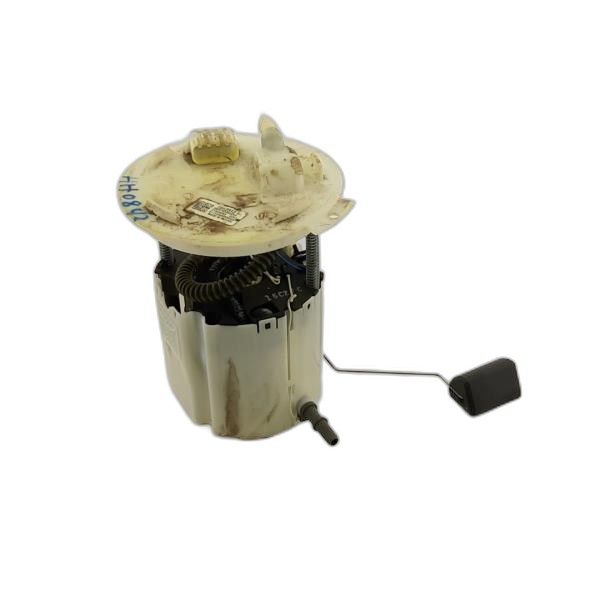
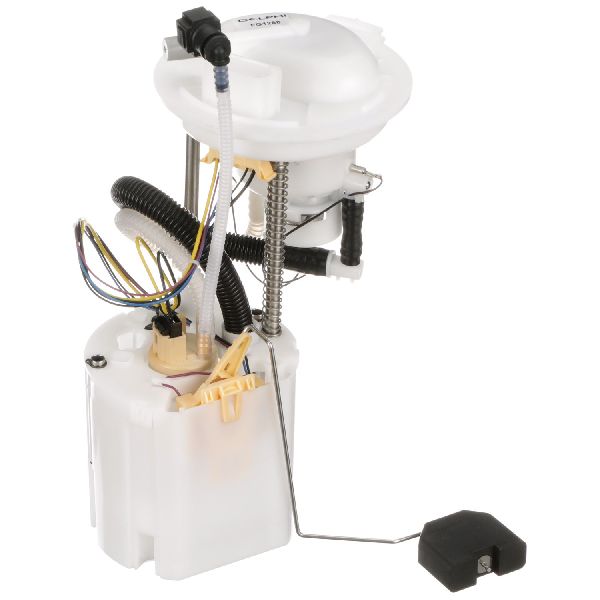
Typical fix: Replace the fuel level sending unit. On the Passat, this is integrated into the in-tank fuel pump module (Part #3AA919051L or similar) and replaced as a single assembly. 🎬 See this walkthrough for replacing a faulty fuel level sensor. This is the most common repair documented by owners.
Est. part cost: $150-$400 - Damaged Wiring or Poor Connection 🟡 Medium Probability The connector is located under the rear seat, where it can be subject to moisture, corrosion, or physical damage if the seat is removed improperly or if liquids are spilled. The pins on the connector can also become loose or pushed out.
How to confirm: Visually inspect the wiring harness and the connector at the top of the fuel pump assembly for any signs of corrosion, pushed-out pins, or breaks. If the sensor tests good, perform a continuity test from the connector to the ECM or Fuel Pump Control Module. A user on a Jeep forum with the same code found that even after replacing the sender, the problem persisted until a wiring issue was found.
Typical fix: Repair the damaged section of the harness or clean/replace the connector. Ensure the connector is fully seated and the locking tab is engaged.
Est. part cost: $10-$50 - Bad Ground Connection ⚪ Low Probability Chassis grounds can corrode over time, increasing resistance in the circuit and causing a high voltage reading. The fuel pump module relies on a solid ground to provide an accurate signal.
How to confirm: Locate the ground point for the fuel pump module circuit (refer to a wiring diagram) and check for corrosion or looseness. Test for high resistance between the ground pin at the connector and a known-good chassis ground.
Typical fix: Clean the ground connection point with a wire brush and re-secure the ground wire.
Est. part cost: $1-$5
Rare But Worth Checking
- Faulty Instrument Cluster: This is rare, but if the sensor and wiring are confirmed to be good, the instrument cluster itself could be failing to interpret the signal correctly. This would likely be accompanied by other gauge-related issues. A user on a VW forum considered this after other fixes failed.
- Faulty Powertrain Control Module (PCM): This is extremely unlikely and should only be considered after all other possibilities have been exhaustively ruled out by a professional.
- Faulty Fuel Pump Control Module (J538): On some VW models, a separate fuel pump control module (J538) is located under the rear seat. While its failure typically causes no-start or drivability issues, it processes the fuel level signal, and a malfunction could theoretically contribute to this code. These modules are known to overheat and fail, sometimes showing visible burn marks.
Diagnosis Steps
- Verify the code with an OBD-II scanner. Check if P2068 is also present.
- Observe the fuel gauge behavior. Is it stuck on full, empty, or fluctuating?
- Use a scan tool to view live data for 'Fuel Level Sensor A'. A 'Circuit High' code will typically show a reading at the maximum value (e.g., 100% or a high resistance reading like 510 Ohms).
- Gain access to the fuel pump/sender assembly. This is under the rear seat on the passenger side for sensor 'A' (G). You will need to pull up firmly on the front of the seat cushion to release it.
- Disconnect the electrical connector. Inspect it for corrosion, moisture, or damaged pins.
- With the connector unplugged, use a multimeter set to Ohms to test the resistance of the sending unit pins (refer to a wiring diagram for correct pins). An infinite reading (OL) indicates an open circuit and a failed sender.
- If the sender shows a plausible resistance, check the wiring harness for continuity and shorts between the sender connector and the ECM. Check for a solid ground connection.
- If replacing the pump assembly, a special lock ring tool is recommended, though many DIYers use a large flat-blade screwdriver and a mallet to loosen the ring.
Parts You'll Likely Need

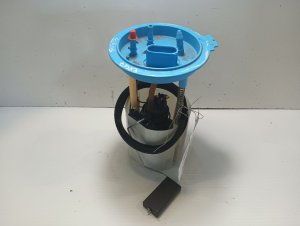
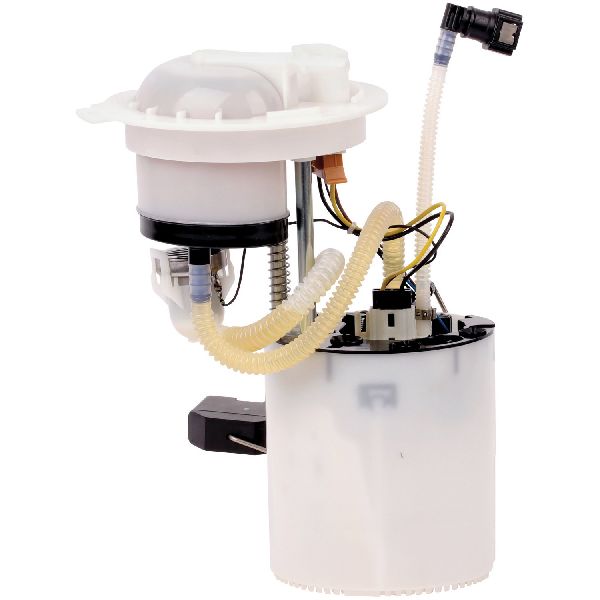
- Fuel Pump and Sender Assembly
(OEM #3AA919051L (superseded by 3C8919051A))— This is the most common failure point. The fuel level sender is integrated into the fuel pump module, and they are typically replaced as one unit for reliability. The original part number 3AA919051L is often superseded by 3AA919051C or 3C8919051A.
Trusted brands: VDO (often the OEM supplier), Bosch, Genuine VW, Continental
OEM price range: $250-$400
Aftermarket price range: $150-$280 - Fuel Tank Seal / Gasket
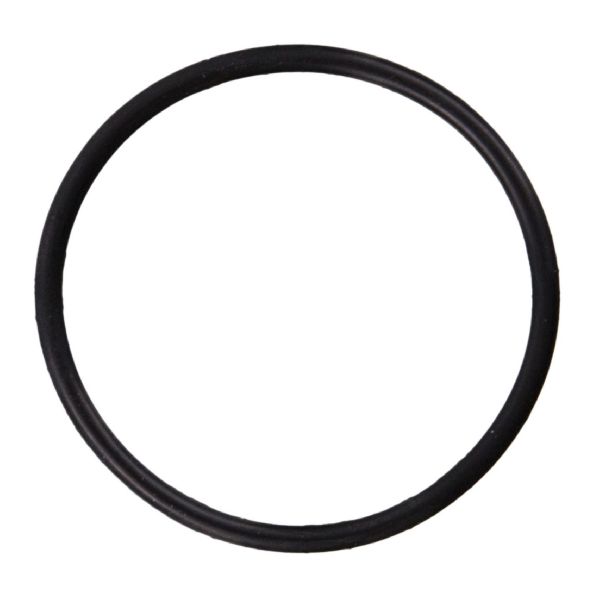
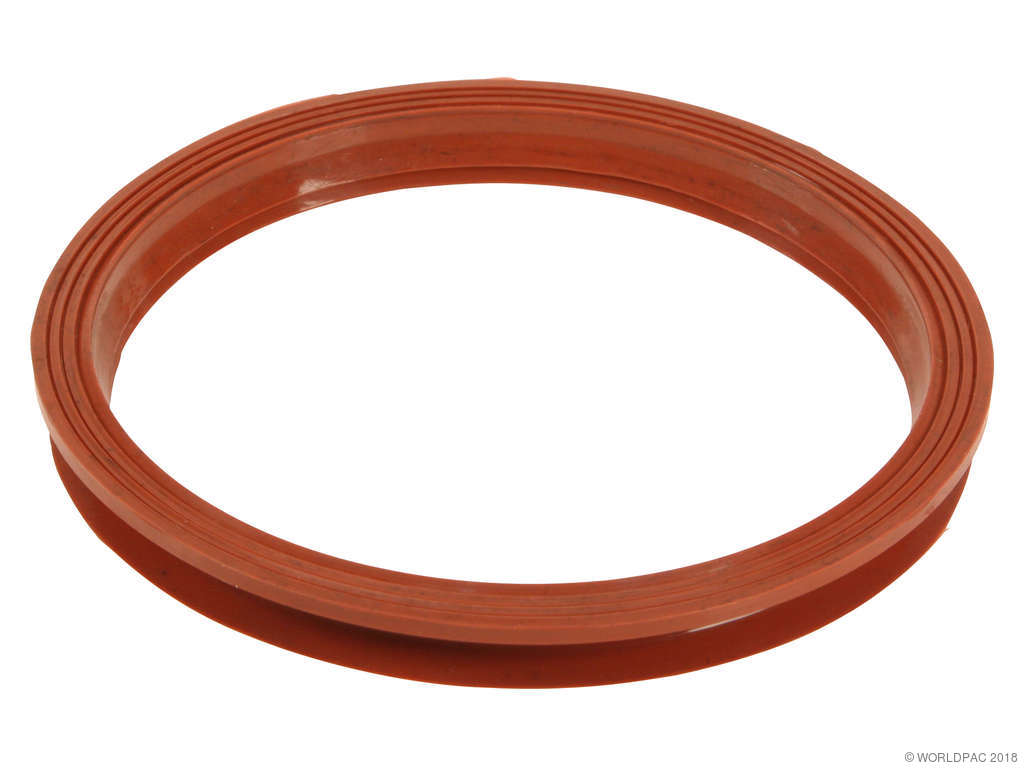
(OEM #1J0919133B)— It is highly recommended to replace the large rubber seal whenever the fuel pump assembly is removed to prevent fuel leaks and vapor smells.
Trusted brands: Genuine VW, Elring
OEM price range: $10-$20
Aftermarket price range: $5-$15
Related Codes That Often Appear With This One
- P2068 — P2068 is 'Fuel Level Sensor 'B' Circuit High'. Since the Passat has two sensors, seeing both P0463 and P2068 together is common and reinforces that the issue is within the fuel tank sending units, as noted in VW's own service bulletins. [VIN4APIN20201112, VIN4APIN20201021] This is a strong indicator that the fault lies with the in-tank components rather than a single wiring problem to one sensor.
Technical Service Bulletins (TSBs) & Recalls
- VIN4APIN20201112: Notes customer complaints of MIL-on with P0463 and P2068 together.
- VIN4APIN20201021: Also lists customer complaints of MIL-on with P0463 and P2068.
- 18-NA-365 (GM): While for a different manufacturer, this TSB for P0463/P2068 describes a similar saddle tank issue where a blocked transfer jet prevents fuel from moving from the secondary to the primary side of the tank, causing the primary sensor to read empty while the secondary sensor shows fuel.
Platform-Specific Known Issues
- The presence of two fuel level sensors (and two potential codes, P0463 and P2068) can sometimes cause confusion. P0463 is for the primary sender (G), typically on the passenger side, while P2068 is for the secondary sender (G169) on the driver's side.
- A Reddit user with a 2016 Passat reported a cracked fuel pump housing causing a fuel smell, which was initially misdiagnosed as a gasket issue. While not directly causing P0463, it highlights potential fragility of the assembly.
- A user on the Ross-Tech forums with a 2014 Passat TDI replaced the sender unit to fix an inaccurate gauge, which initially worked but the problem returned after a few ignition cycles, suggesting potential calibration issues or intermittent faults.
Mechanic-Grade Diagnostic Values
- Fuel Level Sensor Resistance (Combined) — expected: A constant total resistance of ~510-520 Ohms between the two signal pins.. Failure: An open circuit (infinite resistance) or a total resistance value significantly different from 510 Ohms.
- Live Data - Fuel Level Sensor 1 Resistance — expected: A variable reading that changes as fuel level changes.. Failure: A static, maxed-out value such as 510 Ohms, indicating an open circuit or sensor failure.
- Live Data - Fuel Level (VCDS) — expected: A plausible value in Liters, e.g., 63.5L.. Failure: A reading of 0 or an obviously incorrect value that doesn't match the approximate fuel in the tank.
Scan Tool Commands That Help
- VCDS (VAG-COM): Instrument Cluster (17) -> Output Tests (03) — To perform a gauge sweep test. This can help determine if the physical fuel gauge needle in the instrument cluster is stuck or functioning correctly, ruling out a mechanical cluster fault.
- VCDS (VAG-COM): Instrument Cluster (17) -> Adaptation (10) -> Channel 30 — To adjust the fuel gauge calibration. After replacing a sender, if the gauge is slightly inaccurate, this allows for fine-tuning. The value can be adjusted from a base of 128 (range 120-136), with each step corresponding to a 1-ohm change. This should be used for minor corrections, not to compensate for a completely failed sensor.
- VCDS (VAG-COM): Long Coding Helper -> Enable 'Volume to Replenish' — This is not a diagnostic command, but a useful feature to enable. It shows the driver how many liters/gallons are needed to fill the tank, which can be a helpful cross-reference when diagnosing gauge inaccuracy.
Wiring & Ground Locations
- Fuel Pump/Sender Connector — Under the rear seat cushion, on the passenger side, on top of the fuel pump access cover.. This is the primary point for testing the sensor (G) and its wiring. P0463 is caused by a high signal reading from this circuit.
- Ground Connection Point — Wiring diagrams for B6/B7 Passats show multiple potential ground points for fuel system components, including on the firewall (645, 646), on the cylinder head (15), and under the center console (610).. A corroded or loose ground connection for the fuel pump module or instrument cluster can introduce high resistance into the circuit, causing a P0463 code.
- J538 Fuel Pump Control Module — On many models, this module is located under the rear seat, often on the passenger side, installed into the cover for the fuel pump.. This module processes the fuel level signal. A failure within the module, such as from overheating, can disrupt the signal to the instrument cluster and trigger a P0463 code, even if the sender itself is good.
Real Owner Repair Stories
- Ross-Tech Forums (2014 VW Passat TDI SEL) — Fuel gauge would not read full, stopping at about 90%. After a few ignition cycles, it would drop further to 85% and not go back up with refueling. A code for 'HIGH RESISTANCE' was found.
❌ Tried (didn't work) Replacing the fuel level sending unit with a genuine VW part initially seemed to fix it, but the problem returned after 5 ignition cycles.
✅ What actually fixed it The user removed the sender from the tank again and manually moved the float arm while it was still plugged in. The gauge responded correctly, going to full and empty. After reinstalling the same sender unit carefully, the gauge began reading correctly. The final conclusion was that the initial installation may have caused the float arm to be slightly bent or hung up, preventing it from reaching the full stop.
OEM Part Supersession History
3AA919051L→3AA919051C, 3C0919051AK, 3C0919051AE, 3C0919051P, 3C0919051G, and finally 3C8919051A.— Standard part evolution for reliability improvements or supplier changes.
Heads up: The latest part number, 3C8919051A, is listed as compatible with and replaces the previous numbers for the 2013-2020 Passat range.
Helpful Videos
Used OEM Parts in Stock

New Aftermarket Parts Available

The information in this article is provided for general reference and educational purposes only. Vehicle specifications, procedures, and part compatibility can vary by production date, trim level, and region. Always consult your vehicle's factory service manual and verify part numbers before purchasing or performing repairs. Safety-critical components such as airbags, seat belts, and braking systems should be installed by a qualified professional.
- Volkswagen PASSAT:
- 🎬 Helpful Videos
- 🛍️ Shop This Part
- What's Unique About the 2013-2020 Volkswagen PASSAT
- Diagnostic Flowchart
- Symptoms You May Notice
- Most Likely Causes
- Rare But Worth Checking
- Diagnosis Steps
- Parts You'll Likely Need
- Related Codes That Often Appear With This One
- Technical Service Bulletins (TSBs) & Recalls
- Platform-Specific Known Issues
- Mechanic-Grade Diagnostic Values
- Scan Tool Commands That Help
- Wiring & Ground Locations
- Real Owner Repair Stories
- OEM Part Supersession History
- 🎟️ Get 5% Off