

P0463 on 2024 Volkswagen Jetta: Fuel Level Sensor Circuit High Input Causes and Fixes
This code means the fuel level sensor is sending an impossibly high voltage signal, causing an inaccurate fuel gauge. The most common cause is a faulty fuel level sending unit, which is often part of the fuel pump assembly. Expect a repair cost of around $659-$739 at a shop.
- P0463 on a 2024 Jetta indicates a 'high input' from the fuel level sensor, leading to an incorrect fuel gauge reading.
- The most likely cause is a failed fuel level sending unit, which is typically part of the main fuel pump assembly (OEM Part #5QM919051H).
- Before replacing parts, inspect the wiring and connectors, as VW TSBs suggest a potential for broader el
What's Unique About the 2024-2024 Volkswagen JETTA
For the 2024 Jetta, this code is notable because manufacturer Technical Service Bulletins (TSBs) link it to other seemingly unrelated issues like key fob malfunctions and EVAP system codes. This suggests that while a faulty sensor is common, wiring harness or broader electrical issues, possibly related to a shared ground point or a fault within the Vehicle Electrical System Control Module (J519), 🎬 Watch: How to perform Volkswagen instrument cluster output tests. could be an underlying factor on this specific platform, warranting a more thorough diagnostic approach than just replacing the sensor. [Bulletin #VIN4APIN20240523, Bulletin #VIN4APIN20240410]
Diagnostic Flowchart
Tap your situation to follow the diagnostic path that matches what you're seeing on this vehicle.
Symptoms You May Notice
- Check Engine Light is on
- Fuel gauge reads inaccurately (e.g., stuck on full or empty)
- Fuel gauge fluctuates erratically
- Low fuel warning light stays on or flashes
- Engine may stall if the computer is confused about fuel levels, though this is rare
- Replacing the fuel pump when only the sending unit has failed (though they are often sold as one assembly).
- Replacing the instrument cluster before thoroughly testing the fuel level sensor and its wiring circuit.
- Overlooking a simple corroded ground strap on the fuel tank or a damaged connector pin.
Most Likely Causes
- Faulty Fuel Level Sending Unit 🔴 High Probability The sending unit is a mechanical component with a float and a variable resistor (potentiometer) that can wear out or fail over time. It is the most frequent point of failure for this code across most vehicles. On the Jetta, it is integrated into the fuel pump module.
How to confirm: Access the fuel pump assembly under the rear seat. Test the resistance of the sending unit with a multimeter while moving the float arm. The resistance should change smoothly and be within the manufacturer's specified range. An open circuit (infinite resistance) or a reading that doesn't change indicates a bad sensor.
Typical fix: Replace the fuel level sending unit. On the 2024 Jetta, the sender is integrated into the fuel pump module, so the entire assembly is typically replaced.
Est. part cost: $150-$1061 - Wiring or Connector Issue 🟡 Medium Probability Volkswagen TSBs for the 2024 model year link P0463 to other electrical issues, suggesting potential for wiring harness problems. A 'high input' code specifically points to an open circuit, a short to power, or a bad ground connection. Corrosion on the connector at the top of the fuel tank or a damaged ground strap are common culprits.
How to confirm: Visually inspect the wiring harness from the fuel tank to the ECM for any signs of damage, corrosion, or loose connections, particularly at the connector on top of the fuel tank. Check for continuity and for shorts to power using a multimeter and a vehicle-specific wiring diagram. Pay close attention to the ground circuit for high resistance.
Typical fix: Repair the damaged section of the wiring harness, clean or replace the corroded connector, or repair the ground connection.
Est. part cost: $10-$100
Rare But Worth Checking
- Faulty Instrument Cluster: While rare, the instrument cluster itself can fail to interpret the signal from the fuel level sensor correctly. This is usually suspected only after the sensor and wiring have been confirmed to be good.
- Faulty Powertrain Control Module (PCM): This is extremely unlikely and should only be considered as a last resort after all other possibilities have been exhaustively ruled out by a professional. Sometimes a software update may be required.
Diagnosis Steps
- Use an OBD-II scanner to confirm P0463 is the active code and check for any other related codes.
- Check the fuses related to the fuel pump and instrument cluster. For a Mk5/Mk6 generation, this might be fuse 27 in the cabin fuse panel.
- Gain access to the top of the fuel tank (often under the rear seat). Inspect the electrical connector for the fuel pump assembly for corrosion, pushed-out pins, or signs of damage.
- Using a multimeter and a wiring diagram, check for proper voltage (typically a 5V reference) and ground at the fuel level sensor connector. A high input code often results from a loss of ground.
- If power and ground are good, test the sensor's resistance. Connect a multimeter to the sensor's signal and ground pins. The resistance should change smoothly as the fuel level changes. You can sometimes rock the vehicle to slosh fuel and see if the reading fluctuates. An open circuit (infinite resistance) confirms a failed sensor.
- If the sensor tests bad, it needs to be replaced. This requires removing the fuel pump assembly from the tank.
- If the sensor tests good, the problem lies in the wiring between the sensor and the ECM/instrument cluster. Perform a continuity test on the signal and ground wires to find the open or short.
- Given the TSBs linking this to other electrical faults, inspect common ground points in the main wiring harness as a potential source of the issue.
- After repairs, clear the code and drive the vehicle to ensure the fix was successful and the fuel gauge reads correctly.
Parts You'll Likely Need
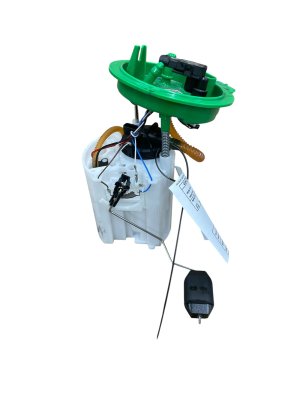
- Fuel Pump Module Assembly
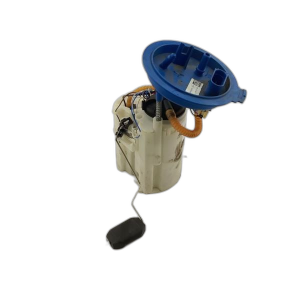
(OEM #5QM919051H)— This is the most common component to fail and directly cause the P0463 code. The fuel level sending unit is integrated with the fuel pump in a single module for this vehicle.
Trusted brands: Bosch, VDO, Genuine VW, Delphi
OEM price range: $967-$1061
Aftermarket price range: $150-$400
Related Codes That Often Appear With This One
- P0462 — This code means 'Fuel Level Sensor 'A' Circuit Low Input.' Seeing it with P0463 can indicate an intermittent wiring problem or a failing sensor that is fluctuating between open and shorted states. The official VW TSBs mention both codes appearing together. [Bulletin #VIN4APIN20240523, Bulletin #VIN4APIN20240410]
- P0442 — This code for a 'Small EVAP System Leak' is mentioned in the same TSBs as P0463 for the 2024 Jetta. This could indicate a shared wiring harness issue, a common ground point problem, or a problem near the fuel tank affecting both systems. [Bulletin #VIN4APIN20240523, Bulletin #VIN4APIN20240410]
Technical Service Bulletins (TSBs) & Recalls
- VIN4APIN20240523: Mentions customer complaints of MIL-on with P0462 and/or P0463, along with fuel gauge issues, EVAP codes, and key fob problems.
- VIN4APIN20240410: Similar to the above, linking P0463 with fuel gauge complaints ('does not read full') and other seemingly unrelated symptoms.
Platform-Specific Known Issues
- NHTSA Technical Service Bulletins for the 2024 model year (VIN4APIN20240523, VIN4APIN20240410) indicate that code P0463 can appear alongside other issues such as P0442 (EVAP leak), a rattle from under the vehicle, and key fob malfunctions. This suggests a potential for a complex electrical issue or wiring harness fault rather than a simple sensor failure. The link between these disparate systems may be a shared, faulty ground connection or an issue within the main vehicle electrical system control module.
- No specific forum threads from 2024 Jetta owners were found due to the newness of the model year. However, owners of previous generation Jettas and platform-mates report that corroded connectors under the rear seat are a common point of failure.
Mechanic-Grade Diagnostic Values
- Fuel Level Sender Resistance (typical older VW) — expected: ~10 Ohms (Full) to ~73 Ohms (Empty). Failure: For P0463, an open circuit (infinite resistance) or a reading significantly higher than the 'Empty' value.
- Fuel Level Sender Resistance (alternate VW range) — expected: ~50 Ohms (Full) to ~270 Ohms (Empty). Failure: An open circuit or reading significantly higher than ~270 Ohms.
- VCDS Measuring Block - Fuel Gauge Resistance (for saddle tanks) — expected: Two separate resistance values for 'Fuel Gauge 1' and 'Fuel Gauge 2'. One side may empty first.. Failure: A reading that is stuck, shows an error, or is wildly out of specification (e.g., maxed out at 287 ohms or higher).
Scan Tool Commands That Help
- VCDS (VAG-COM) or ODIS: Output Test (Function 03) in Instrument Cluster (Address 17) — This is a primary step to rule out a faulty instrument cluster. The command forces a gauge sweep, moving all needles through their full range. If the fuel gauge needle moves correctly during the test, the gauge itself is working, and the fault is almost certainly in the sensor, wiring, or BCM.
- VCDS (VAG-COM) or ODIS: Adaptation (Function 10) in Instrument Cluster (Address 17), Channel 30 — Used to fine-tune the fuel gauge reading. If a replacement sensor is slightly out of spec, this can be used to calibrate the gauge to read correctly. The default value is typically 128, adjustable from 120-136. This is a final calibration step, not a fix for a P0463 code.
Wiring & Ground Locations
- Fuel Pump/Sender Ground — Typically located on the chassis near the fuel tank, often accessible under the rear seat or in the trunk area. It may be a dedicated ground point or part of a larger ground splice pack.. A 'High Input' code is frequently caused by a bad or open ground circuit. The sensor's signal voltage is measured relative to ground; if the ground connection is lost, the control module sees full source voltage (e.g., 5V), triggering the code.
- BCM / J519 (Onboard Supply Control Unit) — Typically located in the driver's side footwell, behind or to the left of the dashboard.. The TSBs linking P0463 to unrelated faults like key fob issues strongly point to a problem with a central module. The J519 controls a wide range of body electrical functions, including interpreting the fuel level signal and managing keyless entry. A fault within this module or its ground connection could cause both symptoms.
Real Owner Repair Stories
- North American Motoring forum user (MINI Cooper R56 (platform uses similar principles)) — P0463 code for left side fuel sending unit, fuel gauge not working, and hidden menu showed **.* for the ohm reading on that side.
❌ Tried (didn't work) Replacing both fuel sending units., Checking for physical obstructions on the float arm., Verifying good connections at the sender., Testing the sender's resistance with a multimeter (it tested OK)., Inspecting wiring harness for damage.
✅ What actually fixed it With the key on, the owner used probes to momentarily short the two signal wires for the problematic sending unit at the connector. This caused the ECU's reading to jump to 'full' for an instant, and after disconnecting the short, the ECU began reading the sensor's resistance correctly. The theory is the ECU was 'stuck' and refused to acknowledge the new sensor until it was forced to see a valid signal change (from open circuit to zero resistance). - GMTNation forum user (Chevrolet Trailblazer) — P0463 code and fuel gauge stuck on empty after having a shop replace the entire fuel pump assembly.
❌ Tried (didn't work) Replacing the fuel pump/sender assembly., Clearing the code (it returned immediately).
✅ What actually fixed it The discussion diagnosed the issue as a likely wiring or connector problem that was not fixed by the part replacement. Key suggestions included: 1) The replacement pump may have come with a pigtail that was improperly spliced. 2) The original connector that broke during the repair may have been replaced incorrectly. 3) The problem could be a bad ground or a short to voltage in the harness between the pump and the PCM, which should have been diagnosed before replacing the pump. The resolution required going back to diagnose the wiring that was overlooked.
When the Usual Fixes Don't Work
- While a faulty sending unit is the most common cause, technicians should be aware of cases where replacing the part does not resolve the issue. In one documented instance on a similar vehicle, a new sending unit was installed, but the P0463 code remained because the vehicle's computer was 'stuck' on the previous fault and needed to be reset by momentarily shorting the sensor signal wires to force a new reading. In another case, a new fuel pump assembly failed to fix the code because the root cause was a wiring issue between the tank and the computer, which was overlooked. The official VW TSBs for the 2024 Jetta strongly support this cautious approach, linking P0463 to other electrical issues that suggest a deeper problem than just the sender itself.
OEM Part Supersession History
5QM919051H→No known supersession.— This appears to be the current part number for the specified vehicle range.
Heads up: Part is confirmed to fit 2019-2021 and 2024 Jetta models, as well as some Taos models.
Helpful Videos

![How to Fix P0463 Engine Code in 2 Minutes [1 DIY Method / Only $11.5]](https://img.youtube.com/vi/vmZ6y3GoXH4/mqdefault.jpg)

Used OEM Parts in Stock
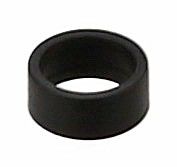
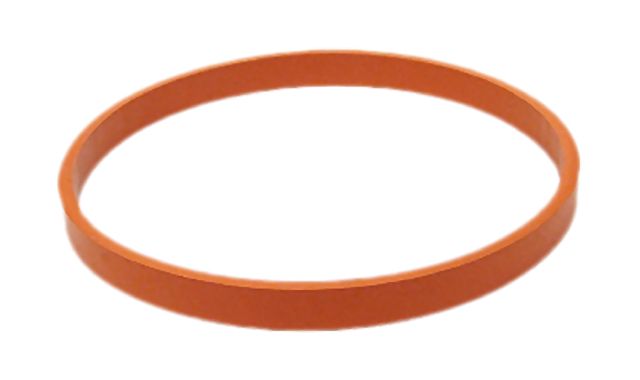
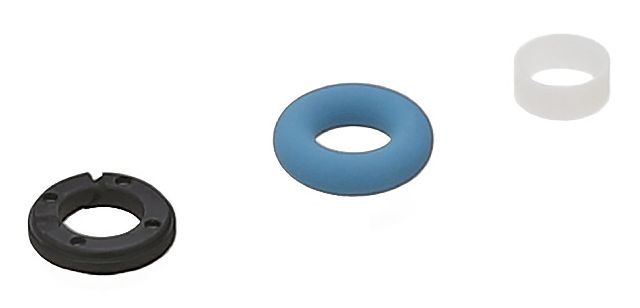
New Aftermarket Parts Available



The information in this article is provided for general reference and educational purposes only. Vehicle specifications, procedures, and part compatibility can vary by production date, trim level, and region. Always consult your vehicle's factory service manual and verify part numbers before purchasing or performing repairs. Safety-critical components such as airbags, seat belts, and braking systems should be installed by a qualified professional.
- Volkswagen JETTA:
- 🎬 Helpful Videos
- 🛍️ Shop This Part
- What's Unique About the 2024-2024 Volkswagen JETTA
- Diagnostic Flowchart
- Symptoms You May Notice
- Most Likely Causes
- Rare But Worth Checking
- Diagnosis Steps
- Parts You'll Likely Need
- Related Codes That Often Appear With This One
- Technical Service Bulletins (TSBs) & Recalls
- Platform-Specific Known Issues
- Mechanic-Grade Diagnostic Values
- Scan Tool Commands That Help
- Wiring & Ground Locations
- Real Owner Repair Stories
- When the Usual Fixes Don't Work
- OEM Part Supersession History
- 🎟️ Get 5% Off