

P0463 on 2016-2020 Nissan Pathfinder: Fuel Level Sensor Circuit High Input Fixes
This code almost always points to a faulty fuel level sensor in the gas tank. On this Pathfinder, Nissan issued a bulletin (NTB22-026) advising technicians to replace only the sensor, not the entire fuel pump assembly, making for a more affordable repair. The gauge will be stuck on 'Full' and you risk running out of gas.
- P0463 on a 2016-2020 Pathfinder means your fuel gauge is not working correctly because of a 'high voltage' signal from the fuel level sensor.
- The most likely cause is a failed fuel level sensor (sending unit) in the fuel tank.
- Do not replace the entire fuel pump assembly. Nissan has confirmed the sensor is a separate, serviceable part via TSB NTB22-026, which saves significant money.
- While you can still drive, you risk running out of gas. Track your mileage as a backup until the repair is made.
- An intermediate DIYer can perform this repair by accessing the fuel tank through a panel under the rear seats. Always replace the fuel tank o-ring at the same time.
What's Unique About the 2016-2020 Nissan PATHFINDER
The 2016-2020 Nissan Pathfinder (R52 generation) and its luxury counterpart, the Infiniti QX60, are known for issues with the fuel level sending unit. The problem became common enough that Nissan released a Technical Service Bulletin (TSB NTB22-026) for its 2016-2022 models. This bulletin specifically instructs dealers to replace only the faulty fuel level sensor rather than the entire, more expensive fuel pump assembly, which is a common misdiagnosis that costs customers unnecessary money.
Diagnostic Flowchart
Tap your situation to follow the diagnostic path that matches what you're seeing on this vehicle.
Symptoms You May Notice
- Check Engine Light is on
- Fuel gauge is inaccurate, often stuck on full
- Distance to Empty (DTE) display is incorrect or blank
- Low fuel warning light may illuminate or flash incorrectly
- Running out of fuel unexpectedly despite the gauge showing fuel
- Replacing the entire fuel pump assembly. Nissan's TSB NTB22-026 explicitly warns against this, as the sensor can be replaced separately at a much lower cost.
- Replacing the instrument cluster. The fault code originates from the PCM's direct reading of the sensor circuit, making the cluster an unlikely cause for this specific code.
Most Likely Causes
- Faulty Fuel Level Sensor (Sending Unit) 🔴 High Probability This is a well-documented issue for this platform, as confirmed by Nissan's own Technical Service Bulletin NTB22-026, which addresses this specific failure for P0463.
How to confirm: The sensor's resistance can be tested with a multimeter. As the float arm is moved from empty to full, the resistance should change smoothly. For many Nissan vehicles, the resistance is higher when empty and lower when full. An out-of-range, unchanging, or infinite (open circuit) reading confirms a bad sensor. A common test is to rock the vehicle side-to-side while monitoring the resistance; it should fluctuate as fuel sloshes.
Typical fix: Replace the fuel level sensor inside the fuel tank. The sensor is available as a separate part from the fuel pump assembly.
Est. part cost: $90-$170 - Damaged Wiring or Connectors 🟡 Medium Probability Wiring issues can occur on any vehicle, but the connector at the top of the fuel pump assembly is exposed to some moisture and dirt. Corrosion or a loose pin can cause an open circuit.
How to confirm: Visually inspect the wiring harness and connector at the fuel pump access panel for any breaks, corrosion, or loose pins. A 'high input' code is often caused by an open circuit (a broken wire) in the signal or ground wire. Use a multimeter to check for continuity between the PCM and the fuel pump connector. Check for a proper ground at the fuel tank grounding strap.
Typical fix: Repair the damaged section of the wire or clean/replace the corroded connector. Ensure the ground strap is clean and secure.
Est. part cost: $5-$50
Rare But Worth Checking
- Faulty Instrument Cluster: While rare, the instrument cluster itself can fail, causing incorrect gauge readings. This is usually suspected only after the sensor and wiring have been confirmed to be good. This would likely not set a P0463 code on its own, as the code is generated by the PCM's reading from the sensor.
- Powertrain Control Module (PCM) Fault: This is extremely unlikely and should be considered a last resort. A PCM failure would typically present with multiple other, more serious symptoms and codes.
Diagnosis Steps
- Scan the vehicle with an OBD-II scanner to confirm P0463 is the primary code.
- Gain access to the top of the fuel tank. On the Pathfinder, this is typically done by removing the rear seat cushion to expose the access panels. There is one on each side (driver and passenger) for the saddle-style tank.
- Disconnect the electrical connector to the fuel pump assembly (usually the passenger side houses the primary sensor).
- Inspect the connector and wiring harness for any visible signs of damage, corrosion, or loose pins.
- Using a multimeter and a wiring diagram, check for proper voltage and ground at the connector. A high input code often points to a loss of ground or a break in the signal wire.
- If wiring is okay, remove the fuel pump assembly from the tank to access the fuel level sensor. Be careful with fuel fumes and disconnect the battery first.
- Manually move the float arm of the sensor up and down while measuring its resistance with a multimeter. The reading should change smoothly and be within the manufacturer's specified range (e.g., ~4-6 Ω full, ~73-85 Ω empty for many Nissans). If it's erratic, stuck at one value, or shows infinite resistance (open), the sensor is bad.
- If the sensor tests good, the problem likely lies in the wiring between the tank and the PCM or, rarely, the instrument cluster.
Parts You'll Likely Need
- Fuel Level Sensor
(OEM #25060-3KA1A)— This is the most common failure point for code P0463 on this vehicle, as identified by owner reports and a manufacturer TSB. It is the sensor for the main (right side) fuel pump assembly.
Trusted brands: Nissan (OEM), Spectra Premium, Delphi
OEM price range: $150-$180
Aftermarket price range: $85-$120 - Fuel Tank O-Ring / Gasket
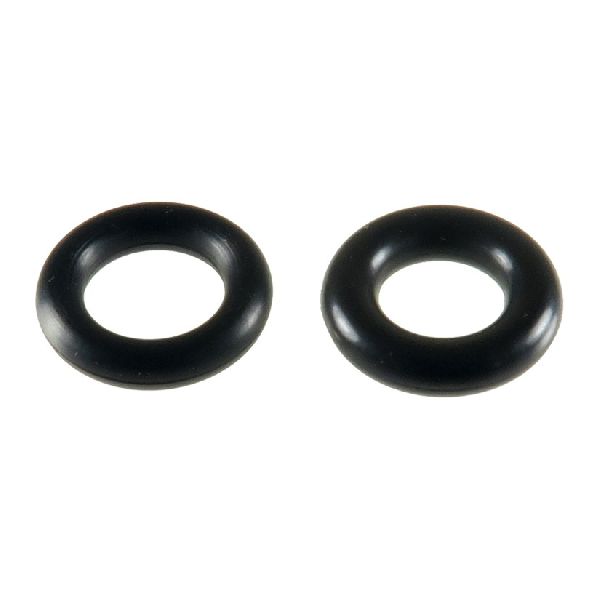
(OEM #17342-EM30A)— This seal should always be replaced when the fuel pump assembly is removed to prevent fuel leaks and vapor smells. It is not reusable.
Trusted brands: Nissan (OEM)
OEM price range: $15-$25
Aftermarket price range: $10-$20
Related Codes That Often Appear With This One
- P0460 — This code relates to 'Fuel Level Sensor Slosh' and can be triggered by the same failing sensor that gives erratic readings.
- P0461 — This indicates an issue with the fuel level sensor's performance or range, often preceding a complete failure that triggers P0463.
- P0462 — This is the opposite of P0463, indicating a 'Circuit Low' input (gauge stuck on empty). It can be caused by the same failing components, just shorting to ground instead of opening.
Technical Service Bulletins (TSBs) & Recalls
- NTB22-026: States that for a P0463 code, the fuel level sensor can be replaced separately and warns against replacing the entire fuel pump assembly. This TSB supersedes earlier versions and applies to a range of Nissan vehicles, including the 2016-2020 Pathfinder.
Platform-Specific Known Issues
- Nissan issued TSB NTB22-026 due to the frequency of this issue. It guides technicians to replace only the fuel level sensor for codes P0460, P0461, P0462, and P0463, and warns that warranty claims for replacing the entire fuel pump assembly for this issue will be rejected.
- Owner experiences frequently mention running out of gas despite the gauge showing a quarter tank or more, highlighting the danger of not addressing the issue promptly.
- The Pathfinder has a saddle-style fuel tank with two sending units. P0463 refers to Sensor 'A', which is typically the primary unit on the passenger side. However, a failure in the secondary (driver's side) unit can also cause gauge inaccuracies.
Mechanic-Grade Diagnostic Values
- Fuel Level Sensor Resistance (Typical Nissan Spec) — expected: Full Tank: ~4.3-6.3 Ω. Half Tank: ~27.7-34.3 Ω. Empty Tank: ~73.3-84.8 Ω. Resistance should change smoothly when moving the float arm.. Failure: A reading of infinite resistance (OL) indicates an open circuit. A reading that is stuck, or spikes/drops out when sweeping the float arm also indicates failure.
- Fuel Level Sensor Signal Voltage at PCM — expected: A variable voltage, typically under 5V, that changes inversely with the fuel level (voltage decreases as level increases).. Failure: A fixed signal of 5 volts indicates an open in the signal or ground circuit, which is the direct trigger for a P0463 code.
Scan Tool Commands That Help
- Nissan CONSULT-III / CONSULT-III Plus: Active Test — After confirming the P0463 code, a technician can use the 'Active Test' function to monitor live data from the fuel level sensor circuit. While a specific 'gauge sweep' isn't documented in the search results, this is the menu where bidirectional tests would be performed to isolate if the fault is with the sender, wiring, or the instrument cluster's interpretation of the signal.
Wiring & Ground Locations
- Fuel Pump Relay Fuse — In the engine compartment fuse box, typically labeled as fuse #47 (15A).. While a blown fuse is unlikely to cause a 'high input' code (it would typically cause a no-start), checking it is a fundamental step in any fuel system electrical diagnosis. The relay it powers is critical for the entire fuel pump assembly's operation.
- Fuel Pump Assembly Connector — Under the rear seat cushion, beneath a metal access panel (typically on the passenger side for the primary 'A' sensor).. This is the primary access point for testing the fuel level sensor's resistance and checking for voltage/ground on the circuit without dropping the fuel tank.
Real Owner Repair Stories
- NPORA Forums (2002 Nissan Pathfinder (R50 generation)) — Ran out of fuel unexpectedly while the gauge still read 1/4 of a tank.
❌ Tried (didn't work) Initially suspected the fuel sending unit was faulty.
✅ What actually fixed it The owner removed the instrument cluster and found cracked solder joints on resistors for the fuel gauge circuit (pins 17 and 23). Re-soldering these connections on the cluster's printed circuit board resolved the inaccurate gauge reading. - YouTube (2001 Nissan Pathfinder (R50 generation)) — Engine would crank but not start, and the fuel gauge read zero.
✅ What actually fixed it Upon accessing the fuel pump under the rear seat, the owner discovered that rodents had chewed through the wiring at the connector. Splicing and repairing the damaged wires restored function to both the fuel pump and the fuel gauge.
When the Usual Fixes Don't Work
- While the TSB and common wisdom point directly to the fuel level sensor for P0463, there are documented cases on older Pathfinders where the root cause was entirely different. In one instance, after confirming the sensor and wiring were good, the actual problem was found to be cracked solder joints on the resistors within the instrument cluster itself. This serves as a reminder that if the common fix doesn't work, the fault can lie further down the circuit in the processing component (the gauge cluster), even if the code is generated by the PCM.
OEM Part Supersession History
25060-3KA1A→No supersession found in search results.
Model Year Variations Within This Range
- 2017-2020: The 2017 model year marked a significant mid-cycle refresh for the Pathfinder. While the fuel tank and sending unit part numbers remained the same, the 3.5L VQ35DE engine was heavily updated to the VQ35DD, which included the addition of direct injection, new pistons, and a higher compression ratio. This does not directly affect the P0463 code but is a major mechanical difference within the specified vehicle range.
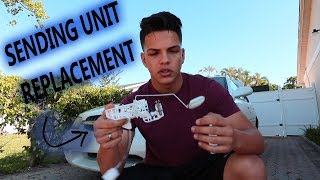
Helpful Videos
We Have This Part in Stock


The information in this article is provided for general reference and educational purposes only. Vehicle specifications, procedures, and part compatibility can vary by production date, trim level, and region. Always consult your vehicle's factory service manual and verify part numbers before purchasing or performing repairs. Safety-critical components such as airbags, seat belts, and braking systems should be installed by a qualified professional.
- Nissan PATHFINDER:
- 🎬 Helpful Videos
- 🛍️ Shop This Part
- What's Unique About the 2016-2020 Nissan PATHFINDER
- Diagnostic Flowchart
- Symptoms You May Notice
- Most Likely Causes
- Rare But Worth Checking
- Diagnosis Steps
- Parts You'll Likely Need
- Related Codes That Often Appear With This One
- Technical Service Bulletins (TSBs) & Recalls
- Platform-Specific Known Issues
- Mechanic-Grade Diagnostic Values
- Scan Tool Commands That Help
- Wiring & Ground Locations
- Real Owner Repair Stories
- When the Usual Fixes Don't Work
- OEM Part Supersession History
- Model Year Variations Within This Range
- 🎟️ Get 5% Off