

P0463 on 2016-2022 Nissan Murano: Fuel Level Sensor Circuit High Input Fixes
This code means your Murano's computer sees a voltage from the fuel level sensor that's too high, usually causing an incorrect fuel gauge reading. The most common fix is replacing the fuel level sensor itself. A Nissan TSB confirms the sensor can be replaced separately from the entire fuel pump assembly, saving significant cost.
- P0463 on a 2016-2022 Murano points to a high voltage signal from the fuel level sensor.
- The most common cause is a failed fuel level sensor, which will lead to an inaccurate fuel gauge.
- A critical cost-saving tip comes from Nissan TSB NTB22-026: replace only the sensor, not the entire expensive fuel pump assembly.
- Diagnosis involves testing the sensor's resistance and checking the wiring for damage.
- This is a manageable DIY repair for those comfortable working with fuel system components, but requires care and safety precautions like disconnecting the battery and relieving fuel pressure.
What's Unique About the 2016-2022 Nissan MURANO
For the 2016-2022 Nissan Murano, this code is a known issue addressed by Nissan. Technical Service Bulletin (TSB) NTB22-026 specifically points out that for P0463 and related codes, the fuel level sensor can be replaced on its own. This is a crucial detail because many shops might opt to replace the entire fuel pump assembly, a much more expensive repair. The Murano's saddle-style fuel tank also means there are two fuel level sensors—a primary (left side) and a sub-sensor (right side)—and diagnosis must determine which one is faulty. The P0463 code specifically refers to the 'A' circuit, which typically corresponds to the primary sensor located with the fuel pump.
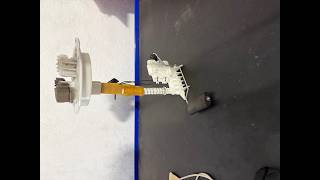
🎬 Watch: Step-by-step P0463 diagnosis and sensor replacement walkthrough.Diagnostic Flowchart
Tap your situation to follow the diagnostic path that matches what you're seeing on this vehicle.
Symptoms You May Notice
- Check Engine Light is on
- Fuel gauge is stuck on full or empty
- Fuel gauge fluctuates erratically
- Low fuel warning light is on or flashing, even with fuel in the tank
- Fuel gauge reads inaccurately, for example showing 3/4 full after a complete fill-up.
- Replacing the entire fuel pump assembly when only the fuel level sensor is faulty. TSB NTB22-026 explicitly warns against this for warranty claims, highlighting that the sensor is a separate, serviceable part. RepairPal estimates for replacing the entire sending unit can be over $1,600, demonstrating the significant cost of this misdiagnosis.
Most Likely Causes
- Faulty Fuel Level Sensor (Sending Unit) 🔴 High Probability This is a known issue for Nissan vehicles, as acknowledged by TSB NTB22-026. The sensor's internal resistor contacts can become dirty or worn, causing an open circuit.
How to confirm: Access the sensor and test its resistance with a multimeter while moving the float arm. The resistance should change smoothly. An open circuit (infinite resistance) or a reading that doesn't change indicates a bad sensor. Some owners have had success temporarily fixing the issue by cleaning the sensor's contacts with fine-grit sandpaper.
Typical fix: Replace the faulty fuel level sensor. Per TSB NTB22-026, the sensor can be replaced separately from the fuel pump assembly. The primary sensor is the most common failure point.
Est. part cost: $70-$150 - Damaged Wiring or Corroded Connectors 🟡 Medium Probability The wiring harness runs to the fuel tank and can be exposed to moisture and physical damage over time, leading to corrosion or breaks in the circuit. The connectors on top of the fuel tank access panels are a common point to inspect.
How to confirm: Visually inspect the wiring harness and connectors between the fuel tank and the PCM for any signs of damage, corrosion, or loose connections. Perform a continuity test on the signal wire.
Typical fix: Repair the damaged section of wire or clean/replace the corroded connector.
Est. part cost: $10-$50 - Poor Ground Connection ⚪ Low Probability
How to confirm: Locate the ground strap for the fuel tank/sensor circuit and inspect it for corrosion or looseness. Test the ground circuit with a multimeter to ensure there is minimal resistance to the chassis ground. However, if the fuel pump is operating normally, a bad ground is less likely to be the cause.
Typical fix: Clean the grounding point and re-secure the connection.
Est. part cost: $0-$10
Rare But Worth Checking
- Faulty Instrument Cluster: While rare, the instrument cluster itself can fail, causing incorrect gauge readings. This should only be considered after the sensor and wiring have been confirmed to be good.
- Faulty Powertrain Control Module (PCM): This is extremely unlikely. The PCM is the last component to suspect. It should be professionally diagnosed and only considered after all other possibilities have been exhausted.
Diagnosis Steps
- Confirm the P0463 code is present using an OBD-II scanner.
- Check for any Technical Service Bulletins (TSBs) related to this code for your vehicle, specifically NTB22-026.
- Using a scan tool with live data, observe the voltage from the fuel level sensor. A reading that is stuck high (often near 5 volts) confirms the 'Circuit High' condition.
- Perform a safety check: disconnect the negative battery terminal and relieve fuel system pressure by opening the gas cap before working on the fuel system.
- Gain access to the fuel level sensor(s) by removing the rear seat bottom cushion and the access panels. There is one on the driver's side (primary) and one on the passenger's side (sub).
- Inspect the wiring and connectors at the top of the fuel tank for any visible damage, corrosion, or loose pins.
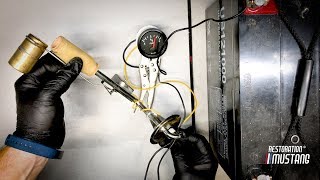
- Disconnect the sensor and test its resistance with a multimeter while manually moving the float arm. The resistance should change smoothly through its range of motion. An infinite resistance reading indicates an open circuit and a faulty sensor.
- If the sensor tests good, check for continuity and shorts in the wiring harness between the sensor connector and the PCM.
- If the sensor is faulty, replace it. If the wiring is damaged, repair it.
Parts You'll Likely Need
- Fuel Level Sensor (Sending Unit)
(OEM #25060-5AA1A)— This is the most common failure point for code P0463, as confirmed by Nissan's own TSB. The sensor's internal components wear out over time. This part number corresponds to the primary (left side) sensor.
Trusted brands: Nissan OE, Dorman (e.g., 911-251, 911-253), NGK, Standard Motor Products
OEM price range: $120-$180
Aftermarket price range: $70-$150
Related Codes That Often Appear With This One
- P0460 — Relates to the Fuel Level Sensor Circuit, often set alongside other fuel level codes.
- P0461 — Indicates a performance/range issue with the fuel level sensor circuit.
- P0462 — Indicates Fuel Level Sensor Circuit Low Input, the opposite of P0463, but can be triggered by related faults.
- U1000 — A CAN communication line issue that can sometimes appear with sensor circuit faults, indicating a broader network problem.
Technical Service Bulletins (TSBs) & Recalls
- NTB22-026: Service Information for Fuel Gauge Inaccurate with DTCs Stored in ECM. This TSB confirms that for P0463, the fuel level sensor can and should be replaced separately from the entire fuel pump assembly.
Platform-Specific Known Issues
- Nissan issued TSB NTB22-026 for the 2016-2022 Murano (and other models) regarding inaccurate fuel gauges with DTCs like P0463. The bulletin explicitly states that if the fuel level sensor is diagnosed as the cause, it should be replaced separately, and replacing the entire fuel pump assembly is unnecessary.
- The Murano uses a saddle-style tank with two separate sending units. The primary unit ('A' sensor) is on the driver's side with the fuel pump, and the sub-unit ('B' sensor) is on the passenger's side. P0463 points to the 'A' sensor.
Mechanic-Grade Diagnostic Values
- Primary Fuel Level Sensor Resistance — expected: Approximately 4 to 83 Ohms, sweeping smoothly as the float arm is moved. Some sources suggest a range of 31 Ohms (full) to 247 Ohms (empty) for similar systems.. Failure: A reading of 'OL' (Open Loop/infinite resistance) or a reading that jumps, sticks, or doesn't change when moving the float arm.
- Voltage at Fuel Level Sensor Signal Wire — expected: A variable voltage, typically between 0.5V and 4.5V, that corresponds to the fuel level.. Failure: A constant high voltage (near 5V) indicates an open circuit or a short to power, which triggers P0463.
Scan Tool Commands That Help
- Nissan CONSULT: Instrument Cluster Self-Diagnosis / Gauge Sweep — To verify if the instrument cluster and fuel gauge needle are physically capable of operating correctly. If the gauge sweeps its full range during the test but reads incorrectly during normal operation, it points away from the cluster being the fault and towards the sensor or wiring.
Wiring & Ground Locations
- Fuel Pump / Level Sensor Connector (Primary) — On top of the fuel pump assembly, under the rear seat on the driver's (left) side.. This is the main connection point for the 'A' circuit sensor. The signal wire and ground wire pins at this connector are where resistance and voltage tests are performed to diagnose the sensor and circuit integrity.
- Fuel Pump Fuse — In the under-hood fuse box (IPDM E/R), typically a 15A fuse.. While a blown fuse would typically cause a no-start condition (P0230) rather than just a P0463, checking it is a quick, simple preliminary step. An intermittent connection at the fuse could potentially cause erratic voltage signals.
Real Owner Repair Stories
- YouTube video by 'A2Z Auto Masters' (2009 Nissan Murano (Z51 generation, but demonstrates the same saddle tank and dual-sensor principle as the Z52)) — Check Engine Light with code P0463, inaccurate fuel gauge.
❌ Tried (didn't work) The video proceeds directly to replacement, implying diagnosis confirmed the sensor was the fault.
✅ What actually fixed it The video demonstrates the replacement of both the primary (driver side) and sub (passenger side) fuel level sensors, which resolved the code.
OEM Part Supersession History
25060-CA00A, 25060-CA00B, 25060-CA00C→25060-5AA1A (for the 2016-2022 generation)— Part evolution and updates across vehicle generations. The older part numbers apply to previous Murano generations (e.g., 2003-2009).
Heads up: Using a part number from an older generation will not work; the resistance range and physical fitment are different. 25060-5AA1A is the correct primary sensor for the 2016-2022 Murano.
Helpful Videos


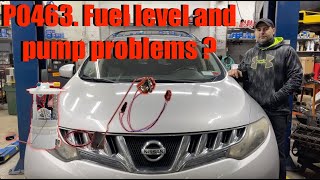
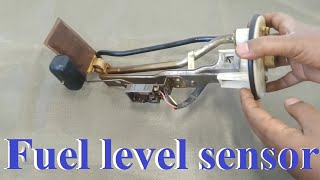

We Have This Part in Stock

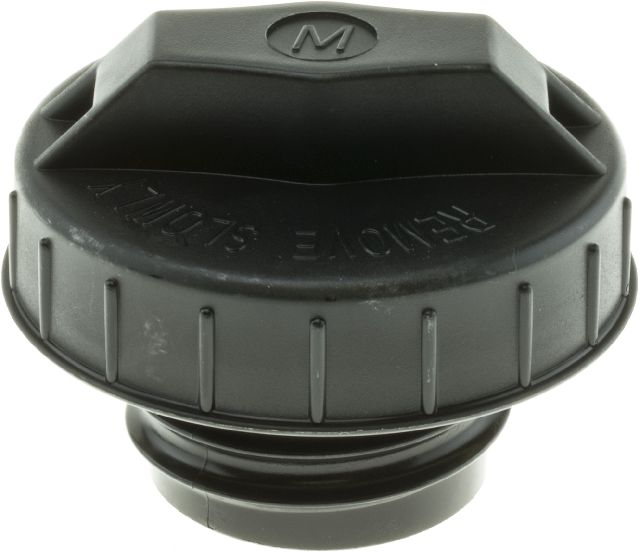

The information in this article is provided for general reference and educational purposes only. Vehicle specifications, procedures, and part compatibility can vary by production date, trim level, and region. Always consult your vehicle's factory service manual and verify part numbers before purchasing or performing repairs. Safety-critical components such as airbags, seat belts, and braking systems should be installed by a qualified professional.
- Nissan MURANO:
- 🎬 Helpful Videos
- 🛍️ Shop This Part
- What's Unique About the 2016-2022 Nissan MURANO
- Diagnostic Flowchart
- Symptoms You May Notice
- Most Likely Causes
- Rare But Worth Checking
- Diagnosis Steps
- Parts You'll Likely Need
- Related Codes That Often Appear With This One
- Technical Service Bulletins (TSBs) & Recalls
- Platform-Specific Known Issues
- Mechanic-Grade Diagnostic Values
- Scan Tool Commands That Help
- Wiring & Ground Locations
- Real Owner Repair Stories
- OEM Part Supersession History
- 🎟️ Get 5% Off