

P0462 on 2010-2015 Toyota Prius: Fuel Level Sensor Circuit Low Causes and Fixes
This code means your fuel gauge is getting an incorrect low voltage signal. The most common fix is replacing the fuel level sending unit inside the fuel tank, which costs about $90-$140 for the OEM part. It's a DIY-friendly job for those comfortable working near the fuel tank.
- P0462 on a 2010-2015 Prius points directly to a problem with the fuel level sensor circuit, indicating a voltage that is too low.
- The most likely culprit is the fuel level sending unit itself (OEM Part #83320-47080), which is a known wear item.
- Before starting repairs, ensure you're not just experiencing the normal Prius quirk where the gauge doesn't update after adding less than 3 gallons of fuel.
- The repair is accessible for DIYers by removing the rear seat, avoiding the need to drop the fuel tank.
What's Unique About the 2010-2015 Toyota Prius
The third-generation Prius (2010-2015) has a fuel system quirk that owners should know about: adding less than about three gallons of fuel may not cause the fuel gauge to update immediately. This is normal behavior designed to prevent gauge fluctuation from fuel sloshing and should not be mistaken for a P0462 fault. The actual fault is almost always the sending unit itself, which is conveniently accessible by removing the rear seat cushion and a metal service cover, making it a more straightforward DIY job than on vehicles that require dropping the entire fuel tank.
Symptoms You May Notice
- Check Engine Light is on
- Fuel gauge reads empty, even after filling the tank.
- Fuel gauge fluctuates erratically or is stuck in one position (full, half, etc.).
- Low fuel warning light stays on.
- Fuel gauge does not change after refueling.
- Replacing the entire fuel pump assembly. The fuel level sender is often sold as a separate component that attaches to the fuel pump module. On the Prius, you can typically replace just the sender without needing to buy the whole pump, saving significant cost.
- Panicking after a small refuel. Prius owners often mistake the gauge's slow update after adding less than 3 gallons of gas for a system fault. This is normal operation for the vehicle.
Most Likely Causes
- Faulty Fuel Level Sending Unit 🔴 High Probability The sending unit contains a variable resistor with a wiper that moves as the fuel level changes. Over time, the resistive strip can wear out or develop deposits, creating 'dead spots' or a short, which results in a low voltage signal. This is a common wear item on many vehicles.
How to confirm: Access the top of the fuel pump assembly under the rear seat. Disconnect the sender and measure its resistance with a multimeter. The resistance should change smoothly as the float arm is moved. A reading of near-zero ohms or an open circuit (infinity) indicates a failed sender. While specific values for the Gen 3 Prius are not published in generic manuals, a Gen 2 Prius has a range of approximately 4-10 ohms at full and 110-120 ohms at empty; a failed sender will often read much higher or show an open circuit. Any sudden jumps or dropouts during the sweep test confirm failure. 🎬 See how to test a fuel level sensor without removing the pump.
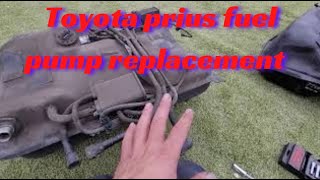
Typical fix: Replace the fuel sender gage assembly. 🎬 Watch this video to see how to replace the Prius fuel sending unit. It is mounted to the fuel pump module inside the tank and can be replaced separately from the fuel pump itself.
Est. part cost: $90-$140 - Wiring or Connector Issue 🟡 Medium Probability The main electrical connector sits on top of the fuel tank assembly, under a cover below the rear seat. It is susceptible to moisture intrusion if the cover is not sealed properly, leading to corrosion. Wires can also be damaged by rodents, which is a surprisingly common issue reported by Prius owners.
How to confirm: Visually inspect the connector for green or white corrosion, bent pins, or melted plastic. Check the wiring harness for any signs of chafing or breaks, particularly where it runs under the carpet and seats. A horrifying example found on PriusChat involved a previous owner running a bypass wire through the main seal, causing an EVAP leak.
Typical fix: Clean the connector terminals with an electrical contact cleaner and apply dielectric grease. If corrosion is severe, the connector pigtail may need to be replaced. Repair any damaged wires.
Est. part cost: $10-$30
Rare But Worth Checking
- Faulty Instrument Cluster: If the sending unit and wiring are confirmed to be good, the problem could lie within the dashboard instrument cluster (combination meter) itself, which processes the signal for the gauge. This is uncommon, but not impossible, as a bad solder joint or internal component failure can cause this.
- Faulty Powertrain Control Module (PCM): This is extremely rare. The PCM is the last component to suspect after all other possibilities, including the wiring and instrument cluster, have been thoroughly ruled out.
Diagnosis Steps
- Read the code with an OBD-II scanner to confirm P0462 is present.
- Check for normal Prius behavior: If the issue occurred after adding only a small amount of fuel, fill the tank completely and drive for a few minutes to see if the gauge resets. If it does, no fault is present.
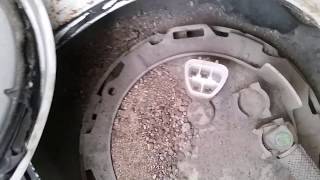
- Access the fuel sender: Remove the rear seat bottom cushion. Pry up the black metal service cover to expose the top of the fuel tank 🎬 Watch this step-by-step guide to accessing and replacing the fuel pump assembly. and fuel pump assembly.
- Inspect the connector: Disconnect the main electrical connector and inspect for any signs of corrosion, moisture, or damage. Clean as necessary.
- Test the circuit: With the key on, use a multimeter set to DC Volts to check for the proper reference voltage (usually 5V) at the vehicle-side harness connector. A reading significantly below this could indicate a wiring issue or a problem with the PCM.
- Test the sender: Use a multimeter set to Ohms to test the resistance across the correct pins for the fuel level sender on the fuel pump assembly side. Manually move the float arm (after removing the assembly) and watch for a smooth change in resistance. A reading of near-zero or infinity indicates a failed sender.
- If the sender and wiring test good, the issue may be with the instrument cluster or, rarely, the PCM.
Parts You'll Likely Need
- Fuel Sender Gage Assembly
(OEM #83320-47080 (replaces 83320-47050))— This is the component that fails most frequently, causing the P0462 code. It is the sensor that directly measures the fuel level.
Trusted brands: Toyota (Genuine OEM)
OEM price range: $90-$140
Aftermarket price range: $40-$80
Related Codes That Often Appear With This One
- P0463 — P0463 is 'Fuel Level Sensor Circuit High Input'. It's common to see this code along with P0462 if the sensor is failing erratically, causing the voltage signal to swing from one extreme to the other.
Platform-Specific Known Issues
- Dealer vs. Independent Repair Cost: A user on PriusChat reported being quoted over $1000 by a dealership to fix a fuel gauge issue, claiming the entire fuel pump assembly needed replacement. An independent shop quoted a more reasonable price to replace only the necessary sending unit. This highlights the importance of understanding that the sender can be replaced separately.
- Magical Self-Fixing Gauge: One owner on PriusChat reported their fuel gauge was stuck on empty for over 1,000 miles of a road trip before it 'magically fixed itself' after a fill-up. This could point to an intermittent connection or a temporarily stuck float that eventually freed itself.
Mechanic-Grade Diagnostic Values
- Fuel Level Sensor Signal Voltage — expected: 0.5V - 4.5V. Failure: A constant voltage below 0.5V, and especially below 0.25V, will trigger the P0462 code.
- Fuel Level Sensor Resistance (Gen 2 for reference) — expected: ~10-15 Ohms (Full) to ~100-120 Ohms (Empty). Failure: A reading of near-zero ohms, an open circuit (infinite resistance), or values that jump erratically when moving the float arm indicate failure.
Scan Tool Commands That Help
- Toyota Techstream: Active Test: Fuel Pump / Spd — While this directly tests the fuel pump circuit, not the sender, it is a relevant bidirectional control in the fuel system that can be used to verify the operation of the circuit opening relay and pump motor, helping to isolate the fault to the sender circuit.
- Toyota Techstream: Data List (Live Data) — Monitor the 'Fuel Level Sensor' voltage or 'Fuel Tank Level' percentage PID. A value that is stuck at 0 or a very low number regardless of the actual fuel in the tank points directly to the circuit fault.
Wiring & Ground Locations
- Fuel Pump/Sender Connector — On top of the fuel pump assembly, accessible by removing the rear seat cushion and a metal service cover.. This is the primary connection point for the fuel level sender. It is a common location for corrosion or damage that can cause a short to ground, triggering P0462.
- Fuel Tank Ground Strap — A strap connecting the fuel tank assembly to the vehicle's chassis, typically secured with a 10mm bolt.. A poor ground connection can cause fluctuating or incorrect voltage readings from the sender. While this more often causes high circuit codes (P0463), a corroded or intermittent ground can cause a variety of electrical issues.
- GE01 — A ground point identifier shown in wiring diagrams for the fuel system.. This is a reference point for technicians tracing the ground circuit from the fuel tank sender back to the chassis to check for continuity.
Real Owner Repair Stories
- PriusChat Forum Thread (2006 Toyota Prius (Gen 2, but demonstrates a relevant failure mode)) — Check Engine Light with EVAP codes P0455 (gross leak) and P0441 (incorrect purge flow) appeared after a combination meter (instrument cluster) repair.
❌ Tried (didn't work) The owner's OBD-II reader could not connect, requiring a dealer visit.
✅ What actually fixed it A dealer smoke test found a major leak at the top of the fuel tank. A previous owner had attempted a fix for a faulty fuel gauge by running a 'yellow bypass wire' directly through the sending unit's main seal. This improper repair compromised the seal, causing a massive EVAP leak. The fix required removing the faulty wiring and properly sealing the fuel tank, in addition to addressing the original fuel sender issue.
OEM Part Supersession History
83320-47050→83320-47080— Standard part revision by the manufacturer for improvements or supplier changes.
Diagnostic Flowchart
Other Known Issues on This Vehicle
Issues unrelated to this code that are worth knowing about as an owner of this generation:
- Excessive Oil Consumption 🔴 High — Very common in higher-mileage (100k+ miles) 2010-2014 models. Caused by faulty piston ring design allowing oil to burn off. (Ref: Toyota issued TSB-0160-17 but no recall. Fix involves replacing pistons and rings.)
- Brake Booster / Actuator Assembly Failure 🔴 High — Common across the generation. Causes a hard brake pedal and loss of braking power, often accompanied by warning lights and a loud buzzing noise. (Ref: Subject of multiple warranty extensions and recalls (e.g., NHTSA Campaign 13V235000).)
- Inverter Failure 🔴 High — A well-known issue, particularly on earlier models of this generation. The inverter coolant pump can fail, causing the inverter to overheat, which can shut the car down while driving. (Ref: Toyota issued a Customer Support Program (like an extended warranty) and recalls to update software or replace the inverter (Intelligent Power Module).)
- EGR System Clogging 🟠 Medium — Extremely common after 100k-120k miles. The EGR valve, pipe, and cooler get clogged with carbon, leading to engine knocking, rough idle, and can contribute to head gasket failure. (Ref: No recall, but it's a widely recognized maintenance item. Cleaning the EGR circuit is recommended preventatively.)
- Head Gasket Failure 🔴 High — A potential consequence of EGR clogging and overheating. More common on engines that have not had the EGR system cleaned. Symptoms include coolant loss and engine shaking. (Ref: No recall, but it is a known failure pattern for the 2ZR-FXE in this application.)
Used vs. New Parts: Buying Guide for This Vehicle
When a used part is the smart pick: A used fuel sender is generally not recommended as the internal resistor is a wear item. It should only be considered as a last resort for budget reasons, with the understanding that it may have a very limited lifespan and the labor may need to be repeated.
Donor-vehicle mileage cap: roughly under 80000 miles for the part to have meaningful remaining life.
What to inspect on the donor part:
- Visually inspect the electrical connector for any signs of white or green corrosion.
- Ensure the float arm moves freely without binding or sticking.
- If possible, use a multimeter to sweep the resistance from empty to full, watching for smooth changes without any dropouts (open circuit) or spikes.
OEM-only on this vehicle (don't cheap out):
- Fuel Sender Gage Assembly
Aftermarket brands forum-validated for this vehicle:
- Denso (often the Original Equipment Manufacturer for Toyota)
Real Owner Stories
Aggregated from forums and TSBs cited above. Mileages and costs reflect what owners reported in those sources.
2010-2015 Toyota Prius 2ZR-FXE
Symptoms: Fuel gauge was stuck on empty for over 1,000 miles of a road trip.
What fixed it: The gauge 'magically fixed itself' after a subsequent fill-up, likely due to an intermittent connection or a temporarily stuck float freeing itself.
Source hint: PriusChat: 'Fuel Gauge always reads empty even when gas if full'
2010-2015 Toyota Prius 2ZR-FXE
Symptoms: Fuel gauge not responding after a fill up.
What fixed it: No repair needed; confirmed as the 'less than 3-gallon' fill-up quirk where the system requires a larger volume of fuel to trigger a gauge update.
Source hint: PriusChat: 'Gas Guage not responding after fill up'
2010-2015 Toyota Prius 2ZR-FXE
Symptoms: Fuel gauge malfunction; previous owner attempted a repair by running a bypass wire through the main seal.
What fixed it: The incorrect bypass wire repair actually caused an additional EVAP leak; the proper fix involves inspecting the connector for corrosion or replacing the sender.
Source hint: PriusChat: 'Fuel Gauge malfunction and fuel sending unit'
2010-2015 Toyota Prius 2ZR-FXE
Symptoms: Fuel gauge issue; dealership quoted over $1000 claiming the entire fuel pump assembly required replacement.
What fixed it: Replacing only the necessary sending unit at an independent shop for a more reasonable price.
Cost: $90-$140
Source hint: PriusChat: 'Fuel Gauge always reads empty even when gas if full'
Related OBD-II Codes
Frequently Asked Questions
I just added a small amount of gas and my Prius fuel gauge didn't move. Is my sending unit broken?
My dealership says I have to replace the entire fuel tank to fix the P0462 code. Is this true?
Can I use a multimeter to test the fuel sender on my Gen 3 Prius?
Are there any known wiring issues on the Prius that cause fuel gauge errors?
Does the Lexus CT200h suffer from the same P0462 issues as the Prius?
Could my P0462 code be related to the common Prius inverter or brake actuator recalls?
Helpful Videos

![How to Fix P0462 Engine Code in 2 Minutes [1 DIY Method / Only $11.56]](https://img.youtube.com/vi/JB1Oef5z7II/mqdefault.jpg)
We Have This Part in Stock


The information in this article is provided for general reference and educational purposes only. Vehicle specifications, procedures, and part compatibility can vary by production date, trim level, and region. Always consult your vehicle's factory service manual and verify part numbers before purchasing or performing repairs. Safety-critical components such as airbags, seat belts, and braking systems should be installed by a qualified professional.
- Toyota Prius:
- 🎬 Helpful Videos
- 🛍️ Shop This Part
- What's Unique About the 2010-2015 Toyota Prius
- Symptoms You May Notice
- Most Likely Causes
- Rare But Worth Checking
- Diagnosis Steps
- Parts You'll Likely Need
- Related Codes That Often Appear With This One
- Platform-Specific Known Issues
- Mechanic-Grade Diagnostic Values
- Scan Tool Commands That Help
- Wiring & Ground Locations
- Real Owner Repair Stories
- OEM Part Supersession History
- Diagnostic Flowchart
- Other Known Issues on This Vehicle
- Used vs. New Parts: Buying Guide for This Vehicle
- Real Owner Stories
- 2010-2015 Toyota Prius 2ZR-FXE
- 2010-2015 Toyota Prius 2ZR-FXE
- 2010-2015 Toyota Prius 2ZR-FXE
- 2010-2015 Toyota Prius 2ZR-FXE
- Related OBD-II Codes
- Frequently Asked Questions
- 🎟️ Get 5% Off