

P0462 on 2017-2019 Nissan Versa Note: Fuel Level Sensor Circuit Low Causes and Fixes
On a 2017-2019 Nissan Versa Note, code P0462 almost always points to a faulty fuel level sensor in the gas tank. Nissan confirms in a service bulletin (NTB22-026) that this sensor can be replaced separately from the fuel pump, making for a much cheaper repair. Expect to pay around $130 for an OEM sensor and 1-2 hours of labor.
- P0462 on your Versa Note means the fuel gauge is unreliable because of a fault in the fuel level sensor circuit.
- The most likely cause is a failed fuel level sensor inside the gas tank.
- A Nissan service bulletin (NTB22-026) confirms this is a known issue and that you can replace just the sensor, not the whole expensive fuel pump assembly.
- The repair involves accessing the top of the fuel tank by removing the rear seat cushion, a job that is DIY-friendly for those with moderate experience.
What's Unique About the 2017-2019 Nissan VERSA NOTE
For the Nissan Versa Note, this code is a known issue addressed by the manufacturer. Nissan issued Technical Service Bulletin NTB22-026 which covers fuel level sensor problems, including P0462, P0460, P0461, and P0463. The bulletin importantly notes that the fuel level sensor can be replaced as a separate component, which is not always the case on other vehicles where the entire fuel pump assembly must be replaced. This makes the fix significantly less expensive for Versa Note owners, as Nissan explicitly warns dealers that warranty claims for replacing the whole assembly for this issue will be charged back.
Diagnostic Flowchart
Tap your situation to follow the diagnostic path that matches what you're seeing on this vehicle.
Symptoms You May Notice
- Fuel gauge is stuck on empty, even with a full tank.
- Fuel gauge reading is erratic or fluctuates wildly.
- Check Engine Light is on.
- Low fuel warning light is on constantly.
- Replacing the entire fuel pump assembly. The official Nissan TSB for this issue confirms that only the fuel level sensor needs to be replaced, which saves significant money on parts and labor.
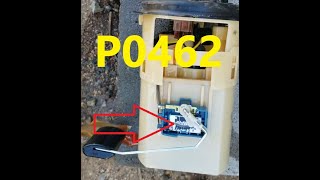
- Assuming the fuel gauge itself is broken. While possible, the P0462 code specifically points to a problem in the sensor's electrical circuit, making the sensor or wiring the primary suspects. 🎬 Watch: A breakdown of P0462 causes and common fixes.
Most Likely Causes
- Faulty Fuel Level Sensor (Sending Unit) 🔴 High Probability This is a known issue for this platform, as acknowledged by Nissan's Technical Service Bulletin NTB22-026. The internal variable resistor can wear out, corrode, or the float arm can get stuck, leading to a constant low voltage signal.
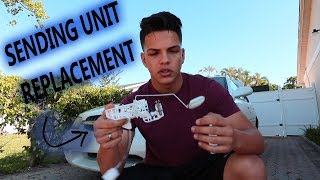
How to confirm: Access the sensor's electrical connector at the top of the fuel tank. Use a multimeter to measure the resistance across the sensor's pins. As you move the float arm (if accessible) or gently rock the vehicle, the resistance should change smoothly. If it reads as an open circuit (infinite resistance) or a dead short (near zero ohms), the sensor has failed. A YouTube video by 'carsNtoys' shows the process of accessing and replacing a similar sensor, highlighting the location under the rear seat. 🎬 See this walkthrough on replacing the fuel sending unit.
Typical fix: Replace the fuel level sensor. Per TSB NTB22-026, this part can be replaced separately from the main fuel pump assembly.
Est. part cost: $115-$170 - Wiring or Connector Issue 🟡 Medium Probability The wiring harness leading to the fuel pump assembly can be susceptible to damage or corrosion, especially at the connector on top of the fuel tank which is exposed to some moisture and dirt under the rear seat cushion.
How to confirm: Visually inspect the wiring harness and the connector for any signs of corrosion, frayed wires, or loose pins. A short to ground in the signal wire will cause a constant low voltage reading, triggering the P0462 code. Check for continuity and voltage drops along the circuit from the tank to the PCM if a visual inspection is inconclusive.
Typical fix: Repair the damaged section of wire or clean/replace the corroded connector.
Est. part cost: $5-$50 - Stuck or Damaged Sensor Float Arm ⚪ Low Probability The plastic float arm can occasionally get stuck in the lowest position due to debris in the tank or become physically damaged, preventing it from moving with the fuel level. This can sometimes happen on vehicles that sit for long periods.
How to confirm: After removing the fuel pump assembly from the tank, visually inspect the float. It should move freely throughout its entire range of motion without binding.
Typical fix: If the arm is just stuck, it may be possible to free it. If it is damaged, the entire fuel level sensor unit must be replaced.
Est. part cost: $115-$170
Rare But Worth Checking
- Instrument Cluster or PCM Fault: While very rare, the instrument cluster that displays the gauge or the PCM itself can fail. A user on a Nissan forum noted that a bad capacitor on the instrument panel was the cause of their P0462 issue after a sending unit replacement didn't fix it. This should only be considered after the sensor and wiring have been thoroughly tested and confirmed to be good.
Diagnosis Steps
- Confirm the P0462 code is present using an OBD-II scanner.
- Check the fuel gauge. Note if it's on empty, fluctuating, or seems to work intermittently.
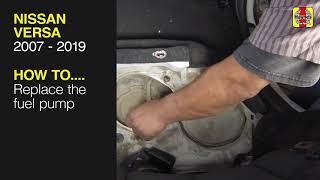
- Access the top of the fuel tank, typically by removing the lower cushion of the rear seat. A YouTube video by '2003s-10' shows this process on a 2017 Versa Note. 🎬 Watch: How to access and replace the fuel pump assembly.
- Inspect the connector and nearby wiring for any visible signs of corrosion, damage, or loose connections.
- With the key on, use a multimeter to check for a reference voltage and a good ground at the connector.
- Disconnect the connector and measure the resistance (ohms) of the fuel level sensor pins. The reading should be within the manufacturer's specified range. A reading near zero ohms indicates a short, while an infinite reading indicates an open circuit.
- If possible, gently rock the vehicle side-to-side while monitoring the resistance. A good sensor should show fluctuating resistance values. No change indicates a stuck float or failed sensor.
- If the sensor and wiring test good, the problem may lie with the instrument cluster or the PCM, which would require more advanced diagnostics.
Parts You'll Likely Need
- Fuel Level Sensor (Sender Unit)
(OEM #25060-5RB0G)— This is the most common failure point for code P0462 on this vehicle, as confirmed by Nissan's own service bulletin. The part number 25060-5RB0G replaces the older part number 25060-5RB0A.
Trusted brands: Nissan (OEM)
OEM price range: $130-$170
Aftermarket price range: $70-$120
Related Codes That Often Appear With This One
- P0463 — This code means 'Fuel Level Sensor Circuit High Input'. It's common to see it with P0462 if the wiring is intermittent or the sensor is failing in an erratic way, causing both high and low voltage spikes.
- P0461 — This code indicates 'Fuel Level Sensor Circuit Range/Performance'. It is a more general code that can be triggered by the same faults that cause P0462, as noted in TSB NTB22-026.
- P0460 — This code, 'Fuel Level Sensor Circuit Malfunction', is also listed in TSB NTB22-026 alongside P0462 as being caused by a faulty sensor that can be replaced independently.
Technical Service Bulletins (TSBs) & Recalls
- NTB22-026: Addresses issues with the fuel level sensor circuit and confirms that the sensor can be replaced as a standalone part. It applies to a wide range of 2016-2022 Nissan vehicles.
Platform-Specific Known Issues
- Nissan Technical Service Bulletin NTB22-026 was issued for fuel level sensor issues on this and other models, specifically mentioning codes P0460, P0461, P0462, and P0463. It advises that the fuel level sensor can be replaced separately from the fuel pump assembly.
- A YouTube video titled '2017 Nissan Versa note fuel pump/sensor replacement' provides a real-world look at the job, showing the access panel under the rear seat and the process of removing the lock ring and assembly. The creator notes the lack of other videos for this specific model.
Mechanic-Grade Diagnostic Values
- Fuel Level Sensor Signal Voltage at PCM/Sensor Connector — expected: 0.5V (Empty) to 4.5V (Full). Failure: A reading consistently below 0.5V, often under 0.2V, indicates a short or circuit low fault triggering P0462.
- Fuel Level Sensor Resistance — expected: Approximately 3-5 Ohms (Full) to 80 Ohms (Empty). Note: These values are typical for many Nissan models but can vary slightly.. Failure: A reading near 0 ohms indicates a shorted sensor. A reading of infinite resistance (OL) indicates an open circuit in the sensor. The resistance should change smoothly as the float arm is moved.
- Ground Circuit Resistance — expected: Less than 1 ohm from the sensor ground wire to a known good chassis ground.. Failure: Resistance greater than 1-5 ohms indicates a poor ground connection, which can cause erratic readings or trigger fault codes.
Scan Tool Commands That Help
- Nissan CONSULT: Instrument Cluster Self-Diagnostic Mode / Gauge Sweep — To verify if the instrument cluster and the fuel gauge needle are mechanically functional. This test commands all gauges to sweep through their full range of motion. If the fuel gauge moves correctly during the test but reads incorrectly during normal operation, it suggests the fault is in the sensor or wiring, not the cluster itself.
Wiring & Ground Locations
- Fuel Pump / Sensor Connector — On top of the fuel tank, accessible by removing the rear seat lower cushion.. This is the primary connection point for the fuel level sensor. It is a 5-pin rectangular connector. The sensor signal, power, and ground wires all pass through here, making it a critical point for testing voltage and resistance.
- Ground Point B7 — Located at the base of the driver's side (left) 'B' pillar.. This is a body ground point used by the instrument cluster. A poor connection at this ground can cause various gauge issues, including erratic fuel level readings, even if the sensor and wiring from the tank are good.
- BCM (Body Control Module) — Located behind the left side of the dashboard, near the driver's kick panel.. The BCM processes signals from various components, including the fuel level sensor circuit, before they are displayed on the instrument cluster. Connectors at the BCM are a secondary location to test the signal wire if a fault is suspected between the tank and the dash.
Real Owner Repair Stories
- MY350Z.COM forum user (Nissan 350Z (similar dual-sensor system)) — Fuel gauge was erratic. After replacing both fuel level sensors with new OEM parts, the problem became even worse, with the gauge reading significantly higher than the actual fuel level.
❌ Tried (didn't work) Replacing both the main and sub fuel level sensors with new Nissan parts.
✅ What actually fixed it The user discovered that one of the new OEM sensors was faulty out of the box. When testing the resistance sweep, the reading would jump erratically from 80 ohms (empty) down to the 30s with only a slight movement of the float arm, indicating a bad spot on the new sensor's resistor track. This highlights the importance of testing new parts before or after installation if a problem persists.
When the Usual Fixes Don't Work
- While the vast majority of P0462 codes are fixed by replacing the fuel level sensor, there are documented cases where even new OEM sensors are faulty out of the box. One owner of a similar Nissan platform replaced both sending units only to find the problem worsened. The final fix was identifying that one of the brand-new sensors had a defective resistor track, causing the resistance to jump incorrectly. This underscores the need to test the Ohm sweep of a replacement sensor if the code persists after installation.
Helpful Videos

We Have This Part in Stock

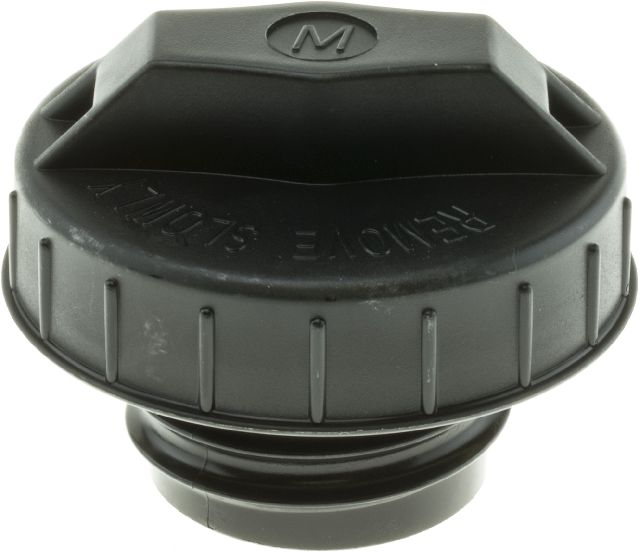

The information in this article is provided for general reference and educational purposes only. Vehicle specifications, procedures, and part compatibility can vary by production date, trim level, and region. Always consult your vehicle's factory service manual and verify part numbers before purchasing or performing repairs. Safety-critical components such as airbags, seat belts, and braking systems should be installed by a qualified professional.
- Nissan VERSA NOTE:
- 🎬 Helpful Videos
- 🛍️ Shop This Part
- What's Unique About the 2017-2019 Nissan VERSA NOTE
- Diagnostic Flowchart
- Symptoms You May Notice
- Most Likely Causes
- Rare But Worth Checking
- Diagnosis Steps
- Parts You'll Likely Need
- Related Codes That Often Appear With This One
- Technical Service Bulletins (TSBs) & Recalls
- Platform-Specific Known Issues
- Mechanic-Grade Diagnostic Values
- Scan Tool Commands That Help
- Wiring & Ground Locations
- Real Owner Repair Stories
- When the Usual Fixes Don't Work
- 🎟️ Get 5% Off