

P0462 on 2016-2022 Nissan Versa: Fuel Level Sensor Circuit Low Causes and Fixes
P0462 on a 2016-2022 Nissan Versa almost always means the fuel level sensor (or sending unit) inside the gas tank has failed. This will cause an incorrect or erratic fuel gauge reading. The sensor can often be replaced separately from the fuel pump for about $100-$150 in parts, a repair strategy confirmed by Nissan TSB NTB22-026.
- P0462 on a Nissan Versa points directly to a problem with the fuel level sensor circuit, usually the sensor itself.
- Your car is safe to drive, but you must keep track of your fuel level manually to avoid running out of gas.
- A Nissan Technical Service Bulletin (NTB22-026) confirms this is a known issue.
- You can save significant money by replacing only the fuel level sensor, not the entire fuel pump assembly.
- Always replace the fuel pump O-ring seal when performing this repair to prevent fuel leaks.
What's Unique About the 2016-2022 Nissan VERSA
The 2016-2022 Nissan Versa spans two different generations (N17 and N18), but this issue is common enough across both that Nissan issued a Technical Service Bulletin (TSB NTB22-026). The bulletin specifically advises technicians that for a P0462 code, they should replace only the fuel level sensor itself, not the entire expensive fuel pump assembly it's attached to. This is great news for owners, as it makes the repair significantly cheaper than on vehicles where the sensor and pump are a single, non-serviceable unit. The TSB even warns that warranty claims for replacing the entire pump assembly for this code will be charged back.
Diagnostic Flowchart
Tap your situation to follow the diagnostic path that matches what you're seeing on this vehicle.
Generation note: The 2016-2022 range covers the end of the second generation (N17, 2016-2019) and the start of the third generation (N18, 2020-2022). While the part numbers for the fuel level sensor differ between these generations, the cause, symptoms, and diagnostic approach for P0462 are virtually identical. The underlying issue is so common that it affects other vehicles on the same Nissan V-platform, like the Kicks.
Symptoms You May Notice
- Check Engine Light is on
- Fuel gauge reads empty, full, or an incorrect level
- Fuel gauge fluctuates erratically
- Low fuel warning light stays on even with a full tank
- Distance-to-empty calculation is inaccurate or shows dashes
- Replacing the entire fuel pump assembly. Nissan's TSB NTB22-026 specifically warns against this, as the sensor is a separate, much cheaper part. Replacing the whole unit is unnecessary and costly.
- Assuming the fuel pump is bad. The P0462 code is related to the fuel *level* circuit, not the fuel *pressure* or pump operation. The car will still run fine.
Most Likely Causes
- Failed Fuel Level Sensor (Sending Unit) 🔴 High Probability This is a known issue acknowledged by Nissan in TSB NTB22-026. The internal resistor track on the sensor can wear out or corrode over time, causing it to send an incorrect, low voltage signal. This is the most frequent point of failure for this code on this platform.
How to confirm: After removing the fuel pump assembly from the tank, test the sensor's resistance with a multimeter while moving the float arm up and down. The resistance should change smoothly through its range (e.g., ~10 ohms full, ~100 ohms empty). If the reading is erratic, jumps, reads open (infinite resistance), or is shorted (near zero ohms), the sensor is bad.
Typical fix: Replace the fuel level sensor. On the Versa, this part can be purchased and replaced separately from the main fuel pump assembly. Always replace the large O-ring/seal for the fuel pump assembly at the same time to prevent leaks.
Est. part cost: $100-$210 - Wiring or Connector Issue 🟡 Medium Probability The wiring connector is on top of the fuel tank, located under the rear seat. It is susceptible to moisture and corrosion over time, which can create a short to ground and trigger a 'low input' code. Spilled drinks in the back seat area can sometimes seep down and damage this connector.
How to confirm: Visually inspect the wiring harness and connector at the top of the fuel tank (usually under the rear seat cushion). Look for green/white corrosion, frayed wires, or loose pins. Perform a continuity and short-to-ground test on the signal wire between the sensor and the ECM.
Typical fix: Clean the connector terminals with electrical contact cleaner or repair the damaged section of the wiring harness. Ensure the connector is fully seated and dry upon reassembly.
Est. part cost: $5-$50
Rare But Worth Checking
- Faulty Instrument Cluster: While rare, the gauge cluster itself can fail, causing it to misinterpret a correct signal from the fuel sensor. One Nissan owner forum reported that a bad capacitor on the instrument panel was the root cause after replacing the sensor didn't fix the issue. This is usually suspected only after the sensor and wiring have been confirmed to be good.
- Faulty Engine Control Module (ECM): This is extremely unlikely. The ECM's internal circuit for reading the fuel level could fail, but all other potential causes should be exhaustively ruled out before considering ECM replacement.
- Stuck Fuel Level Float Arm: It's possible for the float arm to become physically stuck in the down position due to debris in the tank or damage to the fuel pump assembly. This is less common than electrical failure but can happen, especially if the vehicle has sat for a long time.
Diagnosis Steps
- Read the code with an OBD-II scanner to confirm P0462 is present and note any other codes (like P0461, P0463).
- Use the scanner's live data function to observe the fuel level sensor voltage. A reading near zero or below 0.5 volts points towards a short or failed sensor.
- Gain access to the top of the fuel tank, which is typically under the rear seat cushion. You will need to pull up the seat bottom to expose the fuel pump access cover.
- Disconnect the electrical connector and inspect it for any signs of corrosion, moisture, or damage. Clean as necessary.
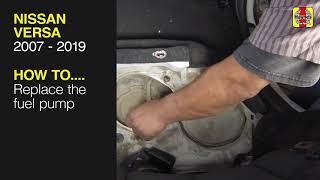
- If the connector looks good, you will need to remove the fuel pump assembly lock ring. This may require a special tool, though some have success carefully using a hammer and a brass punch (to avoid sparks) to rotate the ring counter-clockwise. 🎬 See this walkthrough for accessing and removing the fuel pump.
- Lift the fuel pump assembly partially out of the tank. Be careful not to bend the float arm.
- With the assembly accessible, disconnect the fuel level sensor from the pump body.
- Using a multimeter set to Ohms, measure the resistance across the sensor's terminals while slowly moving the float arm. The reading should change smoothly without any sudden jumps or dropouts. If it does, the sensor is faulty.
- If the sensor tests good, the next step is to check the wiring harness for a short to ground between the connector and the ECM.
- Replace the faulty component (usually the sensor and the pump O-ring), reassemble, and clear the trouble code.
Parts You'll Likely Need
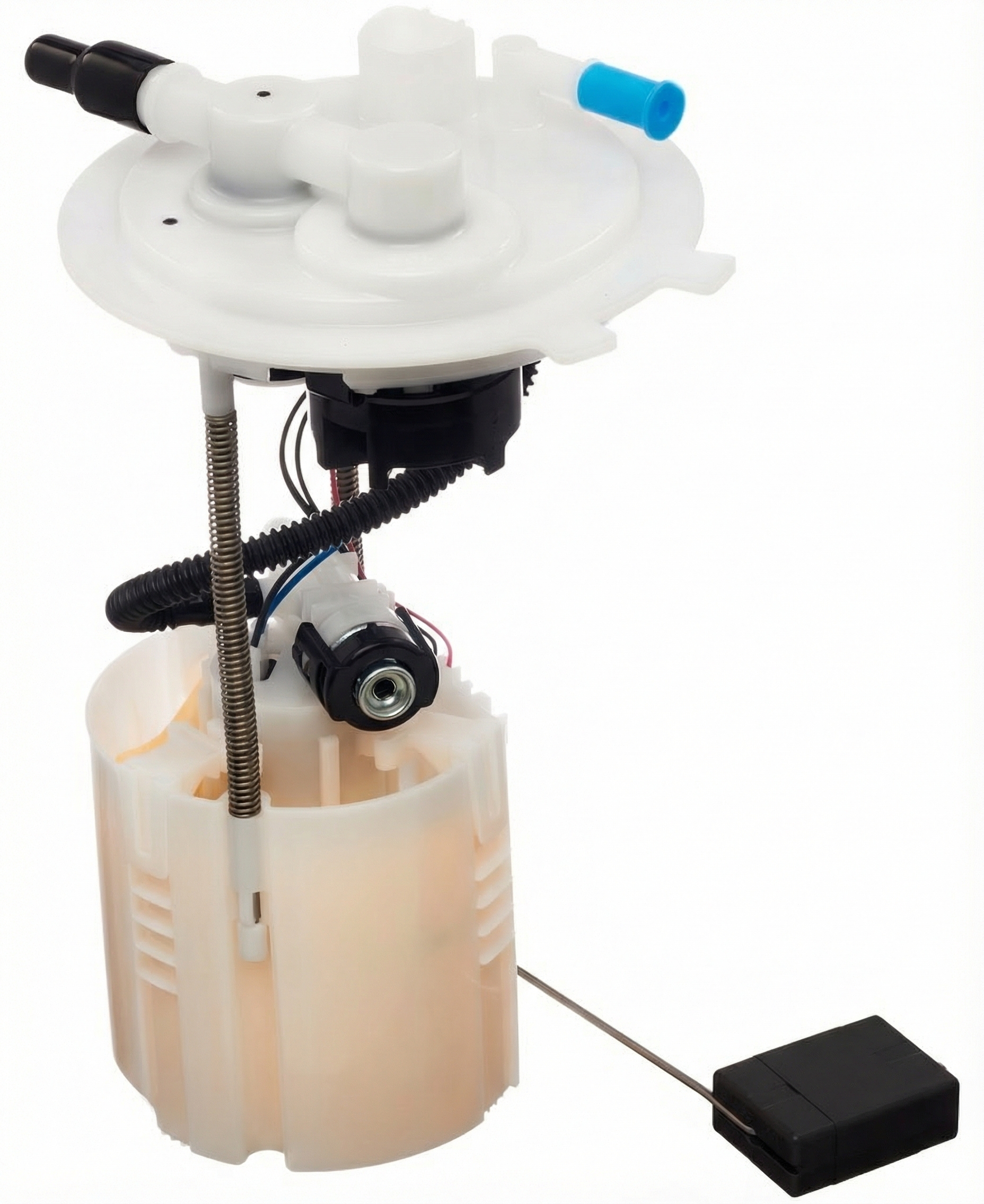
- Fuel Level Sensor
(OEM #25060-3AN0A)— This is the most common failure point for P0462, as confirmed by Nissan's TSB. This part number fits many 2016-2019 Versa (N17) models.
Trusted brands: Nissan Genuine, Spectra Premium, Bosch
OEM price range: $108-$155
Aftermarket price range: $70-$120 - Fuel Level Sensor
(OEM #25060-5RL0A)— This is the corresponding fuel level sensor for the newer generation, typically from 2018/2019 onwards (N18), and is also shared with the Nissan Kicks. 🎬 Watch: How to replace the fuel sensor on 2020-2021 models.
Trusted brands: Nissan Genuine
OEM price range: $200-$290
Aftermarket price range: $150-$220 - Fuel Pump O-Ring / Seal
(OEM #17342-EA000)— This seal should always be replaced whenever the fuel pump assembly is removed from the tank to prevent fuel leaks and EVAP system codes. It is a critical safety and emissions component.
Trusted brands: Nissan Genuine, Mahle, Fel-Pro
OEM price range: $15-$25
Aftermarket price range: $10-$20
Related Codes That Often Appear With This One
- P0461 — This code indicates an issue with the fuel level sensor's range or performance. It often appears with P0462 as the sensor begins to fail.
- P0463 — This code indicates a 'Circuit High Input' for the same sensor. It's common to see P0462 and P0463 appear intermittently as the sensor's internal components fail and send erratic signals.
- P0460 — A general fuel level sensor circuit malfunction code, also mentioned in TSB NTB22-026 as being related to a faulty sensor.
Technical Service Bulletins (TSBs) & Recalls
- NTB22-026: SERVICE INFORMATION FOR FUEL GAUGE INACCURATE WITH DTCS STORED IN ECM
Platform-Specific Known Issues
- Nissan issued Technical Service Bulletin NTB22-026, which applies to 2016-2022 models, acknowledging that P0460, P0461, P0462, or P0463 codes are likely due to a failed fuel level sensor that can be replaced separately from the fuel pump assembly.
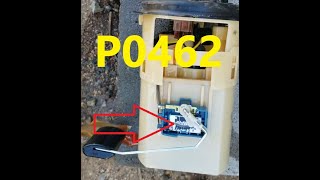
- A YouTube video titled 'How to replacment the fuel sensor of Nissan Versa 2020 to 2021' provides a visual guide for the N18 generation, showing the process of removing the back seat and accessing the pump.
- In a Nissan forum, a user with a P0462 code that persisted after replacing the sending unit found the ultimate cause to be a bad capacitor on the instrument cluster, which required swapping the cluster to fix.
Mechanic-Grade Diagnostic Values
- Fuel Level Sensor Resistance (Single Sensor) — expected: Approximately 4 to 83 Ohms. Should be ~4-6 Ohms at Full and ~80-83 Ohms at Empty. The key is a smooth, consistent change, not the exact numbers.. Failure: A reading of 0 Ohms (short), infinite/O.L. (open), or readings that jump erratically as the float arm is moved.
- Voltage from A/C Amplifier to Sensor — expected: ~4.5 Volts. Failure: A significantly lower voltage, such as ~2.5-3.0 Volts, indicates a faulty Unified Meter and A/C Amplifier.
- Signal Voltage at ECM — expected: Varies with fuel level, but should be around 3.0-3.2 Volts with a healthy circuit and sensor.. Failure: A voltage below the specified threshold (e.g., under 0.5V) will trigger the P0462 code.
Scan Tool Commands That Help
- Instrument Cluster: Self-Diagnostic Mode / Gauge Sweep Test — To quickly rule out a physically stuck or failed gauge needle in the instrument cluster. This test is performed without a scan tool by using a sequence of ignition turns and button presses. If the gauge needle sweeps its full range during the test, the gauge itself is likely functional, pointing the diagnosis back toward the sensor or wiring.
- Nissan CONSULT: Work Support in Combination Meter — The dealer-level scan tool may offer a 'Work Support' menu for the Combination Meter (instrument cluster). This function can allow a technician to see the raw data the cluster is receiving from the fuel level circuit, helping to determine if the fault lies with the sender, the wiring, or the cluster's interpretation of the signal.
Wiring & Ground Locations
- Fuel Pump Connector — On top of the fuel pump assembly, under the rear seat cushion.. This is the primary connection point for the fuel level sensor. Corrosion or damage here is a common cause of P0462. A Spanish-language video identifies the pinout as: Pin 1 (Power), Pin 2 (Sender Signal 2), Pin 3 (Ground), Pin 5 (Sender Signal 1). Another source identifies the main power wire as Green. Testing for power, ground, and signal continuity starts at this connector.
- Unified Meter and A/C Amplifier — Typically located in the center of the dashboard, behind the radio or climate controls.. On many Nissans, this module receives the raw resistance signal from the fuel level sensor, processes it, and then sends a processed signal to the instrument cluster gauge and the ECM. A fault within this amplifier can cause a P0462 even if the sensor and wiring are good.
- Instrument Cluster Ground — Behind the instrument cluster, bolted to the metal dashboard support frame.. A poor ground for the instrument cluster can cause a variety of gauge-related issues, including an incorrect fuel reading that could be misdiagnosed as a sensor problem. If the gauge acts erratically but the sensor tests good, checking this ground is a crucial step.
Real Owner Repair Stories
- YouTube channel 'Nissan, Infinity fuel gauge, a/c amplifier...' (Nissan/Infiniti with a dual-sender system and P0462) — Fuel gauge not working correctly, P0462 code stored.
❌ Tried (didn't work) Guessing whether the sending unit or the gauge cluster was the problem.
✅ What actually fixed it The Unified Meter and A/C Amplifier was faulty. A good amplifier supplied ~4.5V to the sensor circuit, while the bad one only supplied ~2.9V. Replacing the amplifier restored the correct voltage and fixed the issue. - Reddit user in r/MechanicAdvice (2010 Nissan Versa with ~69k miles) — Fuel gauge would drop from half to empty suddenly. Eventually, the gauge stopped moving entirely, even after filling the tank.
❌ Tried (didn't work) Initially, the owner was unsure where to start, suspecting fuses or the sending unit.
✅ What actually fixed it A former Nissan technician in the thread confirmed this is a very common failure of the sending unit in the fuel tank. The advice was to replace the entire fuel pump/sender assembly due to the high failure rate, after first checking fuses.
Model Year Variations Within This Range
- 2016-2019 (N17 Generation): Primarily uses fuel level sensor part number 25060-3AN0A.
- 2020-2022 (N18 Generation): Uses fuel level sensor part number 25060-5RL0A. The 2020 model year marked a major redesign with different styling and a slightly more powerful engine.
Helpful Videos

Used OEM Parts in Stock


New Aftermarket Parts Available


The information in this article is provided for general reference and educational purposes only. Vehicle specifications, procedures, and part compatibility can vary by production date, trim level, and region. Always consult your vehicle's factory service manual and verify part numbers before purchasing or performing repairs. Safety-critical components such as airbags, seat belts, and braking systems should be installed by a qualified professional.
- Nissan VERSA:
- 🎬 Helpful Videos
- 🛍️ Shop This Part
- What's Unique About the 2016-2022 Nissan VERSA
- Diagnostic Flowchart
- Symptoms You May Notice
- Most Likely Causes
- Rare But Worth Checking
- Diagnosis Steps
- Parts You'll Likely Need
- Related Codes That Often Appear With This One
- Technical Service Bulletins (TSBs) & Recalls
- Platform-Specific Known Issues
- Mechanic-Grade Diagnostic Values
- Scan Tool Commands That Help
- Wiring & Ground Locations
- Real Owner Repair Stories
- Model Year Variations Within This Range
- 🎟️ Get 5% Off