

P0462 on 2016-2022 Nissan Rogue: Causes and Fixes for Fuel Level Sensor Circuit Low
P0462 on a Nissan Rogue almost always means the fuel level sensor (sending unit) in the gas tank has failed. Your fuel gauge will be inaccurate or stuck on empty. Nissan issued a TSB (NTB22-026) for this, noting the sensor can be replaced separately from the expensive fuel pump assembly. The repair involves accessing the sensor through a panel under the rear seat.
- P0462 on a 2016-2022 Rogue is most likely a failed fuel level sensor.
- Your fuel gauge will not work correctly, so track your mileage using the trip odometer to avoid running out of gas.
- A Nissan TSB (NTB22-026) confirms this is a known issue.
- You can save significant money by replacing only the sensor, not the entire fuel pump assembly. The sensor is accessed under the rear passenger seat.
- Verify your vehicle's specific year and country of manufacture (VIN) before ordering a replacement sensor to ensure you get the correct part. The most common part for the T32 generation is 25060-4BA0B.
What's Unique About the 2016-2022 Nissan ROGUE

The 2016-2022 Nissan Rogue is known for issues with its fuel level sensor, to the point that Nissan released a Technical Service Bulletin (TSB #NTB22-026) specifically addressing it. The key takeaway from this TSB is that the fuel level sensor can be replaced as a separate component. This is a significant advantage for owners, as many other vehicles require the replacement of the entire, much more expensive, fuel pump assembly to fix a faulty sensor. The TSB explicitly warns dealerships that warranty claims for replacing the whole pump assembly for this issue will be charged back.
Diagnostic Flowchart

Tap your situation to follow the diagnostic path that matches what you're seeing on this vehicle.
Generation note: The 2016-2022 year range covers two Nissan Rogue generations: the second generation (T32, 2014-2020) and the third generation (T33, 2021-2022). The provided TSB NTB22-026 directly applies to the T32 generation. While the P0462 code has the same meaning for the T33, the specific part numbers for the fuel level sensor are different. Be sure to verify the correct part for your specific model year and country of manufacture (USA, Japan, or Korea-built) by using your VIN.
Symptoms You May Notice
- Check Engine Light is on
- Fuel gauge reads empty or is stuck in one position (often full or empty)
- Fuel gauge behaves erratically, fluctuating randomly
- Low fuel warning light stays on even with a full tank 🎬 Watch: How to diagnose a faulty fuel gauge without special tools
- In some cases, the car may be hard to start if the PCM cannot get an accurate fuel level reading.
- Replacing the entire fuel pump assembly when only the sensor is needed. The TSB for the Rogue specifically notes that the sensor can be replaced on its own.
- Replacing the instrument cluster before properly diagnosing the sensor and its circuit.
- Replacing the fuel level sensor without first checking the wiring harness for shorts or open circuits.
Most Likely Causes

- Faulty Fuel Level Sensor (Sending Unit) 🔴 High Probability This is a well-documented issue acknowledged by Nissan's Technical Service Bulletin NTB22-026. The sensor's internal resistor strip wears out over time, causing it to send an incorrect signal.
How to confirm: After confirming the wiring is intact, the most reliable method is to replace the sensor. A scan tool can also monitor the sensor's voltage output; if it's stuck at a very low voltage (typically under 0.5V) and doesn't change when fuel is added, the sensor is bad. Alternatively, the sensor can be removed and tested with a multimeter set to Ohms. By moving the float arm up and down, you should see a smooth change in resistance. For a Rogue, the expected range is approximately 2.5 Ohms (full) to 49 Ohms (empty), though a user reported new OEM parts measuring only up to 39 Ohms. An open circuit (O.L.) or a reading that doesn't change indicates a bad sensor.
Typical fix: Replace the fuel level sensor inside the fuel tank. The sensor is located under the rear seat on the passenger side and can be purchased separately from the fuel pump.
Est. part cost: $140-$250 - Wiring or Connector Issue 🟡 Medium Probability The wiring harness connector is located under the rear seat access panel, where it can be subject to dirt or moisture if the cover is not sealed properly.
How to confirm: Visually inspect the wiring harness leading to the fuel tank for any signs of damage, corrosion, or loose connections at the top of the fuel pump module. Use a multimeter to check for a short to ground in the signal wire. Check for proper voltage at the connector.
Typical fix: Repair or replace the damaged section of wiring or clean/replace the corroded connector.
Est. part cost: $5-$50
Rare But Worth Checking
- Instrument Cluster Malfunction: This is rare for a Rogue, but on other Nissan models, a faulty capacitor or other component on the instrument cluster's circuit board can cause P0462. This would likely cause other gauge-related problems and may set different trouble codes. A cluster self-test can sometimes identify issues.
- Powertrain Control Module (PCM) Fault: This is extremely rare and should only be considered after all other possibilities (sensor, wiring, cluster) have been exhaustively ruled out.
Diagnosis Steps
- Confirm the P0462 code is present using an OBD-II scanner. 🎬 Watch: Step-by-step guide to fixing the P0462 code and broken gas gauge
- Check for other related codes like P0460, P0461, or P0463, as they are all mentioned in TSB NTB22-026.
- Access the fuel pump module. On the Rogue, this is done by removing the rear seat cushion. Pull up sharply on the front corners to release the clips. The access panel is on the passenger side.
- Visually inspect the wiring and connector at the top of the fuel pump module for any obvious damage, corrosion, or loose connections.
- Using a scan tool with live data, observe the voltage reading from the fuel level sensor. A reading that is stuck very low (e.g., below 0.5 volts) points towards a short circuit or a failed sensor.
- If a scan tool is not available, disconnect the connector and remove the sensor. Use a multimeter set to Ohms to test the sensor's resistance. Connect the leads to the sensor's signal and ground pins. Manually move the float arm from the empty to full position. The resistance should change smoothly. If it jumps, stays the same, or shows an open circuit (O.L.), the sensor is bad.
- If the sensor tests good, the fault lies in the wiring between the sensor and the PCM, or in a rare case, the instrument cluster or PCM itself.
Parts You'll Likely Need

- Fuel Level Sensor (Sending Unit)
(OEM #25060-4BA0B (supersedes 25060-4BA0A))— This is the component that fails most often for this code on this vehicle, as confirmed by Nissan's TSB. It fits 2014-2020 USA-built Rogues.
Trusted brands: Nissan (OEM)
OEM price range: $130-$195
Aftermarket price range: $80-$150 - Fuel Pump Module Sealing Gasket/O-Ring
(OEM #17342-9TA0A)— It is highly recommended to replace the O-ring seal whenever the fuel pump lock ring is removed to prevent fuel leaks and vapor smells.
Trusted brands: Nissan (OEM)
OEM price range: $30-$55
Aftermarket price range: $10-$25
Related Codes That Often Appear With This One
- P0460 — Relates to the fuel level sensor circuit performance ('slosh'). It is also mentioned in TSB NTB22-026.
- P0461 — Indicates a range/performance issue with the fuel level sensor circuit. It is also mentioned in TSB NTB22-026.
- P0463 — Indicates a 'Circuit High' input, the opposite of P0462. Seeing these together could point to an intermittent wiring problem or a failing sensor that is fluctuating wildly. It is also mentioned in TSB NTB22-026.
Technical Service Bulletins (TSBs) & Recalls
- NTB22-026: Addresses issues with the fuel level sensor, noting that it can be replaced separately from the fuel pump assembly for codes P0460, P0461, P0462, and P0463. It explicitly states that warranty claims for replacing the entire fuel pump assembly for this issue will be denied.
Platform-Specific Known Issues
- Nissan Technical Service Bulletin NTB22-026 was issued for fuel level sensor problems on the 2016-2022 Rogue, specifically mentioning codes P0460, P0461, P0462, and P0463. It advises that the fuel level sensor can be replaced separately from the fuel pump assembly.
- The fuel pump and sensor are accessed by removing the rear seat bottom cushion. It is held in by clips at the front and can be pulled up firmly to remove. The access panel is on the passenger (right) side of the vehicle.
- AWD models have a main fuel level sensor and a sub-level sensor. Code P0462 typically refers to the main sensor ('A' circuit), which is part of the main fuel pump module.
Mechanic-Grade Diagnostic Values
- Fuel Level Sensor Resistance — expected: A smooth change in resistance when moving the float arm. For the T32 Rogue, approximately 2.5 Ohms (full) to 49 Ohms (empty).. Failure: A reading of O.L. (open circuit), zero resistance (short), or values that jump erratically or do not change when the float is moved.
- Fuel Level Sensor Signal Voltage (Live Data) — expected: Voltage should change smoothly as fuel level changes. A typical range is 0.5V to 4.5V.. Failure: Voltage is stuck below the minimum threshold, typically < 0.5V, which triggers P0462.
- Voltage Drop Test (Negative/Ground Side) — expected: Less than 0.1 Volts (100mV).. Failure: A reading higher than 0.1V indicates high resistance in the ground circuit, which can cause a low voltage signal.
- Voltage Drop Test (Positive/Power Side) — expected: Less than 0.5 Volts (500mV).. Failure: A reading higher than 0.5V indicates high resistance in the power feed or signal circuit to the PCM.
Scan Tool Commands That Help
- Manual Procedure (No Scan Tool): Instrument Cluster Self-Diagnostic Mode — Use this to verify if the physical fuel gauge needle and instrument cluster are working. If the needle performs a full sweep during the test, the cluster is likely good, and the fault is with the sensor or wiring. The procedure typically involves a sequence of turning the ignition on/off while holding the trip reset button.
Wiring & Ground Locations
- Fuel Pump Module Connector — On top of the fuel pump assembly, accessed via a panel under the rear seat cushion, typically on the passenger side.. This is the primary connection point for the fuel level sensor. The sensor wires are typically thinner than the fuel pump motor wires. Corrosion or damage here is a common cause of P0462. Testing for voltage, ground, and signal integrity occurs at this connector.
- PCM (Powertrain Control Module) — On some Nissan models, it is located in the engine compartment at the passenger's side rear corner.. The PCM receives the voltage signal from the fuel level sensor. The final step in diagnosing a wiring issue is to check for continuity and shorts on the signal wire between the fuel pump module connector and the PCM connector.
Real Owner Repair Stories
- Reddit r/NissanRogue (2016 Nissan Rogue) — Car wouldn't turn over at first, then started but the fuel gauge, which should have been half full, read nearly empty with a low fuel warning.
✅ What actually fixed it The immediate advice from other owners was to test the battery. A weak or failing battery is known to cause numerous, seemingly unrelated electronic issues on these vehicles, including erratic gauge behavior. The final fix was not posted, but the strong consensus was to rule out the battery before replacing the fuel sending unit. - YouTube / Reddit (2023-2024 Nissan Rogue) — After filling the fuel tank (especially with the engine running), the fuel gauge and Distance-To-Empty (DTE) display do not update and show an incorrect, lower level.
❌ Tried (didn't work) Waiting for the system to self-correct.
✅ What actually fixed it A 'hard reset' of the system. Disconnect the negative battery terminal for 5-15 minutes, then reconnect it. This forces the computer to clear its memory and recalibrate the fuel level reading upon the next startup.
OEM Part Supersession History
25060-4BA0A→25060-4BA0B— Standard part revision by the manufacturer.
Heads up: This part (25060-4BA0B) is for the 2014-2020 T32 Rogue, specifically for USA-built or Korea-built models. It is often listed as the secondary/left-side sensor, relevant for AWD models.
Model Year Variations Within This Range
- 2016-2020 (T32 Generation): Primarily uses part numbers like 25060-4BA0B. Part selection depends on whether the vehicle was built in the USA, Japan, or Korea, which can be determined by the VIN.
- 2021-2022 (T33 Generation): Uses completely different part numbers from the T32 generation. For a 2WD model, the part number is 25060-6RR0A for USA-made vehicles (VIN starts with 5N1) and 25060-6RE0A for Japan-made vehicles (VIN starts with JN8). Using the wrong part will not work.
Helpful Videos


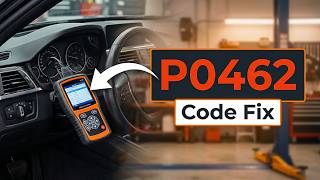
Used OEM Parts in Stock
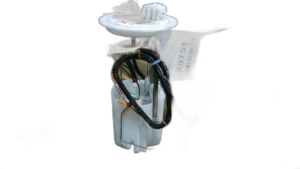


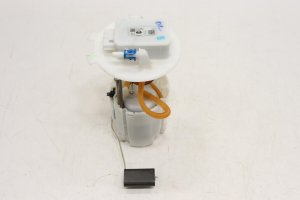

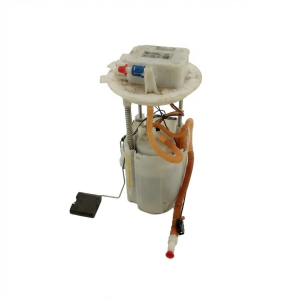
New Aftermarket Parts Available


The information in this article is provided for general reference and educational purposes only. Vehicle specifications, procedures, and part compatibility can vary by production date, trim level, and region. Always consult your vehicle's factory service manual and verify part numbers before purchasing or performing repairs. Safety-critical components such as airbags, seat belts, and braking systems should be installed by a qualified professional.
- Nissan ROGUE:
- 🎬 Helpful Videos
- 🛍️ Shop This Part
- What's Unique About the 2016-2022 Nissan ROGUE
- Diagnostic Flowchart
- Symptoms You May Notice
- Most Likely Causes
- Rare But Worth Checking
- Diagnosis Steps
- Parts You'll Likely Need
- Related Codes That Often Appear With This One
- Technical Service Bulletins (TSBs) & Recalls
- Platform-Specific Known Issues
- Mechanic-Grade Diagnostic Values
- Scan Tool Commands That Help
- Wiring & Ground Locations
- Real Owner Repair Stories
- OEM Part Supersession History
- Model Year Variations Within This Range
- 🎟️ Get 5% Off