

P0462 on 2021-2022 Nissan LEAF: Battery Level Sensor Fault Causes and Fixes
On a 2021-2022 Nissan LEAF, P0462 means there is a fault in the high-voltage battery's level sensor circuit, causing an inaccurate range display. The control module is reading a voltage signal that is too low (typically under 0.5V). This is not a DIY fix; it requires a qualified EV technician due to high-voltage dangers, as the sensor is internal to the sealed battery pack.
- P0462 on a LEAF means a problem with the high-voltage battery's charge level sensor, not a fuel sensor.
- The primary symptom will be an unreliable or incorrect battery range display on your dashboard.
- You can drive the vehicle, but you risk getting stranded because you cannot trust the range estimate.
- This is NOT a DIY repair. Due to the extreme danger of the high-voltage system, this code must be diagnosed and fixed by a qualified EV technician.
What's Unique About the 2021-2022 Nissan LEAF
The Nissan LEAF is a fully electric vehicle, so it has no gasoline, fuel tank, or traditional fuel level sensor. Nissan, like many EV manufacturers, repurposes standardized OBD-II codes that traditionally relate to combustion engines. In this case, the 'fuel level' logic is applied to the high-voltage battery's charge level. The fault lies within the complex and dangerous high-voltage battery system, not a simple component in a fuel tank. The sensor is integrated within the sealed battery pack, making it inaccessible to hobbyists. Therefore, the diagnostic and repair procedures are entirely different and far more hazardous than on a gasoline-powered Nissan with the same code.
Diagnostic Flowchart
Tap your situation to follow the diagnostic path that matches what you're seeing on this vehicle.
Symptoms You May Notice
- Inaccurate or fluctuating battery range display
- Battery charge gauge is stuck on empty, full, or an intermediate value
- Check Engine Light (Malfunction Indicator Lamp) is illuminated
- Incorrect 'Distance to Empty' calculation
- Electric vehicle system warning light may be illuminated.
- Replacing the 12V battery (this code relates to the high-voltage traction battery, not the standard 12V accessory battery).
- Assuming it's a 'fuel' issue and looking for a fuel pump or tank (this is an EV).
- Attempting to find a standalone, orderable 'fuel level sensor' part number, as the component is integrated into the HV battery assembly.
Most Likely Causes
- Faulty High-Voltage Battery Level Sensor 🔴 High Probability The sensor is an electronic component integrated deep within the high-voltage battery assembly. Like any other electronic part, it can fail over time, but its location makes replacement a complex, specialist-only job.
How to confirm: A trained technician must use a specialized scan tool (like Nissan's CONSULT) to read live data from the Li-Ion Battery Controller (LBC). A voltage reading from the sensor that is stuck low (e.g., under 0.5V) confirms the fault. 🎬 See how a pro diagnoses high voltage battery and range issues
Typical fix: The sensor itself is generally not a separately replaceable part. The repair typically involves replacing a larger sub-component of the battery pack or the entire Li-Ion Battery Controller, which houses the sensor logic. This must be done by a certified EV technician.
Est. part cost: $100-$1500 - Wiring or Connector Issue 🟡 Medium Probability Connections between the sensor (inside the battery pack) and the Battery Management System can corrode or become loose, or internal wiring could be damaged, leading to a low voltage signal (short to ground).
How to confirm: After de-powering the HV system, a technician would perform a pin-point test, checking for continuity, shorts to ground, and proper voltage at the connectors between the sensor and the control module. This requires accessing the battery pack's internal connections.
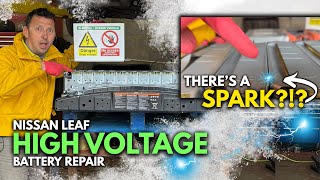
Typical fix: Repairing the damaged section of the wiring harness or cleaning/replacing the affected connector. This is a delicate, labor-intensive job inside the battery pack. 🎬 Watch: A full teardown and repair of a Nissan Leaf battery
Est. part cost: $5-$100 - Battery Management System (BMS) or Li-Ion Battery Controller (LBC) Fault ⚪ Low Probability While robust, the control module that interprets the sensor's signal can fail internally, causing it to misread the input. This is much less common than a sensor or wiring failure. Software corruption or failure is also a possibility.
How to confirm: This is a diagnosis of exclusion. After a certified technician has definitively ruled out the sensor and its wiring, the LBC itself is condemned. A dealer may also attempt to reprogram the LBC as part of recall campaigns.
Typical fix: Replacement and reprogramming of the Li-Ion Battery Controller module. This must be done at a dealership or specialized EV repair facility.
Est. part cost: $500-$2000
Rare But Worth Checking
- Instrument Cluster Fault:
Diagnosis Steps
- CONFIRM a qualified EV technician performs all work.
- Scan the vehicle's onboard diagnostics for P0462 and any other related codes. 🎬 Watch: How to scan and clear Leaf fault codes using LeafSpy
- Using an advanced scan tool (e.g., Nissan CONSULT), access the Li-Ion Battery Controller data and monitor the live voltage reading from the battery level sensor.
- Confirm the voltage is stuck low (typically below 0.5V), which indicates a 'Circuit Low' condition.
- Following all official Nissan safety procedures to de-power the high-voltage system, including disconnecting the 12V battery and service plug, and waiting at least 10 minutes for capacitors to discharge.
- Gain access to the HV battery's internal components. Visually inspect the wiring harness and connectors between the sensor and the LBC for any visible damage, corrosion, or loose connections.
- If wiring appears intact, perform a pin-point test on the circuit with a multimeter to rule out a short to ground.
- If the wiring and connectors are confirmed to be good, the fault is with the internal battery level sensor or the LBC module itself.
- Replacement of the faulty component (likely a battery sub-assembly or the LBC) is performed by a certified technician, followed by re-pairing the components to the vehicle if necessary.
Parts You'll Likely Need
- High-Voltage Battery Level Sensor — This is the sensor that directly measures the battery's state of charge, and its failure is the most direct cause of a 'Circuit Low' code. However, it is typically integrated into a larger battery sub-assembly or the Li-Ion Battery Controller and is not available as a separate, orderable part for this vehicle.
Trusted brands: Nissan OE (as part of a larger assembly)
OEM price range: $100-$1500
Related Codes That Often Appear With This One
- P0463 — This code means 'Fuel Level Sensor Circuit High Input'. Seeing it with P0462 can indicate an intermittent wiring problem causing the signal to swing between both extremes as the sensor fails.
- P0461 — This code for 'Fuel Level Sensor Circuit Range/Performance' is a general performance fault. It can be triggered by the same erratic signals from a failing sensor that cause P0462.
Technical Service Bulletins (TSBs) & Recalls
- NTB22-026 - This TSB is frequently associated with Nissan P0462 codes. However, it is critical to note that its specific repair instructions apply ONLY to gasoline and hybrid models (like the Rogue, Sentra, Kicks, etc.). It instructs technicians to replace only the fuel level sender, not the whole fuel pump assembly. For the LEAF, this TSB is irrelevant for the actual repair but serves as context that Nissan uses this code family for level sensor circuit faults across its lineup.
Platform-Specific Known Issues
- The primary issue for this code on a LEAF is that the repair is not accessible to DIYers. The sensor is located inside the sealed high-voltage battery pack, which carries a lethal electrical charge. Only technicians trained in EV battery service should attempt this repair.
- The lack of public forum discussions specifically about P0462 on the LEAF suggests the fault is either uncommon or is almost exclusively diagnosed and repaired by dealerships, with owners rarely attempting a DIY diagnosis due to the high-voltage system dangers.
Mechanic-Grade Diagnostic Values
- Battery Level Sensor Signal Voltage (Live Data) — expected: A variable voltage, typically between 0.5V and 4.5V.. Failure: A voltage reading that is stuck below the minimum threshold, often < 0.5V and sometimes as low as < 0.25V, will trigger the P0462 code.
- Signal/Ground Wire Continuity — expected: Less than 1.0 Ohm of resistance from the LBC connector pin to the sensor-side connector pin.. Failure: High resistance or an open circuit (O.L. on multimeter) indicates a break in the wire that must be located and repaired.
Scan Tool Commands That Help
- Nissan CONSULT-III plus: Instrument Cluster Self-Diagnostic Test — Use this function to verify if the charge level gauge needle is mechanically functional. The test commands all gauges to sweep through their ranges. If the gauge sweeps correctly, the cluster is likely good, pointing the diagnosis back toward the LBC, sensor, or wiring.
- Nissan CONSULT-III plus: Reprogram Lithium Battery Controller (LBC) — This is required to install updated software as part of safety recall campaigns (e.g., R24B2, R258C). The new software adds enhanced monitoring for battery state-of-charge fluctuations and can disable the vehicle if a critical fault is detected.
Wiring & Ground Locations
- HV Battery 36-pin Connector — The main electrical interface connector on the high-voltage battery pack assembly.. This connector carries the signals from the internal battery sensors, including the level sensor, to the Li-Ion Battery Controller (LBC) and the rest of the vehicle's CAN bus network. A fault, corrosion, or poor connection at this specific connector could cause the P0462 code.
Model Year Variations Within This Range
- 2021-2022: Models within this range are subject to NHTSA recall campaigns (e.g., R24B2, R258C) for a potential battery fire risk. The remedy is a mandatory software update for the Lithium Battery Controller (LBC) performed by a dealer. This new software more closely monitors battery health and state-of-charge fluctuations, which is directly related to the circuit that triggers P0462.
Helpful Videos
We Have This Part in Stock

The information in this article is provided for general reference and educational purposes only. Vehicle specifications, procedures, and part compatibility can vary by production date, trim level, and region. Always consult your vehicle's factory service manual and verify part numbers before purchasing or performing repairs. Safety-critical components such as airbags, seat belts, and braking systems should be installed by a qualified professional.
- Nissan LEAF:
- 🎬 Helpful Videos
- 🛍️ Shop This Part
- What's Unique About the 2021-2022 Nissan LEAF
- Diagnostic Flowchart
- Symptoms You May Notice
- Most Likely Causes
- Rare But Worth Checking
- Diagnosis Steps
- Parts You'll Likely Need
- Related Codes That Often Appear With This One
- Technical Service Bulletins (TSBs) & Recalls
- Platform-Specific Known Issues
- Mechanic-Grade Diagnostic Values
- Scan Tool Commands That Help
- Wiring & Ground Locations
- Model Year Variations Within This Range
- 🎟️ Get 5% Off