

P0461 on 2010-2017 Volkswagen GOLF: Causes and Fixes for Fuel Gauge Issues
P0461 on a VW Golf almost always means the fuel level sending unit is failing. This causes an erratic or inaccurate fuel gauge. The most common fix is to replace the sending unit, which is located inside the fuel tank as part of the fuel pump assembly.
- P0461 on a 2010-2017 Golf means your fuel gauge is unreliable.
- The most probable cause is a worn-out fuel level sending unit inside the gas tank.
- The standard repair is to replace the entire fuel pump and sender assembly, which is accessed from under the rear seat.
- While you can continue to drive, you must track mileage to avoid running out of fuel.
- Always replace the fuel tank seal when performing this repair to prevent leaks, and consider using a special tool (T10202) for the locking ring.
What's Unique About the 2010-2017 Volkswagen GOLF

On the Mk6 and Mk7 VW Golf, the P0461 code is a straightforward issue that almost always points to a hardware failure of the fuel level sender. Unlike some newer VAG models (like the 2014-2016 Audi A4/A5/Q5) that have Technical Service Bulletins (TSBs) for software glitches causing P0461, the issue on the 2010-2017 Golf is typically due to physical wear on the sensor's resistor strip inside the fuel tank. An owner complaint filed with the NHTSA for a 2017 Golf noted the car jerking and the P0461 code being present even before the check engine light appeared on the dash. This jerking could be due to the ECU being confused by conflicting fuel level data versus its calculated fuel consumption, potentially affecting air/fuel mixture adjustments.
Diagnostic Flowchart

Tap your situation to follow the diagnostic path that matches what you're seeing on this vehicle.
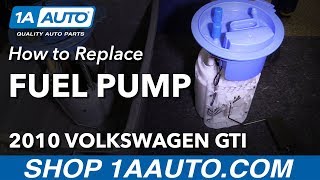
Generation note: This range covers the Volkswagen Golf Mk6 (2010-2014) on the PQ35 platform and Mk7 (2015-2017) on the MQB platform. The cause and symptoms of P0461 are consistent across both generations. However, the specific part numbers for the fuel pump and sending unit assembly will differ, so it is crucial to order the correct part for your specific year and model. For example, a common part for the Mk6 is 1K0919051DB 🎬 Watch this DIY guide for replacing the Mk6 fuel pump., while the Mk7 often uses a 5Q0- or 5WA-prefixed part number.
Symptoms You May Notice
- Inaccurate or wildly fluctuating fuel gauge.
- Fuel gauge stuck on empty or full.
- Check Engine Light is on.
- Low fuel warning light stays on even with a full tank.
- Fuel gauge drops to empty immediately after filling up, then may or may not slowly rise.
- Vehicle jerking or hesitation, as noted in an NHTSA owner complaint and potentially linked to ECU confusion.
- Fuel gauge appears to work correctly only at the extreme full or empty ends of its range.
- Replacing the instrument cluster without first testing the fuel sending unit and wiring.
Most Likely Causes

- Faulty Fuel Level Sending Unit 🔴 High Probability The sending unit is a mechanical part with a resistor strip that can wear out over time, causing dead spots or erratic readings. Contamination in the fuel tank can also accelerate this wear. This is the most common point of failure for this code on this platform.
How to confirm: Use a scan tool to monitor the fuel level sensor's resistance or voltage in live data. The reading should be steady and change smoothly as the fuel level changes. If it's erratic or stuck, the sender is likely bad. You can also test the sender's resistance directly with a multimeter while moving the float arm. 🎬 See how to access and replace the GTI sending unit. The resistance should change smoothly. For many VWs, the approximate range is 10-36 Ohms (full) to 73-110 Ohms (empty), but this can vary significantly by part. A jumpy or open-circuit reading confirms a bad sender.
Typical fix: Replace the fuel level sending unit. It is integrated into the fuel pump module, so the entire assembly is often replaced.
Est. part cost: $150-$450 - Wiring or Connector Issues 🟡 Medium Probability The connector on top of the fuel tank is located under the rear seat cushion, making it susceptible to moisture from spills or debris. The pins can corrode, leading to a poor connection and faulty signal.
How to confirm: Visually inspect the wiring harness and connector going to the fuel pump assembly. Look for any signs of green or white corrosion, chafed wires, or loose pins.
Typical fix: Repair the damaged section of wiring or clean the connector pins carefully. If corrosion is severe, the connector pigtail may need to be replaced.
Est. part cost: $10-$50
Rare But Worth Checking
- Faulty Instrument Cluster: This is rare. Before replacing the cluster, a full diagnosis should confirm that the fuel level sensor and its wiring are functioning correctly. A mechanic can perform a gauge sweep test to check the cluster's operation. One owner on a GolfMK7 forum reported a dealer replacing the cluster, only for the problem to return, suggesting it's often misdiagnosed.
- Faulty Powertrain Control Module (PCM): This is extremely unlikely and should only be considered after all other possibilities have been exhaustively ruled out.
- Use of Ethanol Blends (E25-E85): In at least one documented case on a tuned Mk7 GTI, a user running an E25 ethanol blend reported the P0461 code appearing. While not a common cause, high ethanol content can sometimes affect the sensitive electronics of the sending unit over time.
Diagnosis Steps
- Read the fault codes with an OBD-II scanner to confirm P0461 is the primary code.
- Observe the fuel gauge. Is it stuck, erratic, or reading incorrectly?
- Use a scan tool to view live data for the fuel level sensor ('Fuel Level Sensor A Voltage'). Normal range is typically ~0.5V (full) to ~4.5V (empty). Watch for erratic jumps or values that are stuck.
- Access the fuel pump assembly by removing the rear seat bottom cushion (it pulls up firmly from the front) and the black metal access panel, which is usually held by three 10mm nuts.
- Inspect the electrical connector and wiring on top of the fuel pump assembly for corrosion, damage, or loose connections.
- If wiring appears okay, disconnect the connector. Test the resistance of the sending unit with a multimeter across the correct pins. For many VWs, expect a smooth sweep between approximately 30-110 Ohms. If the reading jumps, shows an open loop (OL), or is static, the sender is bad.
- To replace the unit, first disconnect the battery. Use a special tool (like a T10202 wrench) to unscrew the large plastic locking ring.
- Carefully lift the assembly out, being mindful not to bend the float arm. Disconnect any internal hoses.
- Install the new fuel pump/sender assembly, ensuring the new fuel tank seal is seated correctly to prevent leaks and fumes. 🎬 Follow this walkthrough to install a new fuel pump assembly.
- After replacement, clear the code and verify the fuel gauge reads correctly.
Parts You'll Likely Need
- Fuel Pump and Sending Unit Assembly
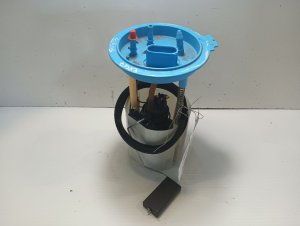
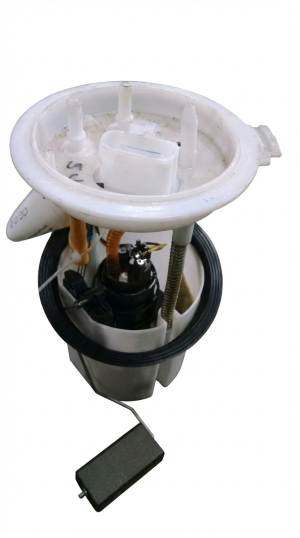
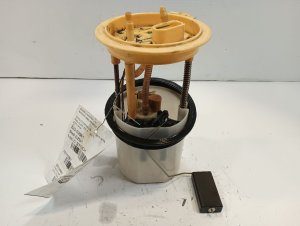
(OEM #Varies. Common for Mk6: 1K0919051DB. Common for Mk7: 5Q0919051BH, 5Q0919051BK, 5WA919051P. Always verify with VIN.)— This is the most common cause of P0461. The fuel level sensor (sending unit) is integrated with the in-tank fuel pump and sold as a single module.
Trusted brands: Bosch, VDO, Genuine VW
OEM price range: $250-$450
Aftermarket price range: $150-$300 - Fuel Tank Seal
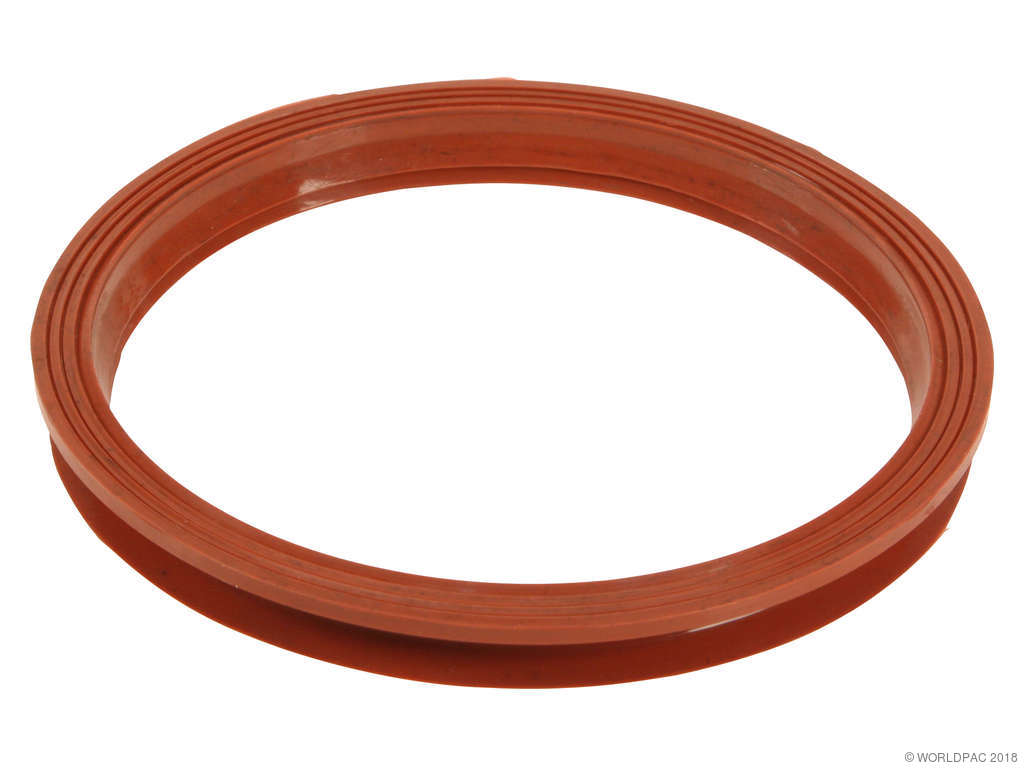
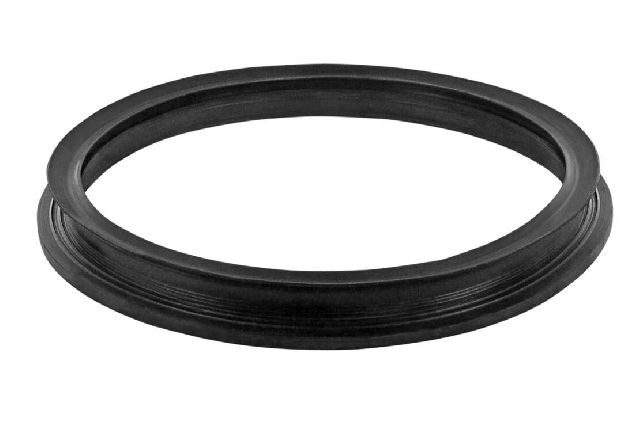
(OEM #e.g., 1J0919133B (verify by VIN))— This rubber gasket seals the fuel pump assembly to the tank. It is critical to replace this seal anytime the pump is removed to prevent dangerous fuel leaks and fumes.
Trusted brands: Genuine VW, Elring
OEM price range: $15-$30
Aftermarket price range: $10-$20 - Fuel Pump Locking Ring Tool
(OEM #T10202)— This special tool is required to safely remove and properly torque the plastic locking ring that holds the fuel pump assembly in place without damaging it.
Trusted brands: CTA Tools, Baum Tools
OEM price range: $20-$50
Aftermarket price range: $15-$30
Technical Service Bulletins (TSBs) & Recalls
- Bulletin #VIN4APIN20210728: A generic manufacturer TSB notes that a customer may state the MIL is on with code P0461 in the ECM, among a list of other potential codes and issues. This bulletin is informational and does not point to a specific root cause or repair.
- Audi TSB #2041594: While for Audi models (A4, A5, etc.) from 2014-2016, this TSB is relevant as it shows that on some VAG vehicles, P0461 was caused by a software issue. This contrasts with the Golf of the same era, where the problem is consistently a hardware failure of the sender itself.
Platform-Specific Known Issues
- A 2017 VW Golf owner reported to the NHTSA that the car began jerking and the P0461 code was stored in the computer before the Check Engine Light illuminated on the dashboard.
Mechanic-Grade Diagnostic Values

- Fuel Level Sensor Resistance (Common Spec) — expected: Approx. 10-36 Ohms (Full) to 73-110 Ohms (Empty). Resistance should sweep smoothly when moving the float.. Failure: Jumps in resistance, infinite resistance (OL), or values that do not change when the float is moved.
- Fuel Level Sensor Resistance (Alternate/Older Spec) — expected: Approx. 47 Ohms (Full) to 289 Ohms (Empty). Resistance should sweep smoothly.. Failure: This range is noted on some Mk5/early Mk6 models. A failure would be erratic readings or an open circuit within this range.
- Fuel Level Sensor Voltage (Live Data) — expected: Typically ~0.5V (Full) to ~4.5V (Empty). Voltage should change smoothly and inversely to fuel level.. Failure: Voltage is stuck, jumps erratically, or is outside the 0.5V-4.5V range.
Scan Tool Commands That Help
- VCDS (VAG-COM): Instrument Cluster (17) -> Adaptation (10) -> Channel 30 — To perform a fine-tune calibration of the fuel gauge reading after a sender replacement or to correct a persistent small inaccuracy. The value can be adjusted from the default of 128 (range 120-136). Security access code may be required (e.g., 20103).
- VCDS (VAG-COM): Instrument Cluster (17) -> Output Tests (03) — To command a full sweep of the fuel gauge needle. This is used to verify if the gauge motor in the instrument cluster is physically working, helping to rule it out as the cause of the problem.
- VCDS (VAG-COM): Instrument Cluster (17) -> Long Coding -> Byte 10, Bit 4 — To enable the 'Volume to Replenish' or 'Refuel Quantity' display in the Multi-Function Display (MFD). This provides a digital readout of how many liters/gallons are needed to fill the tank, which can be a useful cross-reference when diagnosing gauge issues.
Wiring & Ground Locations
- Main Engine Bay Ground Point — On the bulkhead, located above and behind the battery. Characterized by a cluster of brown wires.. A poor main ground can cause a variety of electrical issues, including erratic sensor readings. While not a direct ground for the pump, ensuring it's clean and tight is a fundamental step.
- Instrument Cluster Connector (T32) — Behind the instrument cluster, accessible after removing the cluster from the dashboard.. For some Mk6 models, the fuel level sensor signal is transmitted to the instrument cluster via this connector. For example, pin 5 from the fuel pump controller may go to pin 20 (T32) and pin 8 may go to pin 2 (T32). Checking for a solid connection here is vital if the sender and pump-side wiring test good.
- Fuel Pump Assembly Connector Ground — On the fuel pump assembly itself, inside the fuel tank. The wire is typically brown.. The internal ground connection for the sending unit can fail or corrode, causing an open circuit or high resistance, directly leading to a P0461 code. This is often repaired by replacing the entire pump assembly.
Real Owner Repair Stories
- NHTSA Owner Complaint (2017 Volkswagen GOLF) — Vehicle began jerking. OBD-II scan revealed a P0461 code was present, but the Check Engine Light was not yet on.
❌ Tried (didn't work) Not specified.
✅ What actually fixed it The complaint was filed to document the issue; the final repair is not listed but the symptoms point directly to a failing fuel level sender.
OEM Part Supersession History
1K0919051AQ, 1K0919051BH, 1K0919051CL→1K0919051DB— Standard part evolution and revision by the manufacturer for the Mk6 platform.
Heads up: These part numbers are generally interchangeable for the specified Mk6 applications, with the latest part number (1K0919051DB) being the recommended replacement.
Model Year Variations Within This Range
- 2010-2014 (Mk6) vs 2015-2017 (Mk7): The fuel pump and sender assemblies are different parts between the PQ35 (Mk6) and MQB (Mk7) platforms. Mk6 parts often use a '1K0' prefix, while Mk7 parts use a '5Q0' prefix. The diagnostic resistance values may also differ between generations.
- Pre-2011 vs. 2011+: The wiring and method for reading the fuel level sensor changed around 2011. Later models use a circuit design that is more 'self-diagnostic friendly', giving the instrument cluster more ability to detect specific faults in the sender circuit. This may affect how resistance is measured and interpreted by the vehicle.
Helpful Videos


Used OEM Parts in Stock



New Aftermarket Parts Available


The information in this article is provided for general reference and educational purposes only. Vehicle specifications, procedures, and part compatibility can vary by production date, trim level, and region. Always consult your vehicle's factory service manual and verify part numbers before purchasing or performing repairs. Safety-critical components such as airbags, seat belts, and braking systems should be installed by a qualified professional.
- Volkswagen GOLF:
- 🎬 Helpful Videos
- 🛍️ Shop This Part
- What's Unique About the 2010-2017 Volkswagen GOLF
- Diagnostic Flowchart
- Symptoms You May Notice
- Most Likely Causes
- Rare But Worth Checking
- Diagnosis Steps
- Parts You'll Likely Need
- Technical Service Bulletins (TSBs) & Recalls
- Platform-Specific Known Issues
- Mechanic-Grade Diagnostic Values
- Scan Tool Commands That Help
- Wiring & Ground Locations
- Real Owner Repair Stories
- OEM Part Supersession History
- Model Year Variations Within This Range
- 🎟️ Get 5% Off